The Old Acropolis Museum, the first Greek museum to be built in modern times, re-opened on Monday after a major restoration project. It is the first time the museum, founded in 1874 and nestled into the rock of the storied Acropolis hill, has been accessible to the public since 2007.
The opening ceremony was a grand affair, with speeches by the Greek prime minister Kyriakos Mitsotakis and the country’s minister of culture Lina Mendoni, among others.
Once simply the “Museum”, the Old Acropolis Museum took its current name in 2009, when Athens built a newer Acropolis Museum 300 yards down the hill. This offered larger and state-of-the-art space in which to house the antiquities from the Parthenon and other Greek sites, as well as a viewing room designed for the Elgin Marbles—currently showing casts, but with the idea that one day the museum might one day welcome the real items.
The Old Acropolis Museum was left empty for years, and plans eventually developed to use it as storage and administrative spaces. But by 2019, the Greek state definitively nixed this idea.
“For us, it was inconceivable, almost an affront, that this historic building, with its unique location, should be converted into offices and storage facilities,” said Mendoni during her opening speech. “We therefore decided that the museum should reopen in accordance with its original purpose. However, it was not to become just another conventional museum, but rather a museum and exhibition space hosting exhibitions on the history, archaeology and culture of Athens, as well as contemporary art exhibitions inspired by Greek civilisation and innovative programmes incorporating cutting-edge technology.”
The museum will now host both a rotating selection of artefacts as well as a contemporary art programme. The first exhibition, Athens City Idea, focuses on Athens as a social, political, and economic entity, via tragic masks, statues, coins, and amphorae that have been in storage elsewhere across Athens, plus recent discoveries. A digital art component animated the Parthenon’s friezes and the history of the Acropolis Hill.
Part of the idea behind the temporary exhibitions is to keep the museum’s display current, a point also underlined by its commitment to contemporary art.
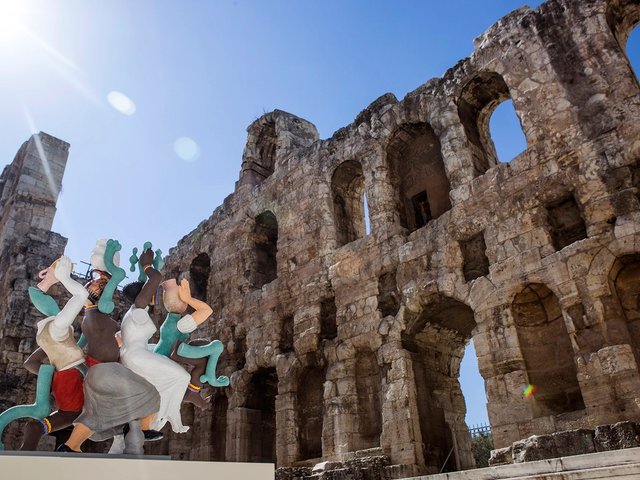
This includes the last of a trilogy of works commissioned for Athens from the American artist Michael Rakowitz, which is also the final project of Neon, the roving art foundation created by Dimitris Daskalopoulos that for 14 years has funded art and exhibitions across the city, and which announced its closure earlier this year.
“You could say that the first contemporary work here was Phidias’s statue of Athena in the 5th century BCE,” quipped Daskalopoulos, the Athens-born collector who founded Neon. Daskalopoulos also supported the refurbishment of the Old Acropolis Museum, which was funded by both private and public money. “But encouraging the coexistence of antiquity with the contemporary is a challenge we have embraced many times throughout our work at Neon.”
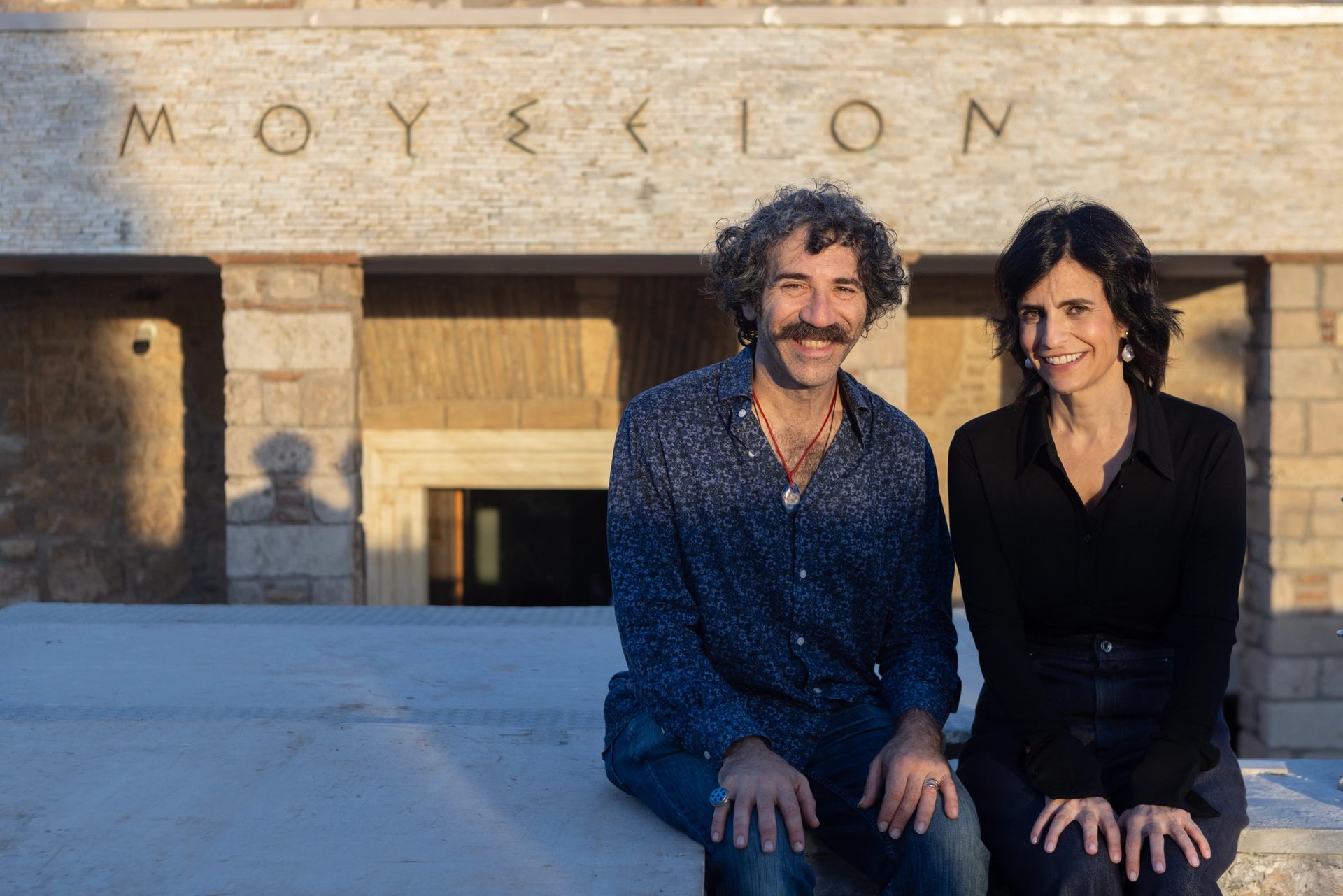
Michael Rakowitz and Elina Kountouri, the director of Neon, outside the reopened Old Acropolis Museum
© Natalia Tsoukala
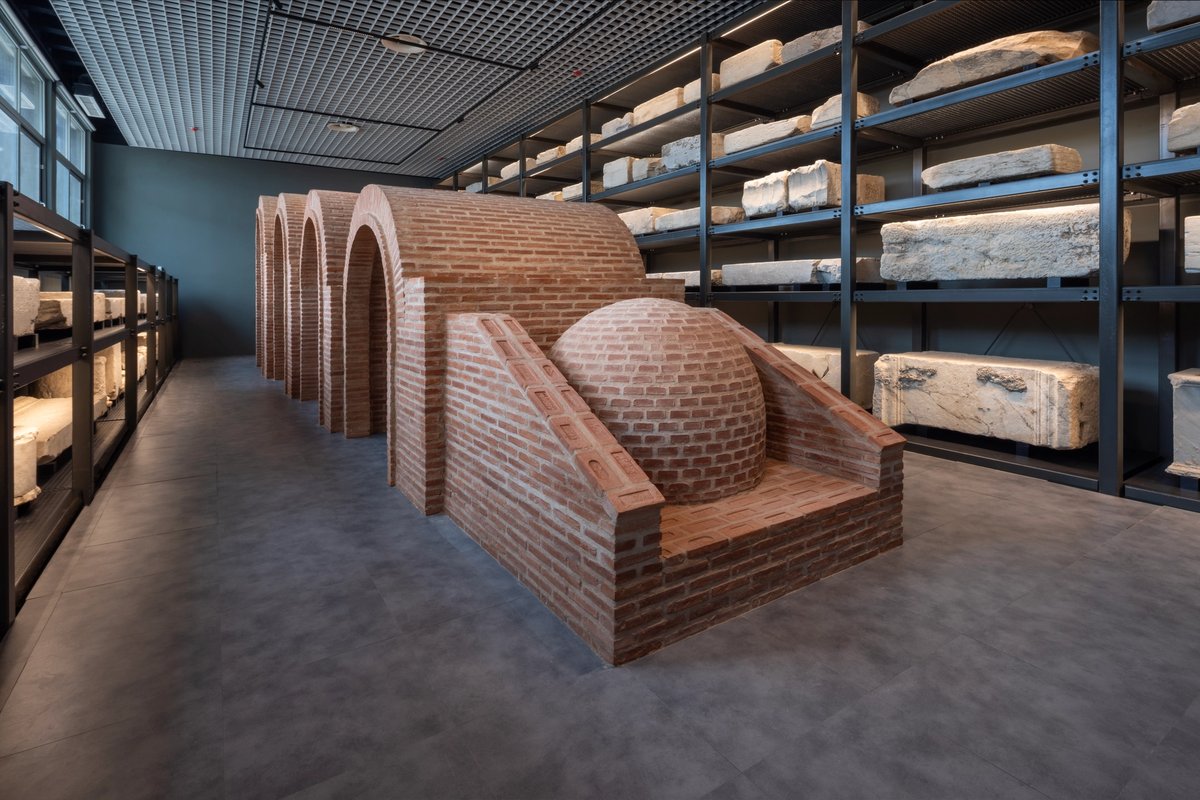
Rakowitz’s installation What You Leave Behind Is Not What is Engraved (2026), which was commissioned by Neon, and comprises a kiln and newly fired bricks, looks at a lesser-known episode in the Acropolis’s history.
“I realised that you could only tell the whole story of the site if you look through the lens of migration,” the artist told The Art Newspaper. He studied the population exchanges during the collapse of the Ottoman Empire, when Greece and Turkey each forced around 1.5 million inhabitants to leave—Christian Turks to Greece and Muslim Greeks to Turkey. When the Turkish refugees arrived in Athens, they set up tents and encampments at the base of the Acropolis hill.
“Thinking about a ruin as being something that can renew itself to a population and become once again a shelter excited me,” he said. "When I found out about the tradition of the Asia Minor refugees who were able to go back to Turkey after some years, and then the Muslims who were uprooted from Greece, when those populations were able to visit their the departed homelands, they found oftentimes their buildings or towns in a state of ruin, and they would take a brick from that place and bring it back as a memento.”
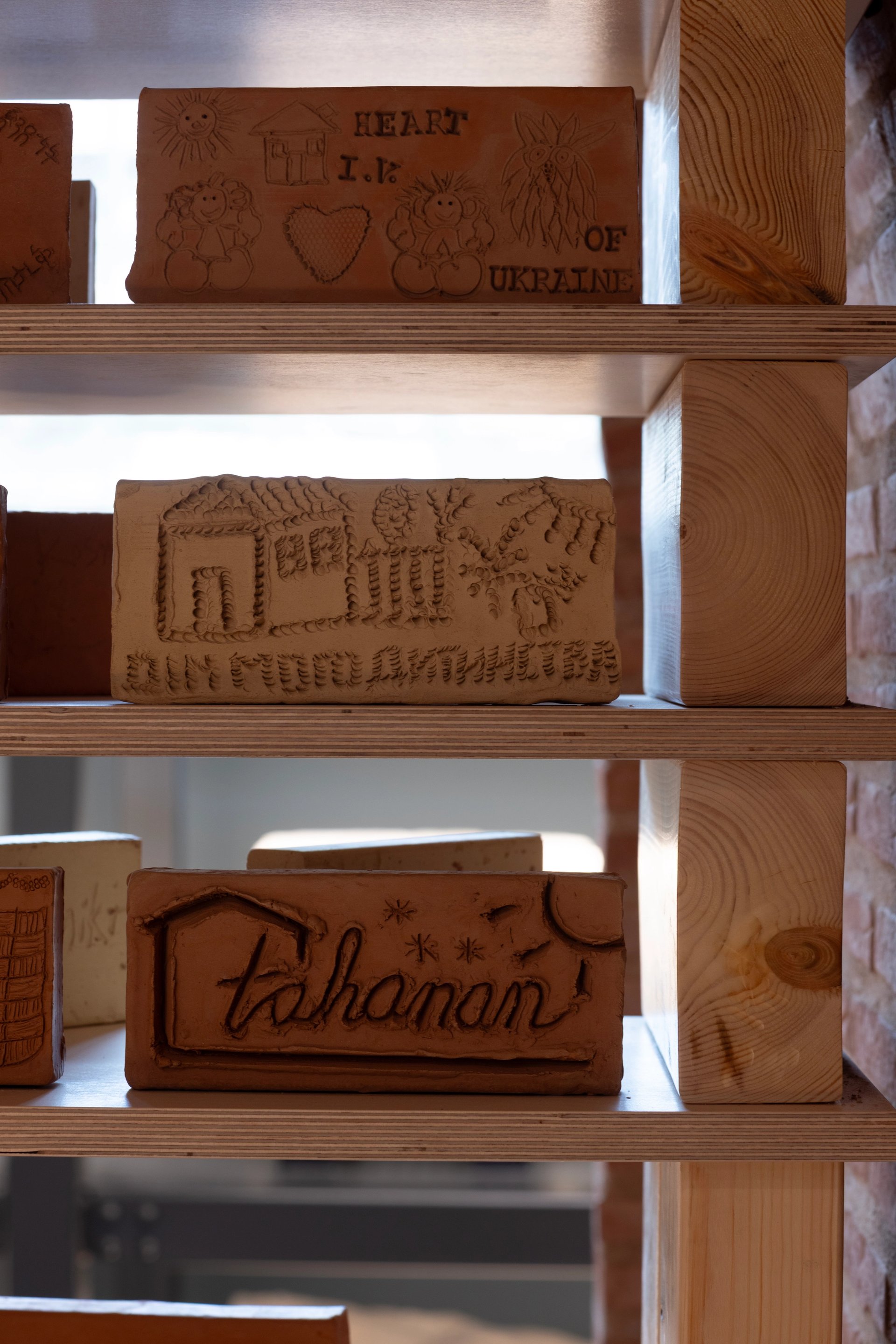
Installation view of Michael Rakowitz, What You Leave Behind Is Not What Is Engraved (2026)
Courtesy the artist and Neon. Commissioned by Neon. © Natalia Tsoukala
Rakowitz has incorporated these original bricks alongside ones newly made with inscriptions and stamps that bear witness to more recent histories of displacement. For these he worked with survivors of the 1920s population transfers as well as women in the Melissa Network, a nonprofit organisation that supports migrant women in Greece.
“I wanted these bricks to become a foundation for a new kind of city that welcomes strangers and doesn't push them back at sea,” he said.