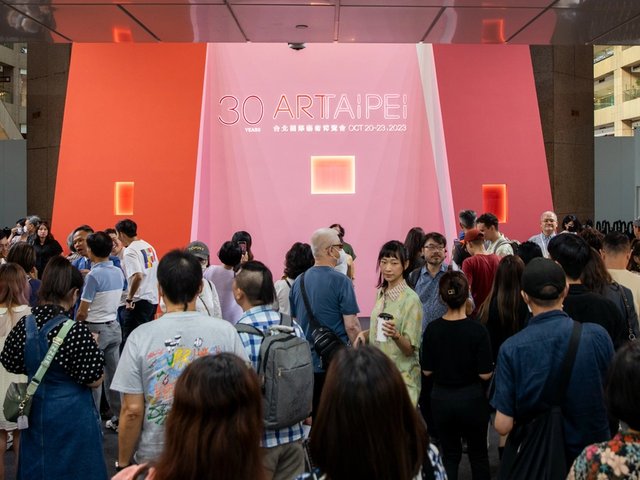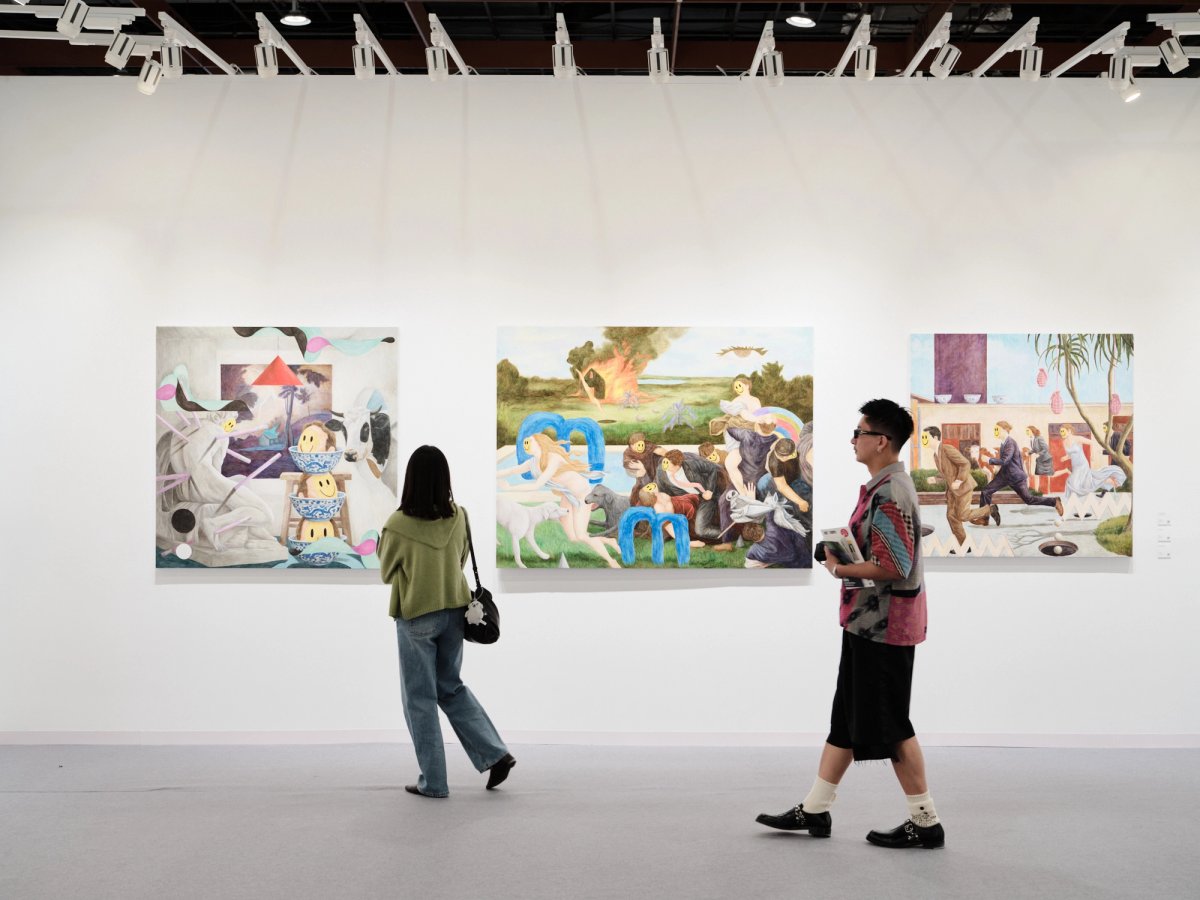
This year's edition of Taiwan's 34-year-old fair Art Taipei (29 October to 2 November) and its third concurrent Taipei Art Week (TAW) fell, serendipitously, just before the alleged spying scandal that emerged around Taiwan's celebrated native son, the naturalised American Nvidia mogul Jensen Huang. This spared fair sales the ensuing worldwide tech stock dive. Rather, concerns during the fair focused more on the pending midterm elections on 28 November.
The fair's opening ceremony was thick with politicians. Prominent figures included incumbent Taipei mayor Chiang Wan-an, now in a close re-election race, who would days later face protests at the Taipei Pride parade and festival over his police department's aggressive raid of gay bar Commander D on 3 October. Taiwan's minister of culture Li Yuan heralded his department's successful efforts in September to get a pavilion at the Gwangju Biennale named for Taiwan rather than the sponsoring institution, which sparked a diplomatic row with mainland China, and pronounced that "AI will not replace artists!"
"The presence of political figures at art fairs is a familiar feature of Taiwan's cultural landscape," says Claudia Chen, director of Art Taipei, chair of its organiser, the Taipei Art Gallery Association (Taga), and cofounder of Taipei's Liang Gallery. She adds that it builds public visibility and engagement for the cultural sector. "We hope this attention can help deepen public understanding of the art market and highlight its close connections with cultural development, urban growth, and international exchange."
The question, she continues, "is whether this engagement with political leaders can translate into consistent policy support, particularly in areas such as arts education, international promotion, and incentives for private collecting and cultural patronage." Taiwan lags behind most East Asian governments in cultural investment. "We hope cultural development can become an important public issue and receive sustained support across political parties, allowing Taiwan to gradually translate its economic strength into a deeper and more far-reaching cultural influence."
Chen says that Taiwan's technology sector and the private wealth it fuels "provide an important foundation for its art market. However, translating economic growth into greater activity in the art market takes time," as well as innovation and outreach by galleries.
© Art Taipei 2026
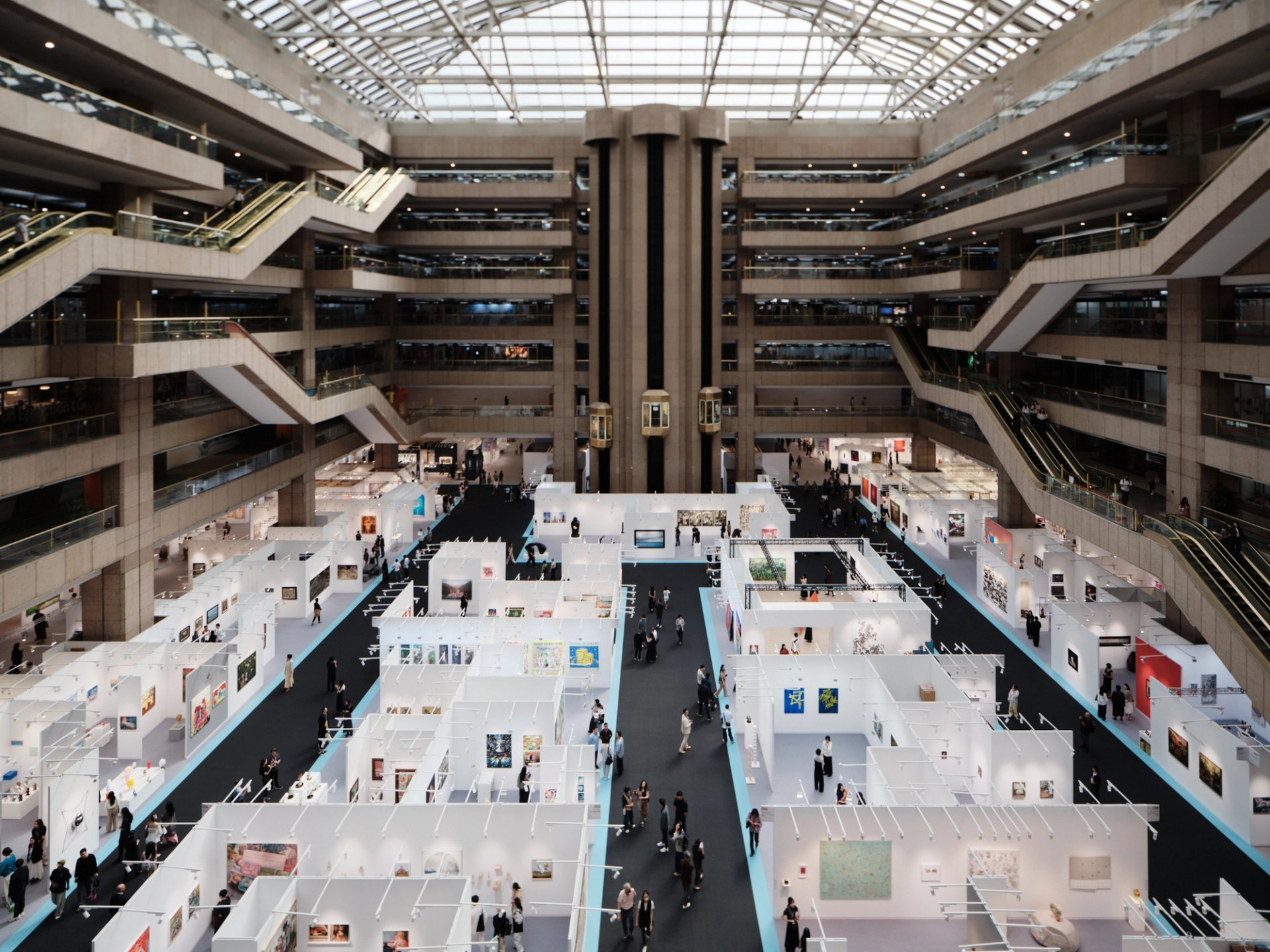
The 127 galleries that Art Taipei welcomed to the Taipei World Trade Center this year included the return of influential galleries such as Richard Koh Fine Art, from Kuala Lumpur and Singapore, for the first time post-pandemic, and Perrotin for a third consecutive year. Newcomers included Tokyo's Misako & Rosen. One of Taipei's leading platforms, Tina Keng Gallery (TKG+) and TKG+ Projects, joined for the first time in about five years. "In recent years, with Singapore, Seoul, Hong Kong, there is a lot happening, so we needed an opportunity to do a Taiwan show," says the gallery's assistant to the director, Alice Liang. With the suspension of the sleeker international fair Taipei Dangdai after 2025, Art Taipei has resumed its status as the main "hometown" option, she says.
Sales of a "museum-type" installation of works by artists including Sanyu, Kuo Tzumin and Michael Lin went "pretty well", says Liang. "People were surprised and curious," with "positive feedback" from collectors who skewed young and were both Taiwanese and foreign. She adds that the launch of the broader art week had little impact on sales, "but we can feel the difference, with the events, parties and open studios."
Fair organisers also report a generational shift among buyers, with 20.8% of those surveyed saying they were attending for the first or second time, double the figure for 2023. VIP collectors also declined from 77.5% to 54.2%, suggesting that the publicly accessible side of the art week is also providing outreach for the fair. Endeavours included five bus rounds, guided tours, digital art screenings at Taipei Lumitree and 30 public artworks displayed citywide, says Chen. For the art industry, a forum included speakers such as M+ Hong Kong curator Russell Storer and 2026 Venice Biennale Korea Pavilion curator Binna Choi.
The fair also featured an expanded presence of galleries from Korea and Japan, with 25 and 22 respectively, drawing on Taga's ongoing collaboration with those countries' gallery associations. Galleries from Japan, Taiwan's former coloniser, "have maintained a longstanding presence in the Taiwanese market, with many having established strong collector networks and brand recognition over the years," says Chen. The Korean presence "demonstrates the Korean art industry's capacity to expand into international markets through collaboration."
Tastes at the fair are also shifting towards Pop and contemporary art, says dealer Steven Chen (no relation). His Taipei gallery Yiyun Art has attended the fair for seven of the past ten years. It represents traditional Asian paintings, which remain a major sector at Art Taipei, if reduced from previous years. His dramatic maze of a booth, evoking a Chinese scholar's garden, saw steady crowds and sales, including of a painting by Yu Cheng Yao for $90,000. "With the young generation is coming more to the fair," says Chen, "we need a new language on ink art. It is the same culture with a new expression."
Claudia Chen says that Taiwan's collectors are maintaining "purchasing momentum" but have become increasingly deliberate, needing time and established relationships with galleries. Meanwhile, younger collectors are "gradually entering the market, bringing more diverse perspectives shaped by their own lifestyles and aesthetic preferences."