Driven largely by Indigenous activism, the repatriation of ancestral human remains in Chile and Argentina is pushing museums, universities and scientific institutions to re-examine longstanding practices of collection, research and display. A recent study by the Chilean researchers Jacinta Arthur and Patricia Ayala suggests that the movement has opened a crucial ethical debate in both countries, with key differences: while Chile has handled repatriation campaigns on a case-by-case basis, Argentina has emerged as a regional leader since passing a law specifically tackling the issue.
“Argentina is central to any discussion of this issue in South America, since it is the first country in the region with a law specifically aimed at the restitution of Indigenous human remains,” Ayala, an archaeologist at the Universidad de Chile, Santiago tells The Art Newspaper. “In Chile, by contrast, there is no legal framework of this kind. That is why it was both necessary and interesting to compare the two realities.”
The researchers’ article, “Indigenous Repatriation Movements in South America and Their Repercussions on Ethical Discussions on the Respectful Treatment of Human Remains: The Cases of Chile and Argentina”, was published on 11 September in the journal Latin American Antiquity. It emerged from Arthur and Ayala’s work with Indigenous communities in Chile, particularly the campaigns led by the Atacameño and Rapa Nui people, where demands for the respectful treatment of human remains include critiques of their scientific study, museum display, sample collection, repatriation and reburial.
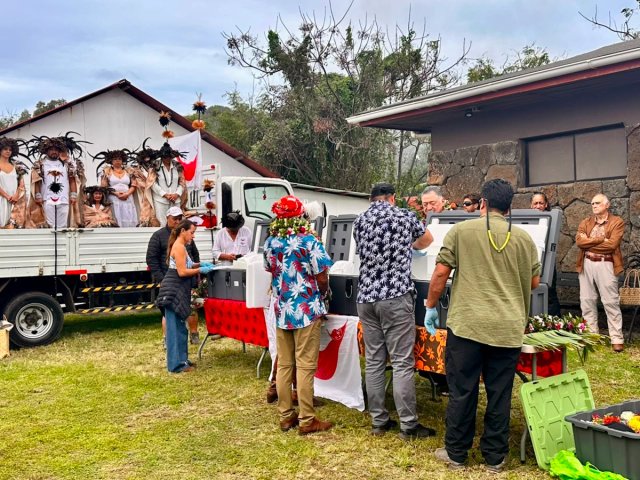
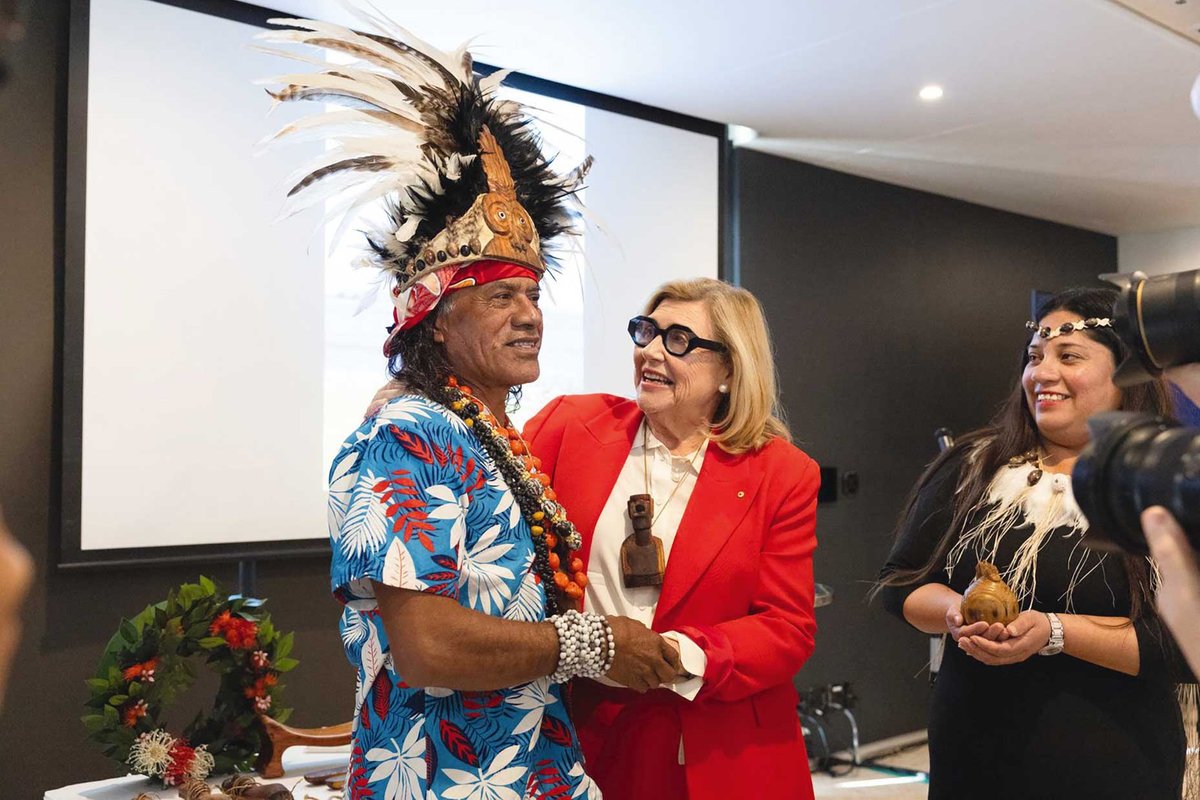
Those efforts were underscored last July, when the Australian Museum in Sydney returned the remains of ancestors of the Rapa Nui people who had been removed from sacred burial sites at Rano Raraku during a German naval expedition in 1882, and acquired by the museum the following year. The institution’s director, Kim McKay, publicly acknowledged the circumstances under which the ancestors’ remains had entered the collection, and said: “Returning them is an act of moral responsibility.”
According to Ayala, despite the legal differences between Argentina and Chile, the treatment of human remains from an Indigenous perspective “has not yet become central to scientific concerns”. Indigenous activism, she says, has forced museums and archaeologists to confront “the exclusion of Indigenous voices” and “alternative knowledge and ontologies” linked to ancestral bodies and the materials associated with them. It has also brought renewed attention to the violence of looting, collecting and scientific research that helped shape colonial and national museums, where Indigenous ancestral remains have ended up since at least the 19th century.
“In this context, both museums and academic fields have begun to reflect on their practices and discourses,” Ayala says, “although much work remains to be done to fully integrate the rights of Indigenous peoples in both countries.”
Argentina’s groundbreaking law
Argentina passed a law in 2001 mandating that Indigenous human remains held in public or private collections must be made available to the peoples or communities that claim them. An implementing decree followed in 2010, making the National Institute of Indigenous Affairs responsible for surveying and identifying remains, and coordinating their return.
A recent case at the Museo Etnográfico Juan B. Ambrosetti, part of the Universidad de Buenos Aires, shows how such restitutions unfold in practice. Last May the museum returned the remains of an Inca child from Apu Chañi, along with his grave goods, to El Angosto and Sol de Mayo, two communities in the El Moreno area of Jujuy state. The child had entered the museum’s collection in 1905, after being brought down from a hill on Nevado de Chañi. Following the restitution, a mausoleum was built at the foot of the mountain to display the grave goods, while the child’s remains will be buried at high altitude when conditions in the freezing high Andes allow.
“What I think is missing here, above all, is getting ahead of restitutions, not waiting for communities to file a claim,” Andrea Pegoraro, the director of the Museo Etnográfico, tells The Art Newspaper. Pegoraro, says the return of the child from Apu Chañi shows that Argentina has a more developed legal framework than many neighbouring countries, but also exposes the limits of a policy based solely on responding to claims.
That, she says, is one of the challenges still facing Argentine museums: moving from responding to specific requests to actively reviewing collections, identifying provenance gaps, reconstructing acquisition histories and contacting the relevant communities. In the Apu Chañi case, she says, the museum reviewed archival and archaeological records to establish where the remains had been taken and to which community they should be returned.
At the restitution ceremony, Pegoraro said the museum was not handing over “a heritage object or an object of study”, but rather “an ancestor to his territory and his people”. The community, in turn, described the returned ancestor as “a guardian” connected to water and life in the Puna region of Jujuy.
For Pegoraro, the distinction between human remains and objects is crucial. “If they are human remains, I am fully in favour of returning them, and the community must decide what to do with them,” she says. Objects raise a different set of considerations, in her view: to whom they should be returned, what happens to them and how museums can ensure access for other communities.
Provenance research is key
Reconstructing provenance is essential to any restitution process, Pegoraro adds, because Indigenous territories do not always align with today’s political boundaries. “Communities inhabit territories that did not previously have the political or geographical boundaries we have today,” she says. Museums often rely on documentation archaeologists wrote at the time the remains entered a collection, even when the places they recorded no longer correspond neatly to current jurisdictions.
Pegoraro also warns that change cannot be limited to isolated restitutions. “The integration of Indigenous communities does not come only through rhetoric, or by carrying out a restitution or holding an exhibition once in a while, but by literally working side by side,” she says. She adds that collaboration must include the ongoing rewriting of exhibition narratives, as well as financial compensation.
In Pegoraro’s view, the current movement for repatriation of Indigenous remains and artefacts began in the 1980s, especially in the US, Australia, New Zealand and Canada. In Argentina and elsewhere in South America, she adds, those demands gained force with the return of democracy after dictatorships. In Europe, however, museums carry “a much stronger colonial history”, she says, and while some countries are beginning to talk about decolonising collections, returning objects or rewriting narratives, “they still have a long way to go. It must not remain just rhetoric.”