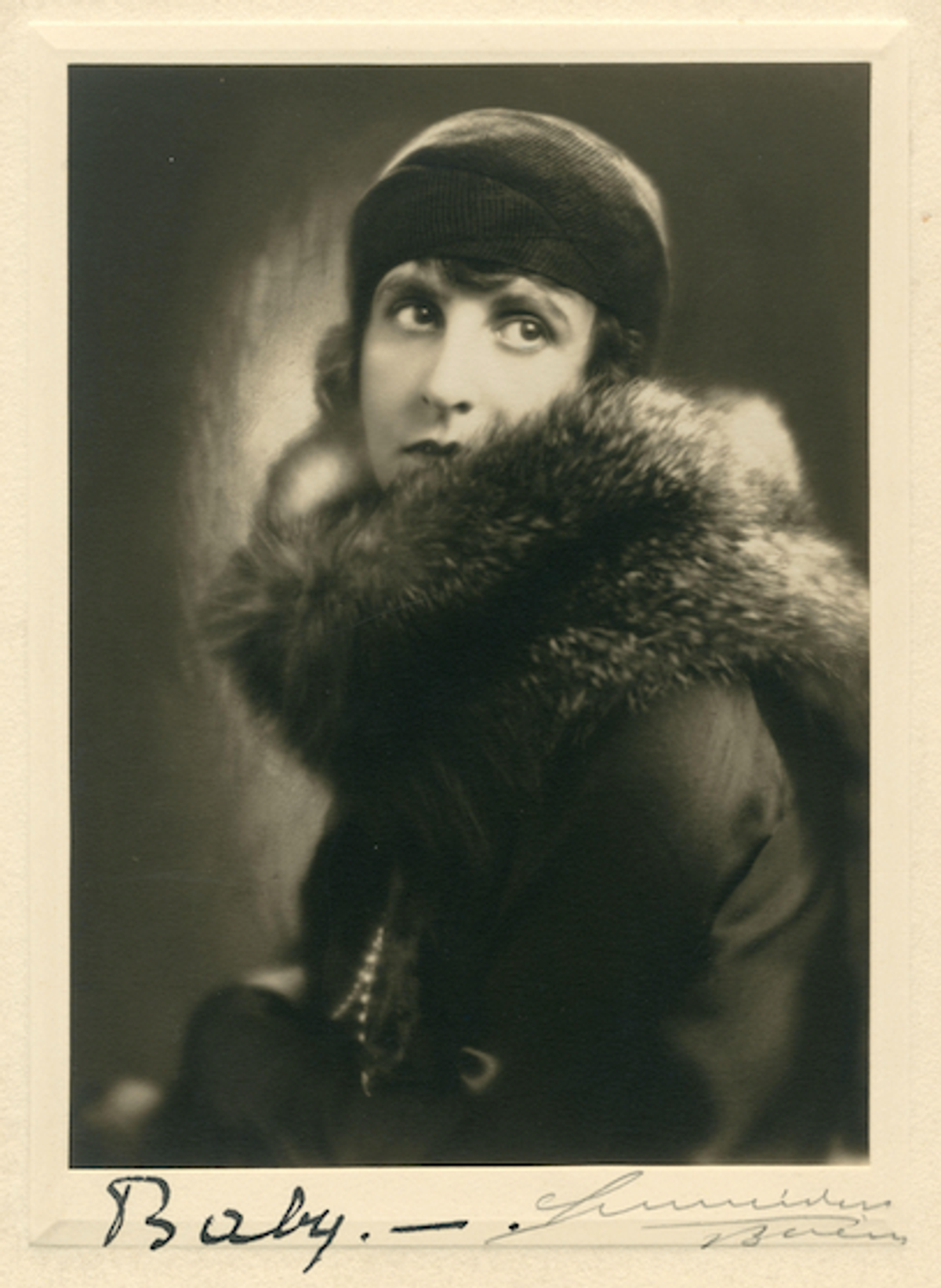

Among the early Van Gogh collectors was a young woman who had just turned 22. Born in 1892 to a very wealthy German family, Marie-Anne (nicknamed “Baby”) de Goldschmidt-Rothschild certainly had the money, but also avant-garde taste. She bought one of the artist’s finest portraits.
Her amazing story is told in a meticulously researched new book: A Collector’s Odyssey: How Marie-Anne de Goldschmidt-Rothschild saved her Paintings from Nazi Looting, written by Christel Force, Anna-Carolin Augustin and Katharina Weiler and published in Berlin by De Gruyter (it is freely downloadable).
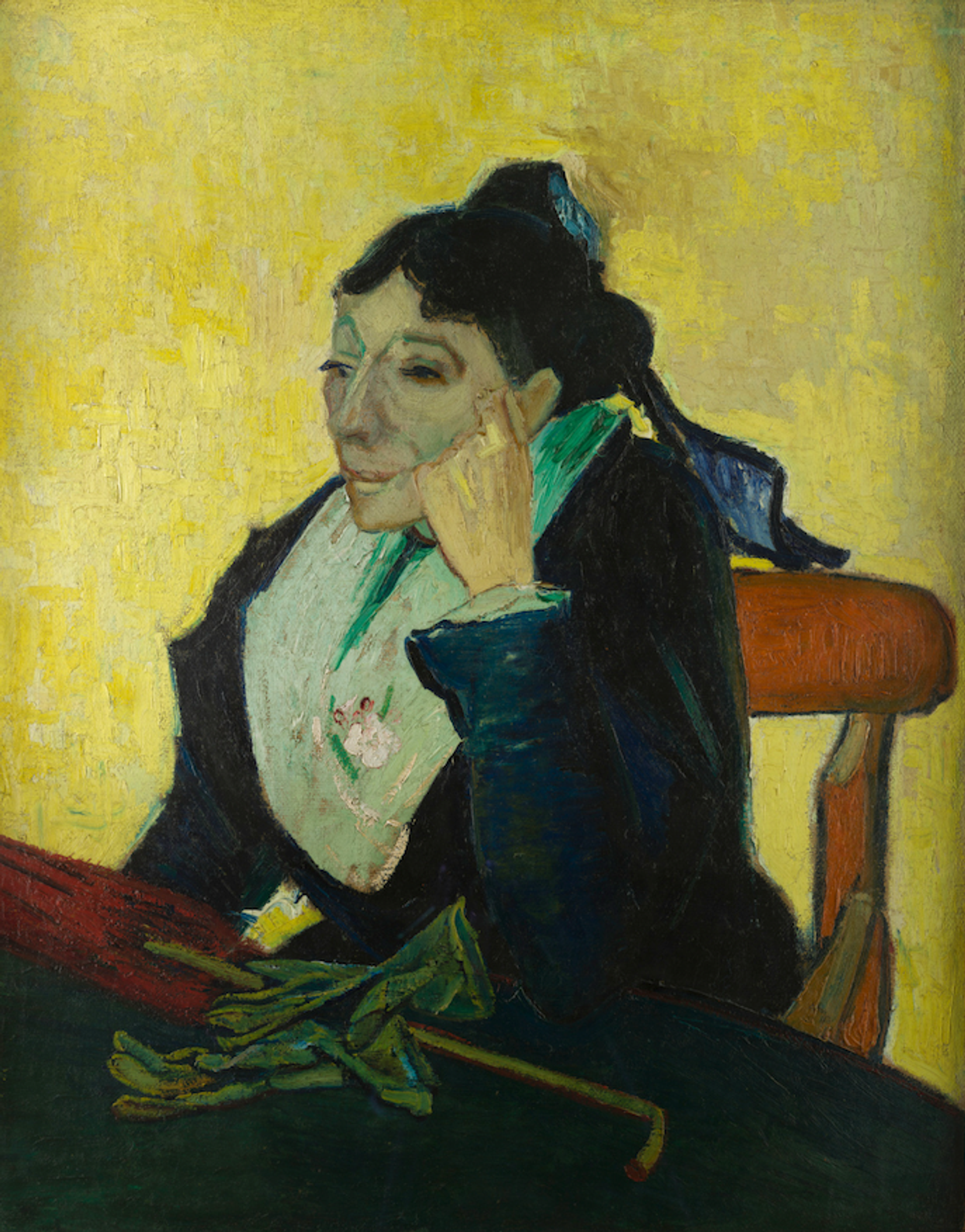
Van Gogh’s The Arlésienne (November 1888)
Musée d’Orsay, Paris (Donation sous réserve d'usufruit Mme R. de Goldschmidt-Rothschild, 1952 © photo : RMN-Grand Palais (Musée d’Orsay) / Stéphane Maréchalle)
It may come as a surprise that the very first painting bought by Marie-Anne (whose maiden name was Friedländer-Fuld) was a Van Gogh - and an important one. Encouraged by progressive mentors, in June 1914 she purchased The Arlésienne (November 1888), a portrait of the artist’s friend Marie Ginoux, co-owner of the Café de la Gare in Arles. The picture cost the equivalent of £6250, a very large sum for a Van Gogh at the time.
Marie-Anne later recounted how she hung the portrait, on antique-gold wallpaper, in her suite in the family’s palatial residence in Berlin’s Pariser Platz, almost next to the Brandenburg Gate: “My first and only painting, at the centre [of her main room], dominating everything and everyone, was L’Arlésienne by Van Gogh”. Her father, who had much more traditional tastes, abhorred the artist, telling her to hide “the jaundiced old lady” behind a curtain.
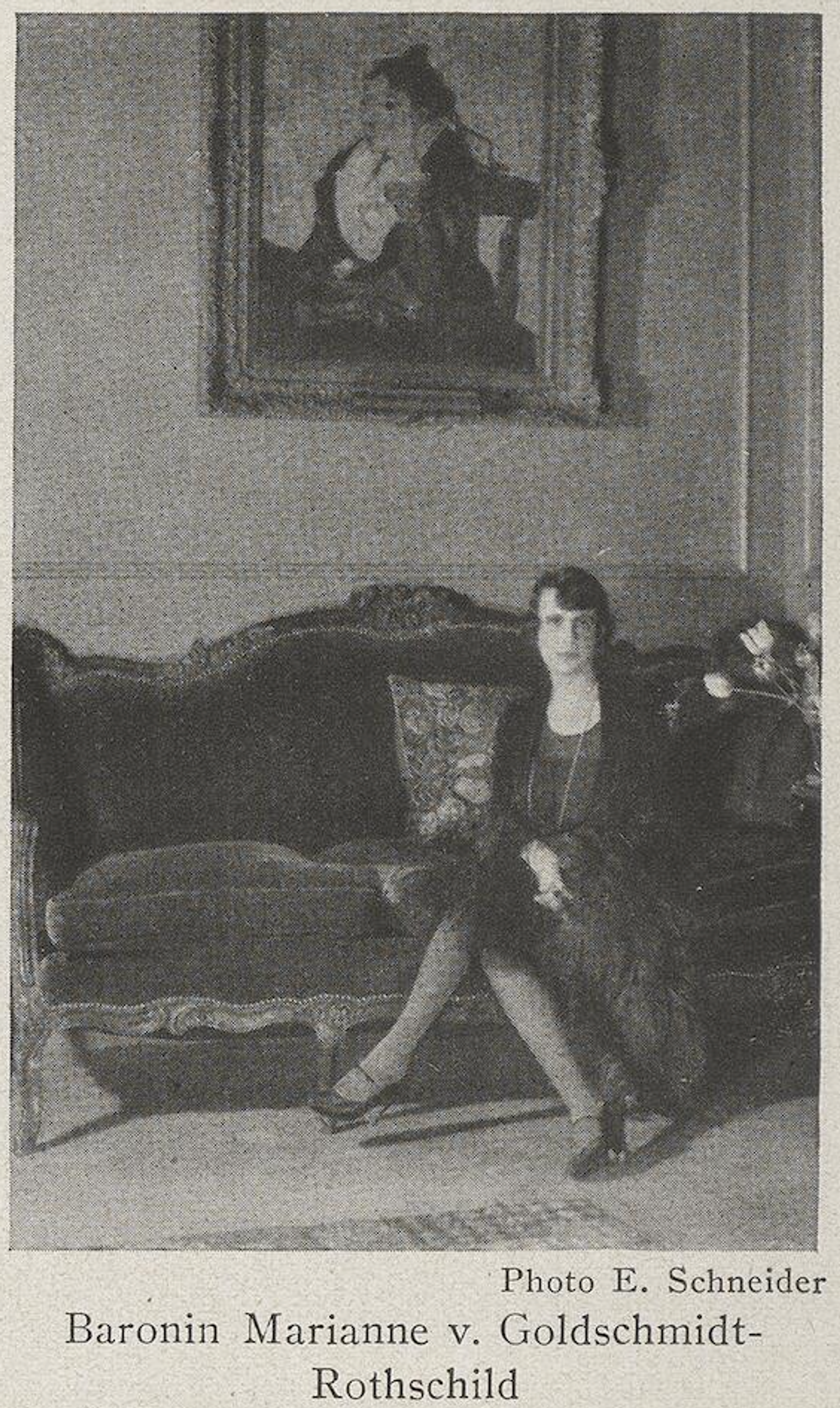
Marie-Anne de Goldschmidt-Rothschild, with her Louis XV sofa and Van Gogh’s The Arlésienne in her Berlin mansion (1929)
Photograph by Ernst Schneider, De Querschnitt journal (Berlin), September 1929
This was only the beginning. Marie-Anne went on to collect other Impressionist artists and their followers: Paul Gauguin, Claude Monet, Pierre-Auguste Renoir, Edouard Manet, Paul Cezanne and Pablo Picasso.
By the time Marie-Anne was 31, she had married three times: to the English aristocrat John Mitford, the former German foreign minister Richard von Kühlmann and the aristocratic banker Rudolf von Goldschmidt-Rothschild (he used “von”, while she preferred “de”). After a few years, she and Rudolf lived independently and eventually divorced in 1938.
With the rise of the Nazis, Marie-Anne, who was of Jewish heritage, smuggled the Van Gogh portrait twice. The first time was in 1934, a year after Hitler came to power, when she secretly sent the painting from Berlin to her residence in Paris. This required subterfuge: she commissioned an artist friend, Eugen Spiro, to paint identical copies of her most important paintings. The copy of The Arlésienne was then surreptitiously placed in the frame in her Berlin mansion, with no one apparently noticing the switch.
The Van Gogh and the other canvasses were taken off their stretchers and rolled up. Marie-Anne instructed Marie-Anne instructed her (female) servants to each carry a single roll to Paris, without telling them what was inside. Had the pictures been declared at the border, Nazi officials would have prevented them from being exported or would have charged her an exorbitant tax. The Arlésienne safely arrived at Marie-Anne's mansion in Paris on the Rue de la Faisanderie.
Six years later, France was threatened by Germany. In mid-May 1940, a month before the Nazi occupation of Paris, Marie-Anne decided to flee to the US, protecting her life and collection. By that time, the only route was via Portugal, which was neutral. In a move which the book’s co-author Force describes as “reckless and admirable in equal measure”, Marie-Anne hatched a plan for her most important paintings.
She again took the canvases off their stretchers, rolled them up, disguised the package and strapped it to the roof of her Citroën. Amidst the chaos of millions fleeing Paris, she drove across France to Spain, facing seemingly endless logistical challenges, but eventually reaching Portugal. Although some reports suggest the Van Gogh was transported on the roof with the rest of the paintings, Marie-Anne later told a different story.
According to her, The Arlésienne had been sent earlier to Amsterdam, on loan for an exhibition. Just one week before the German invasion in May 1940, her contact in the Netherlands somehow managed to get the Van Gogh onto an aircraft bound for Lisbon.
In her hotel room in Portugal, Marie-Anne rolled up all her paintings, although the thick impasto paint of The Arlésienne created problems. She then covered the whole roll with a protective tarpaulin. Eventually she secured a place on a liner crossing the Atlantic, bound for Mexico.
After her ship finally arrived at Veracruz, Marie-Anne travelled on to Mexico City, later taking a plane to Texas and another flight on to New York, accompanied by her paintings. The Arlésienne had been travelling during wartime for nearly five months, arriving in New York in November 1940.
Marie-Anne, thanks to her immense wealth and elite contacts, had managed to escape the terrible fate of the vast majority of continental European Jewry.
Van Gogh’s precious letters
In 1928, Marie-Anne made another prescient purchase: a collection of 22 letters written by Van Gogh in 1887-89 to his artist friend Emile Bernard (plus one to Gauguin). The bulk of Vincent’s surviving letters remained with Theo and his heirs, so the Bernard correspondence represented a very important acquisition. Many of the letters also included small sketches of the paintings which Van Gogh was working on.
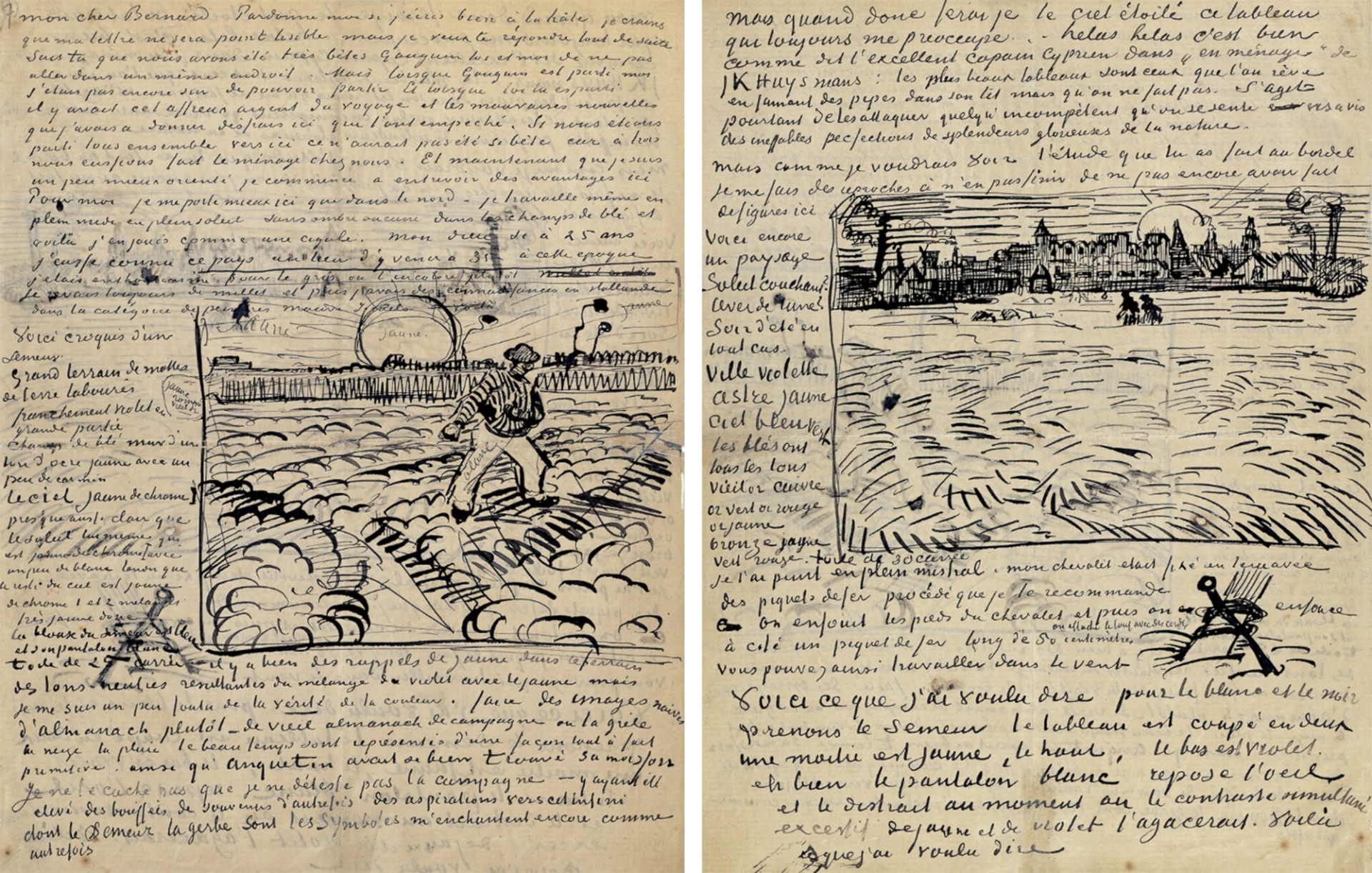
Van Gogh’s letter to Emile Bernard, around 19 June 1888 (extracts)
Van Gogh Museum, Amsterdam (Vincent van Gogh Foundation)
When the art lover and writer Harry Kessler visited Marie-Anne in 1929, he noted in his diary that they had dined under The Arlésienne. Kessler then recorded: “After dinner, thirty letters by Van Gogh in an excessively ornate, ugly binding, were passed around with cigarettes and coffee.” (Although Kessler said it was 30 letters, it was actually 23.) Contrasting the opulence with the artist’s simple way of life, Kessler added: “Poor Van Gogh!”
In 1940, when Marie-Anne fled from Paris in her Citroën, she carried this ornately-bound volume of Van Gogh’s correspondence in a suitcase. She kept the letters during her American wartime exile.
Postscript
On 26 August 1944, just hours after Paris was liberated, Marie-Anne wrote from California to the Free France delegation in Washington, DC: “My hand is shaking with emotion as I am writing to you today, day of the Liberation of Paris. I turn to you to ask that whoever is concerned be informed that I bequeath my Van Gogh painting L’Arlésienne to the city of Paris. It is at the Louvre, I expect, that it will find its place.”
Marie-Anne left New York and returned to Europe in 1947, once again taking her paintings with her. Her family’s palatial residence in Berlin had been almost totally destroyed by Allied bombs, and she wanted to settle in her mansion in Paris. There she would spend the rest of her life, until her death in 1973.
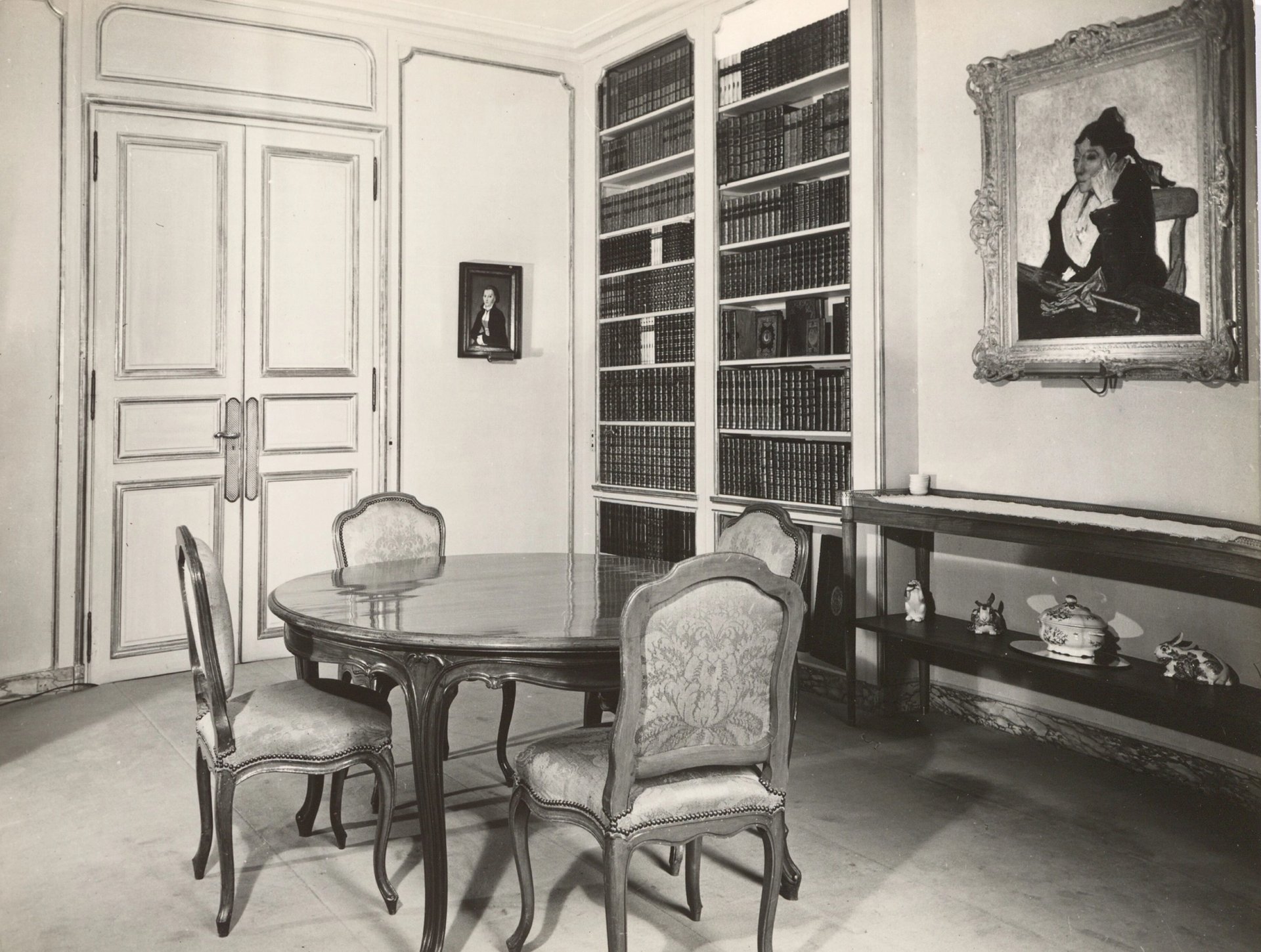
The dining room in Marie-Anne de Goldschmidt-Rothschild’s Paris mansion (1950s)
Photograph by Antoinette Georges Perrier, De Goldschmidt-Rothschild family archive
Marie-Anne had lived with The Arlésienne for nearly 60 years. After her death, the painting went to the Louvre, which displayed it in the Jeu de Paume. It was transferred to the Musée d’Orsay when it opened in 1986.
We can report that next year The Arlésienne will be presented in an exhibition at the Musée de l’Orangerie in Paris: Dépossédes: Oeuvres spoliées, vies brisées 1933-45 (Dispossessed: Plundered Art, Shattered Lives 1933–45)(October 2027-January 2028). Marie-Anne’s life certainly had its challenges, but it was hardly shattered like most of the other collectors who will be featured in the show.
As for the Van Gogh correspondence, Marie-Anne donated one letter to the Fondation Custodia in Paris, another somehow left her collection and the one addressed to Gauguin was given to a friend. This left 20 letters which she bequeathed to her grandson, Frédéric de Goldschmidt-Rothschild. He sold the group to the New York dealer and collector Eugene Thaw in 2001.
Thaw later recalled how he bought the letters: “A young man [the grandson] showed up in my office with them all under his arm—unframed, unmatted—in a simple folder. And of course I nearly died of pleasant shock at seeing them.” Marie-Anne’s ornate binding had already gone.
The correspondence was generously donated by Thaw to New York’s Morgan Library & Museum. These important Van Gogh letters, with their 14 sketches, are now reunited online with the rest of the artist’s correspondence, online.
For conservation reasons, Van Gogh's letters to Bernard are very rarely exhibited, but I once had the privilege of examining the originals in the Morgan’s study room. Seeing the letters, penned by the artist on ordinary writing paper with his little sketches, I thought back to when they had once been housed in Marie-Anne’s ornate album—and their perilous journey during the war.