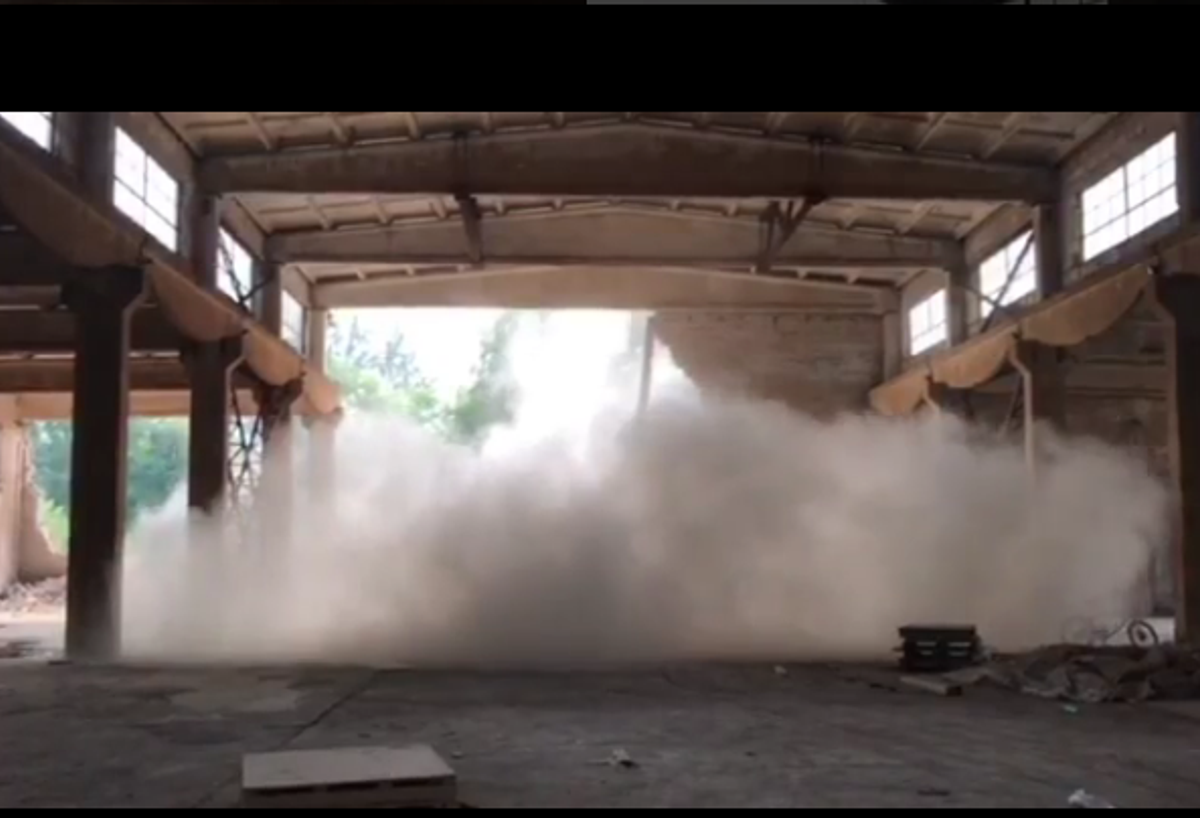
Ai Weiwei’s largest studio in Beijing, located in an old German-designed car parts factory in the Zuoyou Arts District on the city’s periphery, was demolished at 2pm on Friday as part of a redevelopment of the area. Ga Rang, Ai’s assistant who managed the facility, told AFP that the studio’s lease expired last year, but it "simply wasn't possible" to move out quickly given the amount of art and materials Ai kept there. Most other art spaces in the area had already been demolished. Ga said they were notified recently that they must be move within a few days, but not informed when the demolition would start. "They came and started knocking down the windows today without telling us beforehand. There's still so much stuff inside," he said. AFP described a “ghostly retrospective” as works were evacuated ahead of the jackhammers and laid outside.
The Zuoyou studio is the latest artistic casualty in Beijing’s ruthless gentrification and redevelopment campaign. Last year the entire Heiqiao, or Black Bridge, village popular for its low rent artist studios was demolished, and two galleries in Caochangdi, located on land owned by the railway, were evicted last month ahead of impending demolition. Ai’s famous Fake Studio in Caochangdi apparently remains unaffected by both the demolition of Zuoyou, which means Left-Right, or by the nearby demolitions. Fake Studio, established in 1999, launched Caochangdi’s development as an art centre, centered around gallery buildings that Ai designed.
“Farewell,” Ai bid on Instragram to Zuoyou. “Today, they started to demolish my studio 'Zuo You' in Beijing with no precaution. Which I have as my main studio since 2006. It is a[n] East German style socialist factory building." He posted a series of videos showing the edifice’s destruction.
Ai’s studio in Shanghai was demolished in early 2011, shortly ahead his 81 day detention that was followed by four years of de-facto house arrest. While that was widely believed to be in retaliation for Ai’s criticism of the government, the Zuoyou demolition appears to be an indifferent byproduct of Beijing’s latest facelift. Ga said: “The authorities say they want to develop things here, build malls and commercial buildings. But it's a shame—you won't ever find a place in Beijing like this again.”