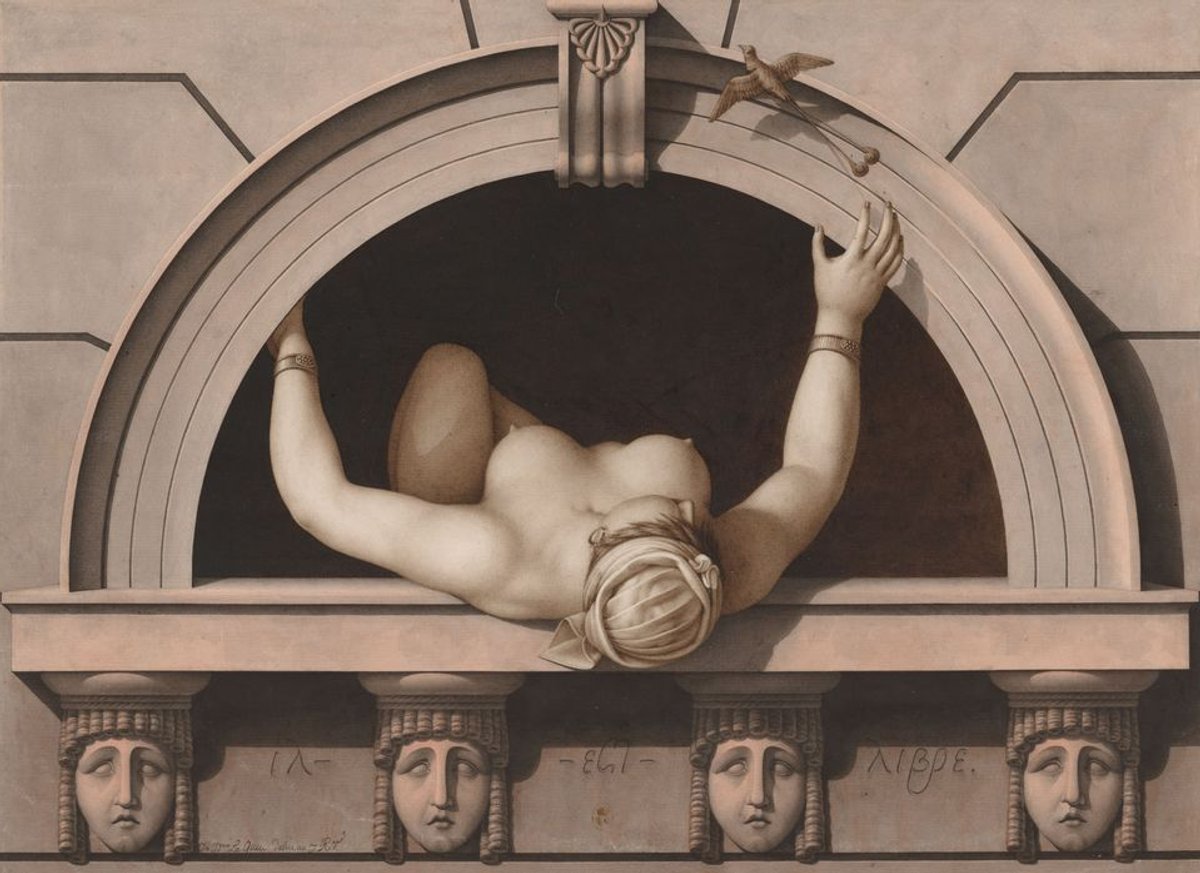
The story of Jean-Jacques Lequeu (1757-1826) is one of abject failure. Born in Rouen, he was sent to study architecture in Rome in his early 20s and, on his return to Paris, failed to make his mark either as a practising architect or an architectural theorist. None of the few buildings he designed survives. What little fame he had was as an imitator of the visionary architects Etienne-Louis Boullée and Claude-Nicolas Ledoux who specialised in the popular fantastic prints of imaginary buildings that followed the lead of Giovanni Battista Piranesi’s Escher-like prisons.
Lequeu failed to ride on Boullée’s and Ledoux’s coat-tails as the public found his work too bizarre and distasteful, even for the libertines of this period. His architectural fantasies—such as a monument to Priapus, explicit phallic symbols, vast megalomaniac towers, a cow-shaped dairy, eclectic Gothic and antique constructions—violated the conventions of symmetry, stylistic purism, proportion and taste.
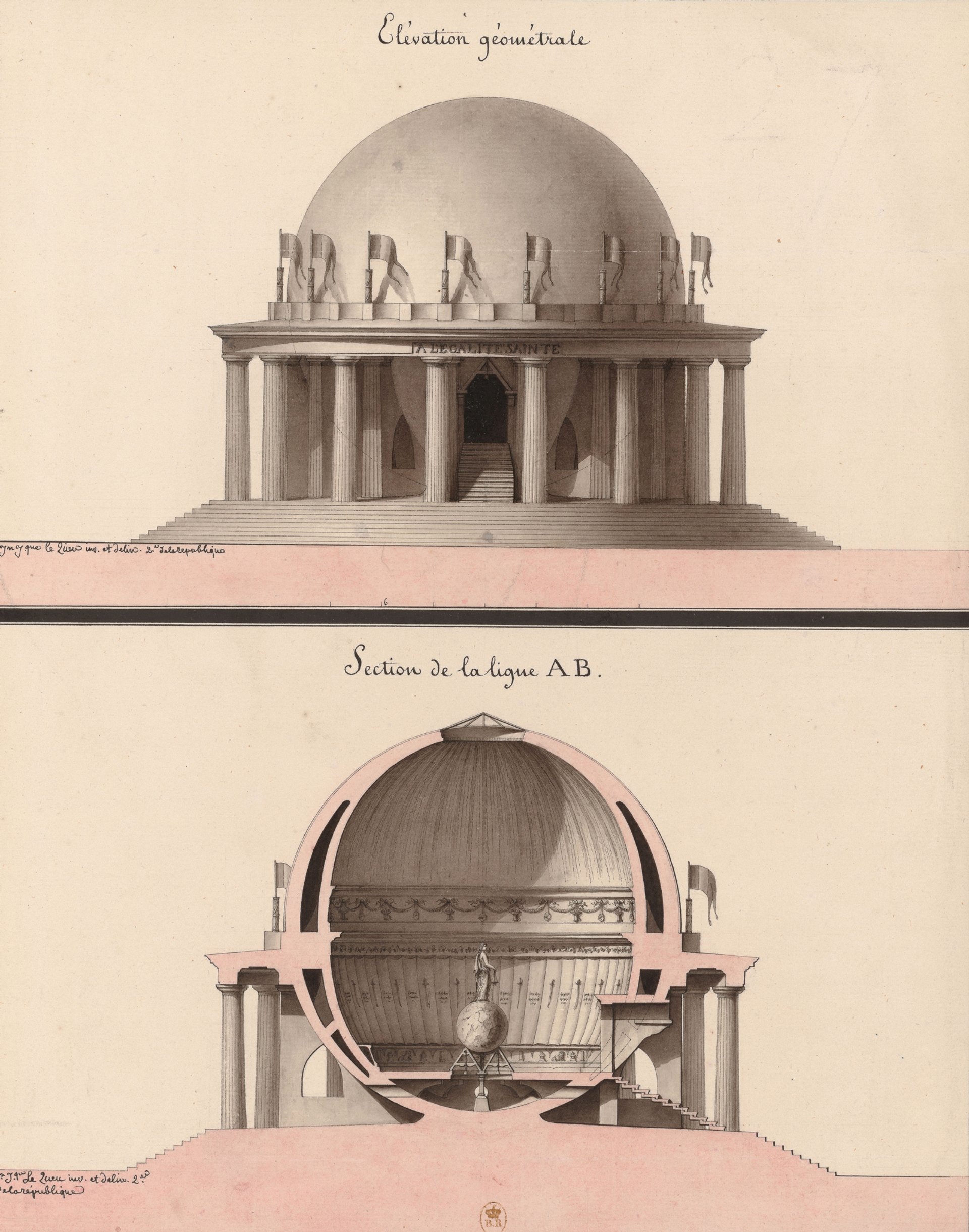
Jean-Jacques Lequeu's design for a temple of equality © BnF
He became a byword for erotic, pornographic, obscene and eccentric visions on paper. Decadence was purged by the French Revolution and he was eventually given a position as a surveyor and cartographer before he was pensioned off in 1815. Six months before his death in poverty, he donated his entire oeuvre to the Bibliothèque National (BN).
It was only with the advent of Modernism, especially Surrealism and Dada, that Lequeu’s fantasies found favour, at last becoming comprehensible to eyes trained to see differently. The loser became a winner, whose posthumous rewards include this show of several hundred drawings and prints, organised in collaboration with the BN.
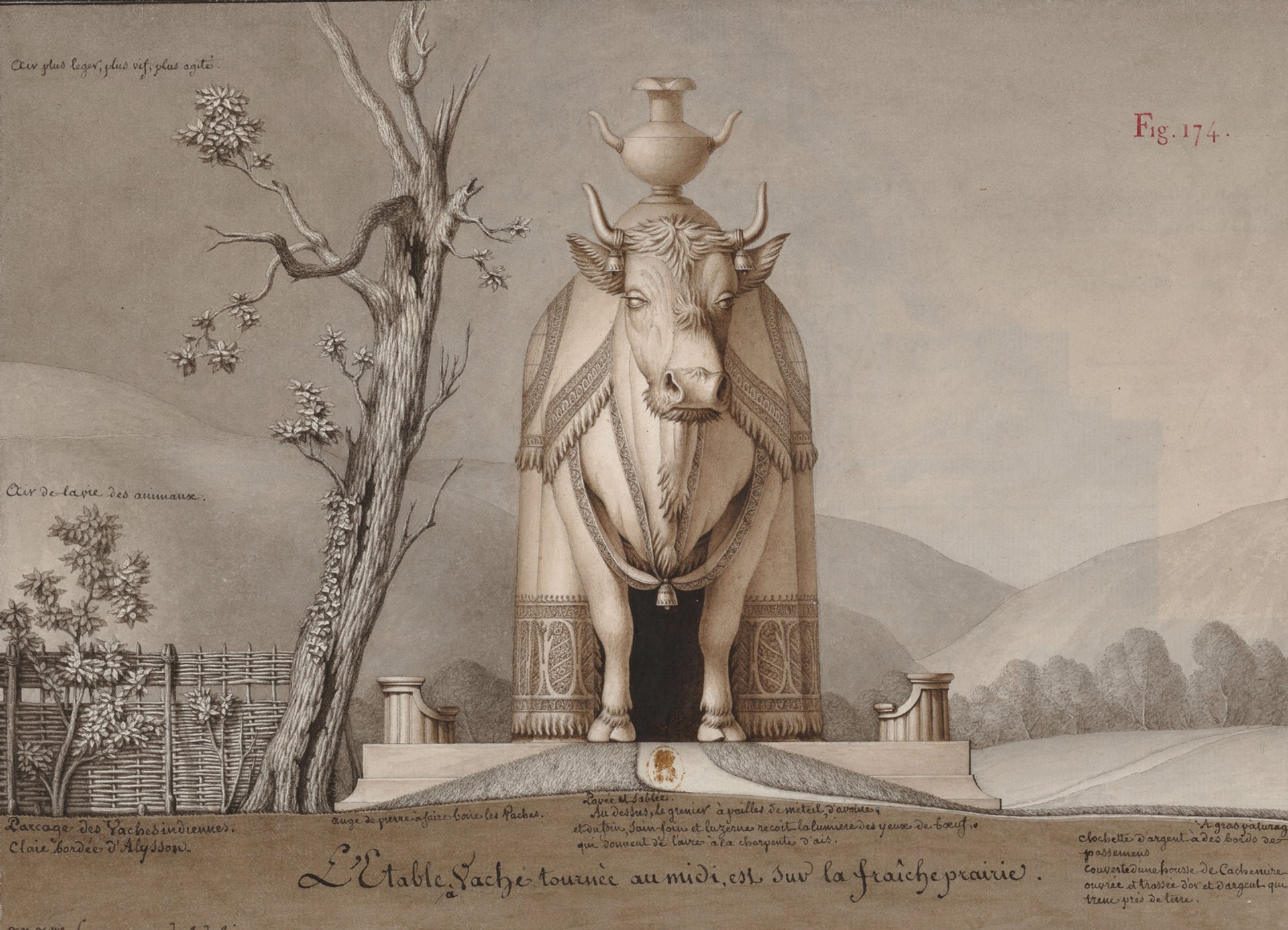
Jean-Jacques Lequeu’s drawing of a cowshed or dairy © BnF
The exhibition is accompanied by a catalogue, Jean-Jacques Lequeu: Bâtisseur des fantasmes (Laurent Baridon ed., BnF Editions in collaboration with Norma Editions, 176pp, €39, pb).
• Jean-Jacques Lequeu (1757-1826), Petit Palais, Paris, 11 December-17 March 2019