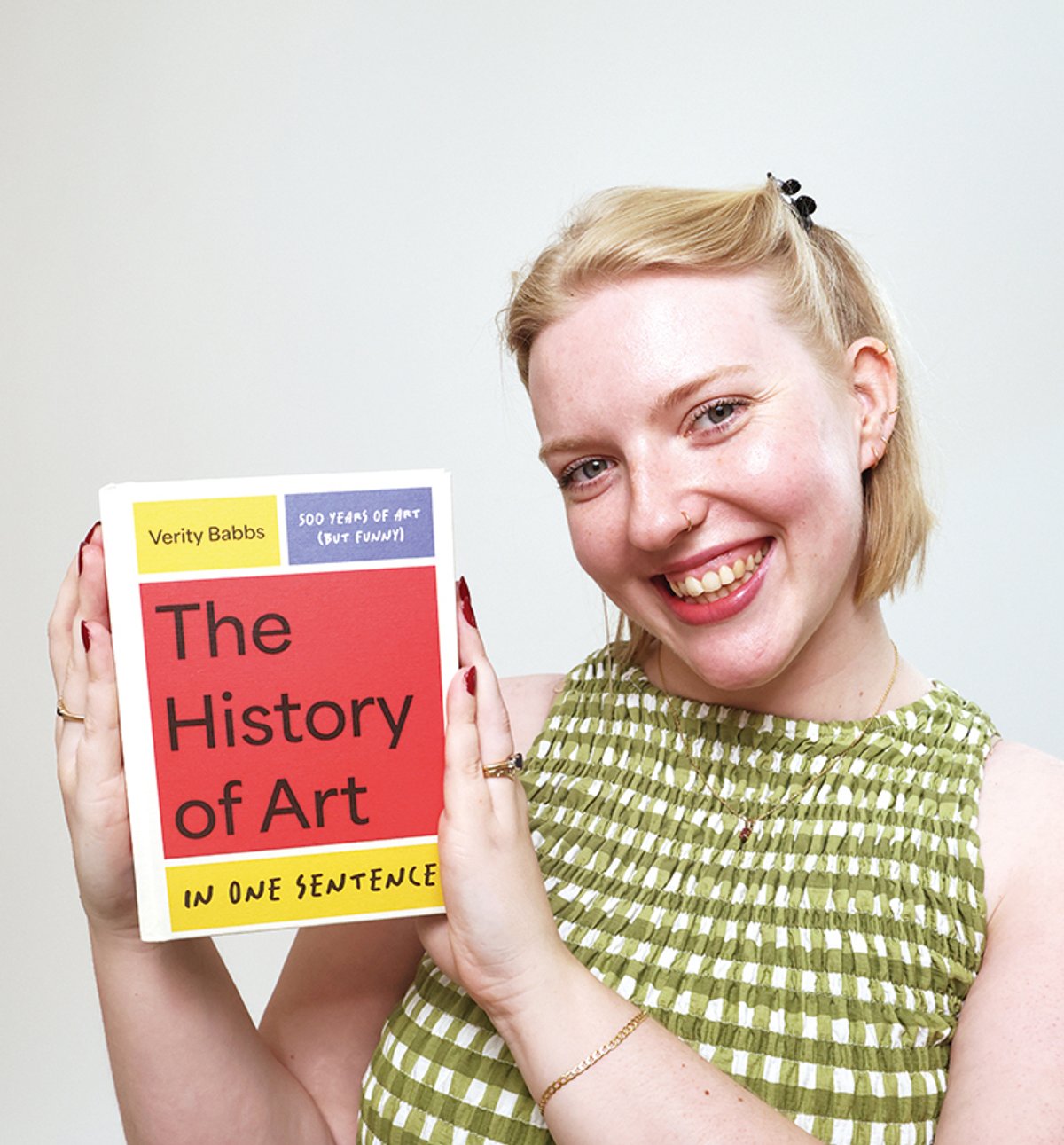
We are finally entering the age of the art world influencer. While the industry has been slow to accept their importance (or even their existence), people who have built a name for themselves specifically in the digital space are appearing more in the mainstream art world.
And when it comes to art social media and book publishing, comedy seems to be a winning ingredient. Last month, the art historian and comedian Verity Babbs (7,800 followers on Instagram) published The History of Art in One Sentence: 500 Years of Art (But Funny). Her book takes readers “through 50 key art movements across history, answering ten questions for each in just one sentence”, according to its publishers. Babbs has created social media content for museums including the Tate, the British Museum and London’s National Gallery.
Wacky faces
Meanwhile, Matthijs Van Mierlo, who runs The Gaze (574,000 followers on Instagram), has taken a more slapstick approach with his new book Stupid Faces in Stunning Paintings, out last month in Dutch (Borgerhoff & Lamberigts) and published next year in English (Page Street Publishing Co). It will take “you on a journey to the strangest corners of the art world, uncovering the stories behind 50 wacky faces,” reads the blurb.
Another social media star whose books attempt to capture centuries of art history is Camille Jouneaux, who runs La Minute Culture (171,000 followers on Instagram). She published Leonardo, Frida and the Others: The History of Art,
800 Years—100 Artists (Prestel and others) last year, while her second book Ulysses, Athena and The Others: Greco-Roman Mythology Told Through Painting comes out in French this month (Editions du Chêne).
Finally, the popular YouTuber James Payne, who runs Great Art Explained (1.77 million subscribers) released a book of the same name last month (published by Thames & Hudson), looking at 30 well-known masterpieces.
Brand power
While some of these writers pitched the idea of a book, some were actively approached because of their online accounts. “My social media presence was definitely crucial,” Van Mierlo says. “The publisher reached out because I had built a large audience of art lovers, which meant I was already connected to the book’s target audience.”
As more social media accounts are being turned into physical publications, it is important to differentiate between those that might make a good book, subject wise, and content creators who might make a good author, says Rebecca Morrill, the executive commissioning editor at HENI Publishing. “Making a book is extremely hard work (and in art publishing, unlikely to be life-changing financially) and so having a true passion for the subject, not just having a themed social media account to gain a following or profile, is obviously going to make for a better book,” she says.
Pods too?
Meanwhile, another site of book potential is podcasts, as you get “much more of a sense of an individual's skill as a thoughtful wordsmith than from Instagram or Tiktok,” Morrill says. This is how HENI came to publish the recent book What Is Art For? by Ben Luke, based on the interviews he had conducted for The Art Newspaper’s podcast A brush with… Another popular art podcast, All About Art, is also being transformed into a book next year. For Working in Art: Demystifying the professional art world (Octopus Publishing Group), Alexandra Steinacker-Clark uses the interviews from her podcast to provide “practical professional advice and support not only for students or recent graduates, but for anyone at any stage of life wishing to work in the arts”, according to the blurb.
“Contrary to what some may think, producing content for online consumption is time-consuming, hard work,” says Steinacker-Clark, who has 7,900 followers on Instagram. “The people behind good art world social media accounts—and podcasts—are passionate and knowledgeable about the topics they explore.”
Van Mierlo agrees, adding that the most successful digital content has one thing in common: great story telling. “The best art accounts manage to teach without being boring. They inspire, entertain and educate all at once,” he says. “And if you know how to tell a compelling story in a short video or post, chances are you can translate that into writing a great book, too.”