Miami’s historic theatres provide some of the most visible architectural remnants of its past, but as the city’s development priorities and identity have evolved, many of these institutions have fallen into disrepair. Ongoing restoration projects at the Coconut Grove Playhouse, Ace Theatre and Olympia Theater provide three examples of how the city and local communities have sought to preserve them—or not.
The Coconut Grove Playhouse, designed by the architect Richard Kiehnel, opened on New Year’s Day 1927 with the luxuries of air-conditioning and the largest Wurlitzer organ in the US. Like many opulent venues at the time, the playhouse followed local Jim Crow laws and only welcomed white customers. A few blocks to the west, the much more modest Ace Theatre opened for Black audiences in the early 1930s in an area known as Little Bahamas, where many of Miami’s Caribbean founders lived. In the 1950s, the Ace was the only movie theatre in the neighbourhood serving the Black community.
“Because there are so many new people moving to Miami, these venues give them an opportunity to learn about the place that they now call home,” Christine Rupp, the director of Dade Heritage Trust, tells The Art Newspaper. “It’s not just a cultural experience. It’s an educational experience. And it’s a fun experience. In many cases, the theatres become the last vestiges of the neighbourhoods that they were once serving.”
Premieres and film stars
The Coconut Grove Playhouse eventually moved away from film, becoming one of the nation’s leading venues for live theatre from its heyday in the 1950s until its closure in 2006. It hosted the US premiere of Waiting for Godot in 1956 and the world premiere of the musical Fame in 1988. The playwright Edward Albee had a house around the corner and staged new work there, and world-renowned actors including Liza Minnelli and Denzel Washington performed at the playhouse. The theatre has remained empty ever since it closed almost 20 years ago. It was added to the National Register of Historic Places (NRHP) in 2018.
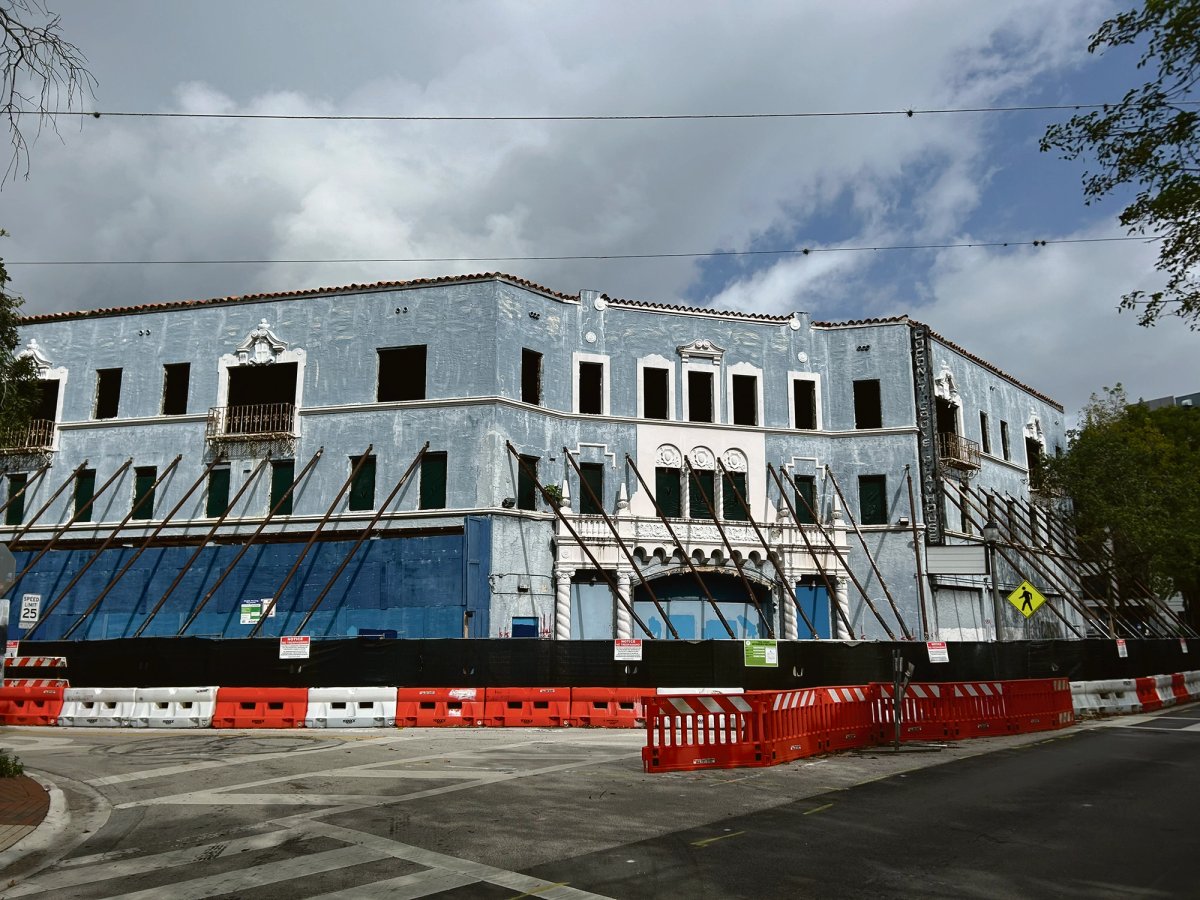
The Coconut Grove Playhouse has been the subject of several restoration plans over the years. The latest of these involves razing 80% of the building and leaving just the façade; demolition began in April 2025, despite public outcry. The plan has also been controversial for devoting most of the playhouse’s space to non-theatrical activities. When it first opened, the theatre had an auditorium that seated 1,150 people. The current plan, envisioned by the Miami-based architecture firm Arquitectonica, has scaled this down significantly, to just 300 seats. In addition, more than 60% of what was formerly performance space will become leased commercial space.
The rapidly changing neighbourhood of Coconut Grove has become increasingly expensive in recent years, partially due to extensive development projects designed by Arquitectonica, which is also behind the nearby Mr. C Residences. The architecture firm, which designed Brickell City Centre and a slew of international projects (including the Westin New York hotel in Times Square), has a tech-forward, Modernist design aesthetic that has transformed much of Miami in its image. However, Arquitectonica has less experience with historical renovations. This made it an unusual choice to design the multimillion-dollar restoration of the Coconut Grove Playhouse. While its plan for the playhouse maintains the original façade, it adds a modern interior of rough rock and glass that mimics Miami’s changing urban aesthetic over the past two decades.
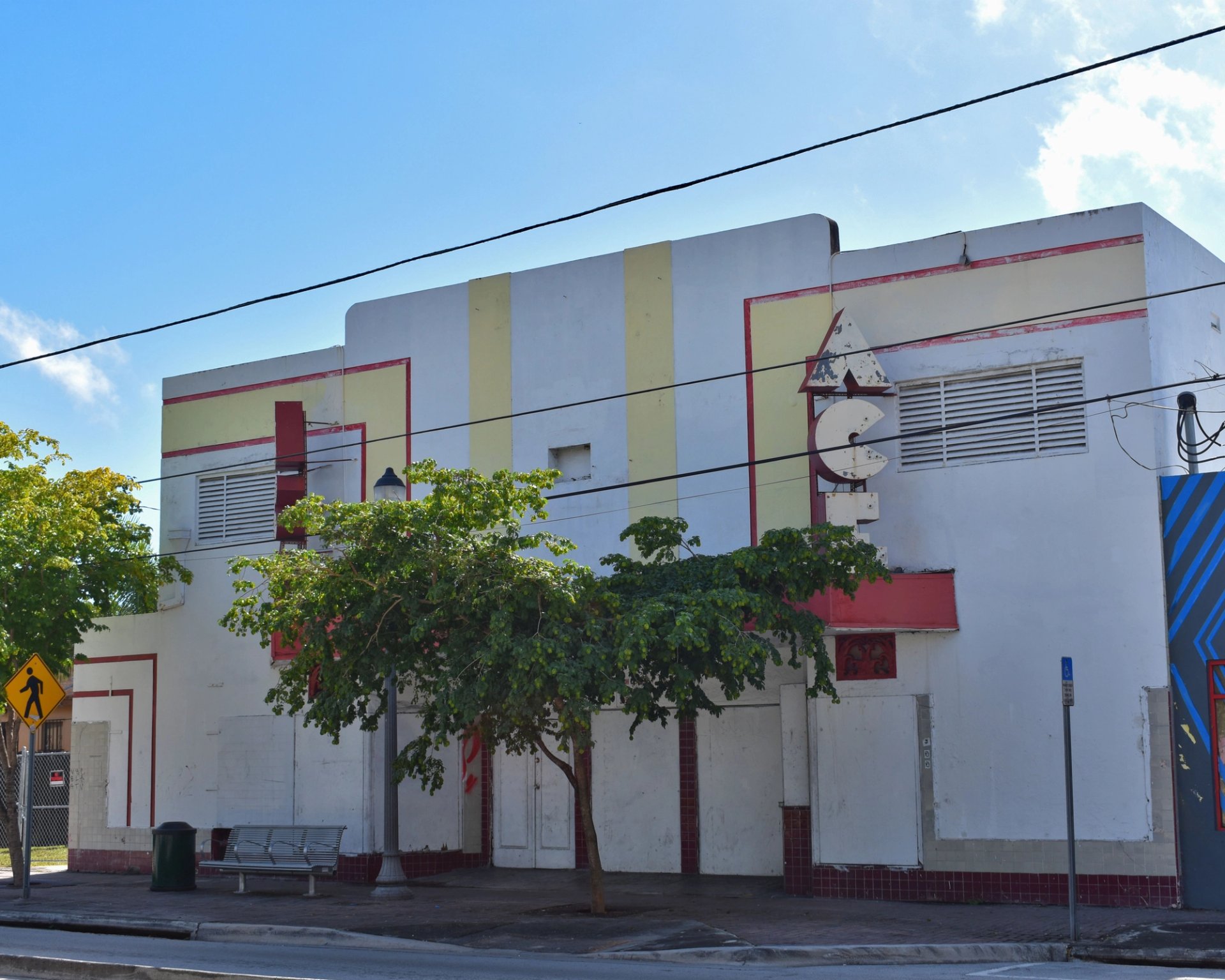
The Ace Theatre is due to undergo a modest rejuvenation
Tamanoeconomico via Wikimedia Commons
Demolition, not restoration
Opponents of Arquitectonica’s plan have argued that it constitutes a demolition, not the restoration for which the $20m in taxpayer money allocated to the project were intended. Detractors advocated for the full repair of the theatre as an historic venue, but their appeals were dismissed in court. Shortly after demolition of the building began, local advocates were outraged when part of the façade collapsed due to the mistaken removal of a load-bearing wall. It remains to be seen whether the playhouse will be operational in time for its 100th anniversary and planned reopening in 2027.
Meanwhile, at the Ace Theatre in West Grove—added to the NRHP in 2016—there are no international design firms restoring the site to its former glory. In 2021 the theatre received a $400,000 grant from the National Park Service’s History of Equal Rights programme for its restoration. The Ace’s mother-and-daughter owners, Dorothy and Denise Wallace, are longtime residents of West Grove. Dorothy, now 96 years old—whose late husband bought the building in 1979—was one of two Black women who integrated the University of Miami’s School of Education in 1963. She hopes to see the Ace restored as a community space, similar to the Historic Lyric Theatre in Miami’s Overtown neighbourhood, which is now home to the Black Archives.
About a mile south-east of the Historic Lyric Theatre is downtown’s lavish Olympia Theater—one of hundreds of “atmospheric theatres” designed by the architect John Eberson to make audiences feel like they are in an exotic outdoor space. The Olympia, which replicates a Spanish garden, was added to the NRHP in 1984. Like the Coconut Grove Playhouse, it was among the first air-conditioned buildings in the South when it opened as a “white-only” movie palace in 1926. In its heyday, it hosted a range of performers, from Elvis Presley to Etta James and B.B. King.
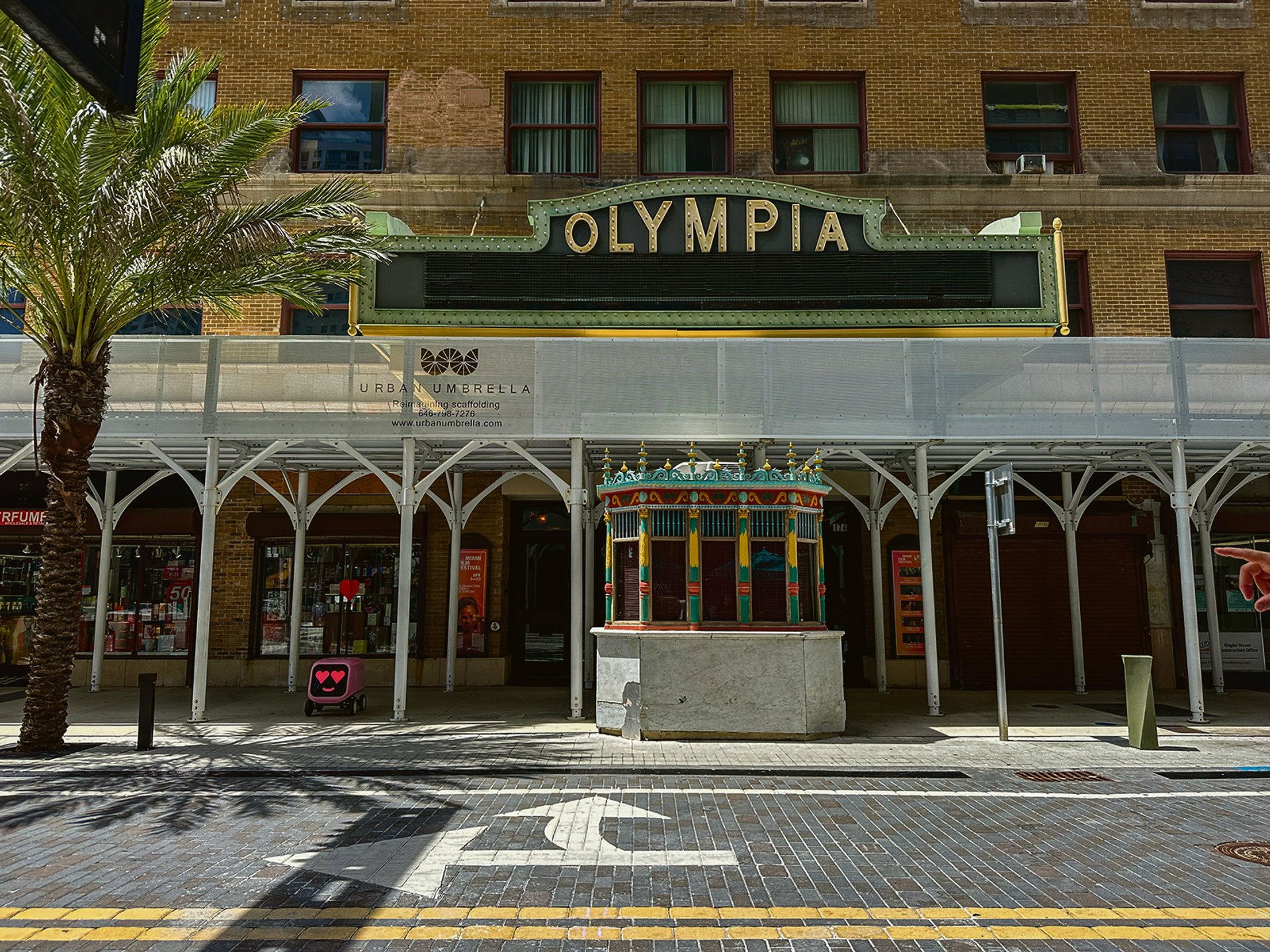
The Olympia Theater was built with an interior designed to make audiences feel like they were in a Spanish garden; it is now in a poor state of repair
Sierra Grace Manno
The building was later almost demolished, but ended up being redesigned by the famed “Miami Modern” architect Morris Lapidus in the 1970s. It underwent many changes over the years, recently serving as an important site for the Miami Film Festival. But in September 2025, Miami’s city commissioners voted unanimously to sell the city-owned Olympia to Sports Leadership Arts Management (Slam), a charter school founded by the rapper Pitbull. Slam bought the building for a symbolic $10 and is now responsible for a minimum of $57m in repairs as well as the cost of additional renovations. News of the sale has caused a public outcry from arts advocates, who blame the city for not doing more to revitalise the historic theatre instead of offloading the burden.
“There is a clear trend going on, where privatisation and profit is taking over established nonprofits and public assets that have been intentionally neglected,” says Sierra Grace Manno, a local artist and preservation activist who leads creative community tours of endangered structures in Miami-Dade County. “The few historic buildings we have are caught in limbo until the public is exhausted and slowly forgets about them or they are too far gone to be saved. It would be silly to think that this hasn’t been planned out over many commission terms. It’s certainly no accident.” She says the lack of a public request for proposals with respect to the Olympia as a potential violation of Florida’s Sunshine Laws, which require public notice before the transfer of land and goods by the state.
Miami’s historic theatres once served as anchor points for communities in some of its oldest neighbourhoods, which themselves have been gutted in recent decades by development projects. The structures’ current state of contentious disrepair represents both a reflection of Miami’s recent municipal priorities and a chance for evolution as a city. “It’s the current policies and procedures that allow for that history to be erased,” Rupp says.