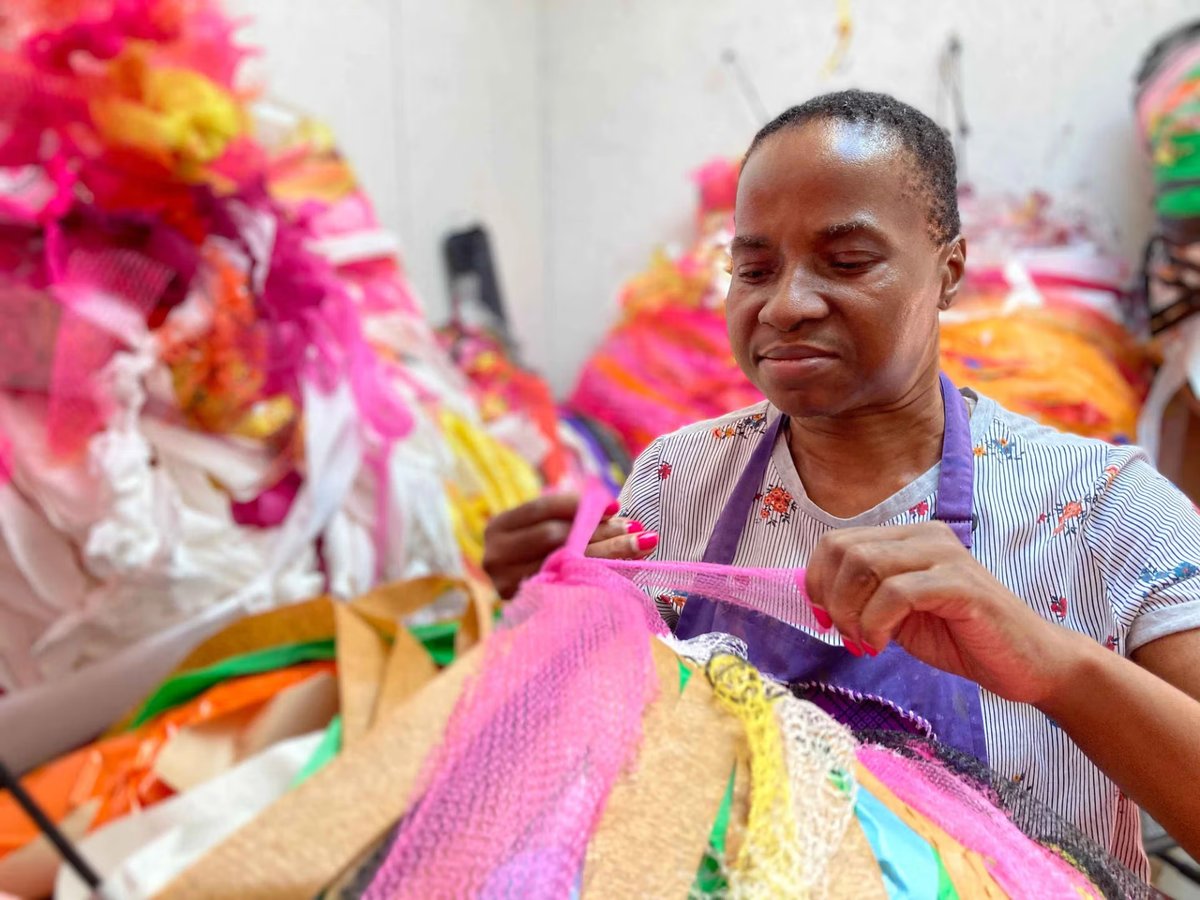
The Scottish artist Nnena Kalu has been named the winner of this year’s Turner Prize, becoming the first learning-disabled person to claim the award. Her victory was described as a “milestone” by the director of Tate Britain and the chair of the prize jury, Alex Farquharson.
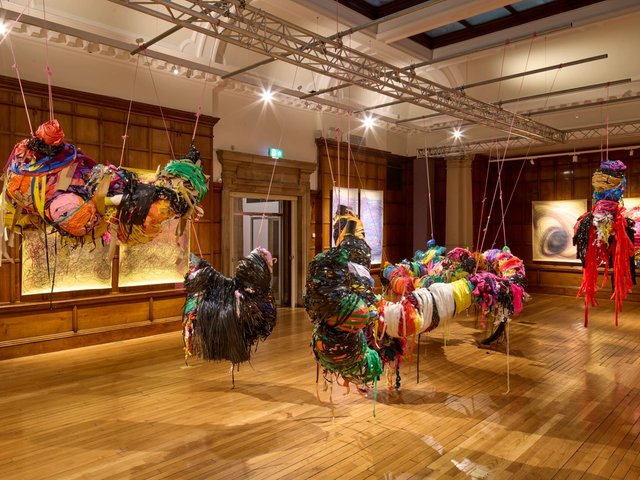
The artist’s work, which is comprised of suspended sculptures bound with rope and tape along with swirling vortex drawings, is on show in the Turner Prize exhibition at Cartwright Hall Art Gallery in Bradford (until 22 February 2026) as part of the UK City of Culture festival. The other shortlisted artists were Rene Matić, Mohammed Sami, and Zadie Xa.
“Firstly, our decision was qualitative and based on the visual and aesthetic quality of Nnena’s work,” Farquharson said. “She makes amazing abstract art, whirlpool-like; its expressiveness is enigmatic.
“It would not be a powerful statement if the work was not powerful on its own terms. Also, learning disabled artists have not been properly recognised in the art world so this is part of a change.”
There was “a strong sense from the prize jury that Nnena is a deserving winner in the context of a very strong shortlist” with “across the board” support, he added.
Kalu, who is autistic and has limited verbal communication, was nominated for her contribution to the Conversations exhibition at the Walker Art Gallery in Liverpool and for her work Hanging Sculpture 1 to 10 at Manifesta 15 in Barcelona. Her nomination “represents a really significant moment for the learning disabled artist community, not just nationally but internationally,” said Michael Raymond, a co-curator of the Turner Prize exhibition.
A Tate statement said: “The jury commended Kalu’s bold and compelling work, praising her lively translation of expressive gesture into captivating abstract sculpture and drawing. Noting her distinct practice and finesse of scale, composition and colour, they admired the powerful presence these works have.”
Kalu’s practice is supported by the visual arts organisation ActionSpace. which runs a studio at Studio Voltaire in south London. Kalu’s primary assistant, Charlotte Hollinshead, the head of Artist Development at ActionSpace, has worked with Kalu since 1999.
Kalu receives £25,000 while the other three shortlisted artists receive £10,000 each. Prize judges included the independent curator Andrew Bonacina and Sam Lackey, the director of the Liverpool Biennial. The charitable foundation set up by Lord Browne of Madingley and the Uggla Family Foundation established by Lance Uggla—a trustee of the Tate Foundation—are exhibition sponsors.