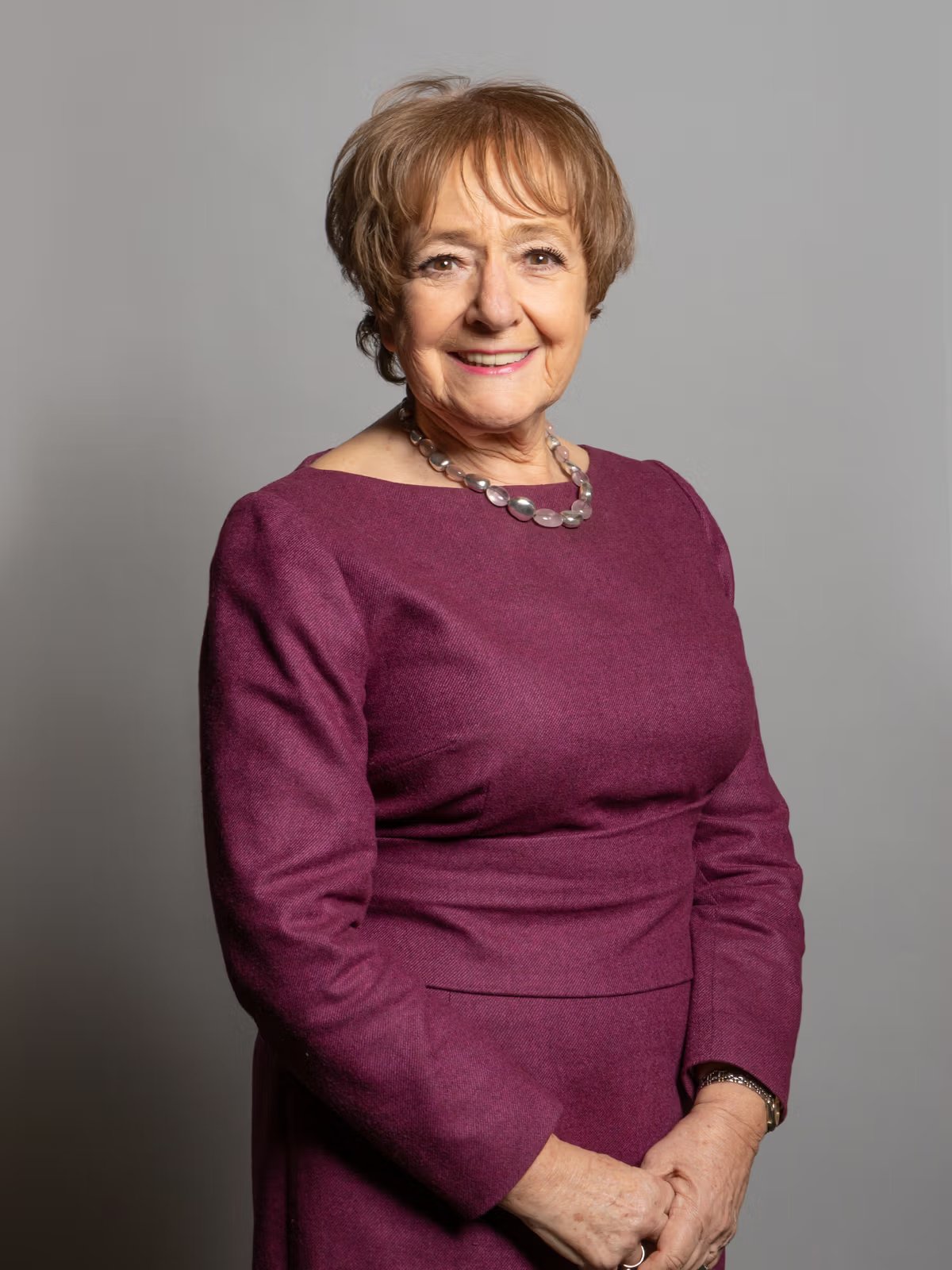
Arts professionals have broadly welcomed a far-reaching review of the arm’s length UK public funding body Arts Council England (ACE) led by the Labour peer Margaret Hodge and overseen by the UK Department for Culture, Media and Sport (DCMS). “My report provides a clear path, with a range of new initiatives that cover everything from new funding models to fundamental systems reform, that will enable ACE to strengthen its key, positive role in sustaining a world-class creative sector for the future,” Hodge says in a statement.
In the wake of various culture wars over the past 15 years, Hodge stresses that “the government must maintain and strengthen the arm’s length principle at all levels of government to ensure that arts funding is protected from politicisation”. The UK’s cherished “arm’s length principle” ensures that national museums and organisations such as ACE can operate independently without government interference.
Hodge also recommends new “ways of responding urgently to the underfunding that has undermined the arts over the last decade”, giving new funding proposals based on philanthropic giving and tax incentives. “The government should consider creating a £250m endowment fund for ACE that is structured in a way that levers philanthropic giving, with ACE raising £1 for every £1 they receive through the endowment,” the document says.
The government should also consider introducing a new tax incentive akin to the French Aillagon Law to encourage corporate giving outside London, Hodge adds. Under the Aillagon law, which came into force in 2003, companies that invest in culture can claim up to 60% in tax breaks for cultural philanthropy.
Hodge also suggests a “completely new model” for funding the National Portfolio Organisations (NPO) that receive regular funding from ACE, which distributes more than £680m annually. She says that the government and ACE should consider lengthening the NPO cycle from three to five years and assuring certain organisations, which meet the highest quality standards, that they will receive at least 80% of their funding in the next round.
The report also broaches the ethical aspect of corporate and philanthropic funding. “Boycotting sponsors of the arts and culture will often be more damaging to the arts than to the sponsor. Challenging boycotts can be difficult, but ACE has a leadership role to play in setting the parameters of what is and is not acceptable behaviour,” the report says.
The report also recommends that the Department for Education and DCMS should work together on a specific project with philanthropists, trusts and foundations to create a joint fund aimed at improving the cultural offer in schools.
ACE should also work with DCMS and the whole museum sector, including national museums funded directly by DCMS, to develop a strategic framework and create a specific long-term plan for museums, says Hodge.
Sharon Heal, the director of the UK Museums Association, wrote on social media: “We have long argued for a meaningful strategy for museums in England and particularly support the recommendation to develop a strategic framework.” She adds: “There will be nervousness about changes to the NPO system and early clarification and reassurance about what this means for museums is needed asap.”
The spotlight also falls on artists. “ACE should introduce a new National Programme for individuals, using money from existing funding streams. The purpose would be to support emerging and mid-career individuals to ensure a diverse talent pool by providing individuals with funding of around £30,000 per year and mentoring support,” the report says.
Paula Orrell, the national director of Contemporary Visual Arts Network (CVAN) England, tells The Art Newspaper: “From CVAN’s perspective, the ACE review offers a fair assessment of the system and a clear representation of what is needed: stripping back unnecessary bureaucracy [and] investing directly in individual artists.”
Anna Kiernan, an associate professor of creativity and literary culture at the University of Exeter, wrote on social media: “[The review is] quite encouraging, and seems to recognise many of the problematic things that have resulted in so many people in the arts feeling alienated from the ACE process.” Meanwhile the Cultural Policy Unit think tank put the case for Labour’s review of ACE, identifying key areas to focus on in its Arts for Us All pamphlet last year.
ACE said in a statement: “We’re encouraged and energised by the review’s recommendations to go further in our support for artists, to search for new sources of funding for the arts, and to do more to grow the cultural offer for audiences, particularly in places that historically have been underserved.” Darren Henley, ACE's chief executive, adds: “We want people to spend less time on our paperwork and more time on their creative work. Our mission over the months to come is to roll up our sleeves and make that happen.”
A DCMS statement adds that “[this review] sets out recommendations to strengthen support for artists, reach communities more effectively, and ensure that creativity is accessible to all. The government will now consider these recommendations.” A response to the review will be published next year.