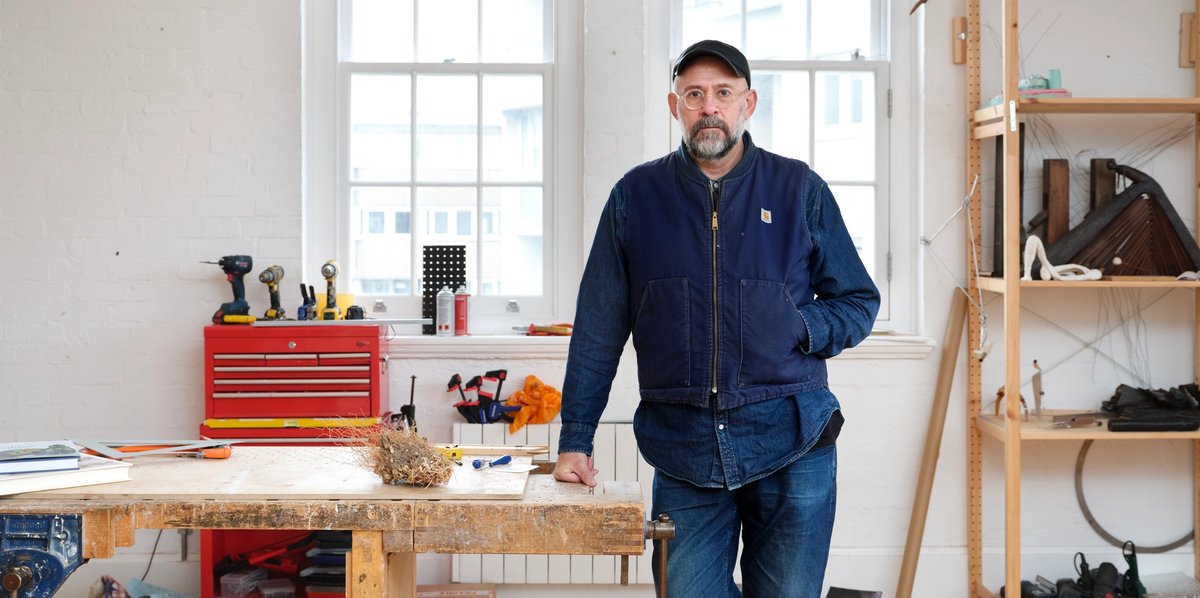
The Italian-born, London-based artist Enrico David first attracted attention in the late 1990s with his large-scale, immaculately executed embroideries featuring masked figures striking extravagant poses. Many of these works were bought by Charles Saatchi and exhibited at the collector’s eponymous gallery in a 2001 group show titled New Labour.
Soon afterwards, though, David changed direction and began producing the enigmatic, psychologically charged sculptures of mutated humanoid forms for which he is now better known. His figures, made in a wide range of materials, draw on multifarious sources, from art history and folk art to design, advertising and gay pornography. These androgynous, ambiguous personages prop against walls, hug the floor or hang from ceilings. Sometimes they morph with furniture or are arranged in theatrical mise en scènes.
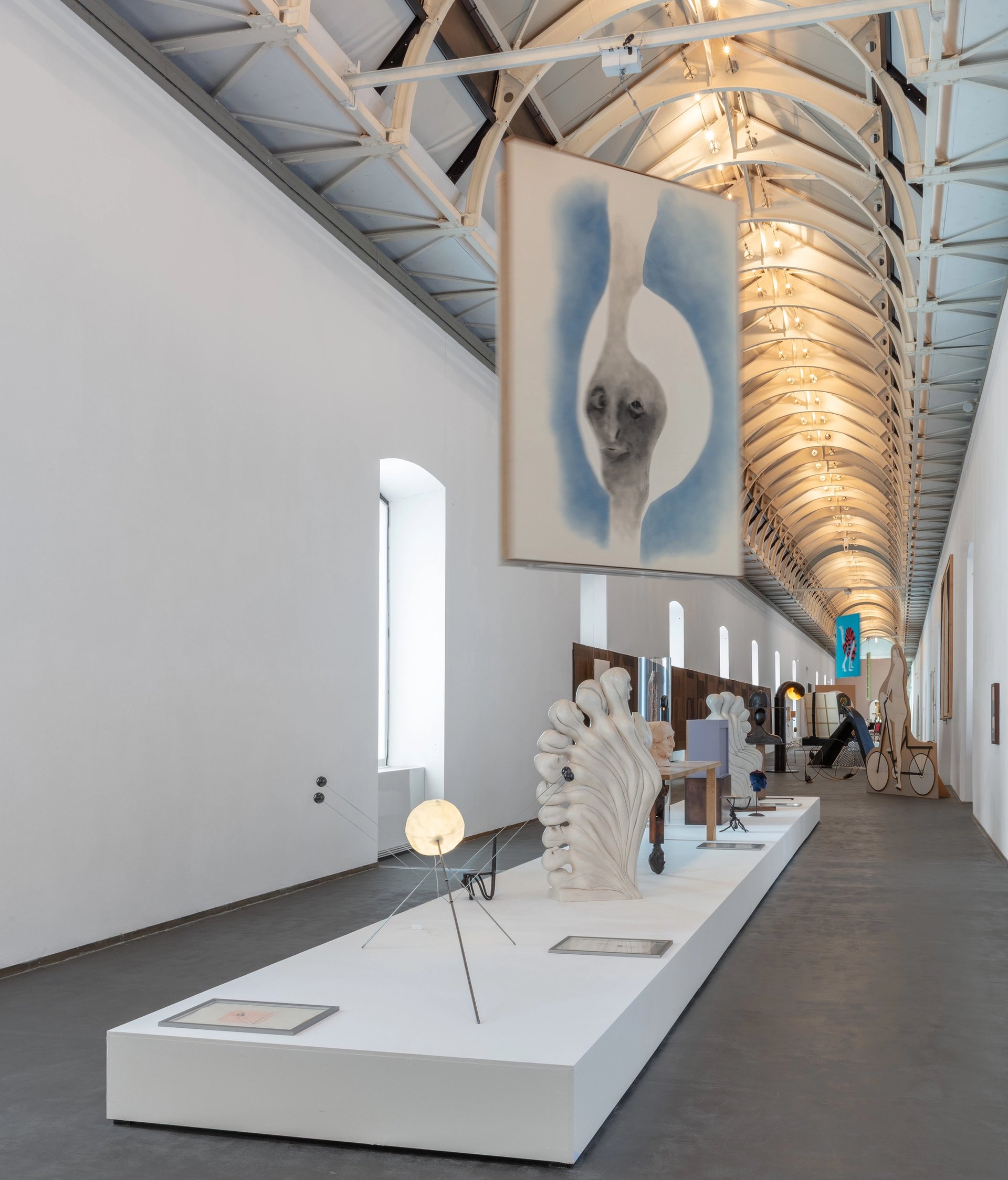
The long view: Enrico David’s works span the length of the Castello di Rivoli’s 147m-long Manica Lunga gallery Sebastiano Pellion di Persano; courtesy Castello di Rivoli
In 2009, David was shortlisted for the Turner Prize after being nominated for exhibitions at the Seattle Art Museum and Museum für Gegenwartskunst in Basel. His latest show, I’m Back Tomorrow at the Castello di Rivoli Museo d’Arte Contemporanea near Turin, is his largest to date.
The Art Newspaper: The Manica Lunga gallery in Castello di Rivoli is an extraordinary space, being 147m long and 6m wide. The exhibition you have devised for this setting spans three decades of work but is neither thematic nor chronological. What was your approach?
Enrico David: It’s a space that demands you throw things at it. You have to get your gloves off; it’s quite confrontational. Because of that, I had to use some of my works from the last 30 years that have the capacity to command the space. So they occupy the space in a very stagey way and are almost like six vertebrae, anchoring the show down this long spine. Around this was the idea of dividing the space into sections—not physical, but imagined, like areas defined by certain ideas.
Also across the show are elements that evoke the spirit of a trade fair or salon mobile, which is a language very familiar to me from my upbringing. My father was a man of the post-war economic boom, who set up this small company that produced neon signs and interiors for shops and homes. He was obsessed with the idea of commerce, marketing and marketability, and one of his favourite things was to go to specialist trade fairs—nautical, car or furniture, any kind—and I’d often go with him. One of my first visual encounters was with the language of marketing and creating images to be employed for commercial purposes, from advertisements to industrial design. That particular vernacular remains inherent in the work and also in the way I have displayed some elements of this show.
From early on you were immersed in a multiplicity of materials and making. Not only was your father a designer, but your mother trained as a dressmaker, your brother was a leather craftsman and your sister works with antique textiles and upholstery.
When I moved to England in the mid-80s, the things that were most familiar and available to me were from the world of craft and design. It wasn’t such a big deal just getting out the sewing machine and doing something with that. And when I was at Saint Martins [art college], much of my source material was from the world of fashion and communication. But once I’d created those large embroideries that Saatchi bought, I thought, I don’t want to become a master embroiderer, I’m done with that. I wanted my visions and my desires, or my perversions—whatever you want to call them—to seep into the everyday and to create a world that the work in all its strangeness could inhabit.
Your use of a wide range of materials and references is often unconventional and unexpected, whether it’s painting bronze to look like something else, making Jesmonite resemble ivory, or combining furniture with sculptures of heads and limbs.
I feel quite addicted to the idea of surprising myself. The less I recognise the territory I’m in, the more I feel like I’m on to something that fascinates me. Whenever I feel like, “I don’t know what the hell that is, I don’t want to have anything to do with it,” then I feel like I’m in the presence of something that is closer to a sense of truth about itself rather than me. I want the work to have its own card to play, and its own authority, not mine. Making art is eventful. It’s about a sense of wonder and a sense of what the fuck is that?
There are some autobiographical elements in the exhibition. For example, the private view card and exhibition catalogue reproduce a collage with Max Ernst’s The Robing of the Bride superimposed with your face alongside a photograph of your father firing a gun. How is this show infused with the presence of your father and the trauma of you witnessing his sudden death from a heart attack when you were 17?
A lot of what I have been doing over the years has an inbuilt sense of mourning and memorialising. So even if a work appears as a lamp or a chair, it still comes from this background of replacing the loss of someone or something with another thing. It’s almost as if the objects are there as an alter ego or avatar, a substitute for something that has gone.
The memory of my father dying in this quite spectacular way at a dinner in front of 40 people mattered a lot, and I didn’t realise how much of an effect it would have on my future life. But I think we all have momentous occasions that make us take important turns. I have also used the memory of my father’s death almost like a fiction—using memory as an information system or database to interact with, and not just to be a victim of.
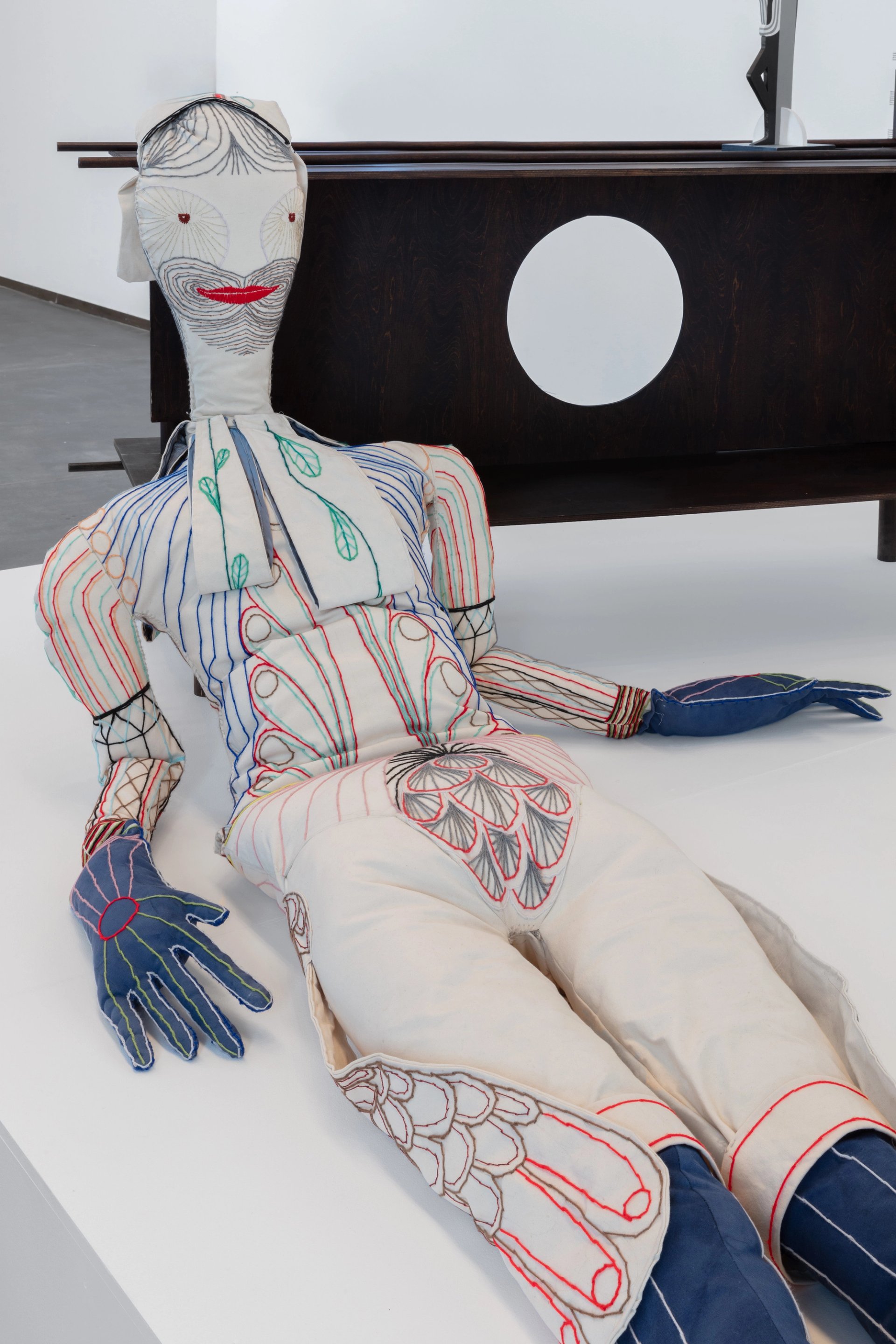
Dressed to thrill in a theatrically staged set: David’s Madreperláge (2003) is on show at Castello di Rivoli Sebastiano Pellion di Persano; courtesy Castello di Rivoli
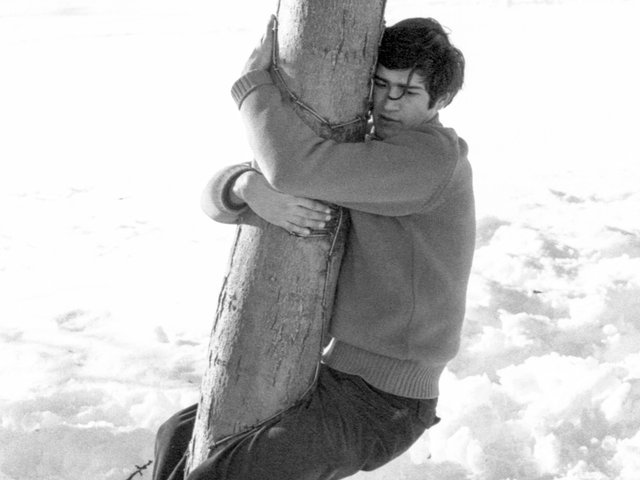
The picture of my dad with the shotgun was taken at a funfair shooting range, and what is missing in the Castello di Rivoli photo is me next to him. I was about five. Then, The Robing of the Bride is one of the most seminal works of Surrealism that I have honoured in my work over the decades, and it is in Venice where we used to go for carnival when I was a teenager. My dad seemed to be almost imitating the shapes of one of my sculptures so I grafted them together and composed this image.
I have been casting my father for years in my dramas—in one way or another—as well as my mother, my brother and my sister. He is definitely a recurrent presence and a very valuable extra in my production.
This spirit of theatricality also runs through your simultaneous show at White Cube, Paris, with some of the same works in both shows.
Castello di Rivoli was already planned when the White Cube show came about and so the Paris show ended up being like this theatre production that I was casting from the show in Turin. Castello di Rivoli, with its 90 works, was like this casting agency, with all these actors that had been sitting dormant for decades with nobody casting them. I was going through the checklist and it was like: “All right, you, you’re going to Paris! Just look good until December. Just loll around and make yourself look really fabulous!” Literally, I was thinking of them as characters. But I have also made eight new works for the White Cube show—the tapestries are new, and they’re exclusive to Paris.
In all of your work the role of drawing plays a key role—not as a way to work ideas out but as a boundless form of inspiration. Can you explain this process?
A great deal of my quest for eventfulness and surprise comes from how to elevate a drawing from the status of a piece of paper with a pencil line. That challenge is essentially where I’m at. Whilst in the drawing, you have this amazing opportunity of not having to leave anything out, you can literally chuck anything at a drawing, and a drawing can take it. And if you don’t like it, you scrap it. I try to draw with zero demands. I just go for a wander, and see what happens.
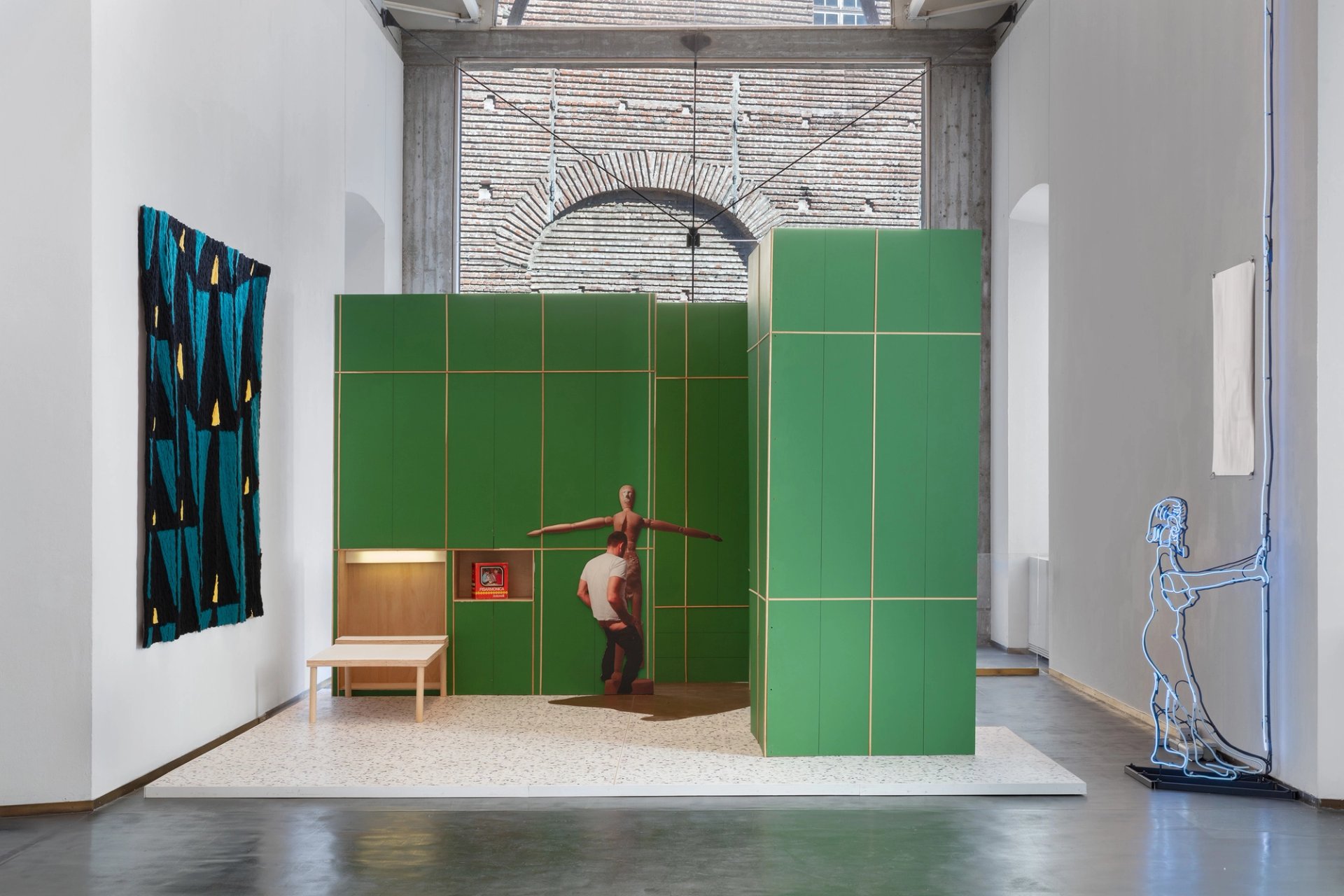
In Ultra Paste (2007), one of more than 80 works on show at Castello di Rivoli, David offers a surreal reimagining of the childhood bedroom that his father, who was an interior designer, created for him Sebastiano Pellion di Persano; courtesy Castello di Rivoli
Obviously, I fall into habits, which is annoying, but we all have our limits. The basic fact is that I’m trying to draw with the aim of leaving that drawing to its own devices, with its own ego, its own personality, its own limits, its own achievements. I don’t want anything from it. But of course, in the background, there is this idea of, how do you decipher that drawing? How do you take that as the starting point to create an installation, or an environment, or a sculpture, or an embroidery, or whatever?
It’s just endless… I haven’t drawn in ages because I feel like I still have so much material to process. You’ve got to be careful. Literally, they’re like dormant cells. You just don’t know what’s going to happen. Sometimes it’s just like, “Oh my God, please just go back into a sketchbook! I don’t want to see you for another two years. Just get away from me!”
- Enrico David: I’m Back Tomorrow, Castello di Rivoli Museo d’Arte Contemporanea, until 22 March 2026
- Enrico David: The Soul Drains the Hand, White Cube, Paris, until 19 December