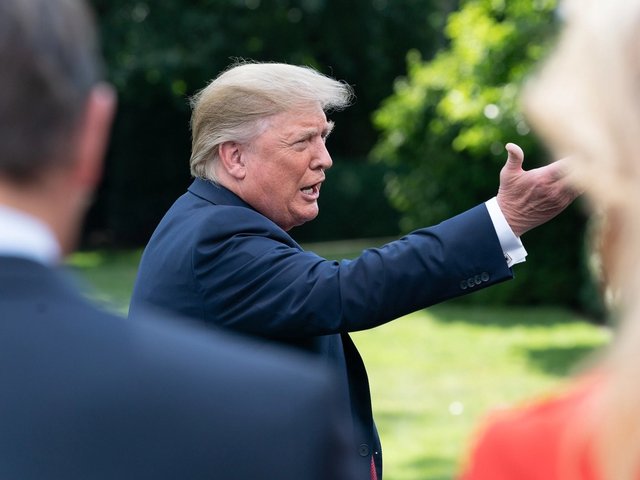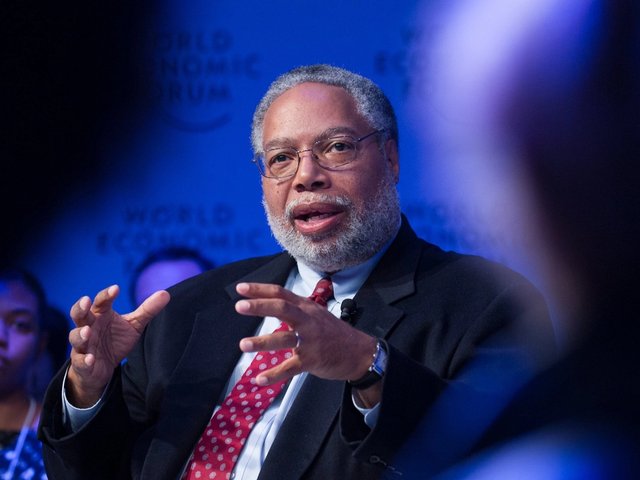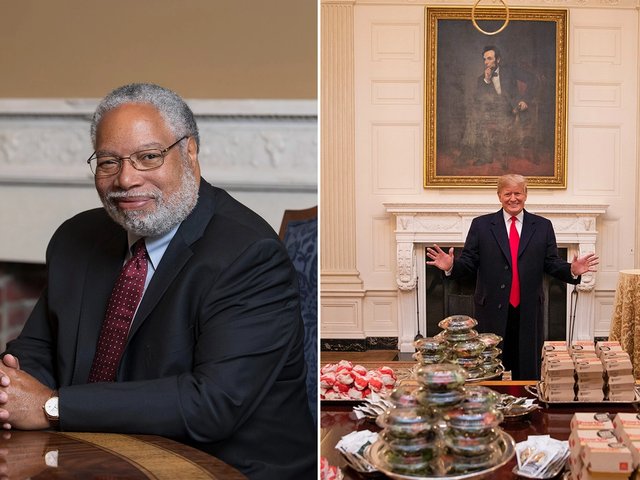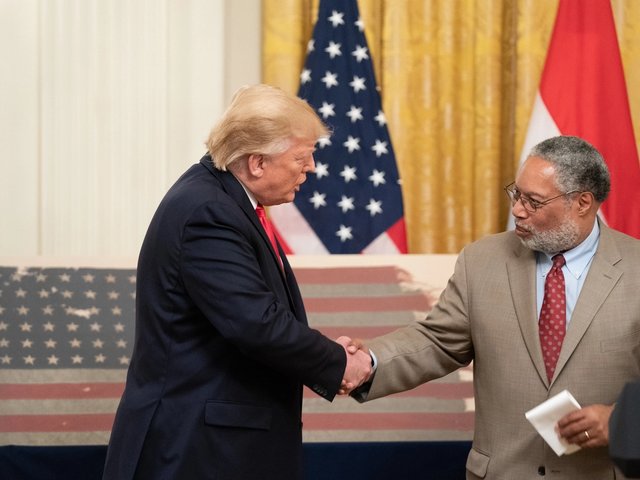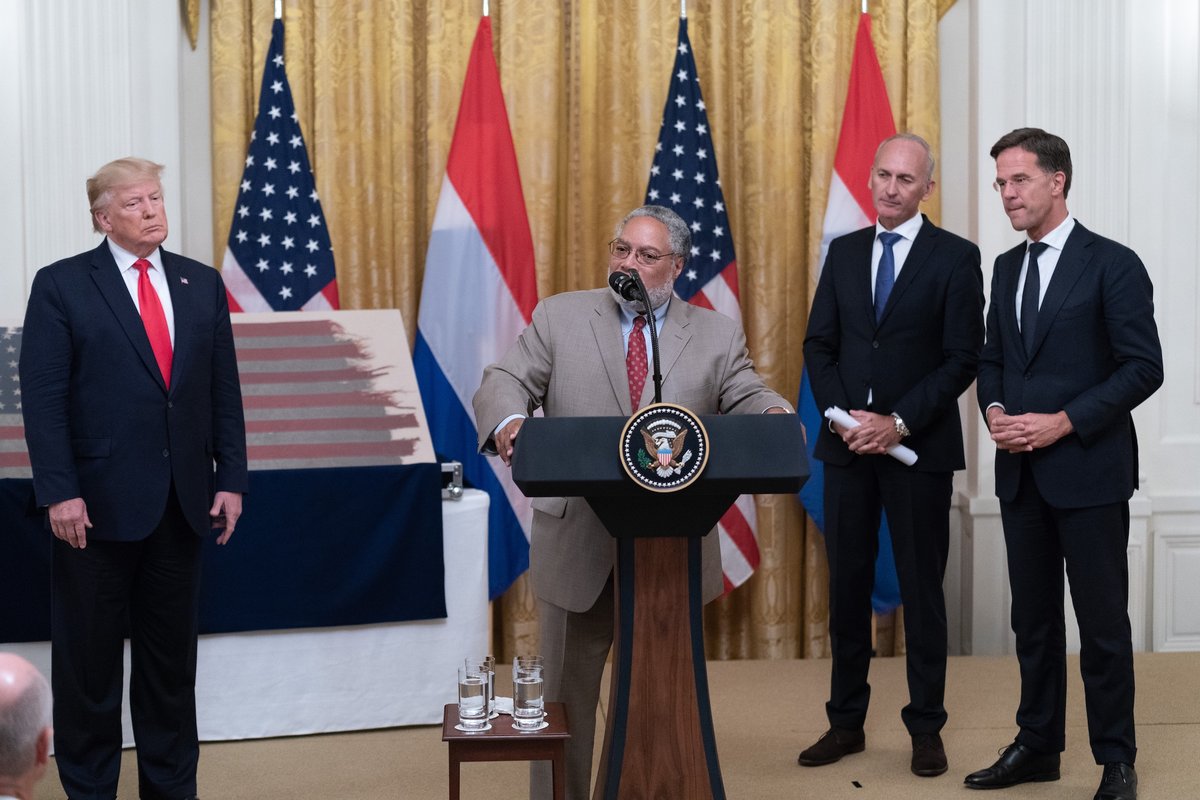
The administration of US president Donald Trump has given the Smithsonian Institution a deadline of 13 January to turn over all the outstanding materials related to a review of programming and decision-making at eight of the 21 museums under its purview. In a letter addressed to Smithsonian secretary Lonnie G. Bunch last month, White House staff imply that the Smithsonian’s future funding is contingent on complying with Trump’s review.
“As you may know, funds apportioned for the Smithsonian Institution are only available for use in a manner consistent with Executive Order 14253,” director of the domestic policy council Vince Haley and director of the office of management and budget Russell Vought wrote in the 18 December letter.
The Smithsonian’s federal funding makes up around 62% of its annual budget and is determined through appropriations approved by Congress, not by the president. The disbursement of those funds, however, is controlled by the Office of Management and Budget.
They reference a Trump executive order from 27 March 2025 titled “Restoring Truth and Sanity to American History”, which claimed the Smithsonian had “come under the influence of a divisive, race-centered ideology” and directed vice-president J.D. Vance, in his role as a member of the Smithsonian’s board of regents, “to remove improper ideology from [its] properties”.
The renewed pressure to comply with Trump’s review and the fast-approaching deadline come at a crucial time for the Smithsonian, whose board of regents is due to change significantly this year as up to six seats are vacated. The 17-member governing body consists of four Democratic elected officials, four Republicans and nine citizen members. New appointments have to be approved by Congress and the president.
In a message to Smithsonian staff following Haley and Vought’s 18 December letter, Bunch wrote that “some aspects of the White House request are not readily available and will require a significant amount of time, labour and coordination from various departments across the Smithsonian”, according to The New York Times.
Contacted by The Art Newspaper, a spokesperson for the Smithsonian declined to comment on the recent letter from the White House and approaching deadline for turning over materials.
In response to news of the 18 December letter, the American Alliance of Museums released a statement that reads in part: "As the world’s largest museum and research complex, any comprehensive gathering of detailed information will require significant time. We have confidence in the Smithsonian’s continued commitment to professional standards, independent stewardship and public service that benefit millions of visitors each year."
The Association of Art Museum Directors issued a statement along similar lines that reads in part: "Gathering such detailed information about the world’s largest museum complex—with collections of objects numbering in the many millions, and installations spread across dozens of buildings—will necessarily take time. We have no doubt that the Smithsonian undertakes this work with the same level of commitment it brings to its ongoing research and scholarly activities and to the myriad ways in which it provides exceptional public service to the institution’s millions of annual visitors."
Smithsonian review's origins
Last summer, on 12 August, the White House announced it was launching a review of activities, programmes and processes at eight Smithsonian museums: the National Museum of American History, National Museum of Natural History, National Museum of African American History and Culture, National Museum of the American Indian, National Air and Space Museum, Smithsonian American Art Museum, National Portrait Gallery (NPG) and the Hirshhorn Museum and Sculpture Garden. It gave the Smithsonian up to 120 days to provide all the requested materials and make corresponding programming adjustments in order “to ensure alignment with the president’s directive to celebrate American exceptionalism, remove divisive or partisan narratives and restore confidence in our shared cultural institutions”.
In response, Bunch wrote to both the White House and the Smithsonian’s staff that the institution was conducting its “own review of content to ensure our programming is nonpartisan and factual”.
A week after initiating the White House’s review of the Smithsonian, Trump took to his social-media platform to lambast the institution for being “out of control” and too focused on “how horrible our country is, how bad slavery was and how unaccomplished the downtrodden have been—nothing about success, nothing about brightness, nothing about the future”. The following week, Bunch visited the White House for a lunch meeting with Trump that an administration official described as “productive and cordial”.
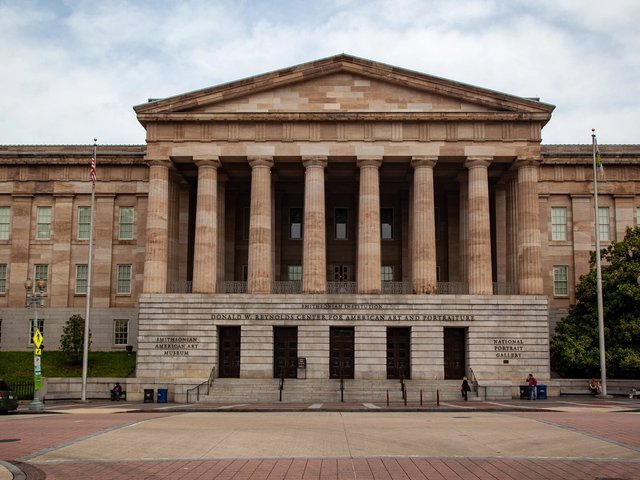
While most museums within the Smithsonian group have continued to operate free of interventions from the executive branch, Trump and his policies have directly impacted programming and staffing at the NPG. Last May, Trump attempted to fire the museum’s director, Kim Sajet. She resigned two weeks later and was subsequently named as the new director of the Milwaukee Art Museum.
The artist Amy Sherald, who painted the museum’s official portrait of former first lady Michelle Obama, cancelled a leg of her traveling survey exhibition American Sublime at the NPG after claiming that gallery representatives had pressured her to remove the painting Trans Forming Liberty (2024), which depicts a non-binary transgender person posing as the Statue of Liberty, allegedly out of fear that it could provoke Trump. The exhibition has instead gone on view at the Baltimore Museum of Art (until 5 April) and will travel to the High Museum of Art in Atlanta for its final presentation (15 May-27 September).