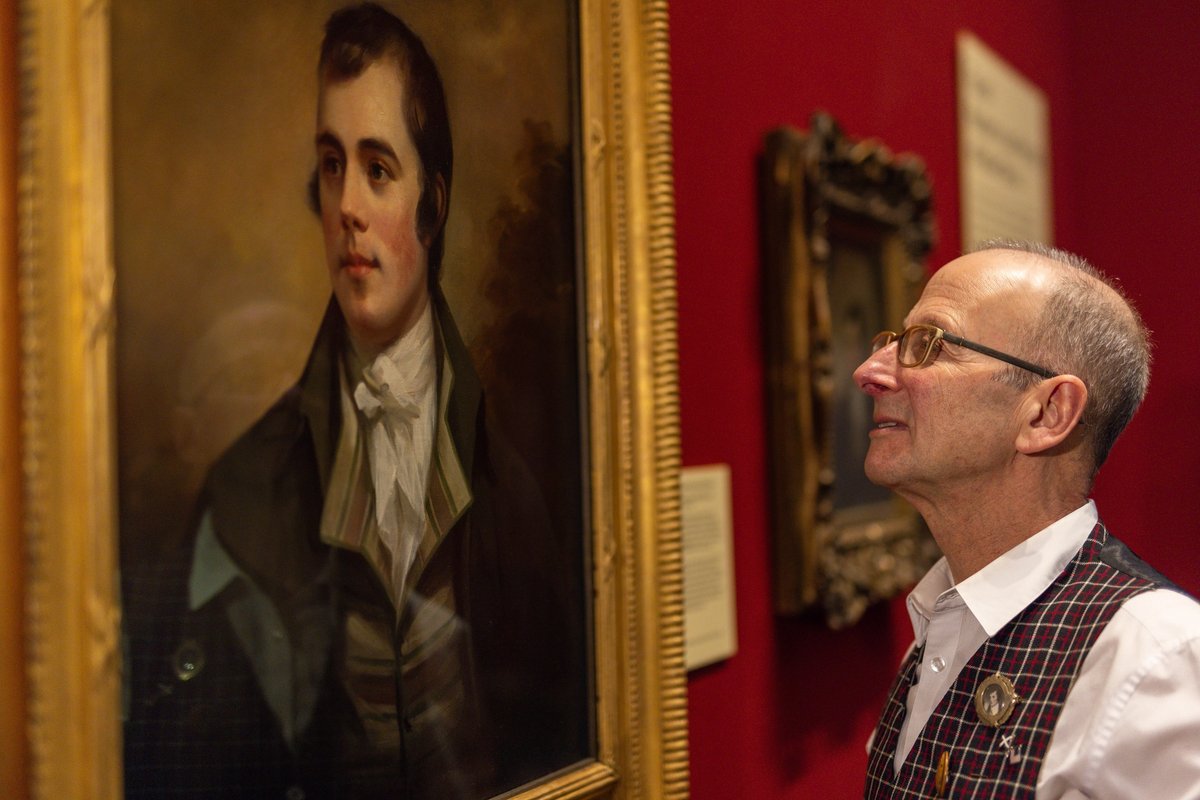
A portrait of Robert Burns by Henry Raeburn, which was lost for more than 200 years, has been put on public display for the first time at the National Gallery of Scotland in Edinburgh. The exhibiting of the work is just in time for Burns Night (25 January), the annual celebration of Scotland’s best-known poet.
The early 19th century painting resurfaced in a house clearance in Surrey and was auctioned in Wimbledon in March 2025 with a guide price of £300-£500. The art collector and Burns enthusiast William Zachs, the director of Blackie House Library and Museum in Edinburgh, purchased the painting for £68,000 (plus fees) in a tense nine-minute bidding war before he could be sure of the Raeburn attribution.
“Every year or so, a painting comes up which could be a lost Raeburn, and none ever has been. The image was widely copied, and the painting was dirty and covered in dark varnish,” Zachs says. “It was a huge gamble, but for the greatest Scottish poet painted by one of the greatest Scottish portrait painters, it was worth the risk. Now it’s back to the country where it all began.”
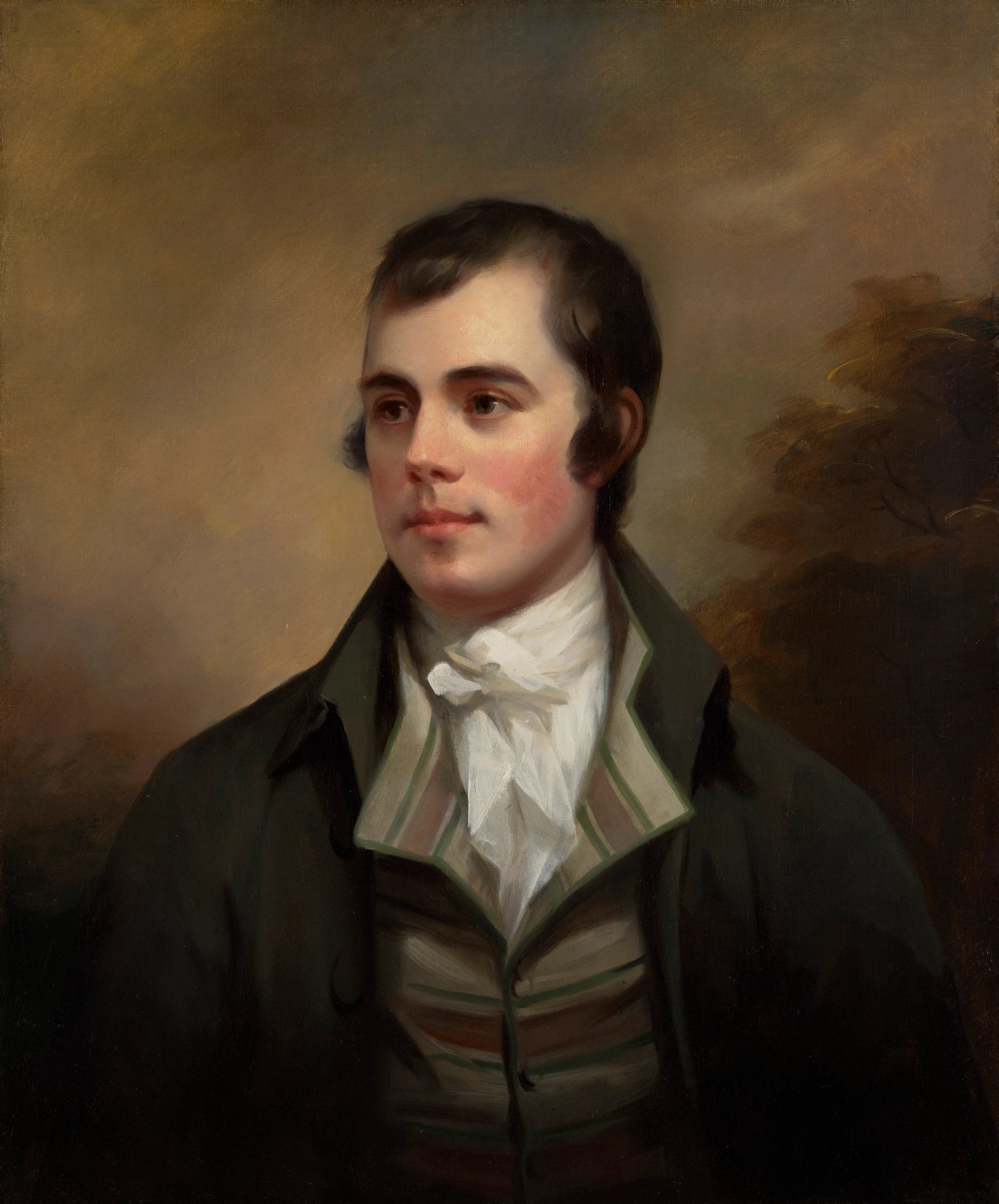
Robert Burns, after Alexander Nasmyth (around 1803) by Henry Raeburn Collection of William Zachs, Blackie House Library and Museum, Edinburgh
Raeburn was commissioned to make the portrait in 1803, seven years after Burns’s death, by the publishers Cadell & Davies as the basis for an engraving for a new collection of his poems. The artist worked from Alexander Nasmyth’s portrait of Burns, painted from life in 1787, which is in the National Galleries of Scotland collection, and the two paintings are now displayed side by side.
“At the beginning we were quite sceptical,” says Patricia Allerston, the head of European and Scottish art at the National Galleries of Scotland. “But now we are absolutely certain it is by Raeburn—it has been confirmed by a whole range of experts.” She adds: “We are delighted to present it next to the Nasmyth portrait, reuniting three of the biggest figures of that period: Burns, Raeburn and Nasmyth.”
Duncan Thomson, the former keeper of the Scottish National Portrait Gallery and curator of the last major exhibition on Raeburn in 1997, was one of those whom Zachs consulted before making the purchase. “Bill sent me a photograph of the painting and as soon as I enlarged it on my screen I thought, ‘This is the real thing’,” Thomson says. “The rediscovery of this portrait is of enormous significance, linking the poet with Scotland’s greatest artist.”