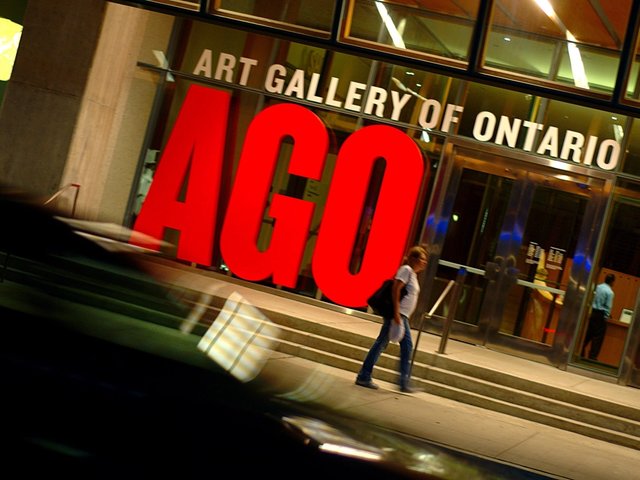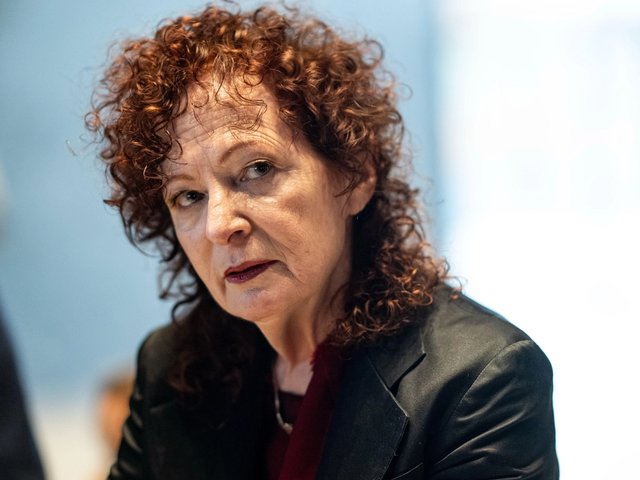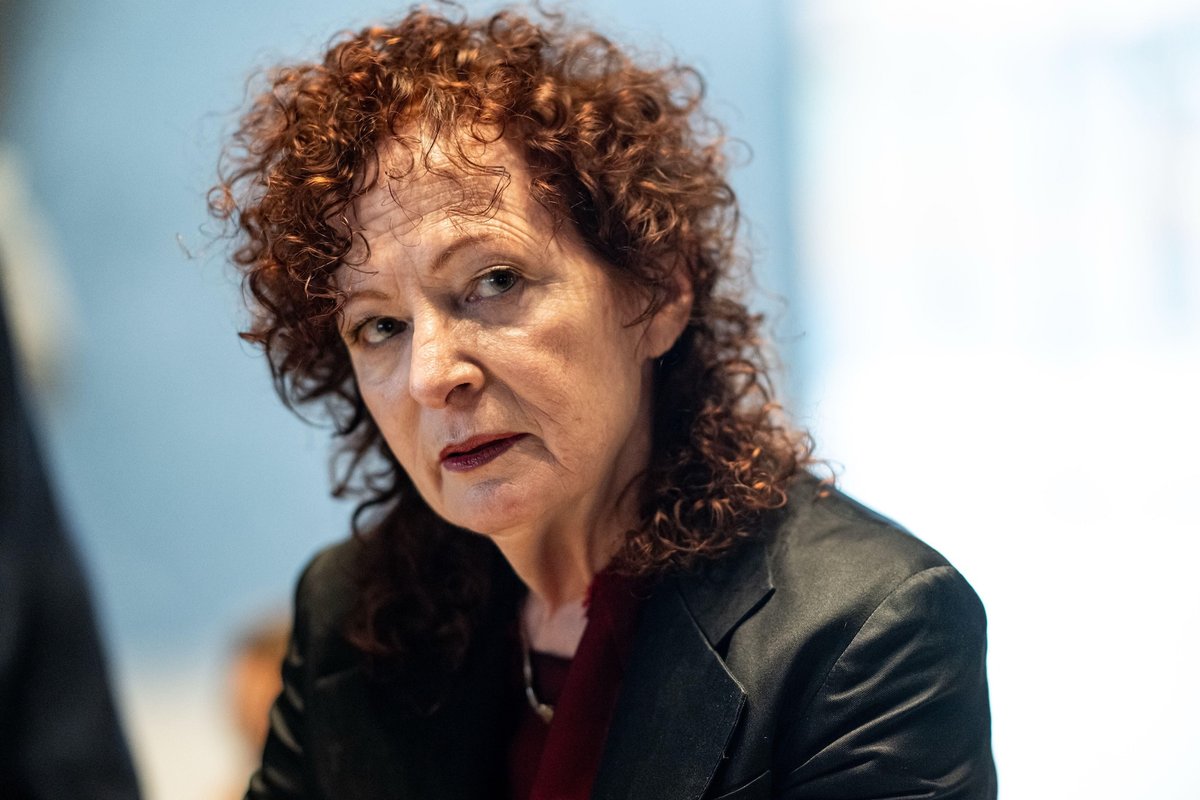
A leaked memo has revealed the resignations of a senior curator at the Art Gallery of Ontario (AGO) and two volunteer members of a collections committee after the group voted against the acquisition of a work by Jewish American artist Nan Goldin because of allegations of “antisemitism”.
Although the AGO had planned to jointly purchase Goldin’s moving-image work Stendhal Syndrome (2024) with the Vancouver Art Gallery (VAG) and Minneapolis’s Walker Art Center, it pulled out in mid 2025 after its modern and contemporary curatorial working committee voted 11-to-9 against it. The move was unexpected, especially as the AGO already had three Goldin works in its collection. (The VAG and Walker Art Center proceeded with the joint acquisition.)
Why did one of Canada’s most important public museums decide against acquiring a work by an enormously influential artist and activist who was deemed, in 2023, to be the most powerful person in the art world? According to an internal memo by AGO director and chief executive Stephan Jost that was obtained by The Globe and Mail, some committee members alleged that remarks Goldin made in a 2024 speech at Berlin’s Neue Nationalgalerieabout her “moral outrage at the genocide in Gaza and Lebanon” were “offensive” and “antisemitic”. Speaking at the Berlin opening of her traveling retrospective, Nan Goldin: This Will Not End Well, the artist also said that to call anti-Zionism antisemitic was a “false equivalency used to maintain the occupation of Palestine”.
According to reporting by The Globe and Mail, the trustee who led the efforts to block the AGO's acquisition of Goldin's work is Judy Schulich. In addition to her support of the AGO, she is the executive vice-president of the Schulich Foundation, a major charitable foundation; previously she ran an art consultancy and received a Masters degree from Christie's Education in New York.
But according to the memo, committee members who were in favour of acquiring Goldin’s work disagreed. In their view, the artist’s remarks were not antisemitic, with some adding that “refusing the work because of the artist’s views was censorship”.
According to the Globe, two people “with direct knowledge of the situation” indicated that John Zeppetelli, the AGO’s curator of modern and contemporary art, who had lobbied for the acquisition, eventually resigned because of the incident. Zeppetelli, who is still working with the Toronto museum as a guest curator, co-organising an upcoming exhibition of work by the Italian artist Diego Marcon, did not respond to The Art Newspaper’s request for comment.
Two members of the modern and contemporary collections committee subsequently resigned from their volunteer roles as well, according to the Globe, because of issues around the nixed Goldin acquisition.
“Nine months ago, we were excited about the acquisition,” Goldin tells The Art Newspaper. “Then we were told that the board had met and one person had blocked the sale—a very persuasive Zionist.” She adds that she only learned this week that 11 committee members had voted against the acquisition.
“It’s so chilling that people are still opposing free speech,” Goldin says. “At this point the whole world should be aware of what’s happening in Palestine and at the very least compassionate. It’s crazy that people are still clinging to the conflation of Zionism with antisemitism.” She admits she was “shocked” that “something like this would happen in Canada. I know [the American Israel Public Affairs Committee] is active in the US, but I didn’t expect this here.”
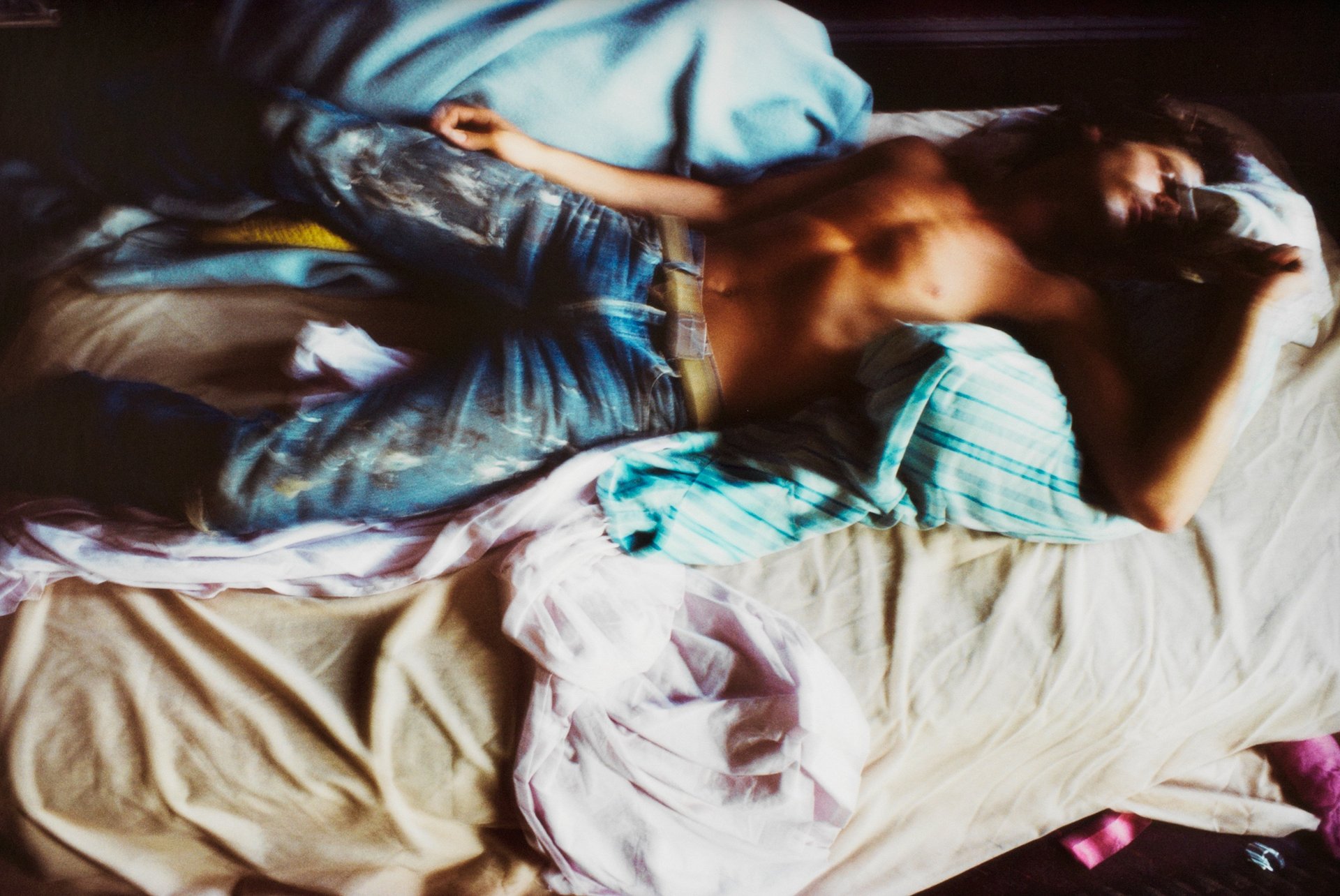
Nan Goldin, Stendhal Syndrome, 2024 (video still) Jointly owned by the Vancouver Art Gallery and Walker Art Center, Minneapolis, Purchased with funds from the Curators’ Council Fund for Women Artists and the Jean MacMillan Southam Fund, Image: © Nan Goldin, Courtesy of the Artist and Gagosian
What Goldin finds even more disturbing, she says, is “all the people we don’t know about who are being blocked—artists being shut down that we don’t know about”.
After she signed a 2023 open letter supporting Palestinians, she says she received emailed death threats in Hebrew and lost significant revenue at her next exhibition. Still, Goldin continues to speak out on Palestine. “I couldn’t sleep at night if I didn’t,” she says.
As Goldin sees it, Zeppetelli “is the hero in all this”. She adds: “Many people aren’t speaking out for economic reasons, and they have a right to be scared. But it would be less scary if more people spoke out.” She says she was unaware of the abrupt departure of the AGO’s Indigenous curator Wanda Nanibush in 2023, allegedly over her stance on Palestine, followed months later by the departure of Taqralik Partridge, an Inuk poet, performer and editor who was serving as associate curator of Indigenous art.
A spokesperson for the AGO acknowledged that the institution initiated a review of the committee meeting in which Goldin’s work was discussed.
“The AGO’s acquisition practices are thorough, well-documented and publicly available,” the spokesperson said in a statement shared with The Art Newspaper. “Political views are never intended to be part of the process. In this instance, personal political views did surface. As a result, the AGO engaged an independent governance expert to review matters relating to that meeting.”
The spokesperson added that a subsequent “reset” would ensure that “such discussions are focused on an artwork’s alignment to the AGO’s acquisition criteria, are healthy and productive, and welcome multiple perspectives”.
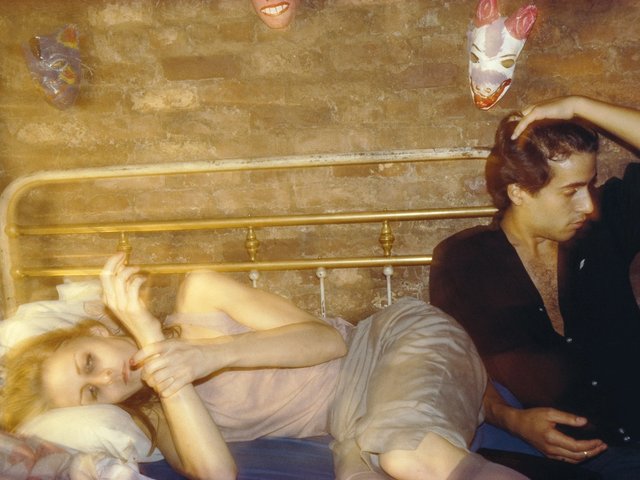
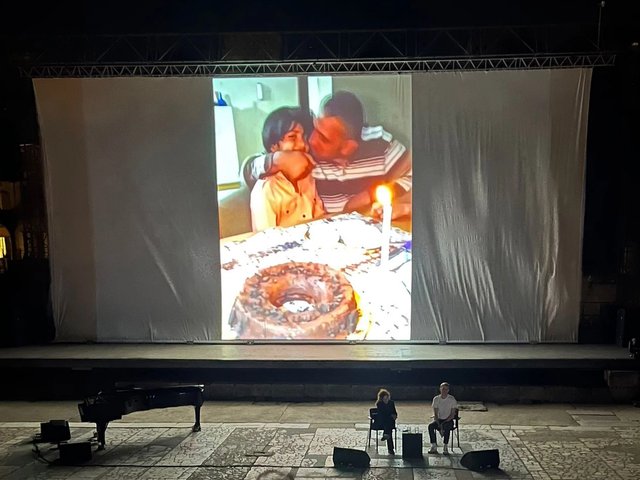
According to the VAG, which is currently exhibiting the piece (until 6 April), it draws on the metaphor of the Stendhal Syndrome—“a psychosomatic condition of dizziness, confusion or even hallucinations triggered by exposure to intense beauty”—through the juxtaposition of Goldin’s original portrait photographs with images from art history. Goldin fans have been flocking to see the piece since its November opening at the VAG.
“This represents the first major presentation of Nan Goldin’s work in Vancouver, and we are proud to share it with audiences in Canada,” a VAG spokesperson tells The Art Newspaper. “The gallery is committed to presenting a wide range of artistic voices and supporting artistic freedom of expression, while fostering open and respectful cultural dialogue. Nan Goldin’s practice has long explored themes of love, grief, beauty, activism and the realities of lived experience.”