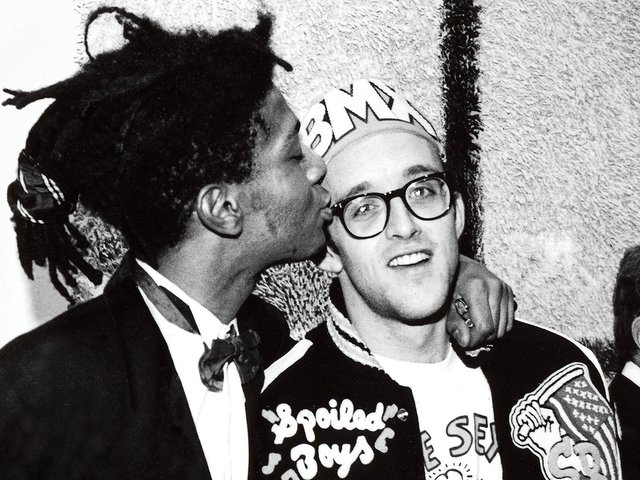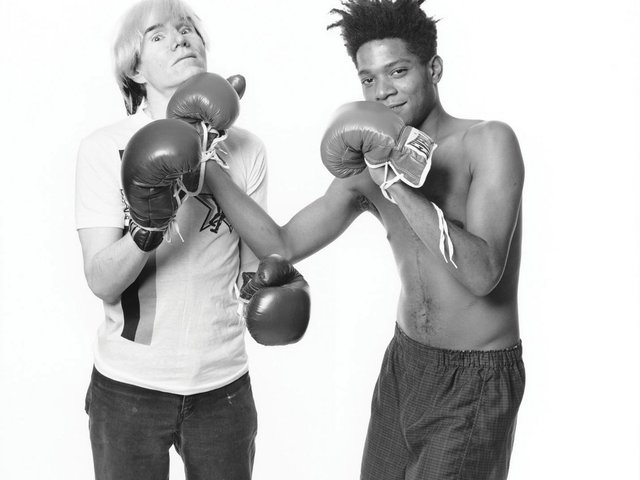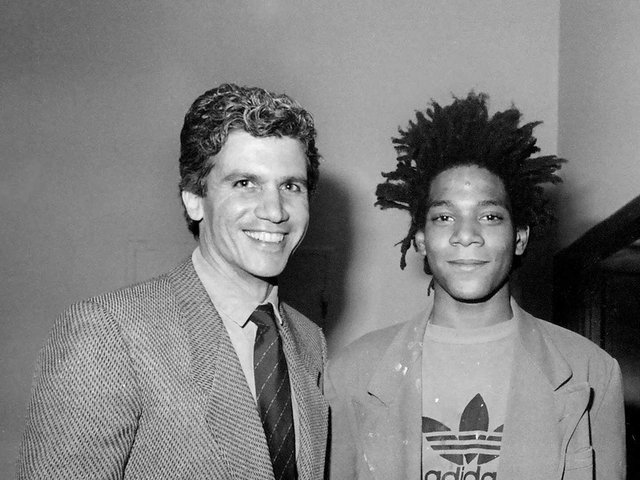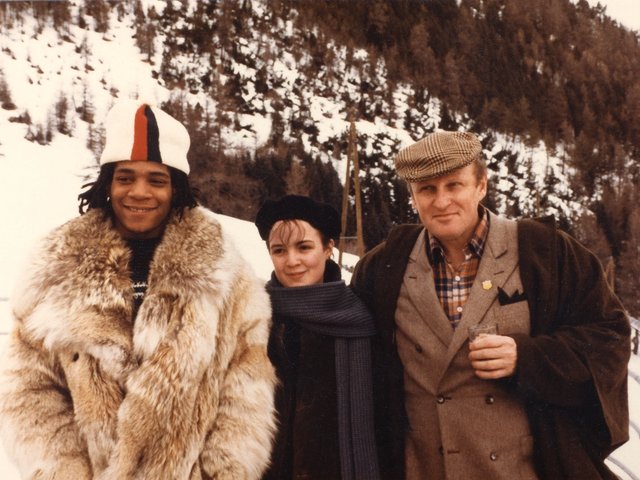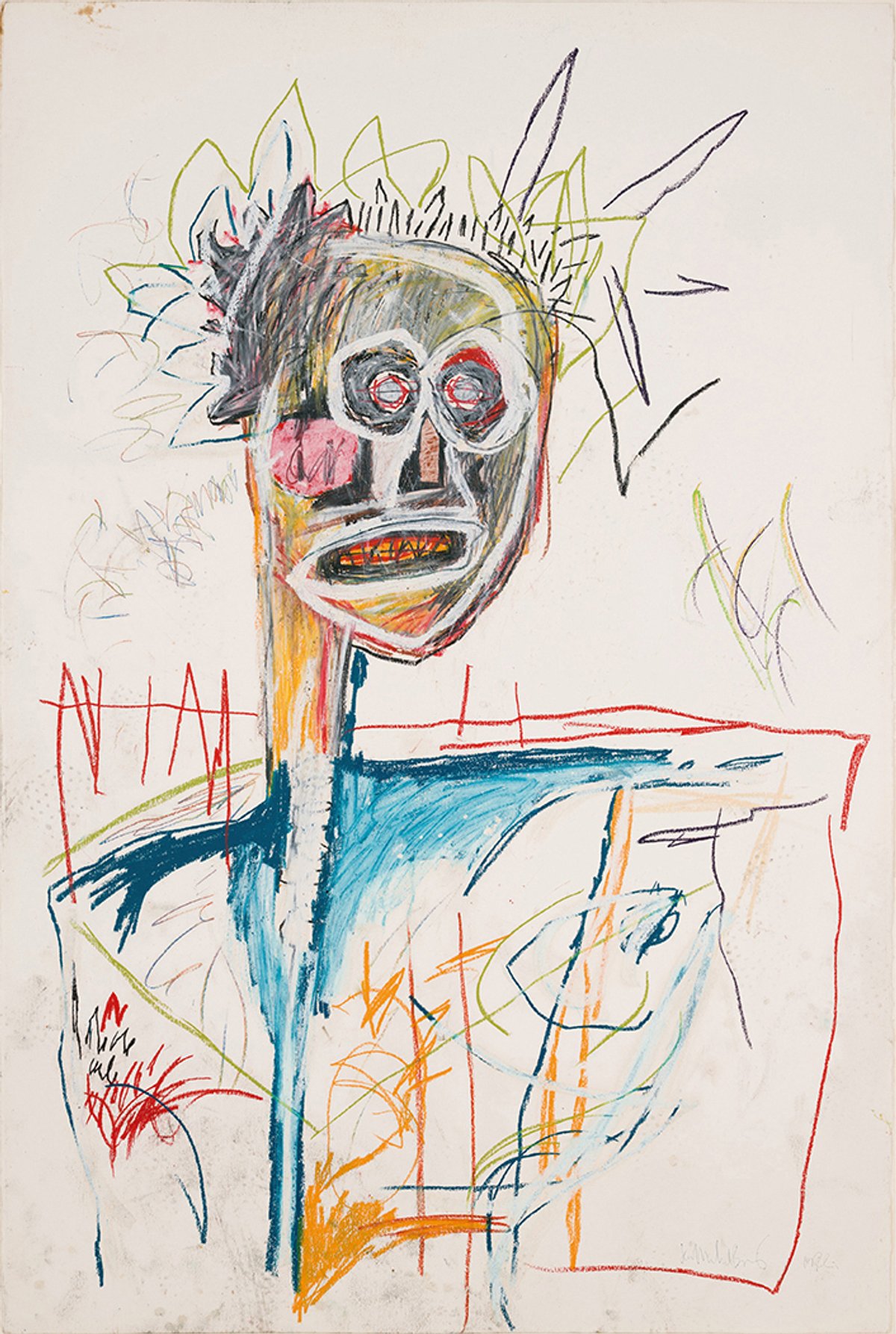
When a 22-year-old Jean-Michel Basquiat (1960-88) was asked how he typically began a piece, his answer was simple: “I suppose I would start with a head.” That instinct—almost a reflex—sits at the core of a remarkable group of early works on paper that remained largely unseen during his lifetime. The Basquiat: Headstrong exhibition, which opens this month at the Louisiana Museum of Modern Art in Denmark, is set to become the first comprehensive showing devoted to the artist’s depictions of the human head, focusing predominantly on works produced from 1981 to 1983.
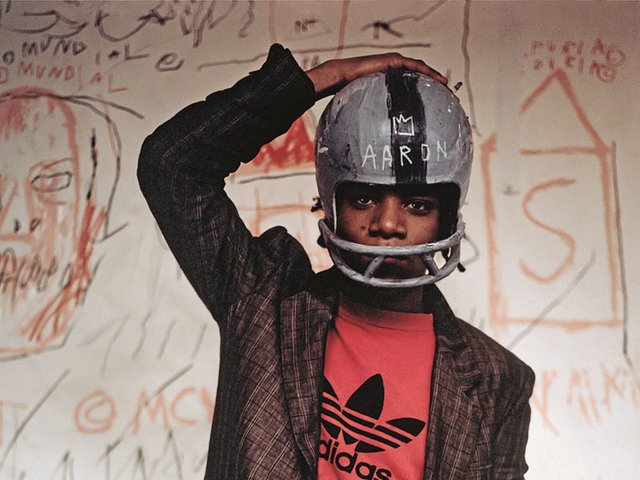
Many of these drawings appear to have been made on the studio floor; smudges, dirt and even the faint marks of sneaker soles linger on their surfaces. Oil sticks, already a familiar tool to the artist, were often the sole medium. Basquiat kept many of these sheets close—so close, in fact, that several of them were hidden away in his studio, shielded from public view for years. While Basquiat began incorporating photocopied colour drawings into his paintings and assemblages after 1981, the “head” drawings mostly escaped this process. They remained separate, a kind of private vocabulary he never repurposed in the way he did other elements.
It was not until 1990—two years after his death—that these works reached a wider audience, when Robert Miller Gallery in New York mounted an exhibition of 142 works on paper, including 27 of the heads. The curator John Cheim, who organised the show, recalled sifting through the estate’s holdings and being struck by these unfamiliar, forceful images. Their boldness, he felt, suggested that Basquiat “retained them because he thought that they were special”. But even then, two years after his death, many museum curators would turn to Cheim and ask: “You don’t really think he’s a great artist, do you?”
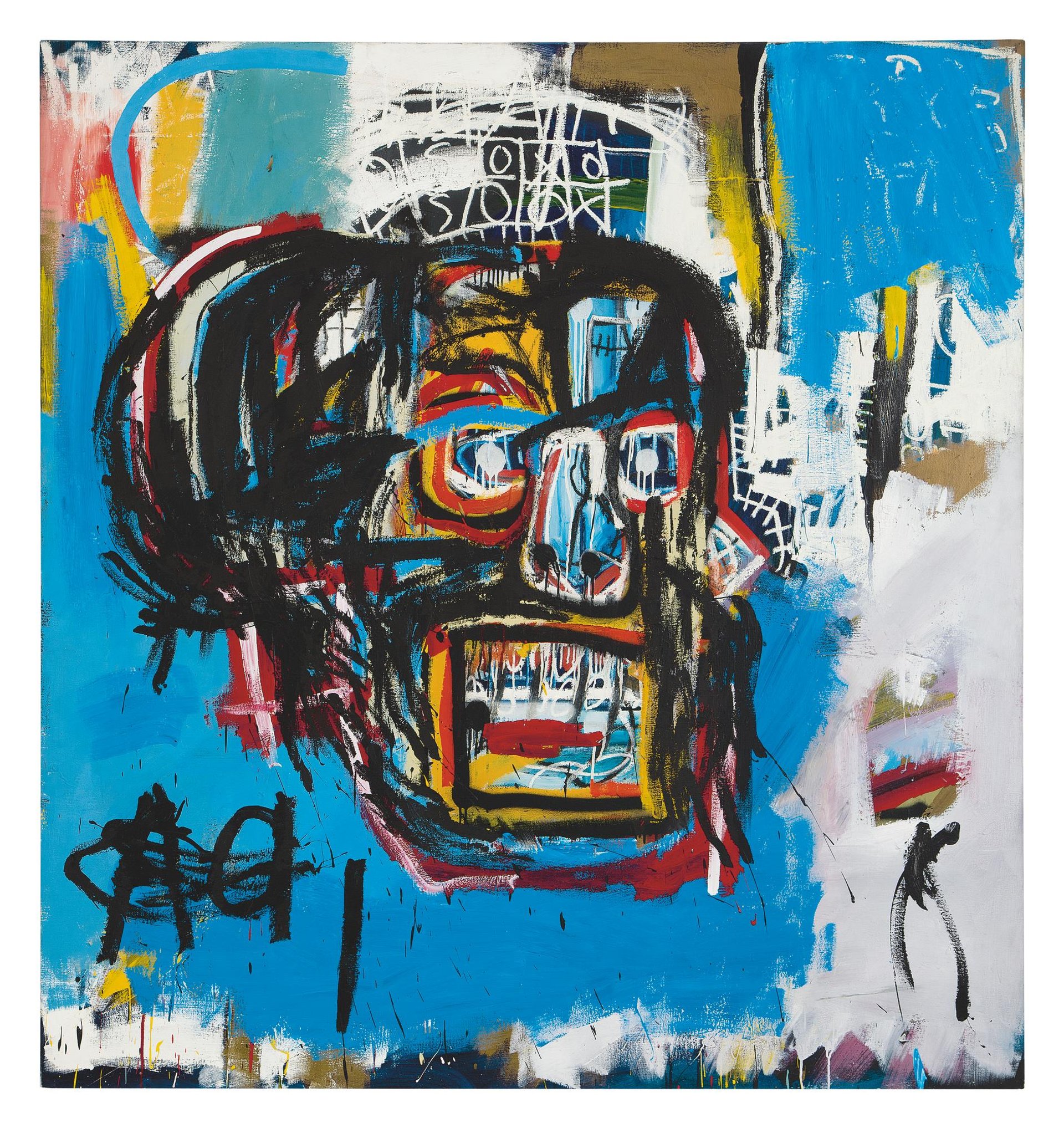
Basquiat’s Untitled (1982) set a record for a US artist when it was auctioned in 2017 for $110.5m
Estate of Jean-Michel Basquiat. Licensed by Artestar, New York. Photo courtesy of Sothebys, Inc. 2025
Few clues
Except for the 1983 Daros Suite, Basquiat rarely titled his drawings, leaving no direct clues about their intended meanings. The imagery, however, speaks on its own. In his accompanying essay, the Louisiana curator Anders Kold describes Basquiat’s heads as ranging “from having something close to the fullness of living flesh to the appearance of skulls, masks or mechanical, automaton-like figures” that “occupy the centre of the paper” but are “characterised by shuddering dissonances between their anatomical parts”. Though most are presented head-on, shifts in angle often disrupt the internal structure, creating the sense that these faces are splitting, rotating or collapsing under emotional pressure. Lines loop, spiral and weave through and around these figures, forming dense networks that suggest both distressing thought processes and physical tension.
Basquiat’s longtime fascination with anatomy adds another layer. When he was seven years old, after being hospitalised following a car accident, Basquiat received a copy of the Gray’s Anatomy medical reference book (originally published in 1858) from his mother. He studied it closely, and echoes of its illustrations ripple through these drawings. The artist also found inspiration in 19th-century science more broadly. His 1983 work Untitled (Charles Darwin), for example, brings together Darwin, Thomas Huxley and Gregor Mendel—figures whose ideas about evolution and heredity resonated with the artist’s relentless probing of what makes up a person, inside and out.
The exhibition will feature a single painting as an example of the artist’s better-known practice (and in keeping with the longstanding format of the Louisiana on Paper exhibition series). Untitled (1982), which combines figurative representation (a large skull or spectral head) and graffiti-like markings set against a soft blue background, was sold in May 2017 at Sotheby’s New York for $110.5m, making it—at the time—the most expensive work by an American artist sold at auction.
The catalogue will also feature new interviews with Basquiat’s friend George Condo, as well as contemporary artists Arthur Jafa, Julie Mehretu, Dana Schutz and Alvaro Barrington.
• Basquiat: Headstrong, Louisiana Museum of Modern Art, Humlebaek, Denmark, 30 January-17 May