The National Museum Cardiff is mounting a major survey exhibition of one of the most famous artists in its collection, Gwen John (1876-1939), nine decades after it invested just £20 on a painting by an artist then almost unknown.
Gwen John: Strange Beauties marks the 150th anniversary of John’s birth in Wales and will be the most comprehensive exhibition of the artist in decades, with major loans from institutions such as the Tate and the Museum of Modern Art in New York. The show, which will travel to Scotland and the US, will aim to emphasise John’s interest in form, materials and colour theory, and will feature late watercolours that she never sold or exhibited but kept in her studio until her death.
John’s work rarely sold in her lifetime, even though she was greatly admired by other artists, particularly her Paris contemporaries. Now though, those same works are cherished by major museums and private collectors across the world, while her life is celebrated in biographies, films and documentaries. The prophecy of her rambunctious brother Augustus John—who overshadowed his quiet sister—that 50 years after their death she would be the more famous, has come true.
‘My little paintings’
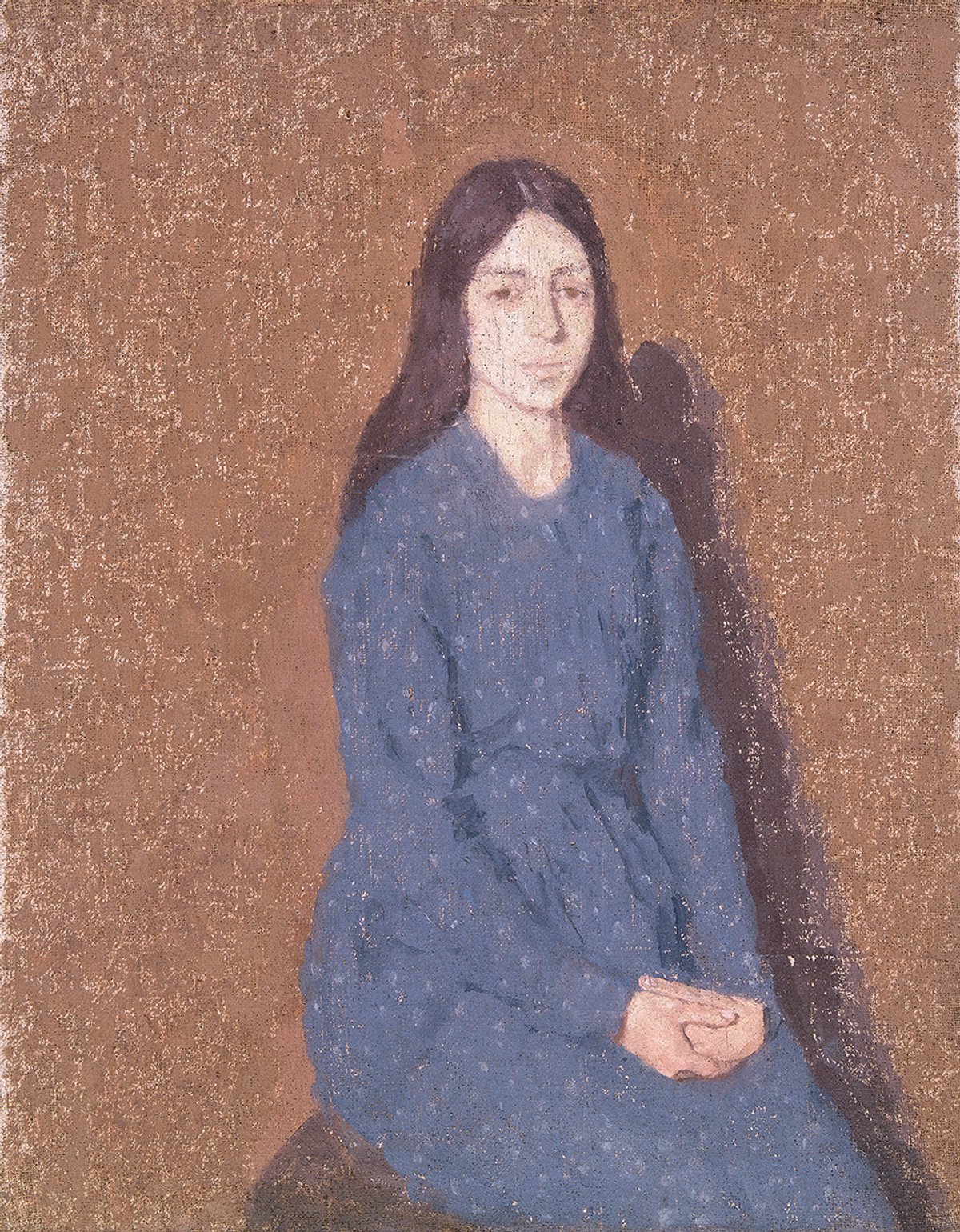
Augustus championed his sister’s work and included eight of her paintings in an exhibition of contemporary Welsh artists—one of which, Girl in a Blue Dress, the Cardiff museum bought in 1935 for £20. At the time, John had held just one solo exhibition, and of the few paintings she had ever sold, most were in the US through her only influential patron, the collector John Quinn. She wrote to David Kighley Baxandall, the museum’s assistant keeper of art, from her home on the outskirts of Paris: “I am very pleased and honoured that you have bought one of my little paintings for the Museum, and I thank you for your praise and criticism of it. In an article on the exhibition, your competent and intuitive appreciation of my brother’s work has given me pleasure.”
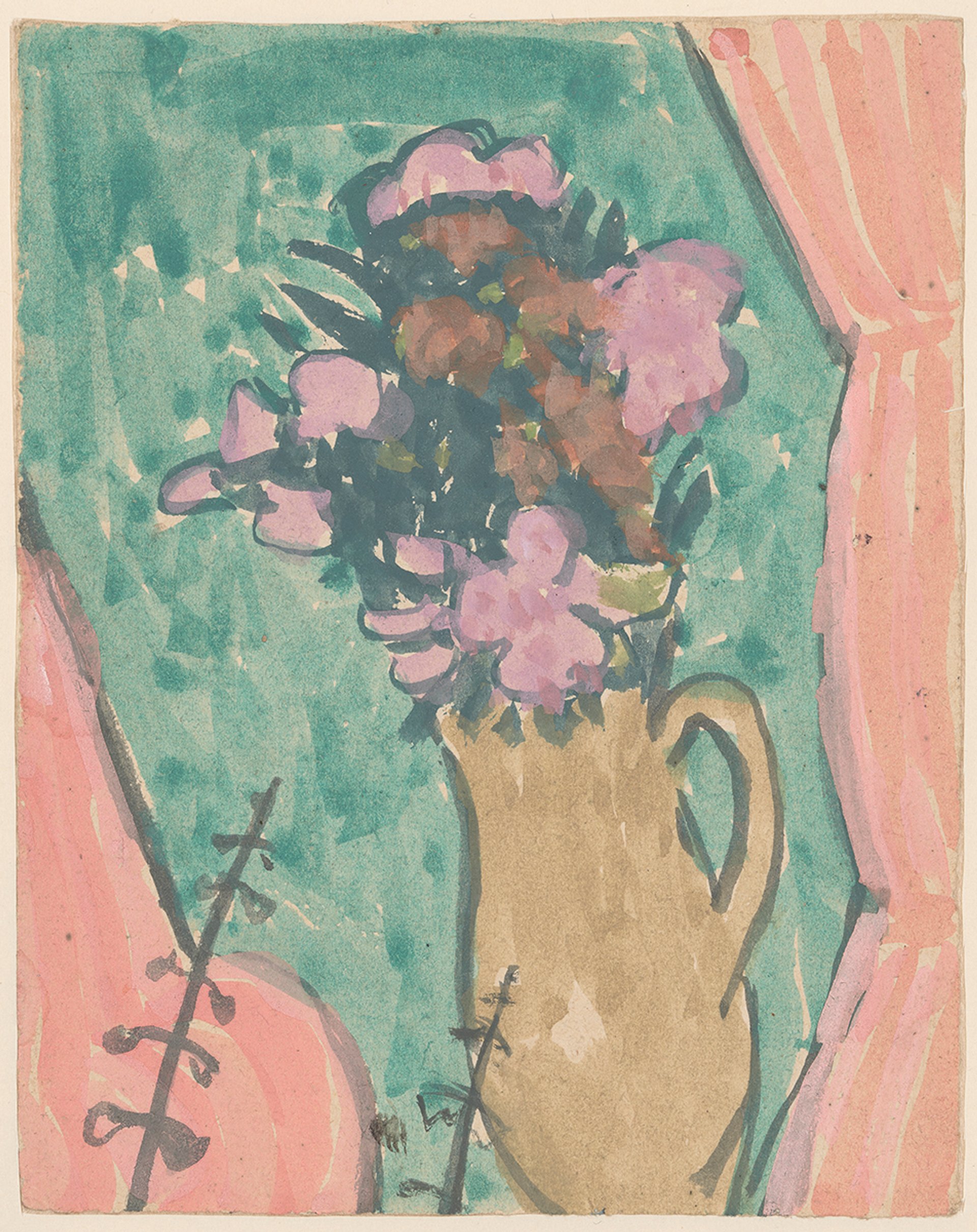
John’s Flowers in a Jug Courtesy of Amgueddfa Cymru—Museum Wales
The museum continued to collect her work, and in 1976 acquired the archive of over 900 drawings, letters, photographs and notes that she had kept in her studio until her death in Dieppe in 1939, giving them the largest collection of her work in the world. The exhibition title, Strange Beauties, comes from the artist’s description of herself as “a seer of strange beauties, a teller of harmonies, a diligent worker”.
Lucy Wood, the co-curator of the exhibition, believes the emphasis on John’s life—for example, her passionate relationship with the sculptor Auguste Rodin, and the perception of her as an eccentric recluse after its breakdown—and the reading of her paintings of solitary women and empty rooms as autobiographical, has distracted from the importance of the work itself. “She has been seen as both a timid recluse and a paragon of feminism and neither view is wholly true,” Wood says.
After months reading hundreds of pages of mainly unpublished notes, letters and drawings in the archive, Wood believes they reveal aspects of John’s life and work that have been overshadowed by the biographical emphasis of many exhibitions. Wood sees John’s conversion to Roman Catholicism in 1913, and her close relationship with the convent near her home, not as a further retreat from life but as broadening her art, her subjects and her techniques.
The late watercolours reveal a wider colour range, often using new synthetic paints, and more diverse subjects than the famous grey-and-blue seated women with their meekly folded hands. Wood sees less a wan recluse than a woman who determinedly made a space of her own where she could work, and an artist who was very aware of the work of contemporary artists, thinkers and writers.
“The main takeaway is that she was an incredibly dedicated and thoughtful woman, driven by a passion for art,” Wood says. “She never stopped working to the very end. She worked hard every day, thought deeply about colour and form, and wrote about what she did. That’s what we hope to show in this exhibition.”
• Gwen John: Strange Beauties, National Museum Cardiff, 7 February-28 June; National Galleries Scotland, Edinburgh, 1 August-4 January 2027; Yale Center for British Art, New Haven, 18 February 2027-20 June 2027; National Museum of Women in the Arts, Washington DC, 30 July 2027-28 November 2027