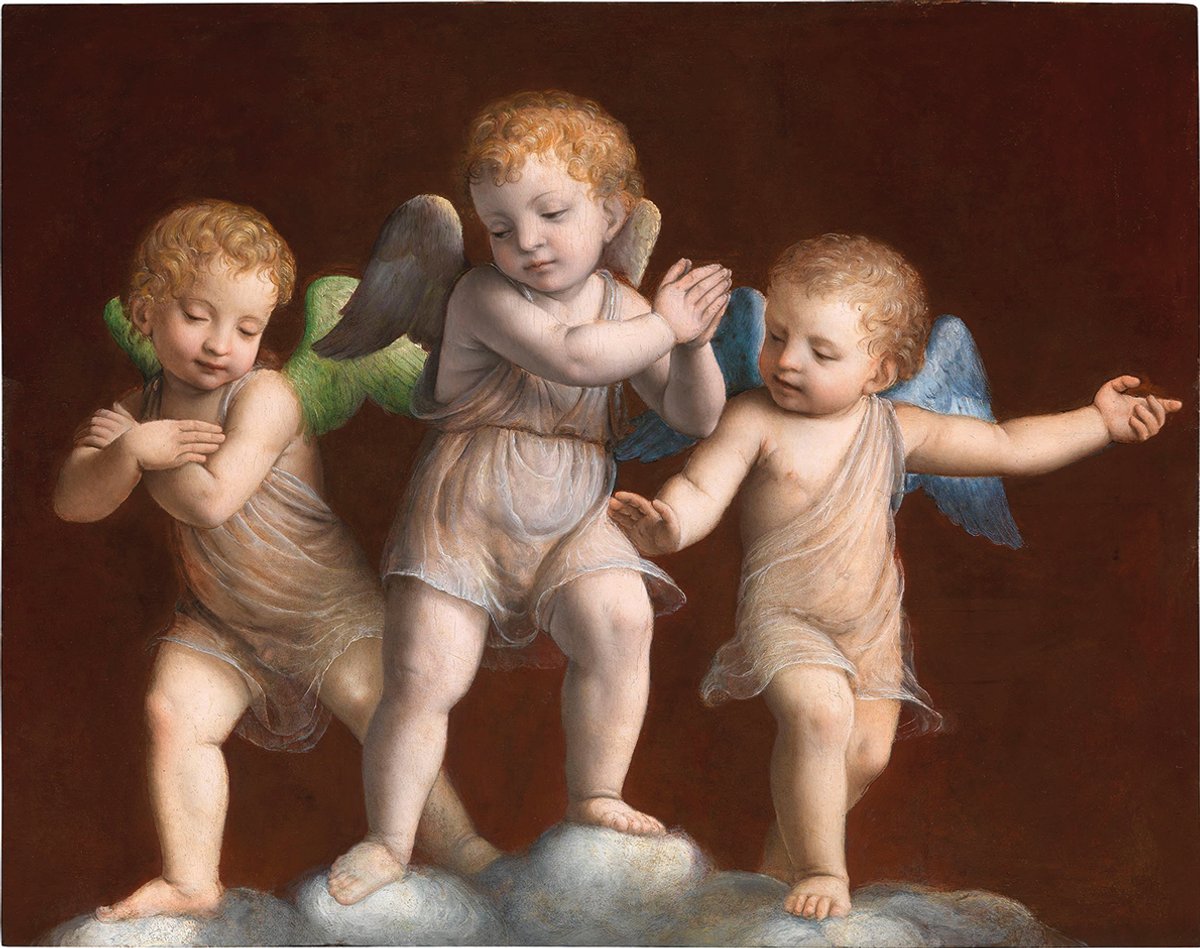
The former picture researcher Caroline Chapman provides a wealth of contextual information about key historic paintings in her new publication Painted Mysteries: Interpreting Great Paintings. The author has looked at more than 135 paintings, from Botticelli to Boucher and Raphael to Rembrandt, “recounting the stories the artists were depicting and unravelling the layers of meaning that modern viewers may find elusive or mysterious”, according to the publishers. Below is a short extract form the book’s illustrated glossary, outlining some of the most common symbols and motifs used by artists throughout the centuries.
Extract from Painted Mysteries: Interpreting Great Paintings
Apple
Eve ate the forbidden fruit from the Tree of Knowledge in the Garden of Eden. Although the fruit is not specified in the Bible, it was taken to be an apple, perhaps because malus is Latin for both apple [tree] and evil. An apple thus represents original sin and the Fall of Man. However, if held by the Christ Child it signifies salvation and redemption.
Archangel
The order of angels that most frequently interact with humanity. The three most important ones are: Michael, messenger of divine judgement, who is depicted with a sword or a pair of scales with which he weighs the souls on Judgement Day; Gabriel, messenger of divine mercy, holds a lily at the Annunciation; Raphael is particularly associated with healing.
Book
An attribute that represents intelligence and the contemplative life. In portraits, it is a sign that the sitter is educated and learned. The Virgin Mary is often reading a book at the Annunciation.
Butterfly
Because the caterpillar transforms itself into a pupa, then a butterfly, it symbolises life, death and resurrection. It can also be a symbol of the resurrected human soul. Butterflies sometimes appear in still-life paintings as a reminder of the transience of life.
Candle
The eternal light that burns in churches symbolises the presence of God or the Holy Ghost. A recently snuffed-out candle can also signify that God is present. A lit candle can refer to the transience of life.
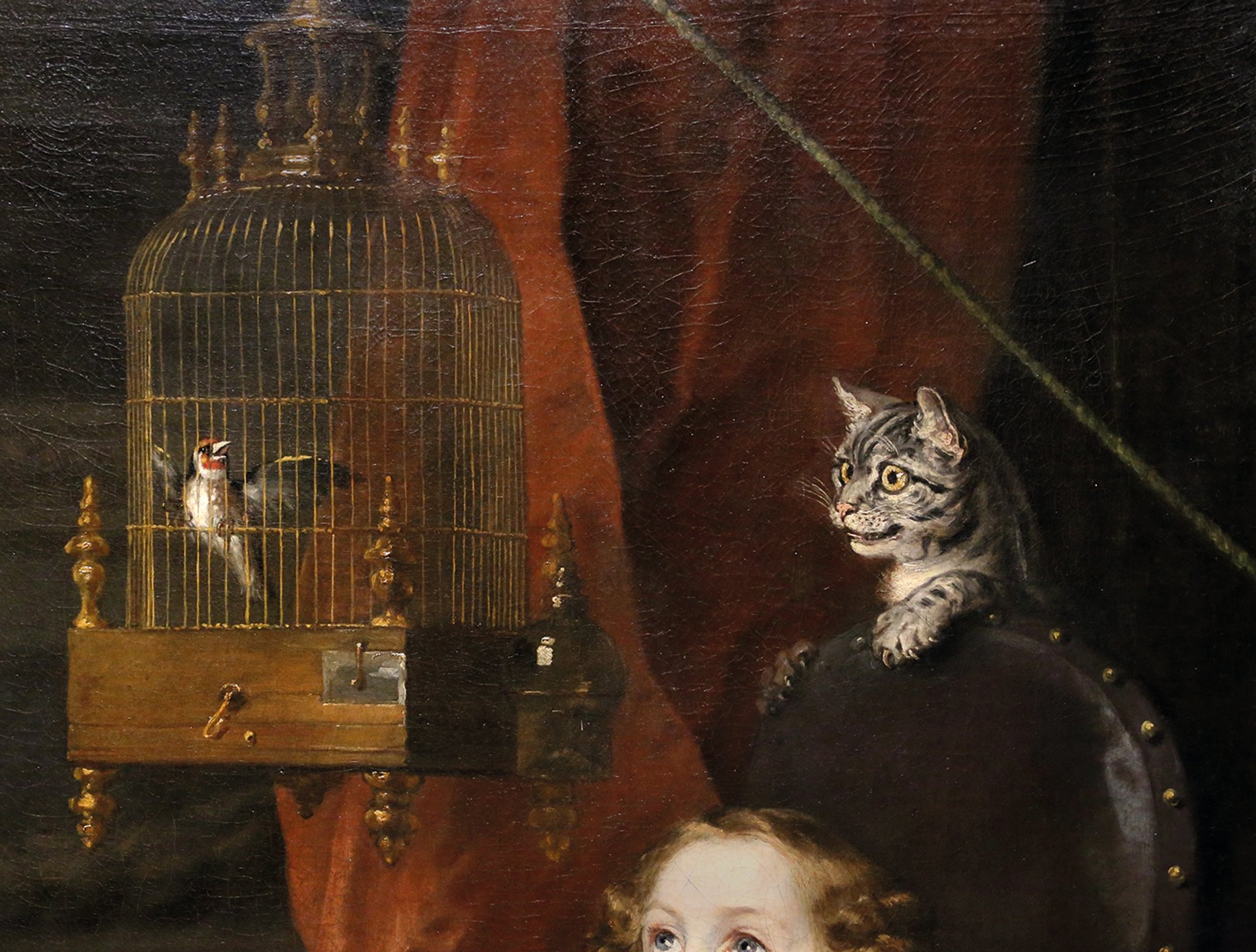
A detail from William Hogarth's The Graham Children (1742)
Carnation
A symbol of Christ since its Greek name, dianthus, means “the flower of god”. Red ones refer to a betrothal or marriage, and are also symbolic of maternal or compassionate love as they were said to grow on the ground where the Virgin Mary’s tears fell at the Crucifixion. Three red carnations together recall the three nails with which Christ was hammered to the cross.
Cat
A symbol of satanic mischief, lust, darkness and laziness. Cats are not mentioned once in the Bible. In art, they feature as mediators between the human and animal kingdom.
Columbine
It was so named because the flower was thought to resemble
doves in flight. Hence, the flower is a symbol of the Holy Ghost. Seven blue
columbines are symbolic of the Seven Sorrows of Mary.
• Caroline Chapman, Painted Mysteries: Interpreting Great Paintings, Unicorn Publishing Group, 160pp, £25 (hb)