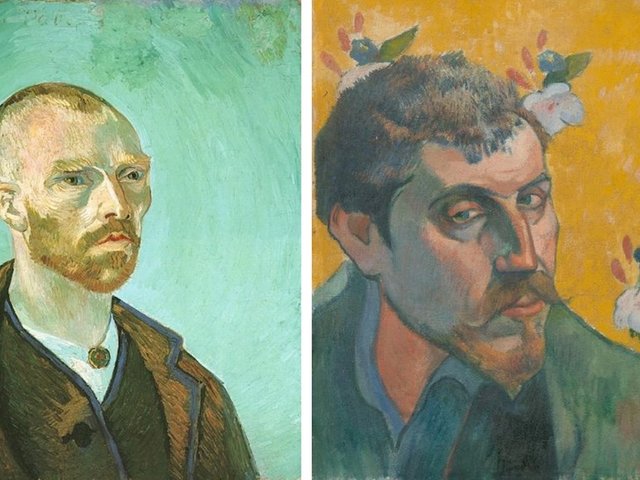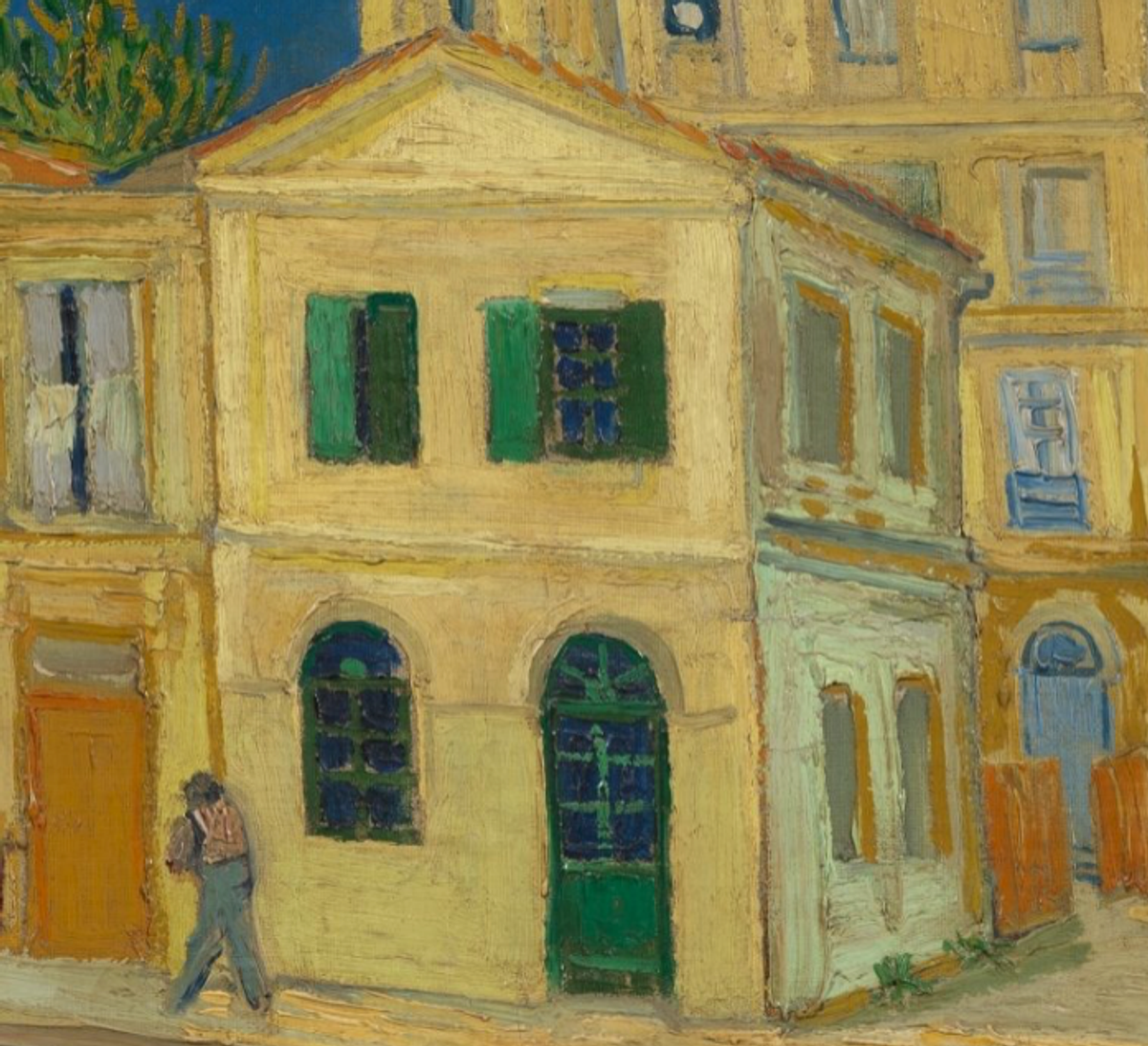

Van Gogh was struck by the colour of the modest building that he rented in Arles, calling it the Yellow House. Sadly, it was bombed during the Second World War and then totally demolished. But evidence has now emerged that, in the late 1930s, its exterior was actually painted blue.
When Vincent rented the Yellow House on 1 May 1888, he sent a little sketch and wrote to his brother Theo: “Today I rented the right-hand wing of this building… it’s painted yellow outside, whitewashed inside.”
Set in Place Lamartine, near the railway station, the building had two wings. The left side was occupied by a grocery shop (it has a pink awning in Van Gogh’s painting). The right side (with the green windows) was Van Gogh’s, with two small bedrooms upstairs, his studio was behind the front door and the kitchen was at the rear.
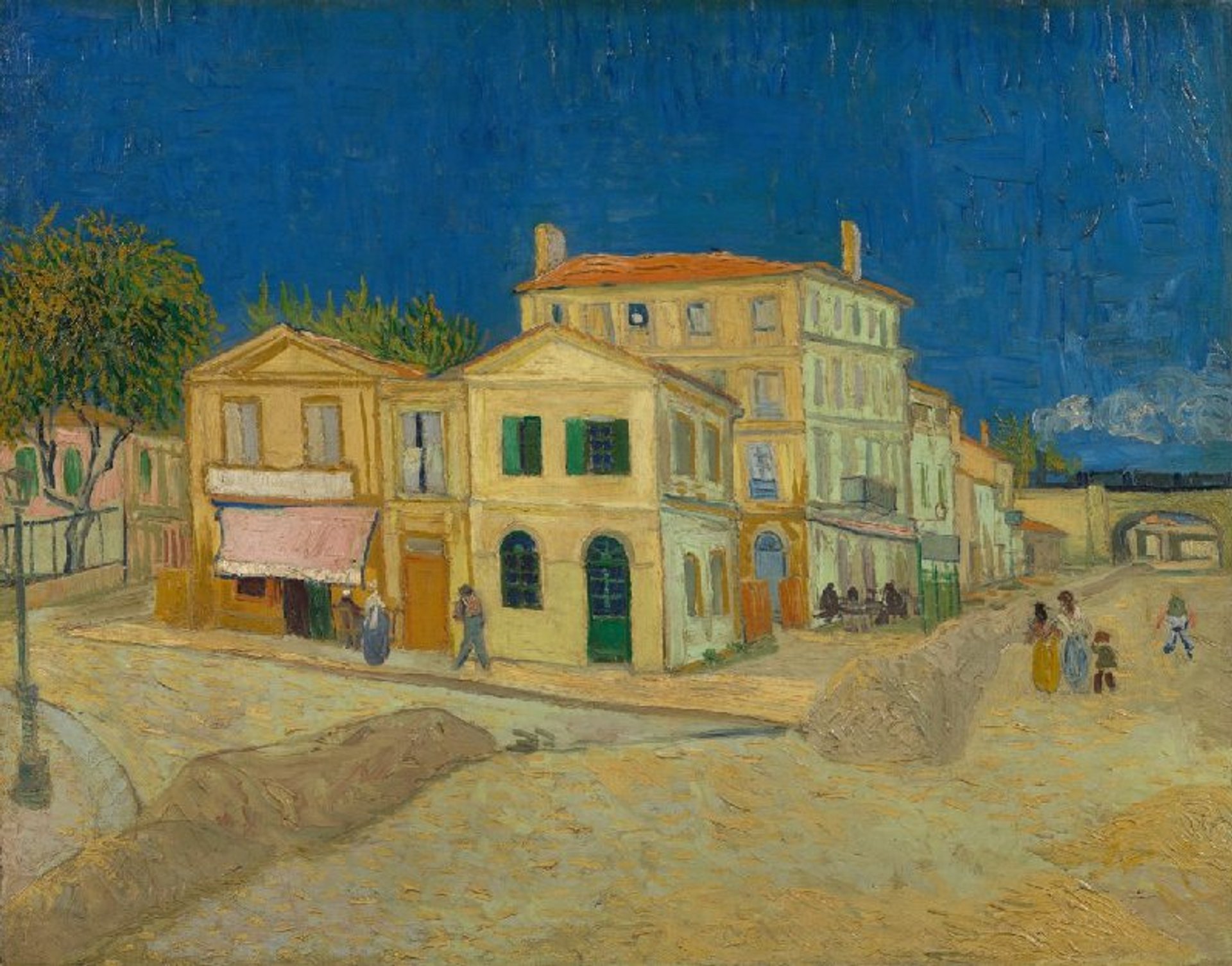
Van Gogh’s The Yellow House (September 1888)
Van Gogh Museum, Amsterdam (Vincent van Gogh Foundation)
The facade was painted yellow when Van Gogh took it on, but it must have been faded because he soon had it repainted - in yellow, of course. Although the artist was always short of money, he did not wield the paintbrush himself, but got someone else to do it.
From then on Van Gogh lovingly called it “my little yellow house”. Yellow was his favourite colour - and this may even have helped swing his decision to rent that house. (Yellow is the subject of an exhibition which has just opened at Amsterdam’s Van Gogh Museum.)
Initially Van Gogh just used the Yellow House as his studio and then from September 1888 he also slept there. In October Paul Gauguin came to stay, until the terrible evening of 23 December when Van Gogh mutilated his ear.
Yellow turns to Blue

Van Gogh’s Yellow House later became a café-bar: a postcard of the Civette Arlésienne (around 1938)
The grocery shop and Van Gogh’s former home were turned into a café-bar and tobacco shop in the 1920s, the Civette Arlésienne. With only black-and-white pre-Second World War photographs available, it has always been assumed that the building’s exterior remained a yellowish hue. But two relatively unknown paintings, brought to our attention by the Kyiv-based Ukrainian artist Yuri Pikul, suggest a rather different story.
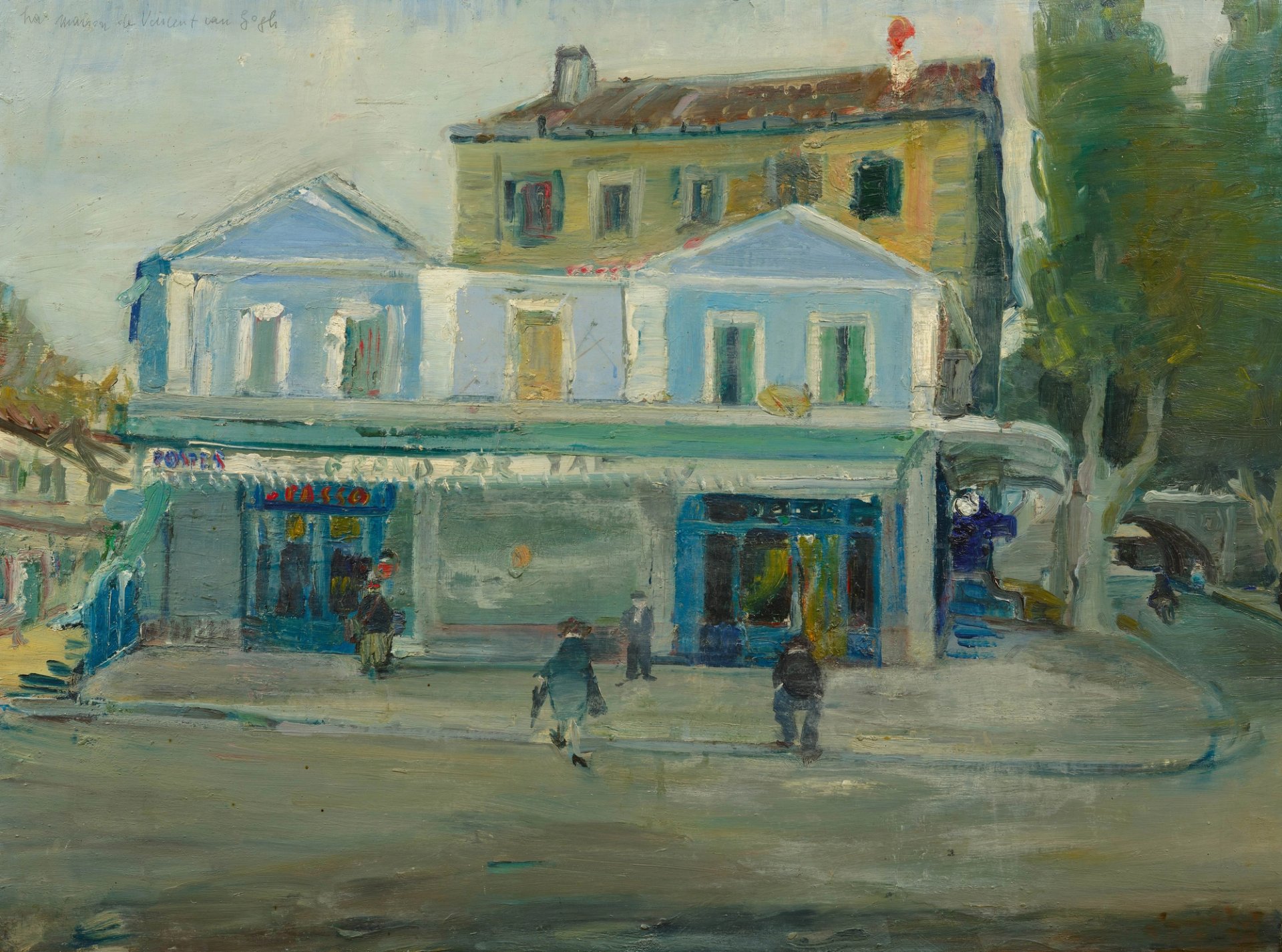
Willy Guggenheim (Varlin), The House of Van Gogh (1938)
Varlin Archive, Bondo (Switzerland) and Koller Auktionen, Zurich
The Swiss artist Willy Guggenheim (1900-77) visited Arles in August 1938 - and depicted the house with a blue facade. Distantly related to the Guggenheim museum family, he preferred not to be associated with them professionally and therefore worked under the name Varlin. Astonishingly, there is a surviving photograph of Varlin at work outside the Yellow House (he is shown painting a second picture, which was bought by Zurich city council for its offices).
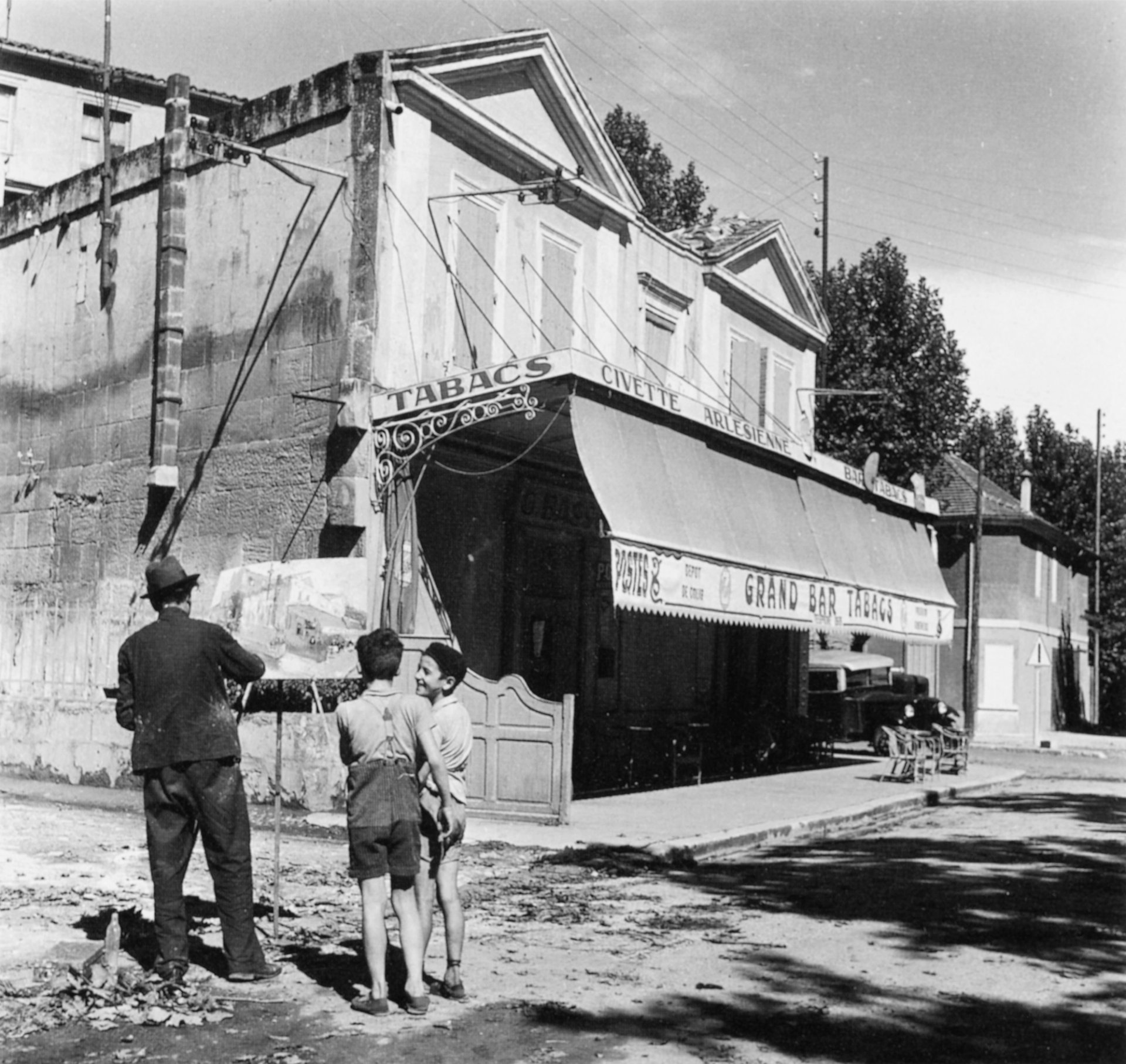
Willy Guggenheim (Varlin) with his easel outside the Yellow House (August 1938)
photograph by Theo Frey, courtesy of Varlin Archive, Bondo
The following year the house was depicted by the Romanian artist George Tomaziu (1915-90), who showed the exterior as a pale blue.
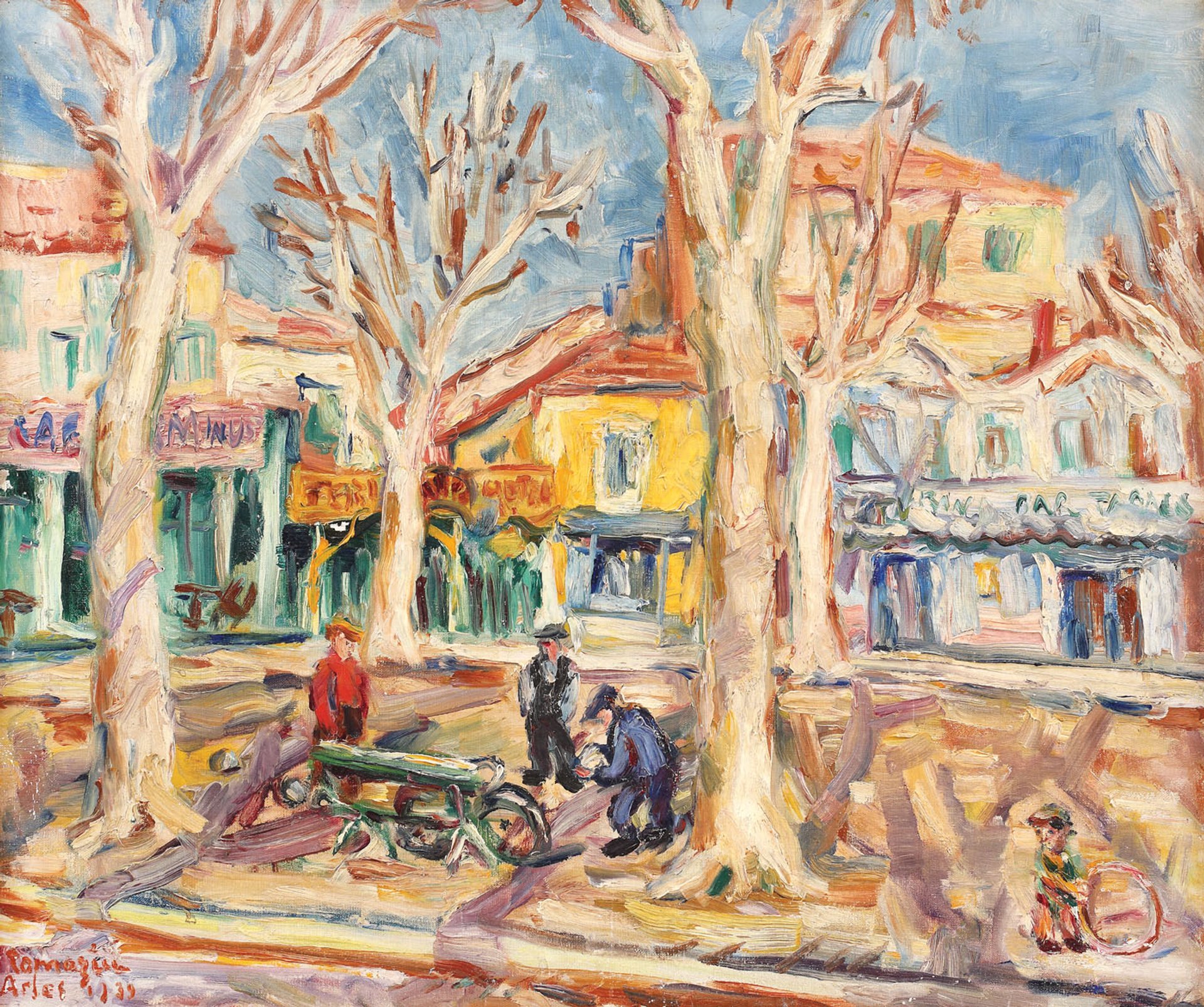
George Tomaziu’s Street in Arles (1939)
Artmark, Bucharest
As two independent artists depicted the building as blue, this must have reflected its actual colour in the late 1930s, rather than artistic licence. Both artists, who made pilgrimages to Arles, would also have known that Van Gogh had called it the Yellow House.
Destruction
On 25 June 1944 American bombers launched an attack on Arles. Place Lamartine, located close to the strategically important station and rail bridge across the Rhône, was devastated. The former grocery shop was completely destroyed and the Yellow House was severely damaged.
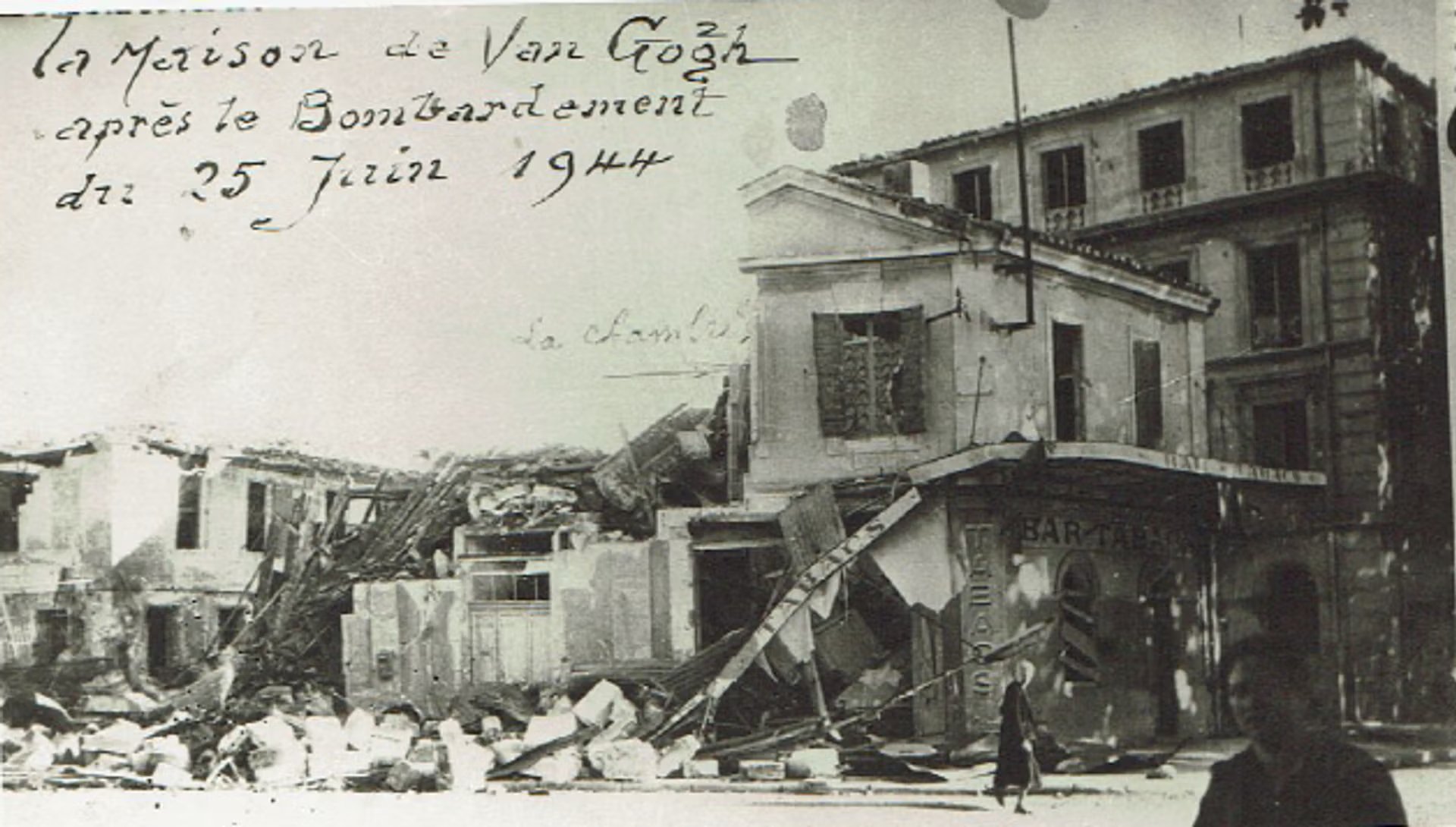
Postcard showing Van Gogh’s house after the bombing of 25 June 1944
Van Gogh’s bedroom was obliterated, although Gauguin’s bedroom (on the right side) partly survived. The walls of the studio and kitchen suffered less damage, but the ceiling collapsed.
The Yellow House could have been rebuilt, but it was simply demolished. Even the plaque commemorating Van Gogh’s stay, installed on the facade in 1922, was lost and never recovered.
Had the Yellow House survived, it would have become among France’s most-visited tourist sites outside Paris - and would have transformed the economy of Arles.
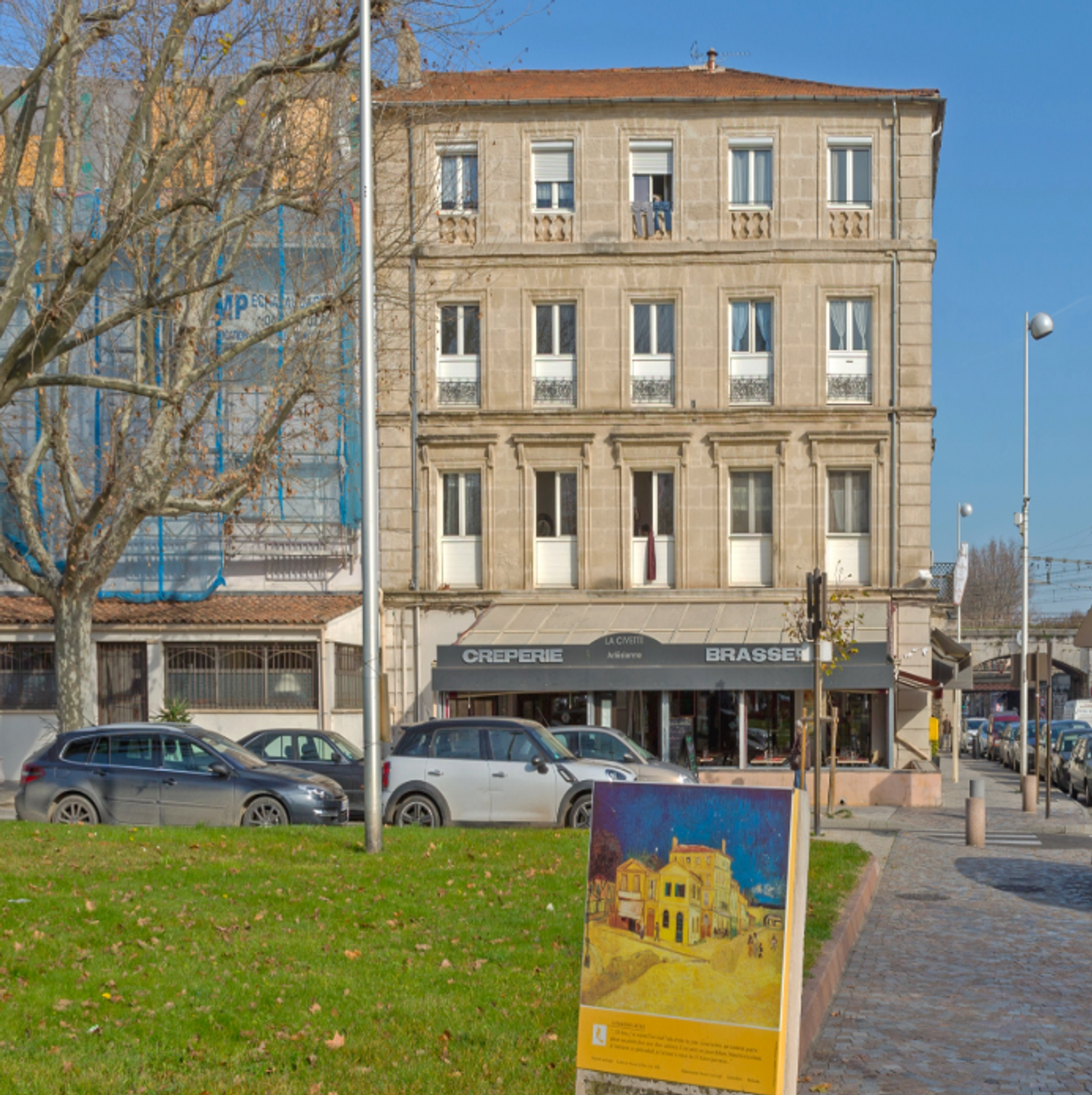
Where the Yellow House once stood: It was between the plaque and the street straight ahead (the taller building in Van Gogh’s painting still survives and appears in this photograph)
markobe - stock.adobe.com
Other Van Gogh news
The J. Paul Getty Museum in Los Angeles has a new logo, publicised with a detail from what must be their most popular painting: Van Gogh’s Irises (May 1889).
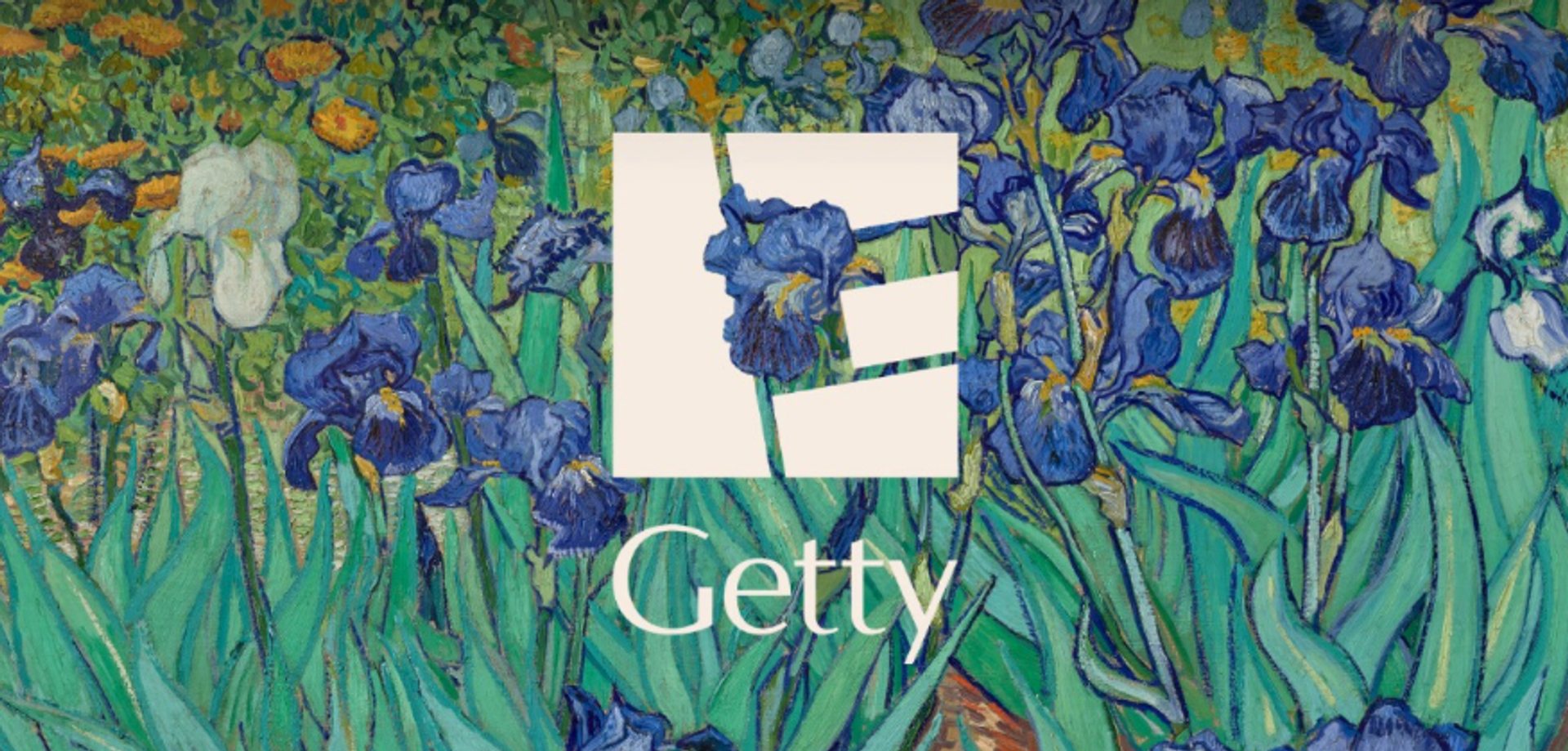
The Getty’s new logo, designed with Fred & Farid, New York
J. Paul Getty Museum, Los Angeles