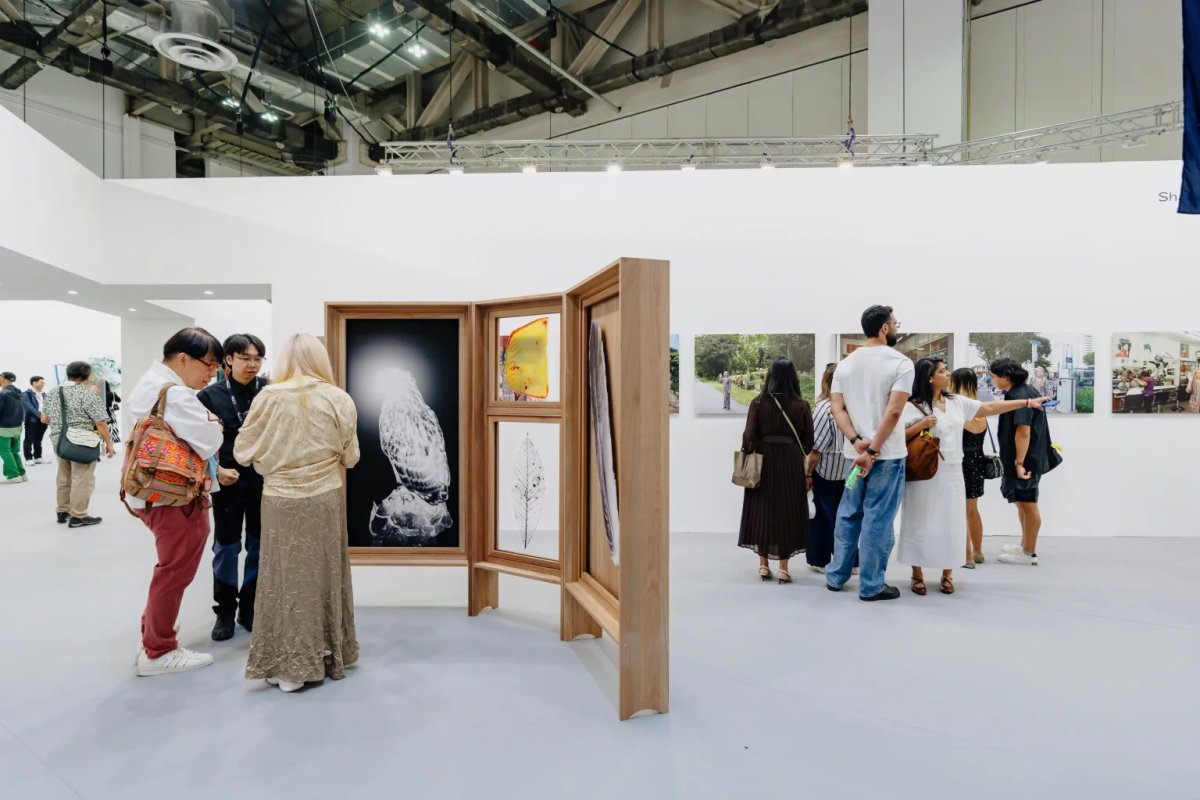
The uncertain future of two regional institutions dominated discussions during this year’s Singapore Art Week (SAW), which ran from 22 to 31 January. For the first time, curated Southeast Asian boutique fair S.E.A. Focus, running since 2019, was folded into Art SG, now in year four.
Some participants quietly expressed concern that the step preceded the larger, more expensive fair absorbing S.E.A. Focus entirely. Meanwhile controversy over a widely-criticised edition of the Singapore Biennale, first held in 2006, culminated into an equally controversial article in local paper Straits Times calling for its outright termination.
Both the Biennale and S.E.A. Focus have, for all their shortcomings, been crucial nubs of activity growing the critical and commercial visibility of Southeast Asian artists. S.E.A. Focus’s combination with Art SG seems an effort to streamline SAW’s two commercial events into a coherent entity, though its sponsoring body, Singapore’s National Arts Council, has been coy about the exact reasons.
“Moving meant the platform could reach a broader audience and bring Southeast Asian art into a larger global dialogue,” says John Z.W. Tung, curator of this year’s S.E.A. Focus themed around art’s role in finding compassion amidst global turmoil. Tung has curated the fair since 2023, on a contract ending after this edition. He adds that the exposure also comes with new challenges: “The intimate community dynamics that defined S.E.A. Focus needed to be balanced with the scale of ART SG, which I feel we tackled successfully. I also see this as an opportunity to engage in dialogue that is not just about visibility, but about how art can reflect the political, ecological, and social changes within the region.”
Sales feedback was “generally strong”, says Tung: “there was palpable interest in the works, with a recognition that Southeast Asian art has long been evolving but still struggles with global recognition. Many galleries reported meaningful connections that extended beyond just transactional engagements, highlighting how important it is to foster an ongoing dialogue between collectors, artists, and curators.”
Tung would “welcome the chance to return,” if invited to renew his contract with S.E.A. Focus. “At the same time, we must continue to evolve the platform in response to regional and global shifts.” He says it must remain “about continuing to challenge the framing of Southeast Asian art within a global context. I hope we can keep pushing this conversation forward, even more effectively.”
Some Southeast Asian galleries anonymously described feeling like “sub-sectors” of the main fair, and suspicious that the move was undertaken to bolster Art SG’s diminished numbers—down to 95 galleries, from 2023’s 160. They fear that even if S.E.A. Focus survives there will be pressure on them to move over to Art SG, where booths are $690 per sq m for the main section, compared to S.E.A. Focus’s more affordable flat rate of SGD 8,000 ($6,320), which is made possible through the support of the National Arts Council.
However, the largely positive feedback augurs well for the platform’s return next year. “We found the venue to be well-organised, accessible, and thoughtfully integrated within the broader Art SG ecosystem," says Deborah Iskandar, owner of Jakarta’s Isa Art Gallery. She felt the incorporation with the bigger fair was “especially beneficial, as it allowed for cross-regional visibility and brought in a more diverse group of collectors and institutions.”
Isa’s section provided a dramatic entrance to S.E.A. Focus with the dramatic ceiling-hung flags made by Indonesia’s Arahmaiani. Her Flag series works with communities around the world to embroider concepts most important to them, in their own languages, on the bright banners. Also exhibiting Ines Katamso’s ecological compositions, Iskandar says they “placed several key works with several collectors” for prices between $3,600 and $19,500. “We hope [S.E.A. Focus] continues to grow as a platform that supports critical discourse, long-term artist development, and deeper regional engagement beyond purely commercial objectives.”
“The inclusion of S.E.A. Focus at Art SG this year was a major success. This strategic collaboration brought a strong contingent of Southeast Asian artists and galleries to the fair, amplifying the platform’s reach,” says Art SG cofounder Magnus Renfrew. “Looking forward, I see S.E.A. Focus continuing to grow and provide more opportunities for local and regional artists to engage with the global market. The themes explored—especially around urgent global challenges like ecological crises, displacement, and peace—are more relevant than ever, and I’m eager to see how the platform evolves in the coming years.”
Overall, says Renfrew, “Singapore and Southeast Asian art markets continue to demonstrate remarkable momentum.” Visitors to SAW and the fairs this year included including Michael Govan, chief executive and Wallis Annenberg, director of the Los Angeles County Museum of Art (Lacma), Tate’s outgoing director Maria Balshaw, and the collectors Rajeeb Samdani and Han Nefkens.
The week also included Sotheby’s annual Modern and Contemporary, which achieved $13.1m across 62 lots, with new auction records for Southeast Asian artists Pacita Abad and Anthony Poon. “We really felt this confidence on the ground at Art SG,” says Renfrew, with major sales such as Danh Vo’s Untitled (2022) for €260,000, Michael Armitage’s 1: The Trial (2025) at $280,000, and three Cai Guo-Qiang gunpowder on canvas works for $120,000 each at White Cube. Johyun Gallery sold out all works of a presentation by Lee Bae for a total of USD 2,758,000.
Thaddeaus Ropac saw major sales including Raqib Shaw’s Fall of the Jade Kingdom I - Paradise Lost Chapter II, (2014–2023) for £475,000, Antony Gormley’s SET VII (2024) for £450,000, David Salle’s Bow Ties (2025) for $250,000 and Lee Kang So’s The Wind Blows – 230928 (2023) for $100,000. “There was a good energy at the fair and across Singapore's art scene during the week,” says the gallery’s director, Asia, Dawn Zhu. “The fair felt busy and, in addition to the local attendees, we saw collectors from across the region including from Japan, Korea, Thailand, Indonesia, Hong Kong and mainland China, and notably more institutional attendance than last year, with a number of groups from major international museums.” SAW’s programming has continued to mature, she says, while “collectors are very considered in what they are buying, engaging deeply and thinking about long-term purchases. We saw strong engagement and sales of works by both established international names and artists with a connection to Asia, which reflects a desire to grow diverse and authentic collections.”
Singapore’s Ministry of Trade & Industry projects the city-state’s GDP to grow by 2% to 4% this after, after growth of 5% in 2025 driven by manufacturing and technology, despite a sluggish consumer economy. However, Singapore’s role within Southeast Asia means it also facilitates art sales to neighbours like Thailand, the Philippines and Indonesia, whose art scenes are maturing despite political instability.
“Singapore has been serving as an important gateway to the vibrant [Asia Pacific] art scene with robust interest amongst art collectors,” says Jin Yee Young, co-head of UBS Global Wealth Management Asia Pacific. She cites the Art Basel and UBS Survey of Global Collecting 2025 report, which “reinforces Singapore's significance, showing it is now the fifth-largest global importer of art and antiques, with import values rising significantly by 74% to just under $1.7bn in 2024. Furthermore, optimism is high among collectors, with 81% of HNWI's surveyed in Singapore feeling optimistic about the outlook for the global art market in the next six months.”
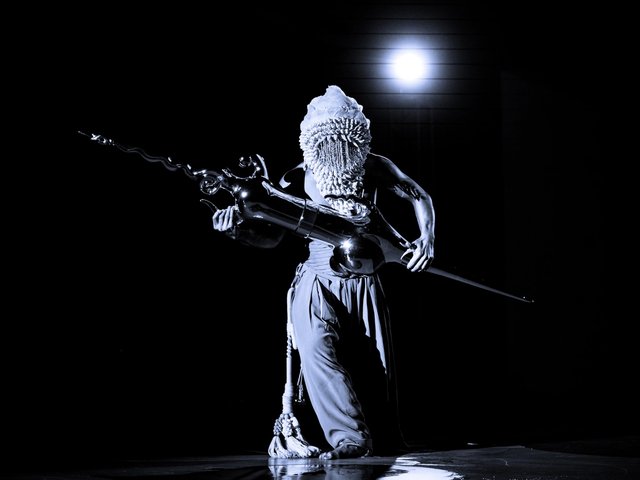
UBS this year presented the five hour performance I Love You (2007) by iconic Indonesian artist Melati Suryodarmo, part of a broader incorporation of performance art into this year’s Art SG through a special sector curated by X Zhu-Nowell, director of Shanghai’s Rockbund Art Museum. Suryadono joined Arahmaiani at S.E.A. Focus for a powerful cohort of mid-career Nustantaran women artists as the fair and the week’s standouts. Next to Arahmaiani’s flags hung photographs of vanishing Singapore traditions by this year’s Singapore Pavilion at Venice artist Amanda Heng.
In Art SG’s curated section Platform, Malaysia’s Anne Samat’s installation It Feels Like Home… The Journey Continues (Wide Awake and Unafraid Series) wowed by the fair’s first floor entrance and downstairs Bali-based artist Citra Sasmita’s Bedtime Stories covered her Platform booth with tapestries interweaving ritual and feminism viewed from reclining on the pillow-strewn floor. At the National Gallery of Singapore, Fear No Power: Women Imagining Otherwise celebrated trailblazing Southeast Asian women artists including Heng‘s performances and the powerful sculptures of Dolorosa Sinaga.
Hanging over this year’s SAW was a scathing editorial that ran 6 January in the Straits Times slamming the current Singapore Biennale (until 26 March) for its muddled messaging and impossibly far-flung venues. Longtime arts editor Ong Sor Fern called the show, themed “Pure Intentions” from a 1995 Rem Koolhaas essay, “a ticking of bureaucratic boxes” and “haphazard, disconnected from the community, and inaccessible".
In a joint statement to The Art Newspaper, Low Eng Teong, chief executive of Singapore’s National Arts Council, and Eugene Tan, chief executive officer and director of the Singapore Art Museum, said they “appreciate the feedback and ideas from the arts community and the public” and were reviewing “through ongoing dialogue and reflection…how the Singapore Biennale can best serve artists, audiences, and the wider cultural landscape.”
Low and Tan said they have been working on ways to bring art closer to Singapore communities, and this edition’s format sought to “enable Singaporeans to engage with art beyond traditional museum settings.” They have worked on finding ways to improve signage, tours and print and digital maps over the show’s run, while considering how to improve future editions. They stressed that its role remains important, as “a key platform for local contemporary artists to showcase, experiment and engage through works that speak to local and global audiences,” helping to “develop the local arts scene and place Singapore on the global arts map.”