Art Basel Hong Kong is the latest event on the art calendar to project an uncanny vision of normalcy amid the “largest supply disruption in the history of the global oil market”, precipitated by the US-Israel war in Iran.
The fair’s director Angelle Siyang-Le hopes Hong Kong’s reputation as a stable trading hub can offer “a place for people to gather and build connections in difficult times”. International VIPs do not seem to have been deterred from travelling, she says, and their numbers are “on par with last year”.
Nonetheless, the crowd at Art Basel Hong Kong is increasingly a regional one, with European private buyers particularly thin on the ground at the VIP preview today (25 March). As the Belgian collector Alain Servais noted, “it’s basically just myself and Patrizia [Sandretto Re Rebaudengo] who showed up”. More US buyers were in attendance, particularly those associated with institutions on the West coast in areas with large Asian-diaspora populations, including a group from the San Francisco Museum of Art. Several leading museum heads, including the Guggenheim's Mariet Westermann and Jochen Volz, the general director of the Pinacoteca de São Paulo, were also spotted in the aisles, having flown in to take part in the Hong Kong International Cultural Summit (22-23 March).
The Chinese art market is showing signs of stabilising after a prolonged downturn, with the latest Art Basel/UBS Art Market Report finding a slight uptick of 1% in its total sales last year. Siyang-Le notes that “while the highest-level prices have not yet returned to pre-Covid levels, the volume of transactions in China is still impressive”.
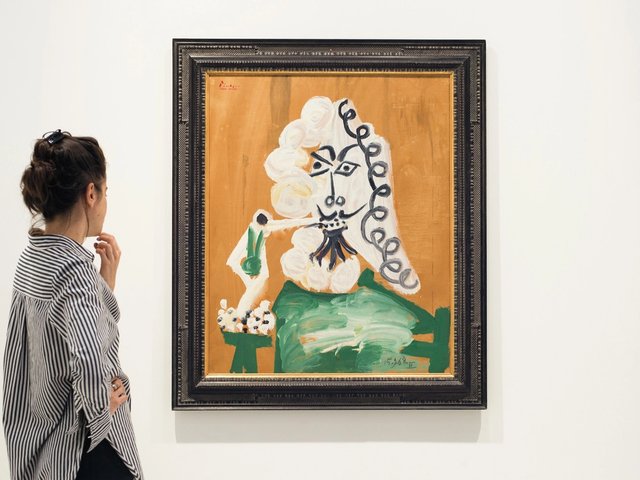
This assessment largely held true by the end of VIP day. No gallery reported selling work priced at more than $5m, including what is understood to be the most expensive brought to this edition of fair, an €11.5m Modigliani painting at Pace. But by the late afternoon, a steady stream of blue-chip sales were announced. Among the biggest sales reported are by David Zwirner, which placed a Liu Ye painting for $3.8m and a 2002 Marlene Dumas painting for $3.5m, and Bastian gallery, which sold a 1968 Picasso canvas for around €3.5m. Hauser & Wirth placed a $2.2m Louise Bourgeois sculpture of a hugging couple to a foundation and a George Condo painting for $2.3m to a private collector, both from Asia, and White Cube reported around £4m in first day sales, including a 2024 painting by Tracey Emin for £1.2m.
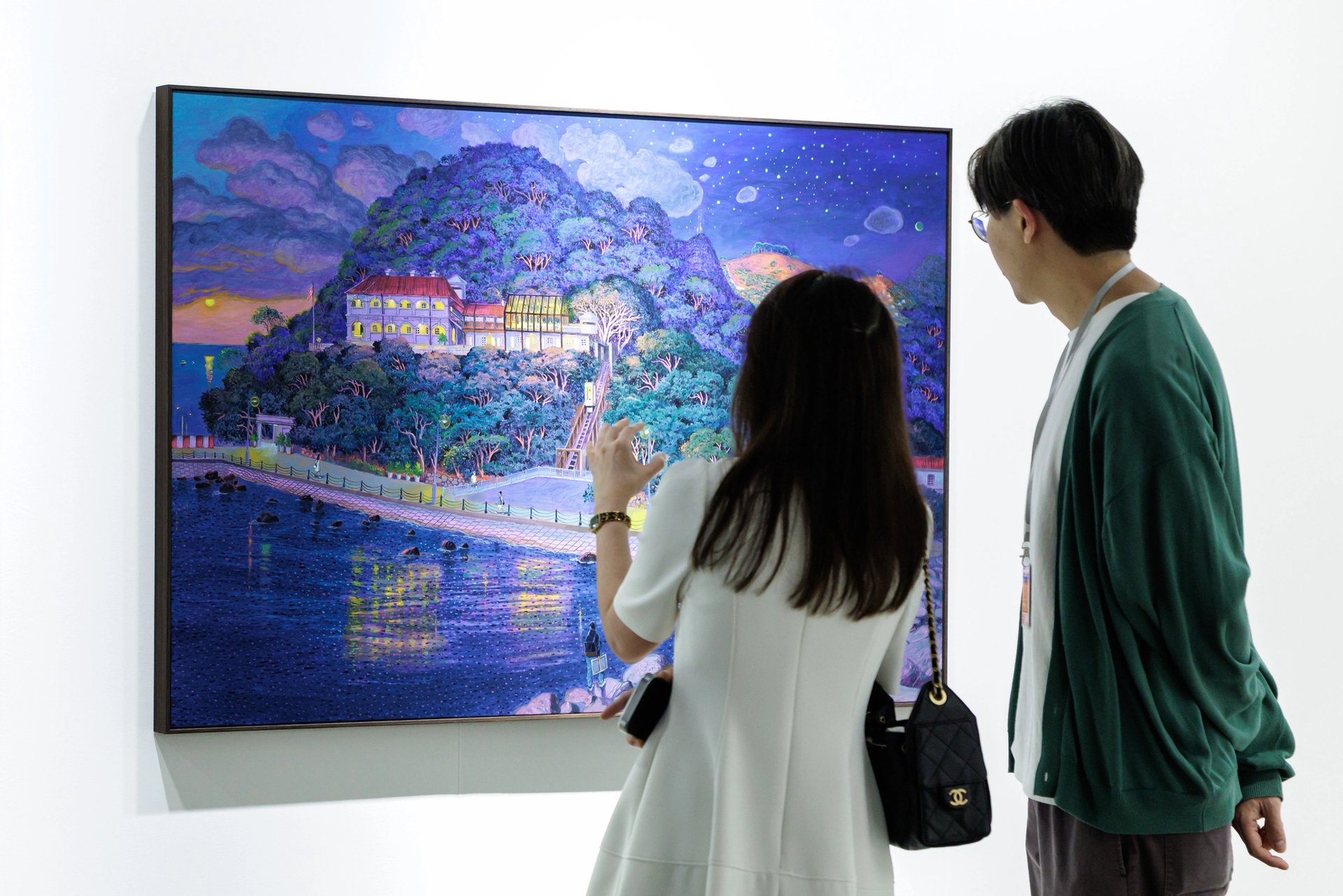
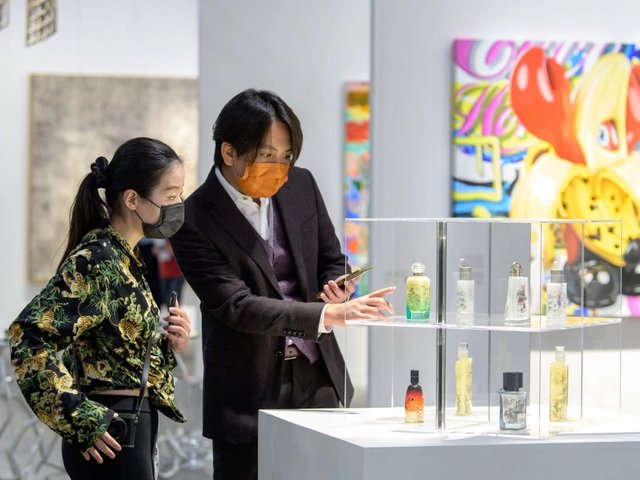
Visitors to the stand of Mother's Tankstation at Art Basel Hong Kong 2026
© Art Basel
Local players acknowledge that the era of explosive Chinese growth is now a thing of the past, and local buyers have turned away from the speculative excess associated with the ultra-contemporary art boom. “Collectors are considered and taking their time,” says Dawn Zhu, the Asia director of Thaddaeus Ropac.
“It’s pretty slow, but that’s to be expected,” said one Hong Kong gallerist, who had placed two small paintings and a video work by the late afternoon. “We’ve all adjusted our expectations to a new pace.” This restraint could be detected at lower price points. Arario gallery, which has locations in Shanghai and Seoul, presented unsettling doll-like diorama sculptures and video works by Shih Yung Chun from its stand. By the late afternoon it had placed one video work for $4,500 to a Beijing collector, but no further confirmed sales.
Some smaller galleries, particularly those selling works mostly below $50,000, seemed satisfied, or at least happier than previous years. “It’s been busy—I haven’t sat down in six hours,” said Sammi Liu, the founder of Tabula Rasa gallery, which has spaces in Beijing and London. The gallery has shifted to the main section after five years in Discoveries, the emerging section for solo presentations, meaning they "can show a more commercial booth”.
For Shanghai’s Vacancy gallery, this edition of the fair "is much better than last year”, said its director Lucien Tso. He attributed his success to different stand placement. “It can make a huge difference”. The gallery had sold its largest work, a painting by the London-based Henry Curchod for $46,000 to a forthcoming Los Angeles foundation.
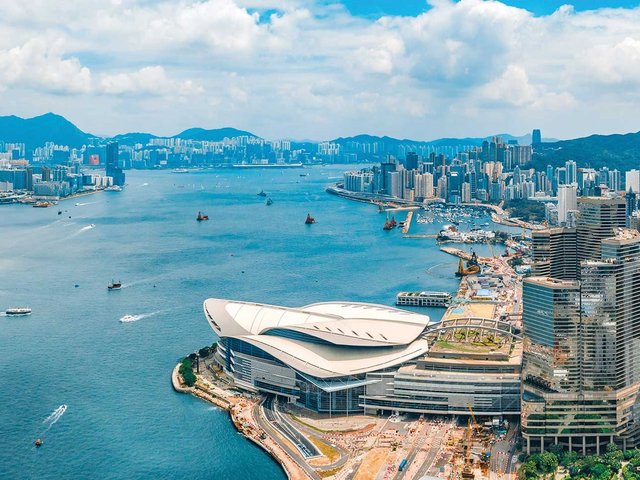
The atmosphere of the week is notably optimistic, thanks in part to the opening of four new galleries in town. They have helped to counteract anxieties of Hong Kong’s decline following the retreat of Western dealerships like Pace and Lévy Gorvy Dayan from the city. Meanwhile Hong Kong yesterday announced that it had secured an agreement with Art Basel to be the region’s sole host for the next five years—a reassuring sign from the fair company of its commitment to the city, as the art hubs of Singapore and Seoul vie for regional attention.
Signs of maturation abound across the Chinese market, as well as the wider Asia Pacific region. Present at the fair were representatives from several newly established Asian institutions including Dib Bangkok and the Tanoto Art Foundation in Singapore.
Speaking to the advisory firm Art Intelligence Global in their latest quarterly report, Robin Peckham, the director of the forthcoming JD Museum in the nearby mainland Chinese city of Shenzhen, noted a promising new chapter for China’s increasingly sophisticated institutional landscape. The emergence of state museums for contemporary art——such as the New Guangzhou Art Museum (2023), the Bai’etan Greater Bay Area Art Center (2023), or the Suzhou Museum of Contemporary Art (opening later in 2026), to name a few—as serious players in mainland China "eases the heavy sense of responsibility that smaller, privately founded museums carry.”
The strategic arts planning of China is made more impressive when compared to its Western counterparts, where culture funding is being cut to finance wars. Tobias Berger, the founder of Gold, one of the new galleries to open in Hong Kong this week, reported a "great start" to the fair, thanks in part to the "phenomenal" presence of Asian galleries, biennials and museums across Hong Kong this week. Berger's enthusiasm is matched by other local players who remain optimistic for the future of the city’s art scene, despite its imperilled free speech laws and prohibitively expensive rents. “Hong Kong," he says, "is the most exciting city in the world right now”.