On 28 February, a new gallery devoted to Iranian contemporary art opened in Istanbul’s Pera district, offering a rare physical platform for artists navigating sanctions, travel restrictions and mounting instability at home. That same day, the US-Israeli war with Iran began, casting immediate uncertainty over the fragile lifeline the space hopes to provide.
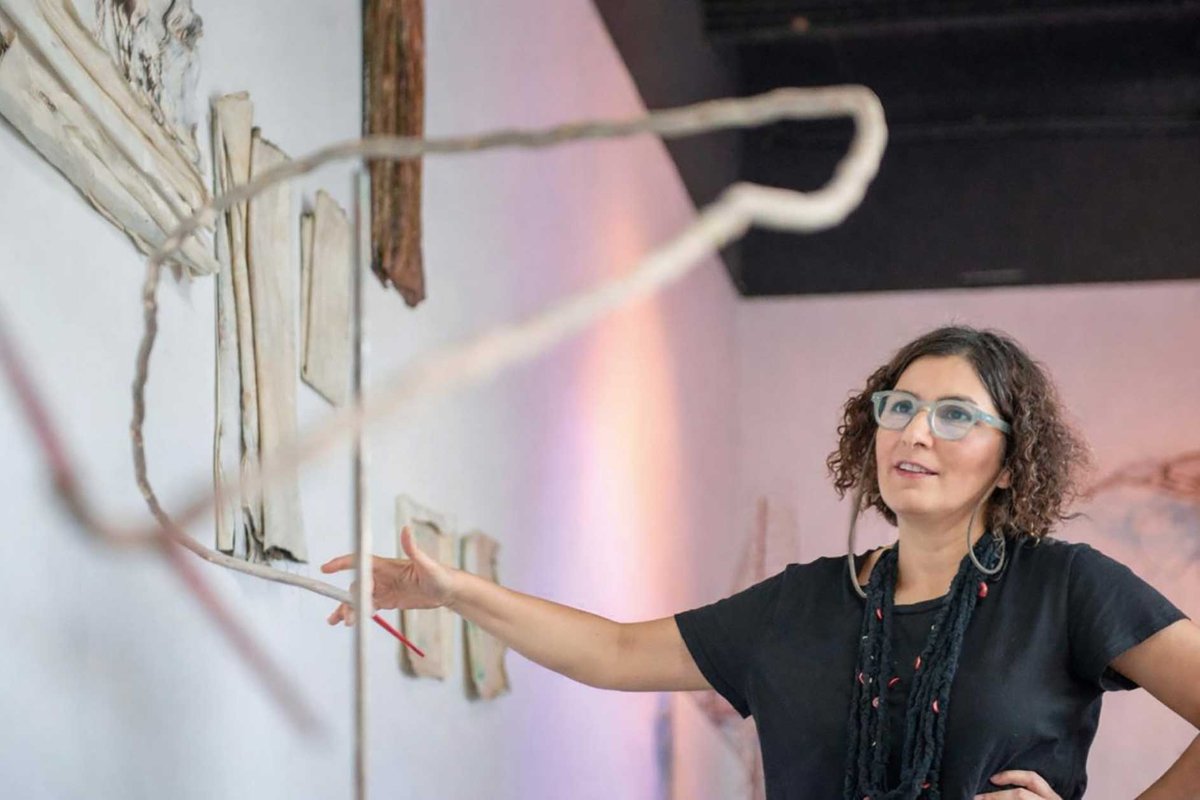
Shiva Zahed Gallery had set out to position itself as a bridge between Tehran and the international art world at a time when that connection had grown increasingly tenuous. Its inaugural exhibition, Echoes, brings together the installation artist Shaqayeq Arabi and Fereydoun Ave, one of Iran’s most influential contemporary figures whose work is held in major international collections, including the British Museum and the Victoria and Albert Museum in London, and New York’s Metropolitan Museum of Art.
If I can introduce even one Iranian artist to the world, I will be happy
The gallery was originally due to open on 28 January with a group exhibition of 20 emerging Iranian artists, none of whom had shown work outside Iran. Promotional materials were ready and works selected. Then, in late December, protests erupted across the country following a currency crash, triggering widespread disruption and a communication blackout.
“We couldn’t get in touch with any of the artists,” says Shiva Zahed, the gallery’s founder. “Everything was prepared and suddenly we were completely cut off.”
Zahed trained as a medical doctor at Shahid Beheshti, one of Iran’s leading universities, and worked for eight years in Iran and Dubai. Surrounded by artists from an early age, she began collecting and spent much of her spare time in galleries and art events.
Growing isolation
Over the years she had watched emerging Iranian artists become increasingly cut off. Sanctions complicate banking and shipping, while visa restrictions prevent artists from attending their own exhibitions, leaving international galleries hesitant to take on the logistical risk. Art fairs are also largely out of reach, with only a handful of Iranian galleries able to afford the costs, limiting opportunities to a small number of artists. For many, Instagram has become the primary—and, given bans on other platforms, sometimes the only—way to reach audiences abroad. The growing isolation led Zahed to ask “why”.
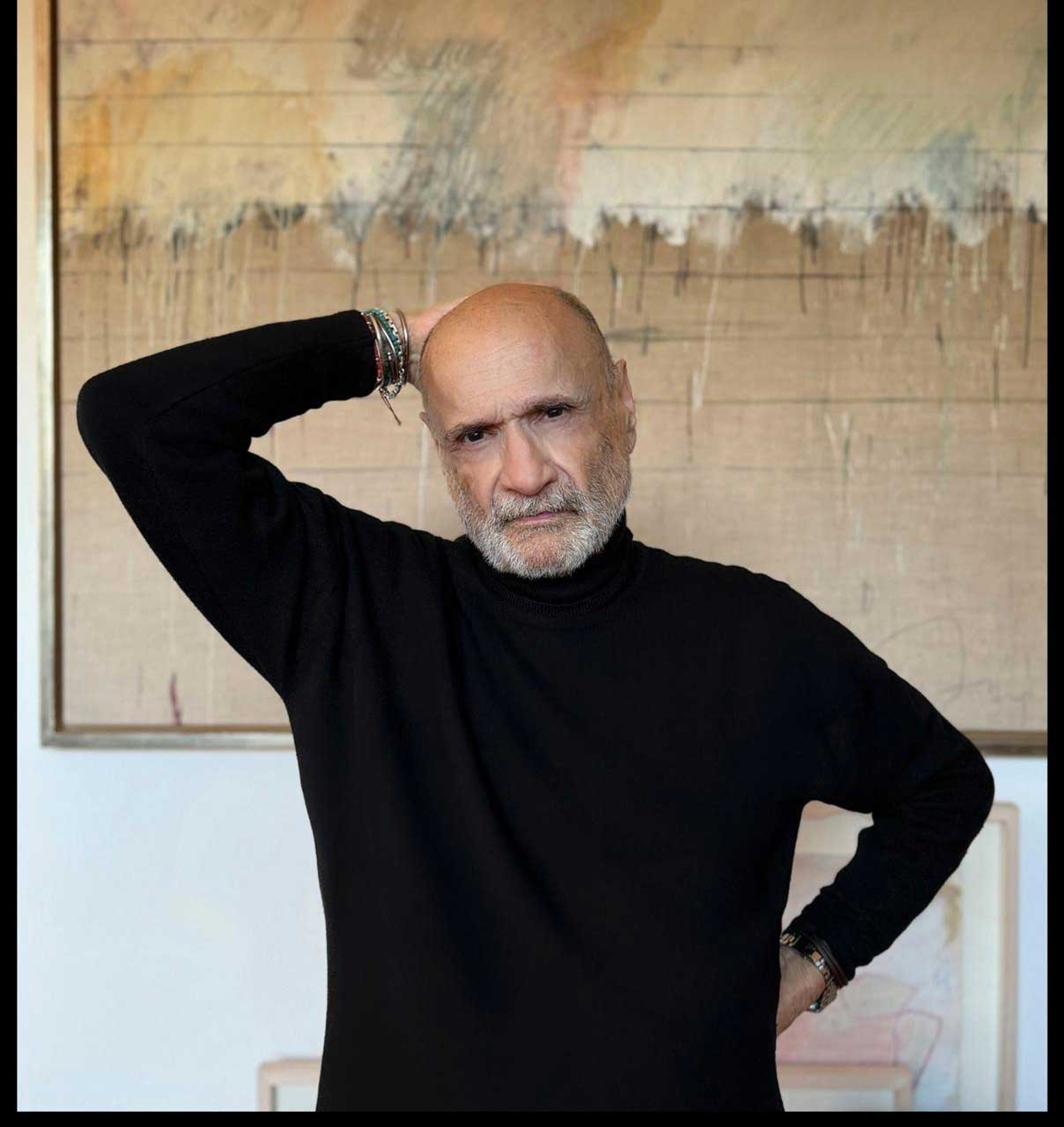
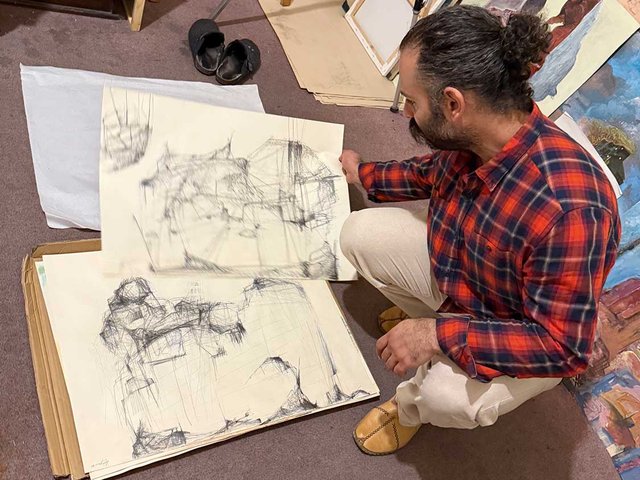
Iranian artist Fereydoun Ave is also showing work in Echoes
Photo: Leila Moghtader
“It was a question for me: why is it that we know the Western legends, like Picasso, but our own legends are not known [outside Iran]? We have so many great art figures,” she says.
After moving to Turkey last year, Zahed set up a private practice before deciding within a week to leave medicine behind and pursue the arts full time. Istanbul, she says, offers practical solutions for Iranian artists: no visa requirements, fewer shipping obstacles and an established international art scene.
As the unrest intensified in January, Zahed travelled back to Iran to reach the artists directly. There, she found daily life overshadowed by speculation about war with the US, negotiations, regime change and further sanctions, leaving many in what she describes as “a state of pause”, unable to make decisions. Even those willing to commit to the exhibition faced constant disruption, with flights repeatedly changed or cancelled. “You would book a flight and the next day it would be cancelled. It was impossible to plan,” Zahed says. Some artists feared being stranded abroad; others were simply emotionally exhausted, she says.
Ultimately, Zahed made the difficult decision to postpone the original group exhibition and reconfigure the opening with artists based outside Iran. Ave, who lives in Paris and curated the original show, agreed to participate when he saw the circumstances unfold. Arabi, based in Dubai, was a natural choice, Zahed says, for her pioneering installation work.
Continuing uncertainty
“It’s important that the opening is strong,” Zahed says. “I feel the weight of responsibility to present Iranian art to the world, and to provide a space for other artists who might otherwise never be seen.”
The postponed exhibition was due to be held in May, following the close of Echoes on 25 April. However, despite the newly announced ceasefire, ongoing travel disruptions and communication blackouts—and uncertainty over how long the truce will hold—have left those plans in limbo.
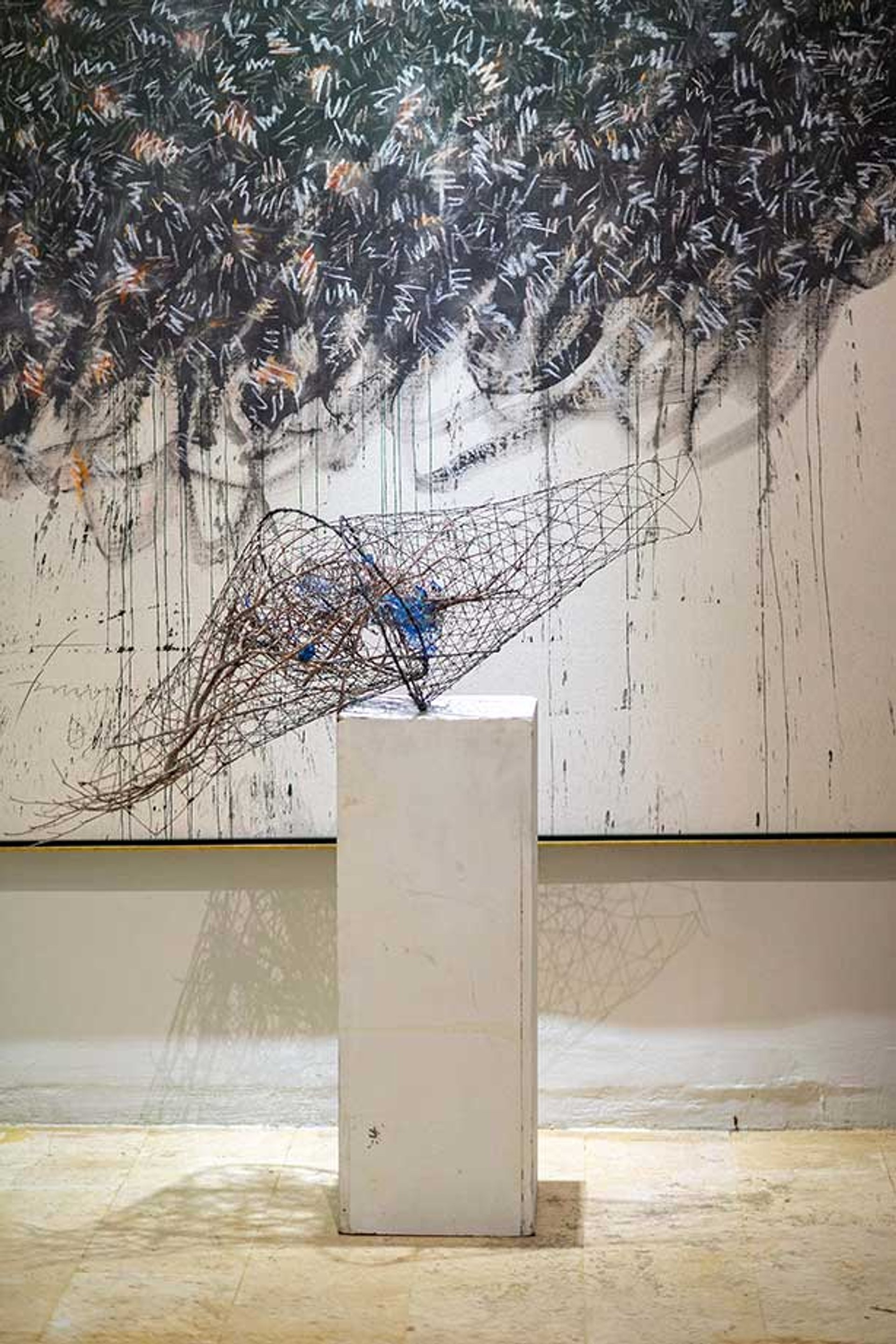
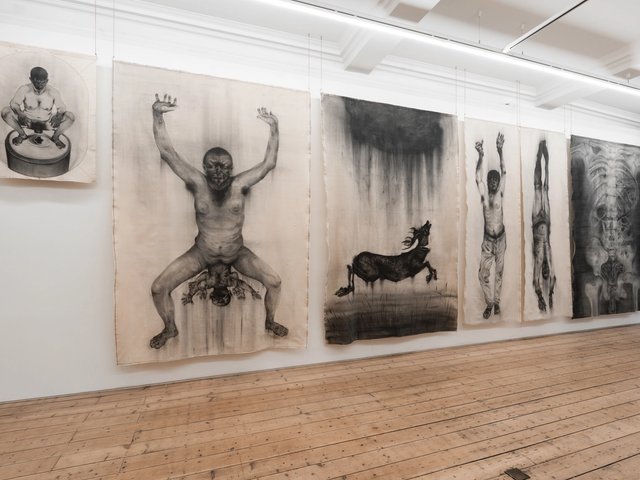
installation view of Echoes; Zahed set up the gallery after initially coming to Istanbul to open a medical practice © the artists, Shiva Zahed Gallery
On Tuesday evening, President Donald Trump announced that the US had reached a two-week ceasefire agreement with Iran. Prior to the agreement Trump had warned that “a whole civilisation will die” if a deal was not reached— remarks that drew widespread condemnation, including from the UN Secretary General António Guterres and Pope Leo XIV.
Zahed says that while, like many Iranians, she welcomes the ceasefire, it has not brought clarity. “I am truly happy that there is a ceasefire, but its temporary nature is very worrying,” she says. “Like [many] Iranians, I worry that the war can start again.”
The lack of a lasting agreement, she adds, complicates her work with the gallery too. “It does not allow for any sort of decision or planning,” she says. “I hope it has truly finished, because the war has had a very devastating impact on our lives,” she notes.
She says she now faces the same obstacles as in January, casting uncertainty over the group exhibition. Zahed adds she will not be able to make any decisions until she can travel to Iran and meet the artists in person. Given the current mood in the country, she says, it is unclear whether all of them will want to participate.
For Zahed, the uncertainty and instability only underline the need for a space beyond Iran’s borders. Opening a gallery dedicated to Iranian art at this moment, she acknowledges, is a risk, but one she believes is necessary.
“I feel this is my calling. If I can introduce even one Iranian artist to the world, I will be happy,” Zahed says. “Even if I fail, I want to be able to say I tried.”
- Echoes: Shaqayeq Arabi and Fereydoun Ave is at Shiva Zahed Gallery, Istanbul, until 25 April