Mexico’s National Institute of Anthropology and History (INAH) recently announced the discovery of a well-preserved pre-Hispanic stone altar with offerings and human remains. The finding, near the Toltec site Tula Chico in Hidalgo in central Mexico, was made during archaeological salvage work associated with planning a new 232km passenger rail between Mexico City and Querétaro.
Construction on the Mexico City-Querétaro train began in April 2025, with official figures indicating that progress is currently at around 10%. This latest discovery resulted from INAH-led explorations along the route that have yielded colonial-era and Mesoamerican remains. “In preliminary fieldwork, we have identified 12 areas of archaeological interest, including objects and monuments of varying scales,” Víctor Francisco Heredia Guillén, INAH’s salvage project coordinator, tells The Art Newspaper.
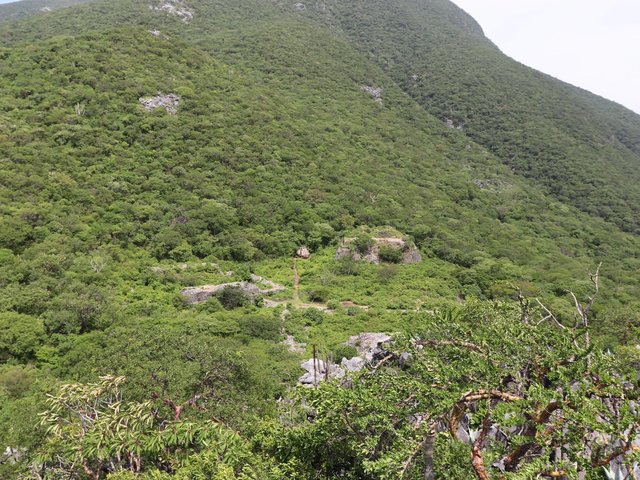
In October, the discovery of petroglyphs at the El Venado archaeological site near Tula de Allende in Hidalgo prompted an 8km rerouting of the rail line. “Due to the petroglyphs’ significance, the route was adjusted to preserve them,” Heredia Guillén says. “Although the site was known since the 1970s, the petroglyphs—some believed to be prehistoric—were recently identified on a steep cliff.” At a press conference later that month, Mexican president Claudia Sheinbaum emphasized the area as a present-day sanctuary for Indigenous peoples.

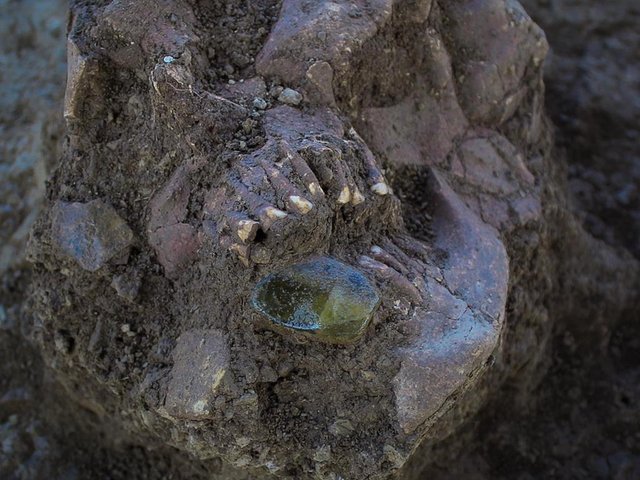
Close-up of one of the skulls flanking the altar Photo: Gerardo Peña, courtesy the National Institute of Anthropology and History, Mexico
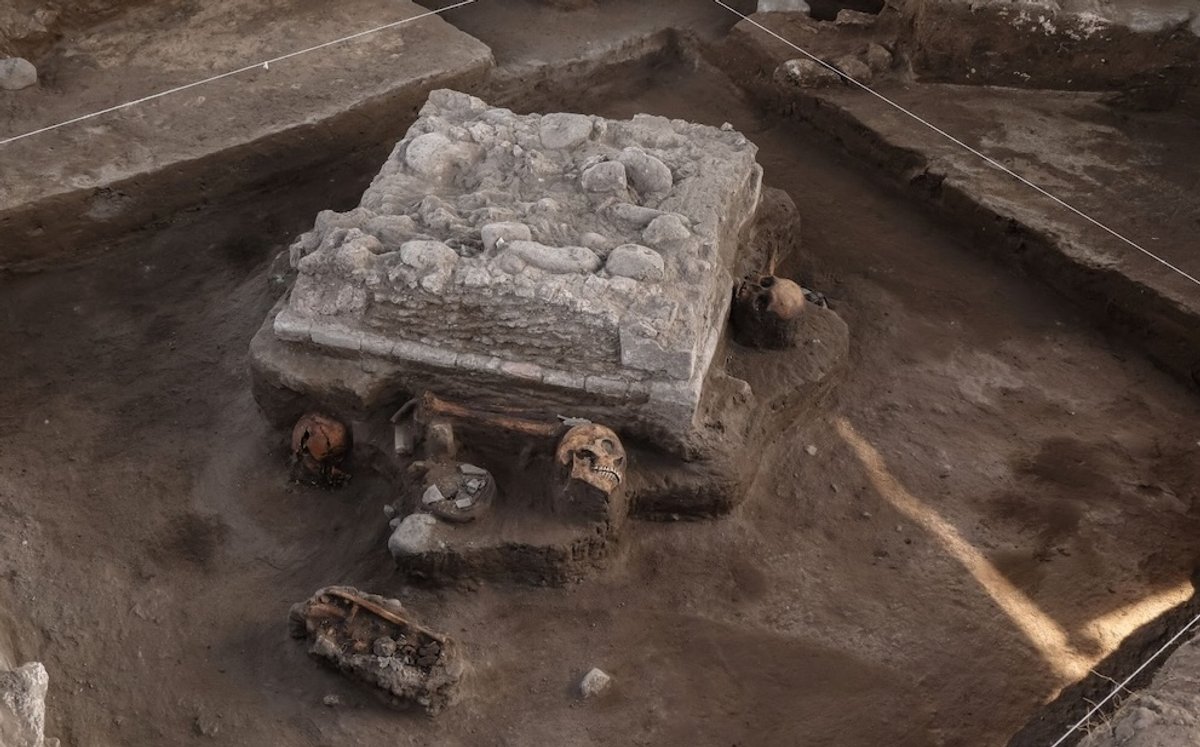
The altar
The newly discovered, three-level, one-metre-square momoztli (or altar) was built from various types of stone and contains human remains, ceramic objects and obsidian. Four human skulls and what appear to be leg bones were found arranged around the base of the altar, indicating its ritual or sacrificial use. The altar was located 300m from the perimeter of Tula Chico, adjacent to Tula Grande, the Toltec civilisation's main ceremonial centre. The structure dates to around AD900-1150, the height of the Toltec, and was part of a compound likely inhabited by a local elite.
“The fully preserved altar formed part of larger constructions, of which only foundations remain, supporting hypotheses about administrative areas beyond the archaeological zone,” Heredia Guillén says.
Previous studies point to the region’s historical density. “A systematic survey conducted in 1972 found surface evidence that the city covered more than 16 sq. km with a population of at least 60,000,” says the Toltec expert Dan M. Healan, a professor emeritus from Tulane University in New Orleans. He also notes that other structures, in various stages of preservation and complexity, have been found over time during salvage work and reveal similar layouts. “Altars were a common component of Toltec civic, ceremonial and residential architecture,” he says.
The objects and human remains found at the altar are currently being studied, and the site has been covered to help preserve it. However, its future has yet to be determined, as the train’s route—located only 600m from Tula’s archaeological site—may still be changed. Non-archaeological factors, such as community opposition, have also been part of the equation.
“At this stage, the train’s final right of way has not yet been defined,” Heredia Guillén says. “Once established, considerations will be issued regarding this and other archaeological elements, with heritage preservation and the project’s needs carefully assessed.”
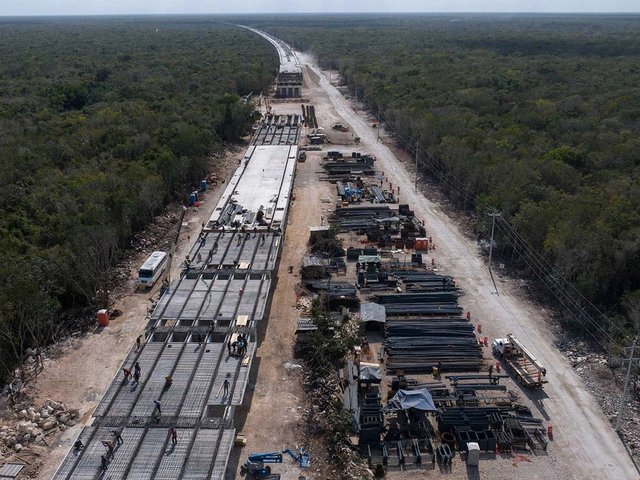
Recently, the construction of other trains in the region—most notably the new Maya Train—has sparked both heritage and ecological controversy. Those involved in the Mexico City-Querétaro train project emphasise that thorough examinations are in place. In the meantime, further excavations are under way along its proposed route with additional findings anticipated. “There are four active excavations, including El Venado and the altar near Tula,” Heredia Guillén says, “with more expected as work progresses.”