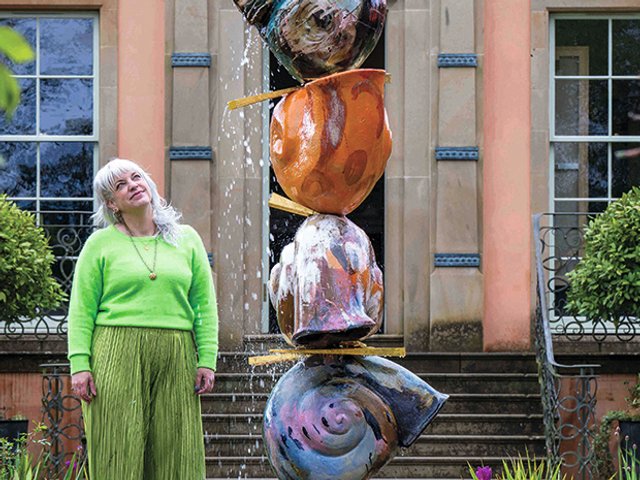

The contemporary sculpture park and art gallery Jupiter Artland, just outside of Edinburgh, offers a rolling programme of temporary exhibitions as well as 150 acres of Scottish countryside populated by specially commissioned permanent works. These include pieces by over 40 major artists including Phyllida Barlow, Tracey Emin, Pablo Bronstein, Christian Boltanski, Charles Jencks and Anya Gallaccio.
It also has terrific views that encompass nearly two centuries of Scottish energy production. To the north sweeping swathes of rugged post-industrial West Lothian landscape are dominated by the "bings", massive spoil heaps formed from nearly a century of shale oil mining that ended in the early 1960s with the arrival of liquid oil from the Middle East. Looming on the far horizon are the three bridges across the Firth of Forth, where the Forties oil pipe delivers oil and gas from over 80 fields in the North Sea to the terminal at Grangemouth. While over to the south, cleaner power sources are to be seen where banks of wind farms twirl their turbines backed by the Pentland Hills. Then amidst all these panoramic power sources past and present there’s also Jupiter’s own newly installed solar array which has recently transitioned the estate to near 100% renewable energy generated on site.
This dramatic terrain makes Jupiter Artland a perfect setting for Extraction (until 26 July), an exhibition that explores the impact of our seemingly insatiable need for power—a show made all the more topical by the current energy crisis caused by the US-Israel war.
Yet Extraction is not just another polemic against fossil fuels and nor is it an environmental manifesto. Housed in Jupiter’s gallery spaces but in dialogue with its outdoor surroundings, it brings together the work of five artists who each in different ways present a more nuanced view of energy histories. These histories are regarded not so much as linear progressions than as repetitive cycles built on ideas around wealth, technology and cultural identity. The artists in Extraction reflect on the cultural and ideological as well as the environmental legacies of energy systems and the landscapes, both physical and emotional, that they shape.
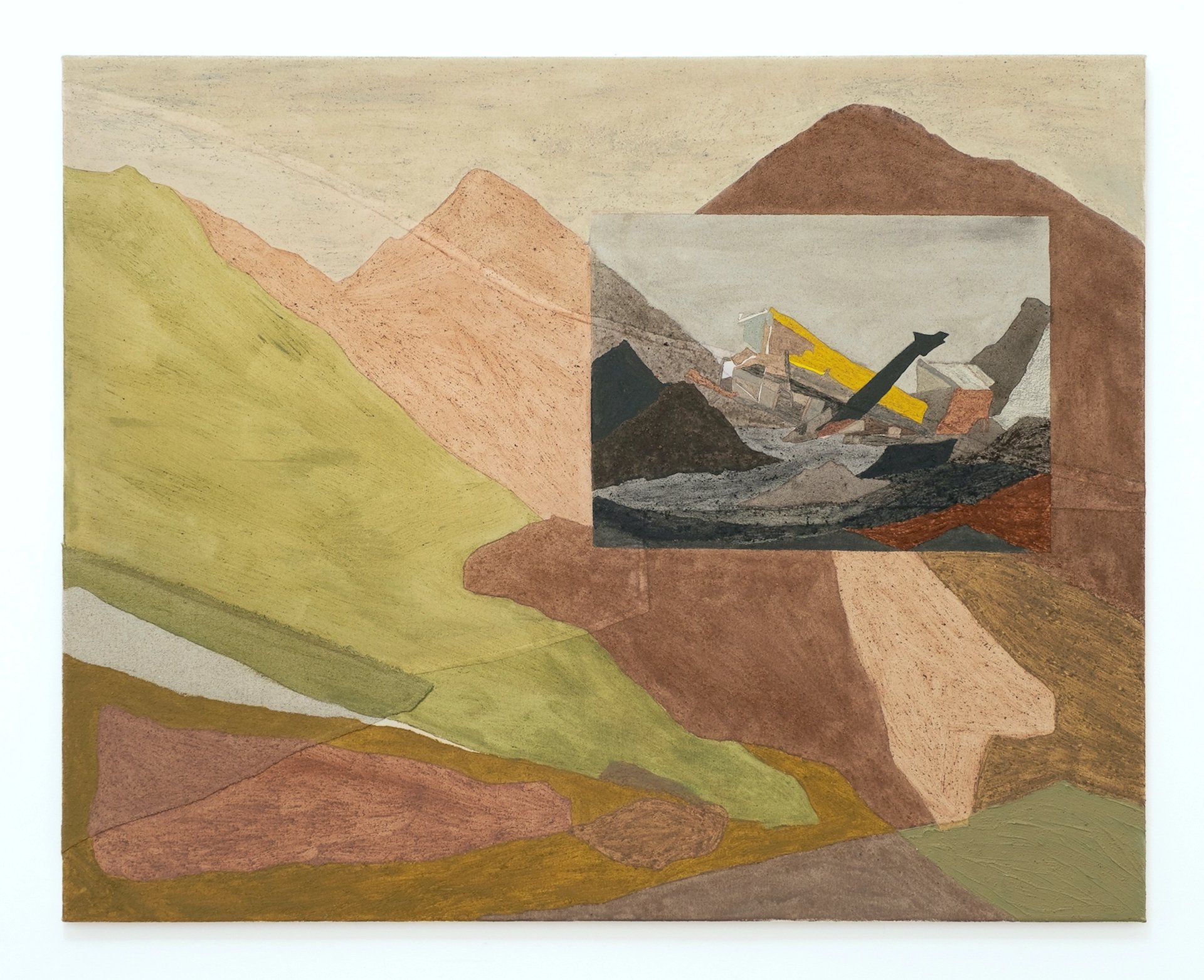
Siobhan McLaughlin, Date of Exhaustion, 2025
Courtesy of the artist
The paintings of Glasgow-born Siobhan McLaughlin literally bring the outside in. She uses earth pigments gathered directly from the Five Sisters Bing, the vast five-pronged red shale heap that dominates the landscape and is clearly visible from Jupiter’s land. Using the pigments she creates her fractured, multidimensional landscapes that turn waste, pollution and castoffs into a medium.
McLaughlin sees these earthy vistas as “speaking to the land’s ability to hold knowledge and memory” and by exposing and repurposing this earth stained by mining waste she asks us to consider what has been left behind. The title of one painting, Date of Exhaustion (2025), refers to land used up and no longer profitable, but this is knowingly refuted by the fact that, while the Five Sisters came into existence as huge piles of slag, these spectacular additions to what was hitherto an unremarkable agricultural landscape are now valued as a local landmark and protected as a Scheduled Monument.
Over the years these seemingly barren bings have evolved into unlikely hotspots for wildlife, offering multi-species ecosystems in surroundings dominated by agriculture and urban development. The variations in the chemical composition of the five different bings therefore not only present a multi-hued earthy palette for McLaughlin, but as is suggested by another of her works titled Pioneer Species (2025), they also offer a wide range of habitats and new niches for plants and animals—some of which are rare and endangered. So out of blight and devastation, new and precious territories—as well as art works—can emerge.
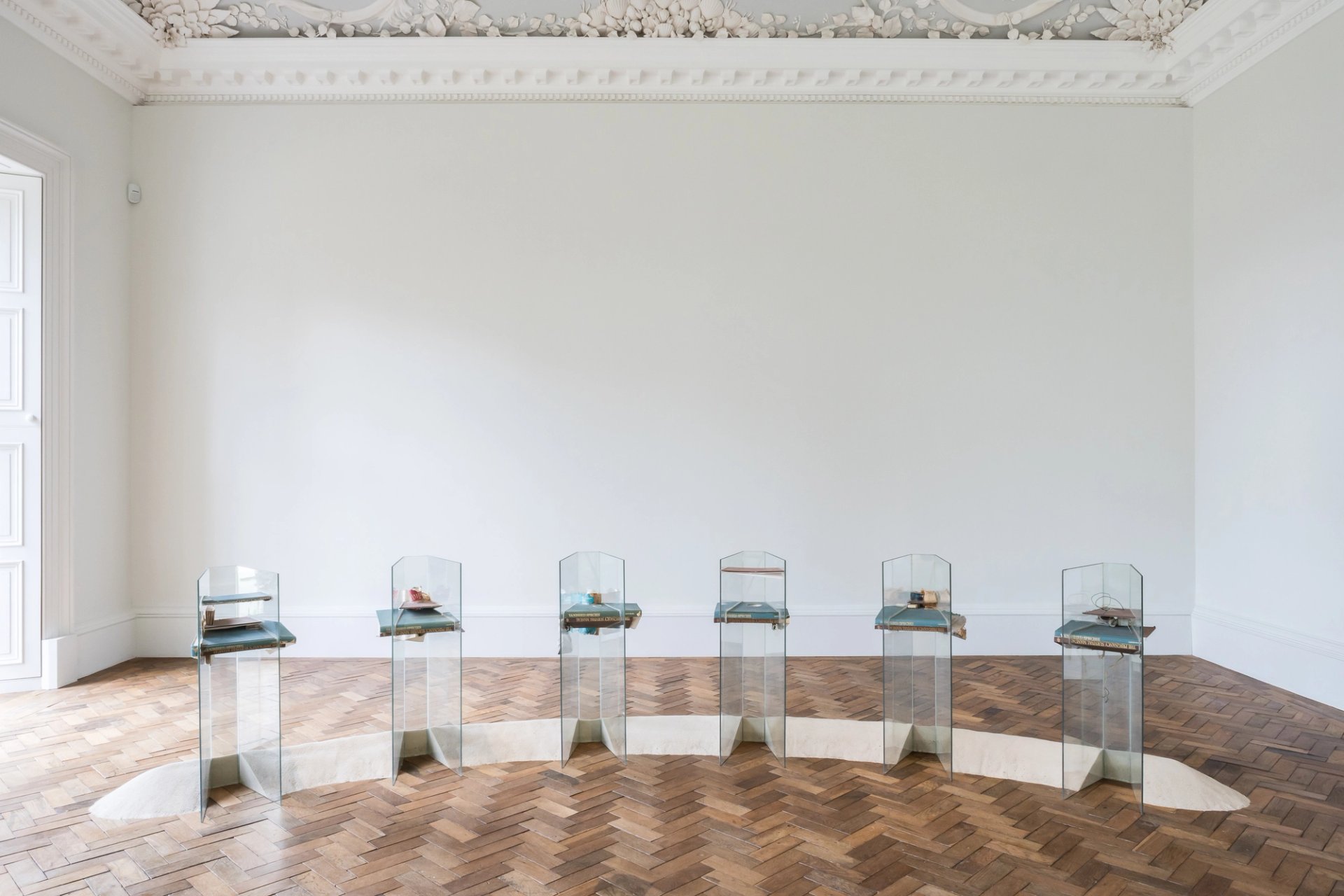
John Latham, The N-U Niddrie Heart, 1991
©The John Latham Foundation. Courtesy Lisson Gallery. Photo: Sally Jubb
West Lothian’s shale bings were a major concern of the pioneering English conceptual artist John Latham, who died in 2006. In a move that would now be inconceivable, in 1975 Latham was appointed as Artist in Residence at the Scottish Development Agency, who sought his advice and creative input regarding the future of the then-recently defunct spoil tip bings. Latham regarded these massive heaps of red waste as ‘process sculptures’ and collectively christened the large shale bing known as Greendykes and its four adjoining heaps as Niddrie Woman, feeling that their forms and imposing resemblance to pre-historic mounds lent themselves to what he described as “a modern variant of Celtic Legend.”
Sadly Latham’s proposal to retain the bings as works of art and to mark them with beacons was not implemented. However, his research and activism was a crucial keystone in subsequent campaigns to preserve the bings, with two out of his four Niddrie Women now officially classified as monuments. Latham’s sculptural works and documentation on show in Extraction reflect his far-reaching cosmological thinking, which extended to viewing the bings not as industrial ruins but an event still in process and an active link to pre-history.
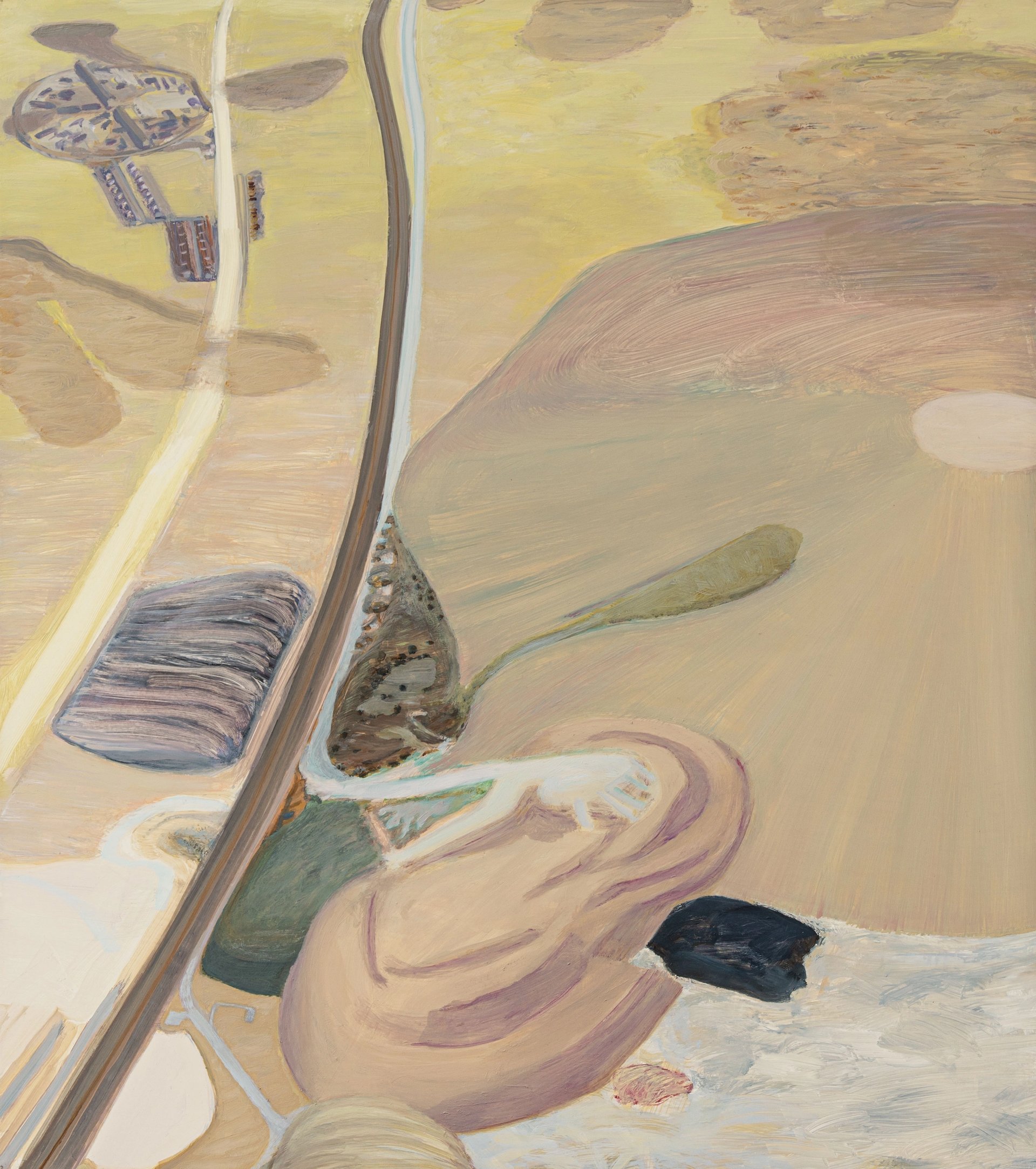
Carol Rhodes, Deposits, 2009
© Carol Rhodes Estate. Photo: Michael Brzezinski. Courtesy Carol Rhodes Estate and Alison Jacques
The quarried, marked landscape around Jupiter and beyond also formed the inspiration for many of Scottish artist Carol Rhode’s paintings of abstracted landscapes altered by human intervention. Across a 25-year career, Rhodes who died in Glasgow in 2018, painted mainly aerial views of uncanny, uninhabited industrial terrains and edgelands such as quarries, depots, pipelines or reservoirs and her paintings and drawings in Extraction reveal the land of Lothian—and by implication much of our wider world—not as nature but as designed infrastructure, here engineered according to energy ideologies.
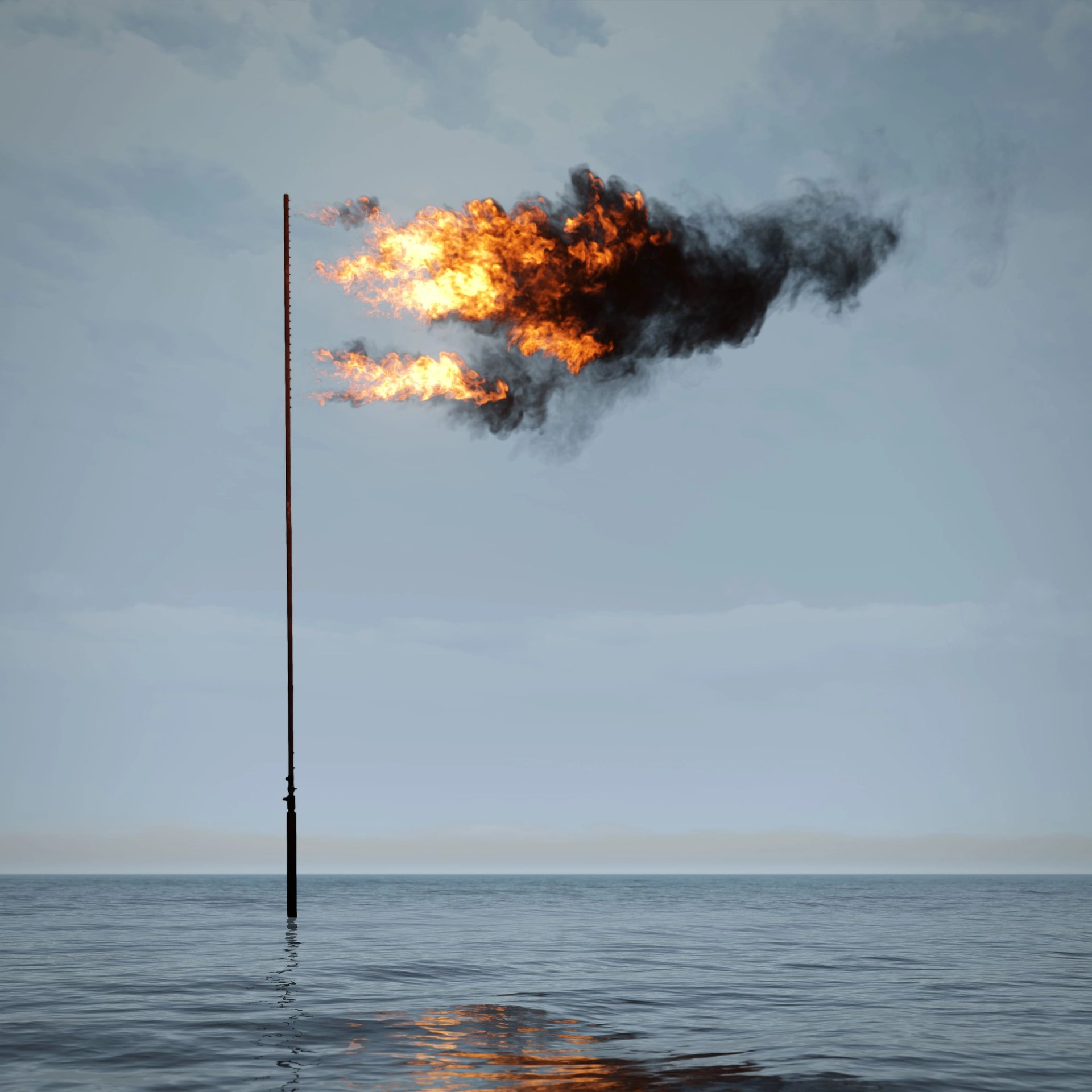
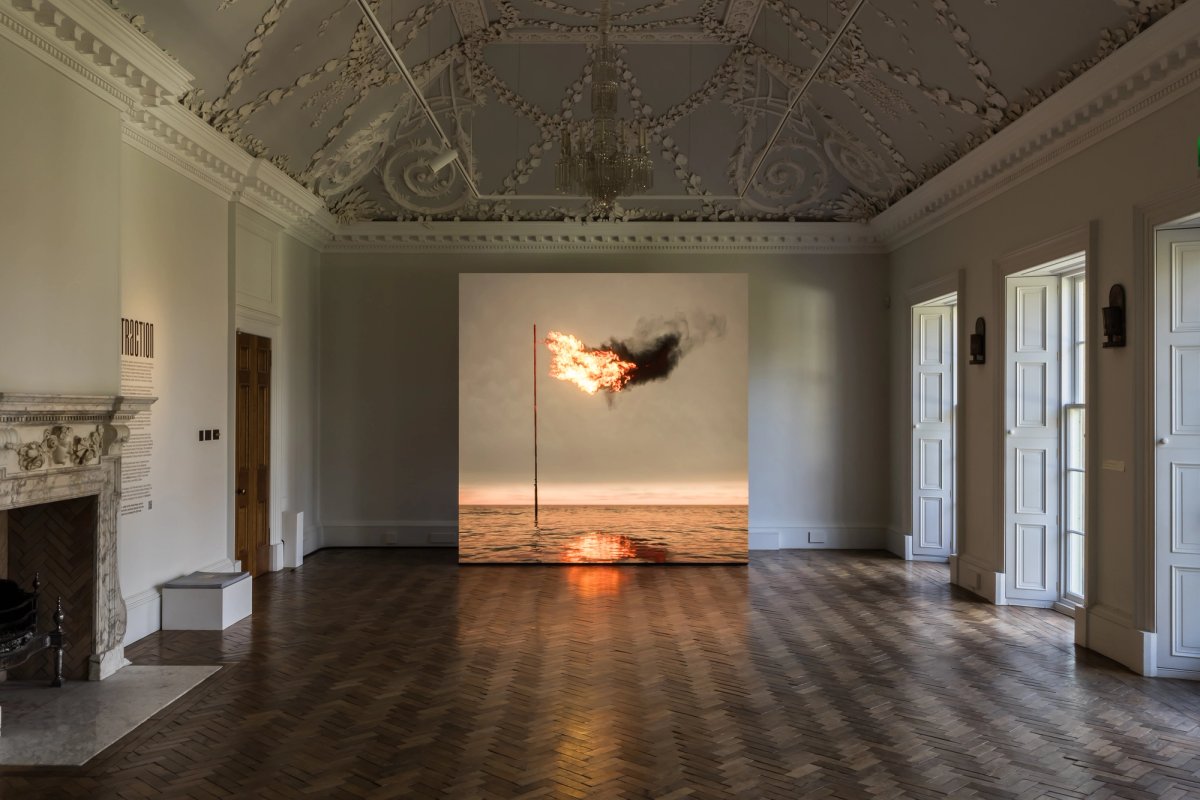
john gerrard, Flare (Oceania), 2022
Courtesy of the artist
These ideologies and their impact on global geopolitics literally ignite in Irish artist John Gerrard’s digital simulation Flare (Oceania) (2022) on show in Jupiter’s ballroom gallery. This spectacular work hovers between a flaming gas flare and a national flag, part monument, part warning, using real time computer graphics to reflect on the energy crisis. In its ability to strike up simultaneous conversations with all the various power sources, histories and geologies surrounding Jupiter, Gerard’s flickering, flaring flag chimes with both past and present moments and reinforces the notion of how recurring and interconnected all these seemingly distinct and progressive quests for power really are.
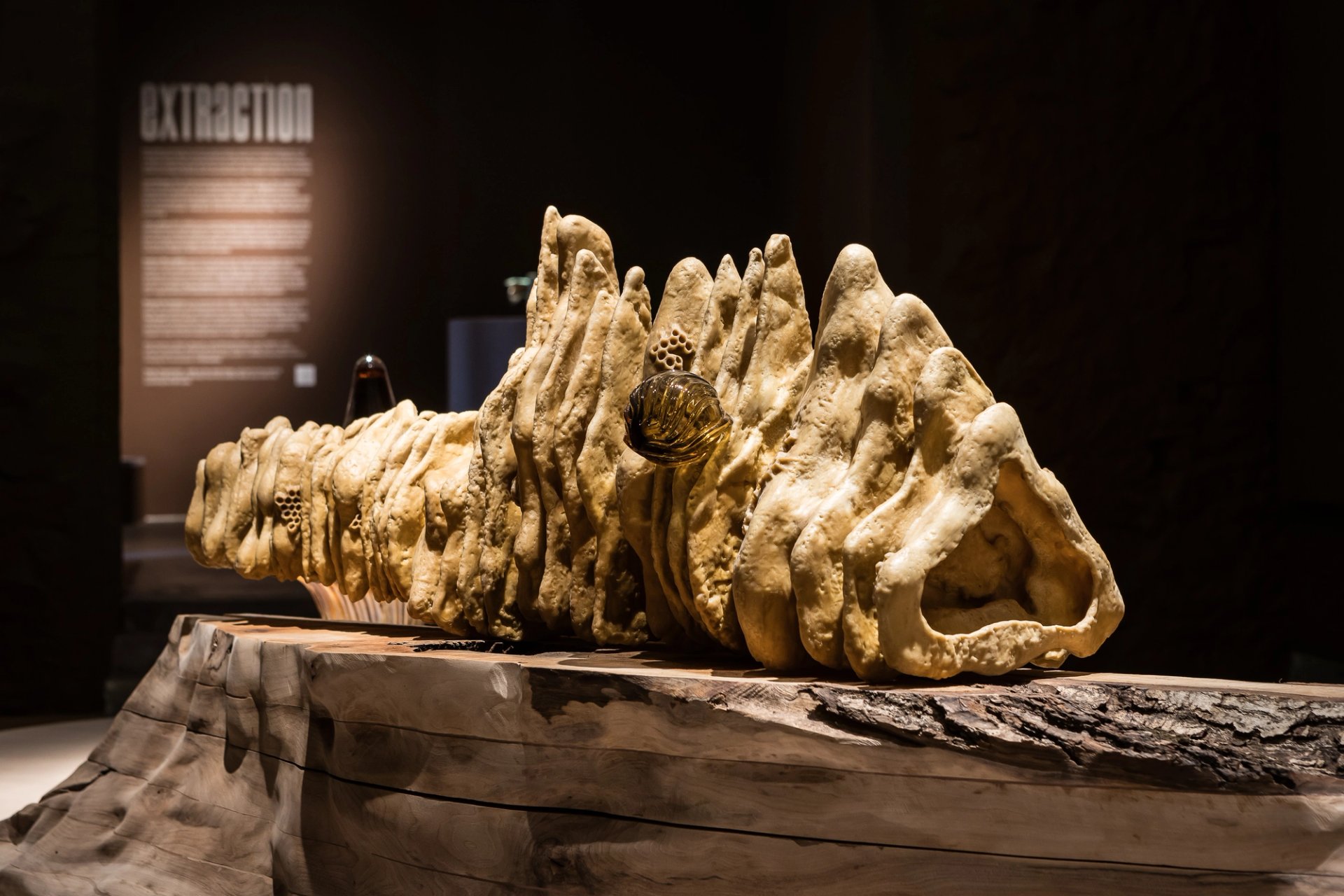
Marguerite Humeau, The Honey Holder, 2023
Courtesy White Cube Gallery. Photo: Sally Hubb
Extraction’s fifth artist reverses the show’s core concept by re-imagining future systems of energy as something contained and metabolic, based on cooperation, symbiosis and collective intelligence. Working in blown glass, beeswax, carved wood, bronze and unexpected materials such as snake venom and honey, Marguerite Humeau's hybrid sculptures propose new models of transformation, growth and survival that do not offer solutions or utopias, but instead provocatively propose a future without humankind at its centre. Meanwhile, Homo sapiens are very much here, and in a big mess.
As well as offering a show packed with an abundance of nuanced thought that highlights how societies build and unbuild worlds through energy, Jupiter Artland is also admirably striving to implement meaningful change on its own site. Their recent transition to solar power means that in the next couple of months all Jupiter’s operations will be powered by renewable energy and they will be selling power back to the grid. In addition they are offering free electric vehicle charging for all visitors throughout the exhibition, becoming the first cultural venue in Scotland to do so.
However, not only does the surrounding landscape bear witness to prolific energy production past and present, it also shockingly houses a population with some of the highest fuel poverty rates in the UK. So while arts organisations such as Jupiter Artland can set an excellent example, a real shift away from this dire situation can only be achieved by governments prepared to legislate the prevailing mindset away from generating both wealth and energy through extraction.
• Extraction, Jupiter Artland, Edinburgh, until 26 July