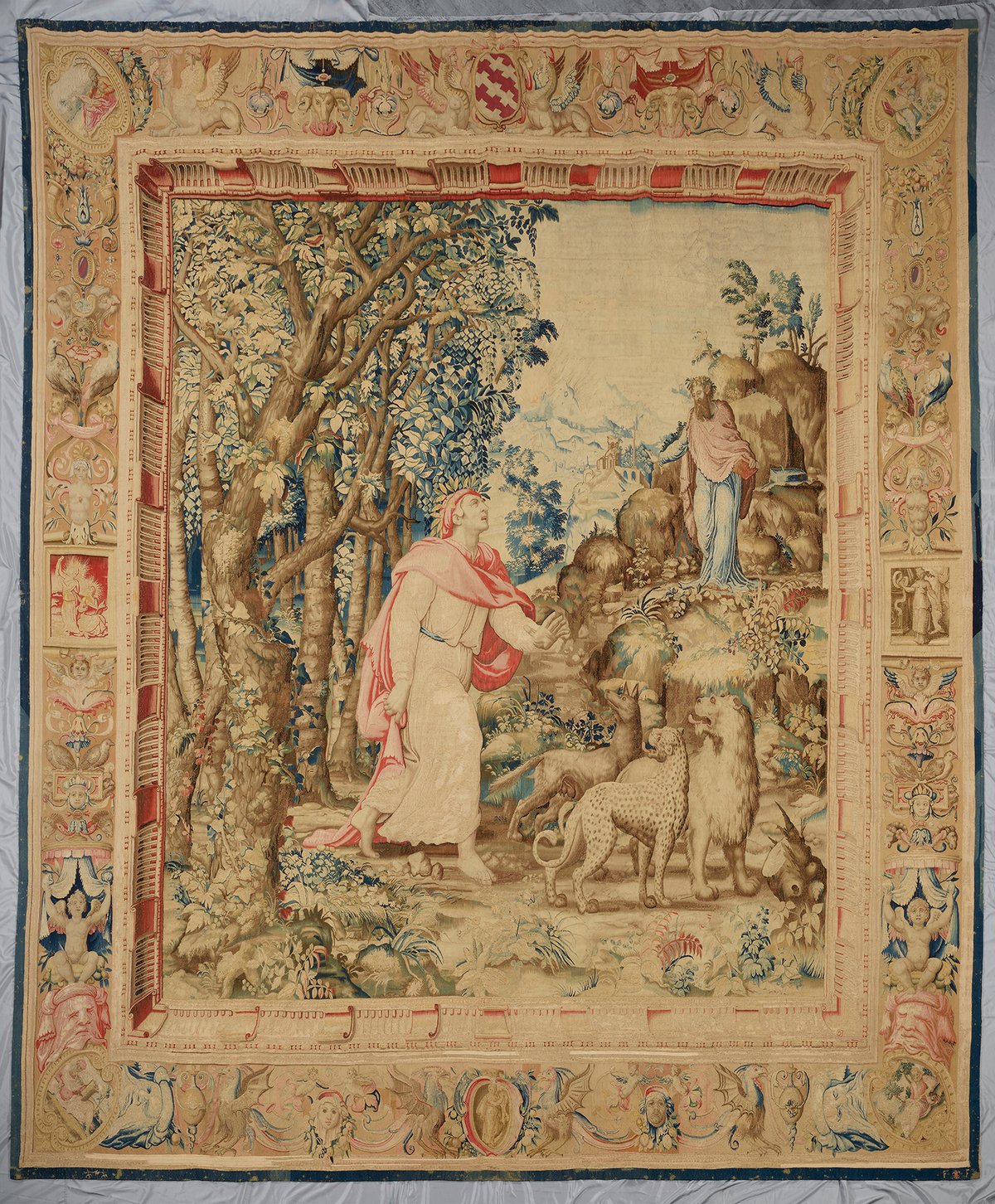
The second and final recipient of this year’s Tefaf Museum Restoration Fund award is the Minneapolis Institute of Art (MIA), the fair has announced. The €25,000 prize will be used to restore a large-scale Renaissance tapestry called The Meeting of Dante and Virgil (around 1547- 49). It is the first time the fund has supported the restoration of a tapestry since it was launched in 2012.
With its 41 exemplars, the MIA’s tapestry collection ranks among the best in the US. At 5.3m high and 4.7m wide, The Meeting of Dante and Virgil is one of the museum’s largest works. It is the only example of an early Medicean tapestry in a public collection outside of Italy, and it is considered the most important Italian Renaissance tapestry in the US.
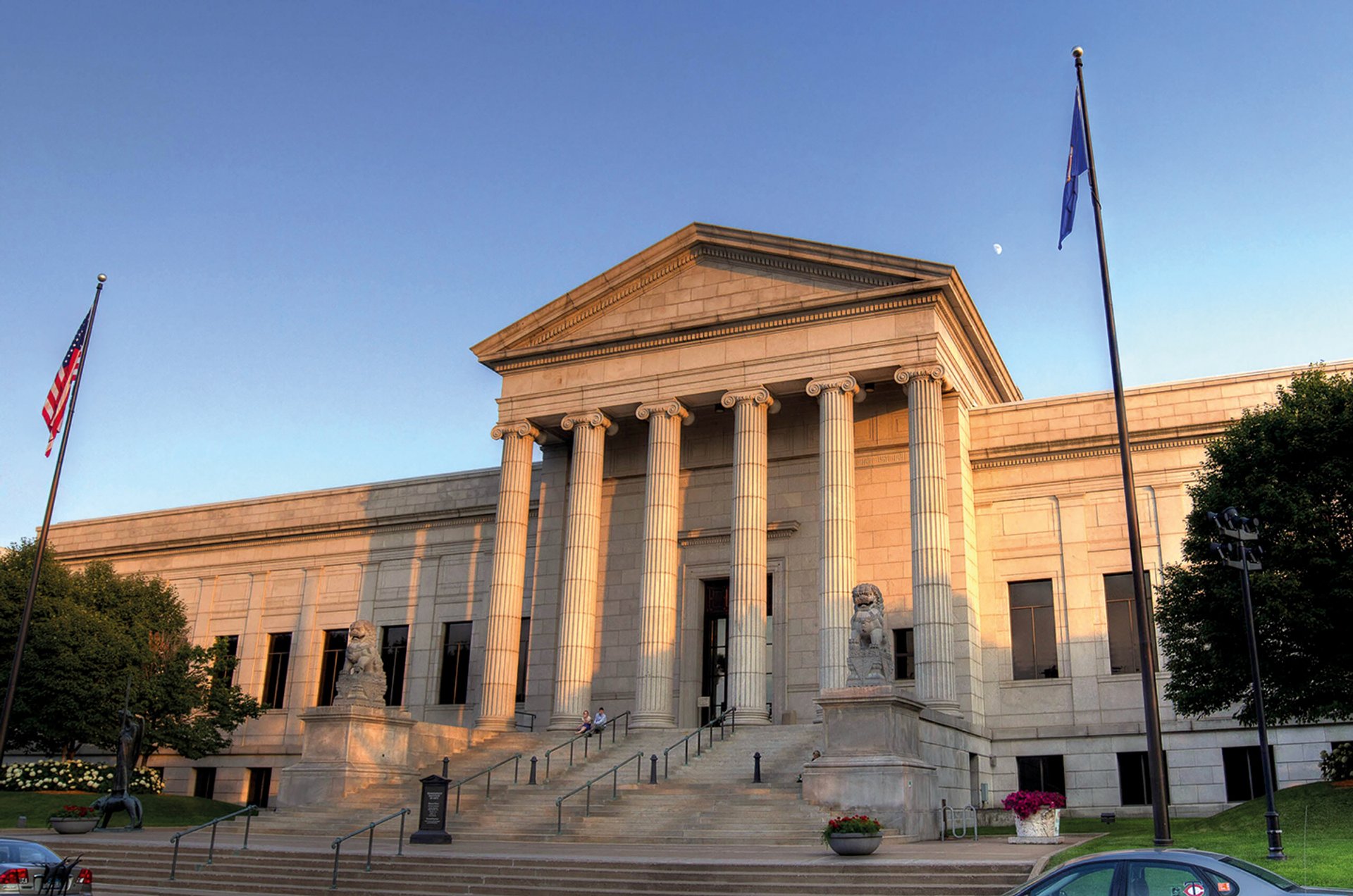
Minneapolis Institute of Art
Courtesy of MIA
The Meeting of Dante and Virgil has not been on display in more than 60 years due to its poor condition. “The outermost narrow border series displays the most significant losses, while multiple campaigns of reweaving can be identified throughout,” says Max Bryant, MIA’s associate curator of European decorative arts and sculpture. “Overall, there are open slits and consistent silk weft loss throughout, and there is evidence of a former hanging system.”
The restoration will be undertaken by the Midwest Art Conservation Center in Minneapolis and will focus on the cleaning, consolidation and lining of the tapestry. “The tapestry will first receive wet cleaning, after which fabric leaders will be hand-stitched to the vertical sides,” Bryant says. “Missing wefts will be supplemented, and loose warps will be secured by hand-stitching as needed in the most damaged areas.” Once the conservation is complete, the tapestry will go on public view at MIA this summer.
Medici-made
The tapestry workshop in Florence where The Meeting of Dante and Virgil was made was founded in 1545 by Duke Cosimo I de’ Medici. He set it up in the hopes of competing with the tapestry manufacturers in Brussels, which was the primary centre of production at the time. Cosimo hired a master weaver from Brussels named Jan Rost, who brought his local expertise and managed the workshop and the weavers. The Meeting of Dante and Virgil was made in the workshop’s early years, when Cosimo was most involved with the tapestries.
The painter Francesco Salviati created the design and cartoons for the tapestry between 1546 and 1548. It depicts an opening scene from Dante’s epic poem The Divine Comedy (completed around 1321), which narrates the poet’s journey through the afterlife, where he meets the spirit of the Roman poet Virgil in a dark wood, guarded by three beasts representing lust (a leopard), pride (a lion) and avarice (a she-wolf).
The tapestry’s restoration at MIA is an extension of the Tefaf fund’s partnership with the Bank of America Art Conservation Project, which has funded more than 275 projects in 40 countries since it began in 2010. The fund has supported the professional restoration and related scholarly research of significant works held in museums since 2012. “Championing art in all its forms, applications for its grants are open to public museums from all over the world and artworks from any age,” according to Tefaf.
The other recipient of this year’s fund is Dresden’s Gemäldegalerie Alte Meister, for the restoration of The Boar Hunt (1616-18) by Peter Paul Rubens.