One hundred years ago, in July 1926, Hitler’s Nazi party emerged as a recognisable movement at the first party rally in Weimar. The swastika and eagle holding an oak wreath were taken as a symbol, and the Hitler salute was adopted (copied, however, from Mussolini), along with the all-important “Sieg Heil”. The Hitler Youth, with accompanying regalia, was founded. Hitler himself, banned from speaking in public after being convicted for attempted high treason, stood silently on the stage, as if he too had become an image. Along with the visual spectacle of the mass rallies that were to come, culminating ten years later in Leni Riefenstahl’s film Olympia, these “optics”, as we call them now, were to become the bedrock of Nazism.
As Katja Hoyer writes in her book Weimar: Life on the Edge of Catastrophe, both the Weimar Republic and the Third Reich that followed were founded on ideals of art and culture. Both governments were founded in the German National Theatre in Weimar, and both attempted to draw together a national community, otherwise obliterated by war and revolution, with a sense of cultural (and in the Third Reich, racial) belonging. The struggle for democracy was one fought through works of art and architecture. They were even more central to Nazi Germany. Although it eradicated the Bauhaus (founded in Weimar in 1919), Hitler inherited many avant-garde ideas of melding art and life.
Art without the dissent
Fascist aesthetics, as Susan Sontag once wrote, exert mindless fascination through mass pageantry and political theatre. Fascist despots love monumental hero-worshipping art and smooth, seamless images, devoid of individual vision. Fascism cannot tolerate the individual, creative imagination, the best gauge of the diversity and tolerance of democratic life.
All of this leads to the question of fascist aesthetics nowadays. If art is central to fascism, then what does this mean for the “fascism debate” that has been simmering vigorously for the past few years around President Donald Trump?
Strikingly, the role of aesthetics is rarely, if ever, asked. The reason, it might be said, is because in truth there is no comparison with Germany in the 1930s. There is no mass choreography, no Triumph of the Will for our times, no style of art associated with the Maga (Make America Great Again) movement.
Predictably monomaniacal
The National Garden for American Heroes, the vast statue park promoted by Trump, will be a monument to kitsch of fascist proportions, like his (currently stalled) White House Ballroom, and the recently unveiled Triumphal Arch planned for Washington, DC. All predictably monomaniacal, but empty fragments compared with the masterplans of Albert Speer. When it comes to art, Trump is an utter vacuum. He makes the Nazis look like great connoisseurs.
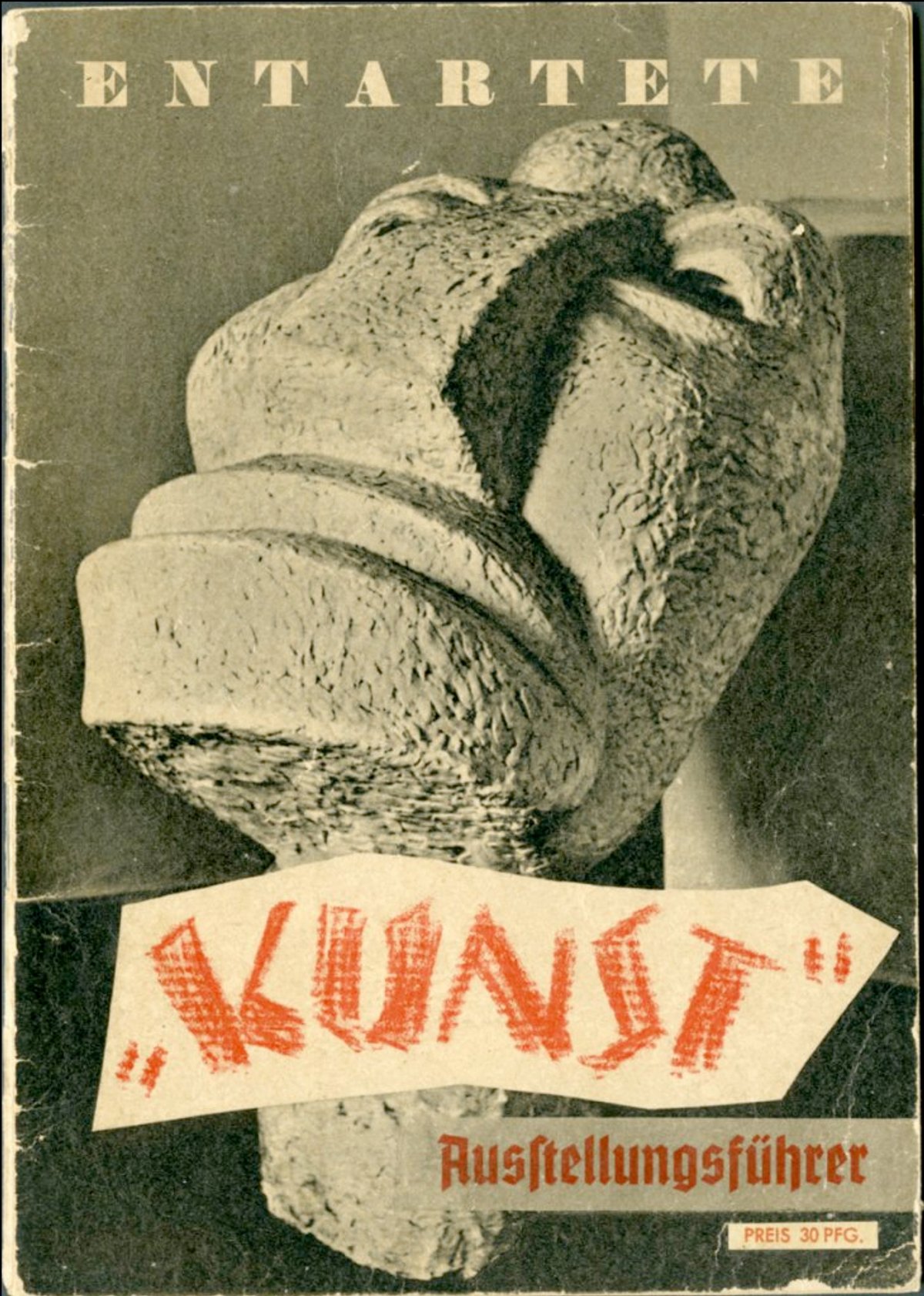
Ten years after the first Nazi rally in Weimar, at the end of 1936, Goebbels banned art criticism (no anniversaries there). The following summer heralded the crucial moment for art in Nazi Germany, the twin exhibitions Entartete Kunst, showing so-called “degenerate art” allegedly made by Jews and Bolshevists, and the exhibition of Nazi-approved art, also held in Munich, the Great German Art Exhibition at the Haus der deutschen Kunst.
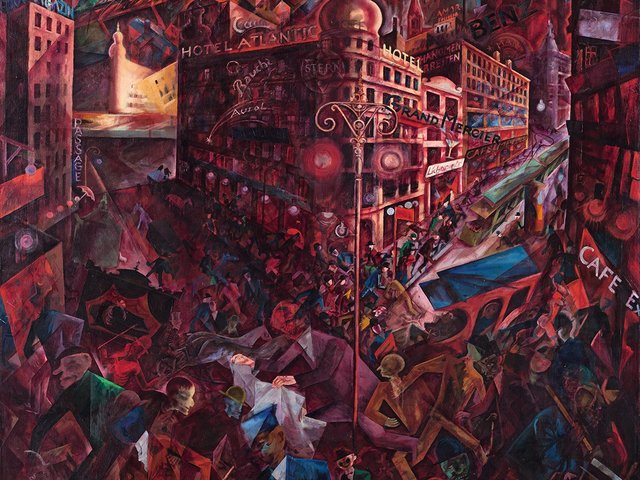
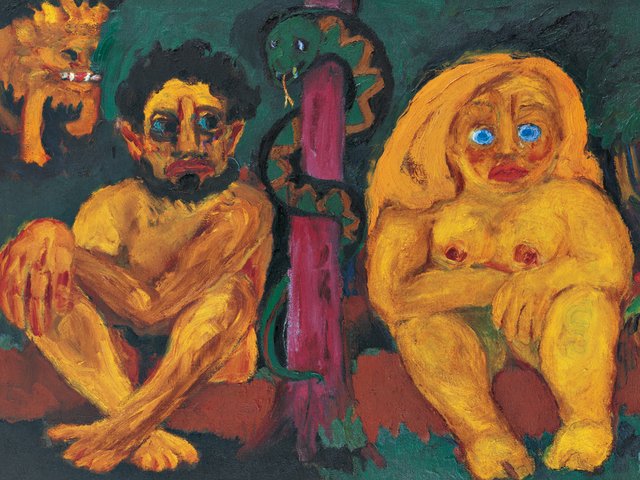
Entartete Kunst, as I write in my new book, The Worst Exhibition in the World, was one of the most important exhibitions of the 20th century, not least because it was the first survey of Modern German art. It has routinely been described as dreary Nazi propaganda, chaotically hung, but the sheer quality of works on display should make us think again. The works of art lost none of their power for being pilloried—quite the opposite. Censorship only amplified the message of freedom and individuality. Many came to laugh, but for others it was a revelation of Modern art—others still came to say goodbye.
Slandering of Modern artists
Could Entartete Kunst happen again? The vilification of Modern art hardly ended in 1937, and anti-Modern attitudes continued well into the 20th and 21st centuries and do so to this day. But surely they are on a different scale to the wholesale confiscation, pillorying and destruction of art? Entartete Kunst was part of a much wider campaign of confiscation of Modern art from museums and slandering of Modern artists, which ended in the bonfires of books and pictures, and the exile—and in some cases murder—of the artists who created them. Surely that could not be repeated?
Ten years before Entartete Kunst such things seemed just as impossible as they do now. Nobody in 1926 had the slightest idea that just over a decade later such violence would be done to an entire cultural world.
Articide
We live in a more democratic world (at least by comparison with the 1930s), one in which difficult or challenging art has a far firmer foothold. It might seem impossible that a whole culture of art could be vilified and destroyed as part of a campaign of violence and genocide.
And yet technology, in the form of artificial intelligence (AI), is wiping out creative lives with astonishing arrogance, and on a scale of which the fascists of yesteryear could only have dreamt. Smartphones are a form of fascism in our pockets. The images created by AI find their closest comparison with the seamless kitsch of dictator art. All of this, combined with the sheer unpredictability and vindictiveness of the American president, and the shameless firmament in which he and his like operate, mean that nothing can be ruled out.
• John-Paul Stonard is an author and art historian. His latest book, The Worst Exhibition in the World: Degenerate Art, 1937, is published on 5 May