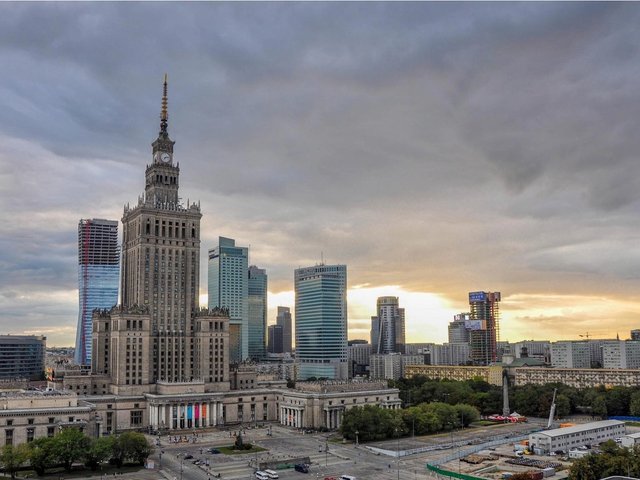
In 2026 Poland pipped Switzerland to become the world’s 20th largest economy, with over $1tn in annual output. This is a historic leap for a country that was shattered by World War II and then Communism. While the vast, 1950s Palace of Culture and Science—a “present” from the Soviet Union—still dominates the Warsaw skyline, it now neighbours shiny tower blocks proclaiming such names as Deloitte, LG and Samsung, all built in the last decade. A huge, white Museum of Modern Art, inaugurated in 2024 and designed by the American architect Thomas Phifer, sits just across from the palace.
“It was only about 20 years ago that collecting art really started here,” says Joanna Witek-Lipka, the director of Warsaw Gallery Weekend, now in its 16th year and which brings together some 50 galleries in late September. She continues: “Before that there was virtually no market.”
Today, in contrast there are some major collectors: Jerzy Starak, for instance, who with his wife Anna have tapped Renzo Piano to design a contemporary art museum near Warsaw to show their collection. The Starak Family Foundation has also presented Polish artists at successive editions of the Venice Biennale – this year it was Tadeusz Kantor and Maria Jarema. Artur and Mitra Dela collect both Polish and international art and are also very philanthropic. In Switzerland Grażyna Kulczyk has established the Muzeum Susch, featuring Polish and international artists.
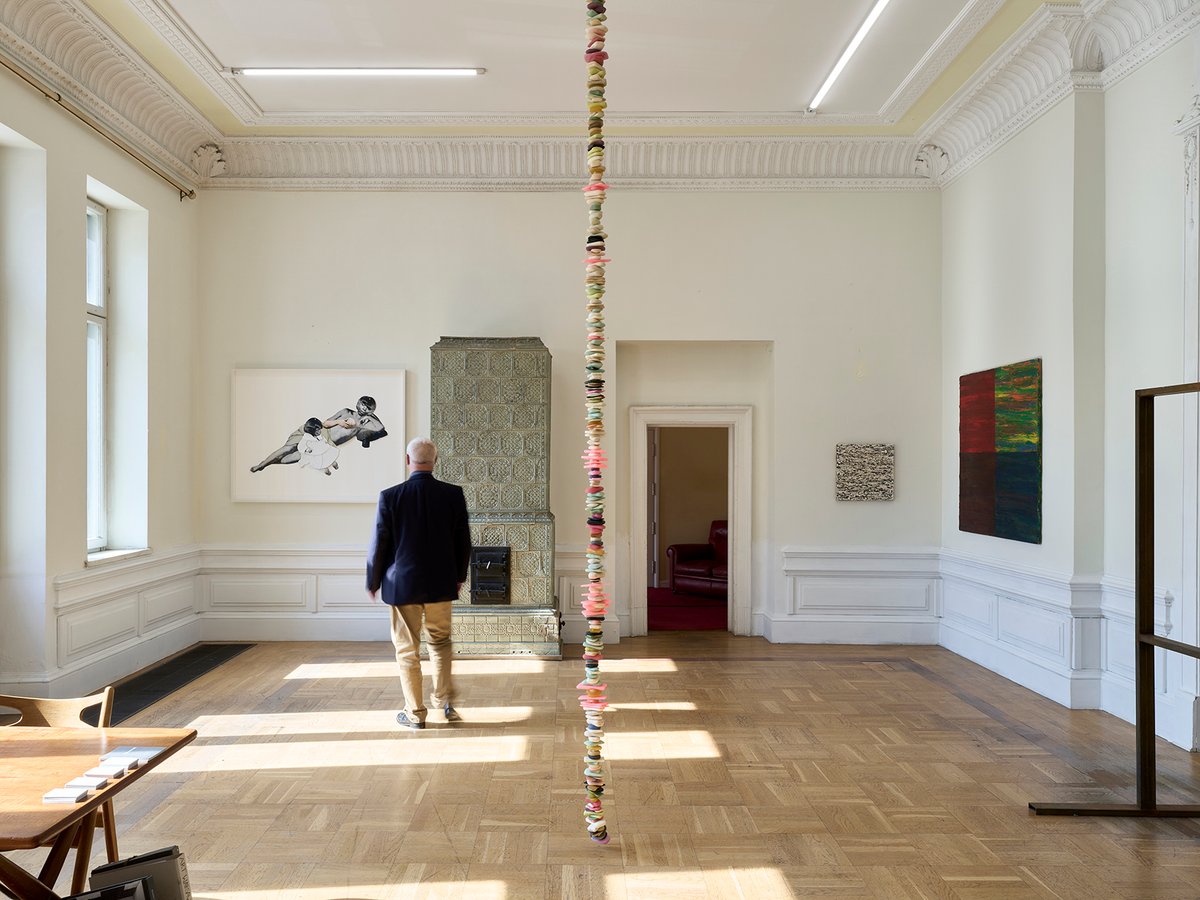
For the last three years, the country’s capital has boasted an art fair, Art Warsaw, which was held from 21 to 24 May this year in the 19th-century Villa Róż, formerly the British Embassy during the Cold War era. Now very dilapidated, the building still bears traces of its spying past, with reinforced safe rooms and even an incinerator, still splattered with ash. It even conserves a 1950s night club, the Pink Elephant.
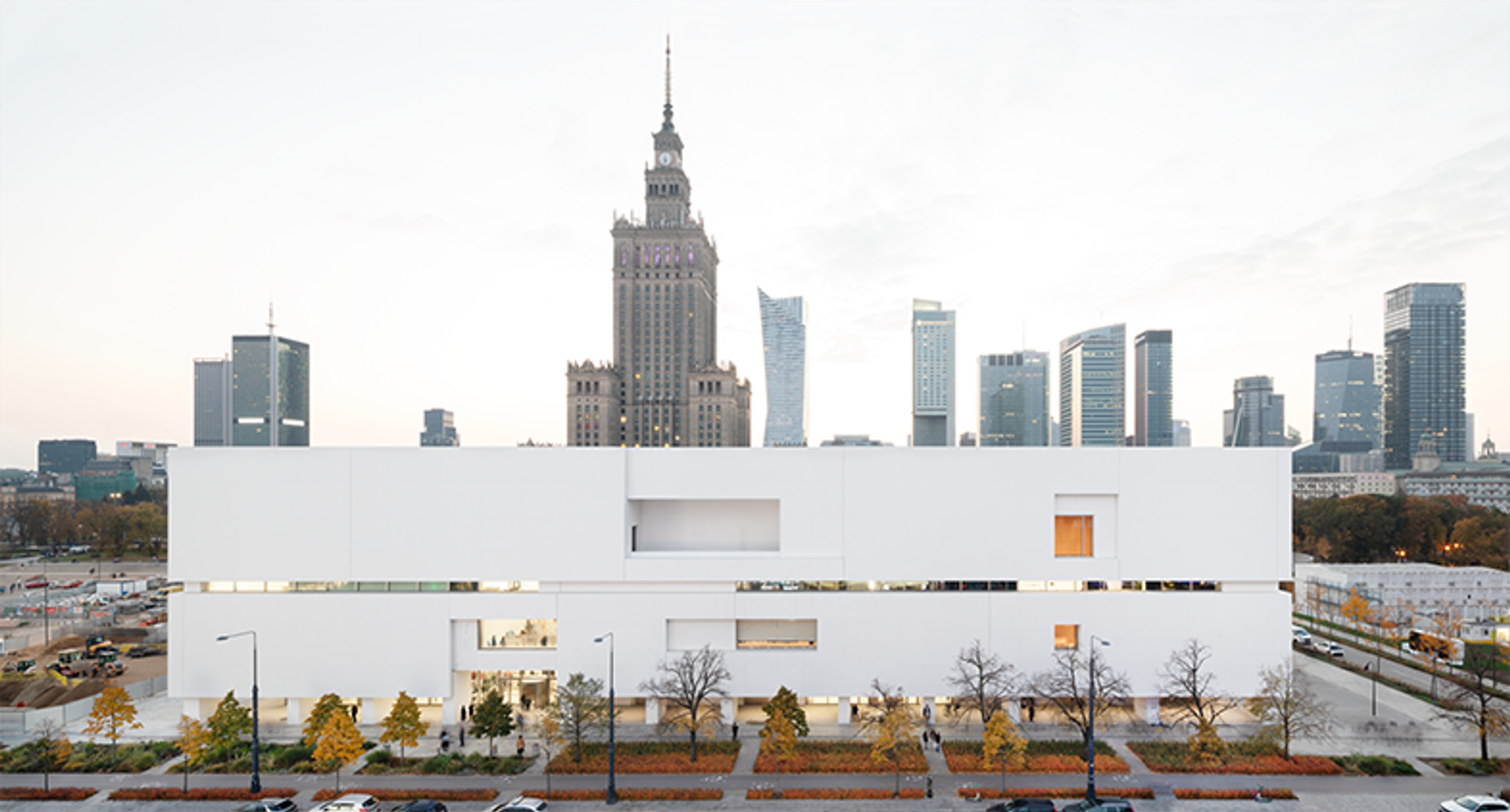
The new Museum of Modern Art with Palace of Culture and Science and tower blocks behind
Photo: Marta Ejsmont
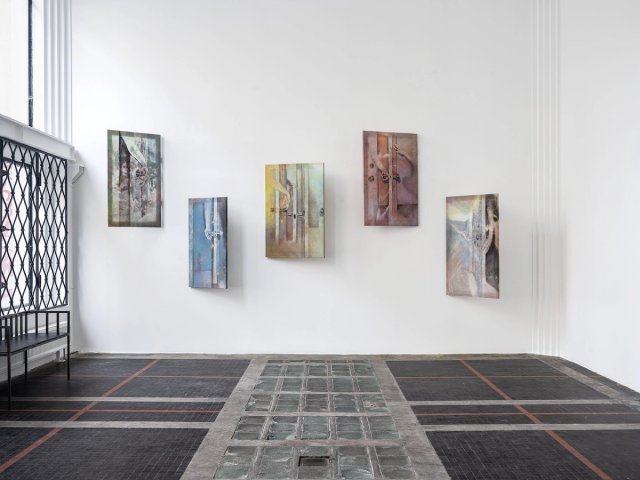
Art Warsaw partnered with the New Art Dealers Alliance (Nada) for its first two years, but now is going it alone, bringing 56 galleries to the rabbit-warren of a building. Of them just 22 were Polish, including established names such as Raster and Foksal, while the others ranged from Gregor Podnar of Vienna to Misako and Rosen of Tokyo, Plan B from Berlin and London’s Hollybush Gardens. “What we really like about Poland is the level of knowledge of collectors here,” said Alexander Mayhew of the Dutch gallery Dürst Britt & Mayhew: “They are well informed and treat art with great respect.”
On offer was, in general, work at low prices. Among the more expensive pieces was Mirosław Bałka’s suspended string of soap, 550x15x10 (2024) priced at €150,000 but not immediately sold by Nordenhake of Berlin. Raster Gallery was showing paintings by Monika Falkus, images of people in a soft palette which the gallery has specially commissioned for the fair, and sold the largest pieces at prices up to €25,000. Foksal reported success with ceramic sculptures of Warsaw street inhabitants—many on their mobiles—priced in the region of €10,000 each. “We like the atmosphere here, and we are meeting a new generation of buyers,” said Carla Chiarchiaro of Rome’s ADA gallery; she sold two figurative paintings by the Polish artist Alicja Pakosz to local buyers, at €7,000 each, plus 5% sales tax. Entry was free, with the result that over visitors waited patiently in long lines to get into the fair; organisers reported attendance of about 11,000.
The subject of tax is very acute in Poland at the moment—currently it is 23%, but the art trade is attempting to have this reduced. “It is cheaper for us to buy outside our country where the tax is lower!” lamented Witek-Lipka.
Institutions, such as the museum mentioned above, have had a considerable influence on the Polish art scene. Other spaces such as Zachęta contribute to the growing cultural scene, as well as a network of smaller local museums dotted around the country. The European Union has supported culture in manifold ways, notably through Creative Europe, which has been a big boost for Poland. And a sign of the country’s increasing internationalism is the major exhibition of Julie Mehetru currently on display at the Museum of Modern Art.
Art Warsaw has also benefited from the disappearance of the Austrian fair, Vienna Contemporary, which folded earlier this year. So with a growing art scene, a buoyant economy and some deep-pocketed collectors, the country seems poised to make an increasing impression on the art market in the coming years.