A new exhibition at ATINATI’s Cultural Center in Tbilisi explores the work and legacy of an influential Georgian sculptor and teacher, Rusudan Gachechiladze, who died on 26 November last year.
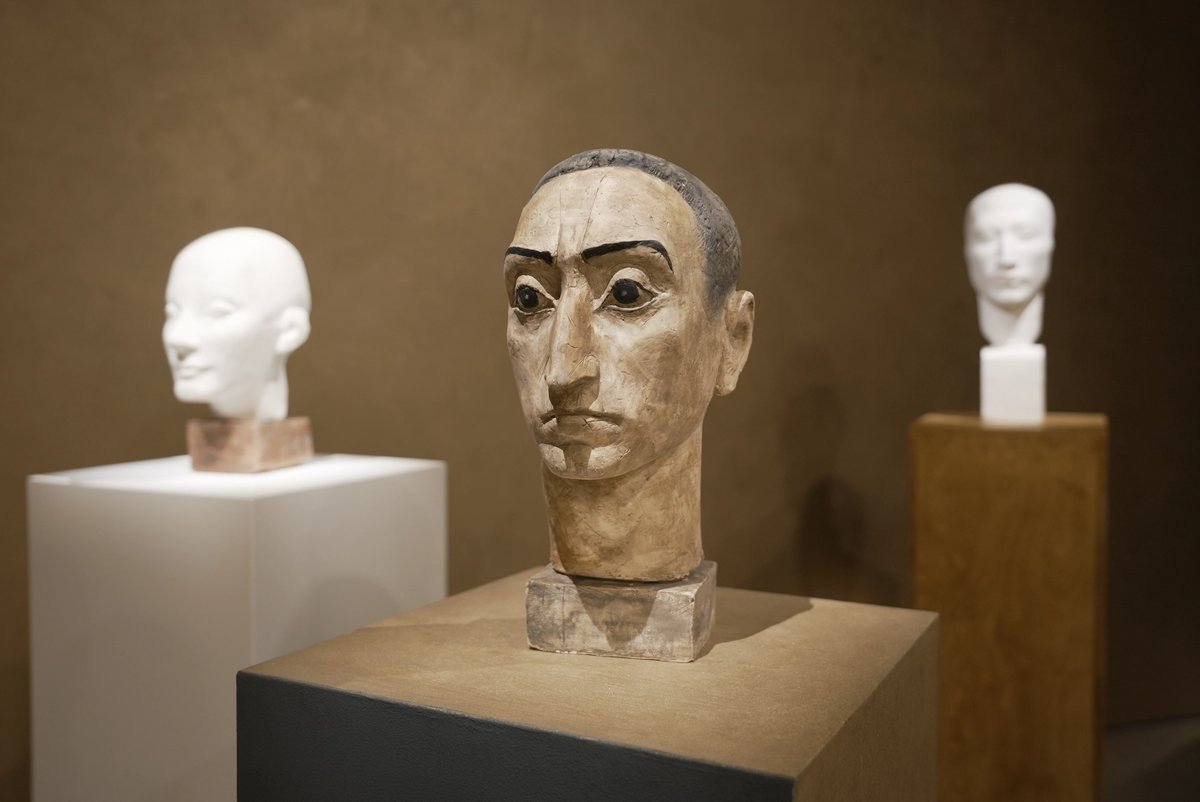
Born in 1937, Gachechiladze was part of a generation that introduced important transformations into Georgian sculpture. She trained and then later taught at the Tbilisi Academy of Arts, but her practice went beyond the traditional framework of realistic representation. Paralleling the developments of European Modernism, her sculpted portrait heads utilise simplified and universal forms, while maintaining a deep sense of the individual character of her subjects.
Much of the work in the show is in plaster, some of which have been coloured to give a sense of terracotta, stone or bronze. The exhibition also includes a series of sketches inspired by Modernist sculpture that Gachechiladze made in the 2000s, when she was in her 70s and 80s.
The exhibition is the latest in a series showcasing key figures in Georgian art, using pieces from the ATINATI collection. The collection has grown to more than 3,000 works over the past five years, tracing the evolution of Georgian art from Modernism to the present. ATINATI is a non-profit charitable foundation dedicated to promoting Georgian culture and art, through exhibitions in the Cultural Center and through the online media platform, ATINATI.com.
We asked Sofio Chakvetadze, art historian and the director of ATINATI’s Cultural Center, to tell us more about Gachechiladze and her work.
The Art Newspaper: The ATINATI collection “demonstrates the continual evolution of Georgian art from Modernism to the present”. What is the importance of Rusudan Gachechiladze’s work in this story?
Sofio Chakvetadze: Rusudan Gachechiladze occupies a very important place in the development of post-war Georgian sculpture, particularly through her transformation of portrait sculpture in the 1960s and 1970s. Her work introduced a new plastic language that moved beyond strict realism towards psychological depth, formal reduction and Modernist structure, placing Georgian sculpture into a broader international context.
For ATINATI, as one of the leading institutions collecting and preserving Georgian art, it is essential to present artists like Gachechiladze, whose work connects the Georgian history of sculpture with contemporary artistic discourse.
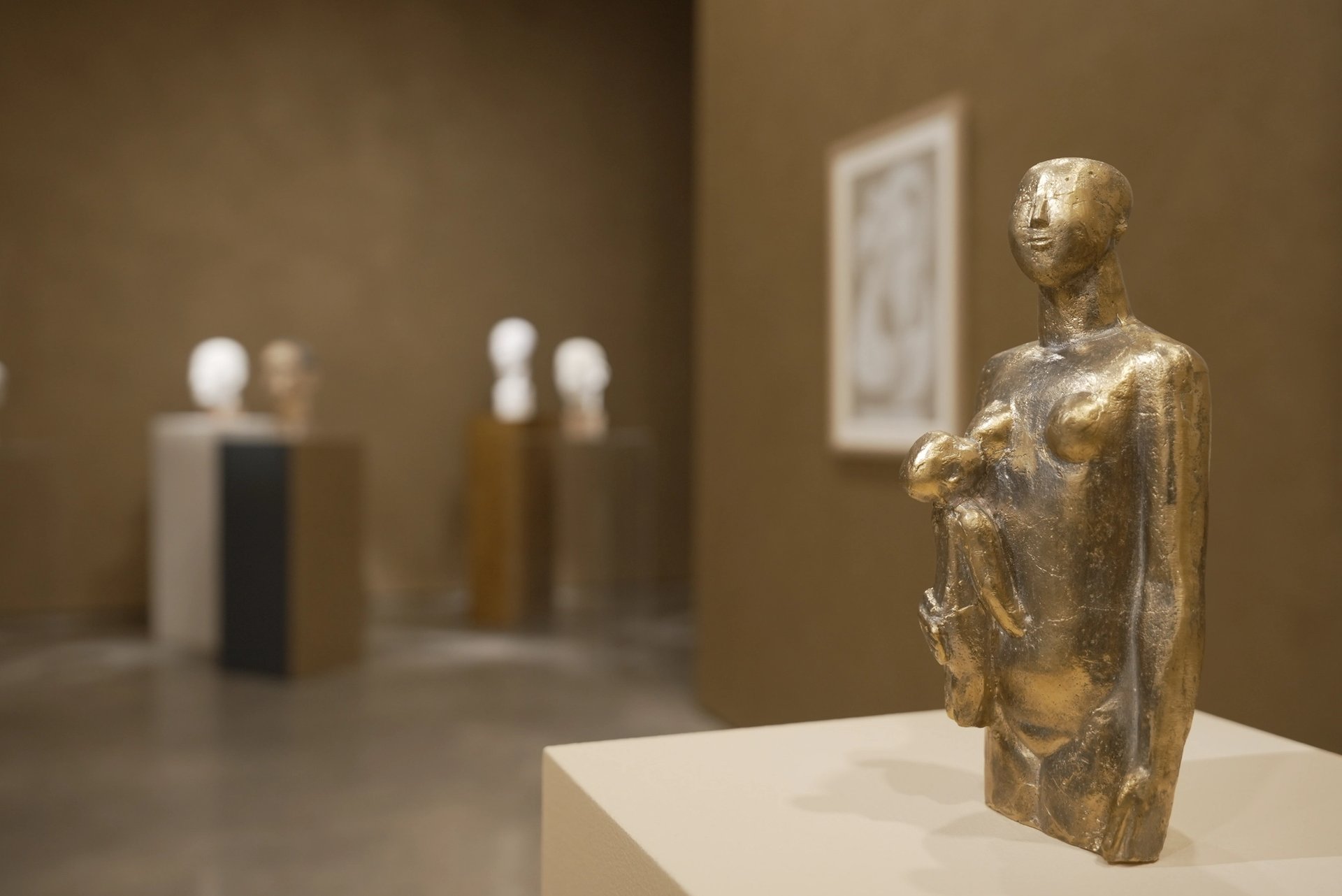
Most of the sculptures in the show are in plaster, but there are also works in bronze, such as Woman with Baby (1980s) ATINATI Private Collection. Photo: courtesy ATINATI
What influence did Gachechiladze have on Georgian artists of her time and since?
Alongside her artistic practice, Rusudan Gachechiladze devoted many years to teaching at the Tbilisi State Academy of Arts, where she influenced several generations of young artists. Her approach encouraged greater formal freedom and psychological expressiveness within sculpture, particularly in portraiture, and she also played an important role in strengthening the visibility of women within Georgian sculpture. Her legacy continues to resonate today through both her students and the broader evolution of Georgian sculptural language.
The first part of Gachechiladze's career was when Georgia was part of the Soviet Union. What were the constraints and opportunities of working under that system?
Like many artists working during the Soviet period, Gachechiladze operated within an institutional system that favoured official artistic conventions and limited experimentation. Unfortunately, many sculptural works from that era were never cast in durable materials or properly preserved, which is why a significant part of her legacy survives today primarily in plaster versions and sketches—making the role of collections such as ATINATI especially important in preserving and researching this heritage.
To what extent was Gachechiladze's work influenced by international artists and developments? Is there a distinct Georgian character to her work?
Her work demonstrates a strong awareness of 20th-century European Modernist sculpture, particularly in its simplification of form, geometrisation of the body and interest in archaic structure. At the same time, there is a distinctly Georgian sensibility in her sculpture—especially in the emotional intensity of the portraits and the synthesis between monumentality and intimacy. This balance between international Modernist language and local cultural character is one of the reasons her work remains so significant today.
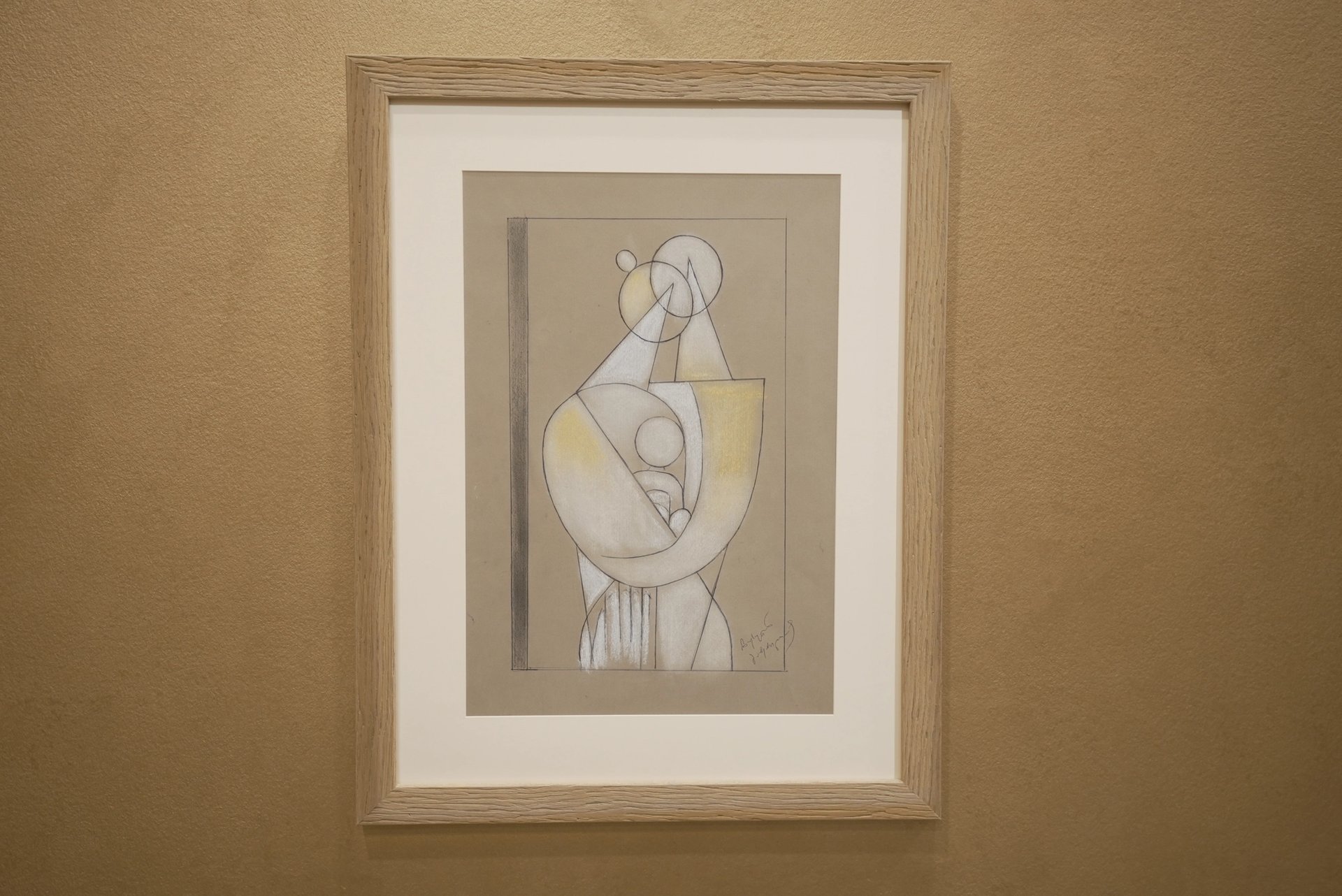
Later in her life, Gachechiladze made a series of drawings of Modernist sculptures, such as Family: Sketch for a Sculpture. ATINATI Private Collection. Photo: courtesy ATINATI
The exhibition includes some of Gachechiladze's work on paper. Can you tell us a little about these and her later work?
The later works on paper reveal another dimension of Gachechiladze’s practice, where she continued to explore sculptural form through drawing. These graphic series, produced mainly in the 2000s and 2010s, feature athletes, riders and religious and allegorical figures, rendered through expressive lines and constructive forms closely connected to Modernist sculpture. For ATINATI, it was important to exhibit these works alongside the sculptures, as they demonstrate the continuity of her artistic thinking and allow viewers to see the full scope of her creative vision.
• Rusudan Gachechiladze, until 7 June, ATINATI Cultural Center, Tbilisi