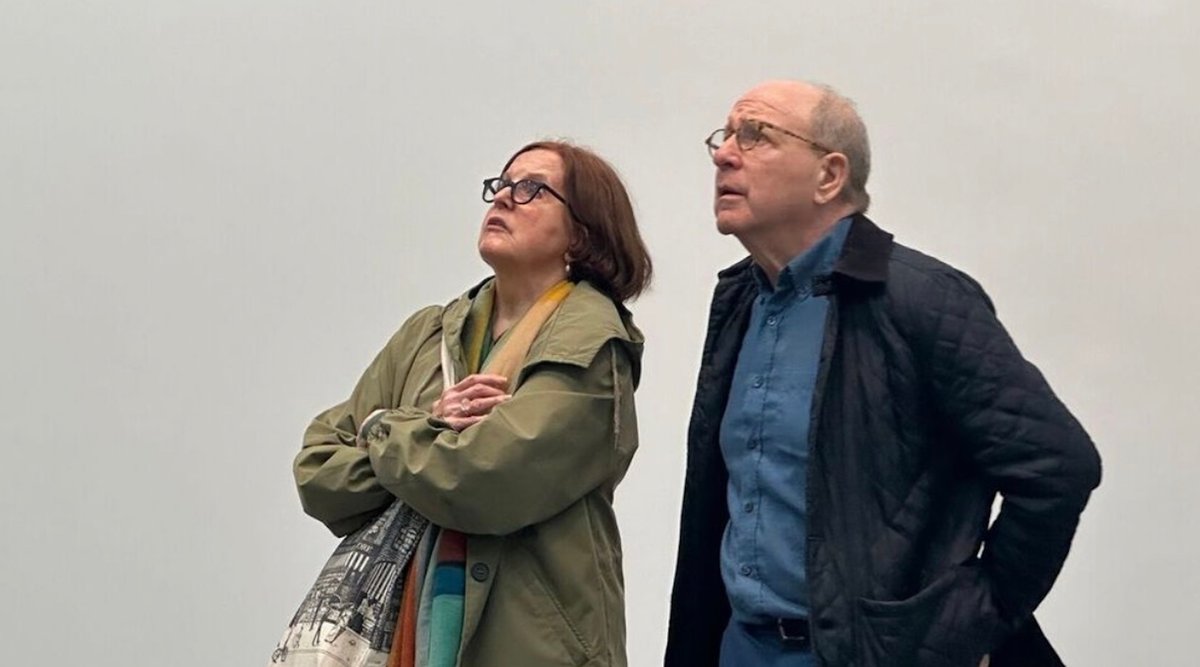
Over the last four decades, few figures have influenced contemporary art criticism in the US more than Jerry Saltz and Roberta Smith. In her documentary House of Criticism (2026), which had its world premiere last week at the Tribeca Film Festival, the film-maker Alison Chernick shifts the focus away from the bylines and public personas to the private lives behind them.
The film follows the married critics (he for New York magazine, she, until recently, for The New York Times) through their daily routines, offering an intimate portrait of two people whose relationship has been built around looking at art, forming opinions and turning those observations into writing. In doing so, it also becomes a portrait of a profession that has grown increasingly scarce within contemporary journalism.
For many people in the art world, Saltz and Smith’s marriage has long been a source of fascination. House of Criticism offers a rare glimpse into what happens when two people who have dedicated their lives to the typically solitary pursuit of criticism go home together at the end of the day.
In an early scene, Saltz and Smith are seen eating together at a diner and reminiscing about their careers’ early days. Smith recalls helping Saltz with his writing, while Saltz jokes about frequently asking her for opening sentences. In one of the documentary's many dryly funny lines, Smith remarks: “I thought I wrote better for you than I did for myself.” The exchange captures the film's tone, which balances affection, humour and curiosity about how two people built parallel careers in art criticism. Chernick manages to convey the contrast in her subjects’ writing styles: Smith’s precision, patience and deep attentiveness to objects, as opposed to Saltz's more expansive and emotional approach driven by personal connection.
Much of the documentary is shot in the couple's Manhattan apartment, following them to galleries, exhibition openings and outings with friends. Chernick is also interested in the smaller details that make up their lives, from Saltz’s famous Big Gulp cups, which Smith can occasionally be spotted drinking from as well, to the replicas of art gifted to him by admirers and social media followers. In another memorable sequence, Saltz shows work he made as an art student and recalls Smith telling him that he was meant to be a writer rather than an artist.
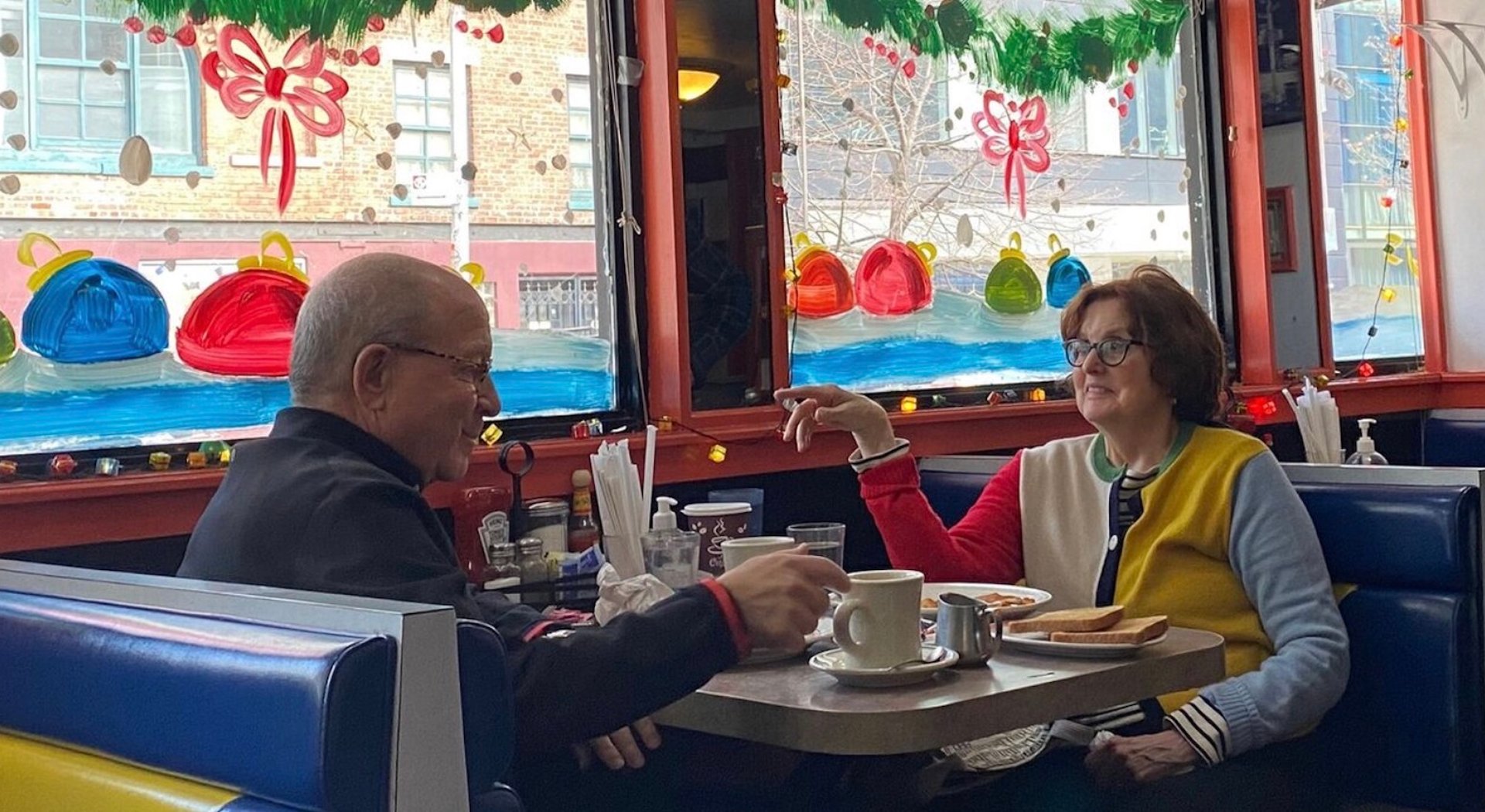
Roberta Smith and Jerry Saltz in a scene from House of Criticism (2026), directed by Alison Chernick Courtesy Tribeca Film Festival
The documentary traces the formative experiences that shaped both critics and sheds light on the people they would become. Smith recalls growing up in Kansas in a household where her mother, who had a particularly strong sense of aesthetics, frequently asked for her opinion on everything from household objects to matters of taste. The anecdote becomes one of the film's most revealing insights into Smith's development as a critic. That confidence would later lead her to the Whitney Independent Study Program, where she worked closely with Donald Judd, helping shape her critical sensibility.
Saltz’s path to criticism was far more chaotic. In one of the film's most affecting sequences, he recalls a childhood visit to the Art Institute of Chicago, when his mother dropped him off at the museum to spend the afternoon looking at art. She died two weeks later. He only learned years later that she had died by suicide. Saltz says his mother’s death was rarely discussed within the family, there was no funeral and his father remarried a year later. The memory reveals a vulnerable side of a critic known for his outsized personality, sharp opinions and near-constant presence on social media.
One of the film's most revealing moments comes when Smith discusses her retirement from The New York Times in 2024. Rather than consult Saltz beforehand, she sent the email to her editor first and informed him afterward. Smith notes that had she told Saltz beforehand, he likely would have wanted to dictate the email himself. The exchange is funny and quintessentially them, revealing how well they know one another while working to preserve their independence. Smith’s retirement hangs quietly over much of the documentary, and Chernick is ultimately most interested in what comes next for her personally.
One topic conspicuously absent from the film, however, is a deeper discussion of where art criticism is headed and how Saltz and Smith view its future. At one point, Saltz acknowledges that he and Smith have occupied two of the last remaining full-time art critic positions in the US. The observation is striking, particularly because the documentary often feels as much like a portrait of a fading model of criticism as it does a portrait of the critics themselves.
Perhaps that conversation was beyond the scope of the film, but it is one of the most compelling questions it raises. House of Criticism succeeds as an intimate portrait of two writers, but it is also an inadvertent portrait of a profession in decline. If Saltz and Smith represent the last great generation of full-time art critics, who will inherit their roles when they are gone and what will criticism look like going forward?
- House of Criticism, 12-14 June, Tribeca Film Festival, New York