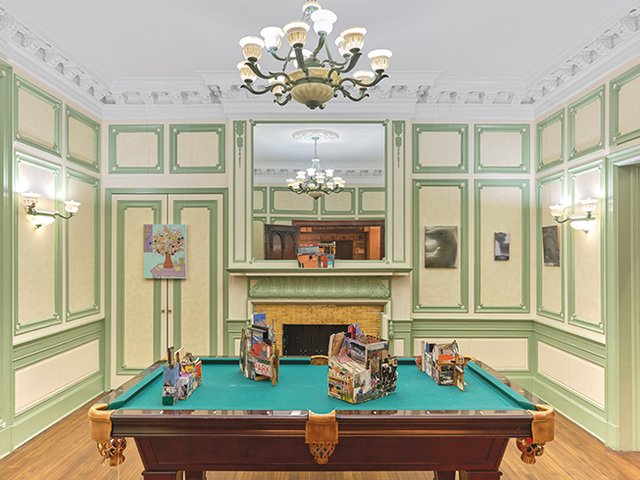
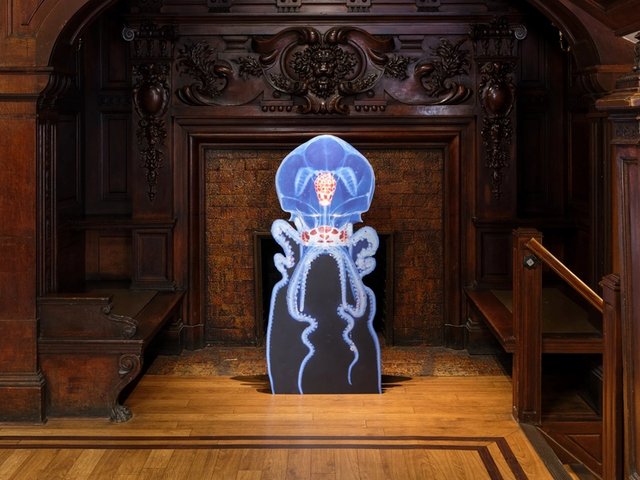
One of Estonia’s oldest and leading contemporary art institutions, the Tallinn Art Hall (Tallinna Kunstihoone), is reopening on 13 November after a five-year, €13m renovation. The kunsthalle relaunches with the exhibition Estonian Art from Beginning to …, which will trace the Baltic nation’s art history from the 19th century to now.
The institution has been exhibiting in the Tallinn City Gallery and its new extension at the Lasnamäe Pavilion since closing in March 2021. It will now return to its original home in Tallinn’s main public plaza Freedom Square, where it first opened in 1934.
The renovations were led by Juhan Rohtla of the local firm KUU Architects, and have involved preserving the historic facade of the building and significantly altering the interior, according to a statement. The interior changes include enlarged galleries, new routes and an underground Black Box gallery dedicated to performance and time-based work. The historic nightclub KuKu Club will return to its original, now refurbished location in the Art Hall’s basement, where it opened in 1935.
“As the oldest and largest commissioner and producer of contemporary art in Estonia, Tallinn Art Hall has a unique role within the country's cultural landscape,” Paul Aguraiuja, the director of Tallinn Art Hall, says in a statement. “This moment marks the beginning of an exciting new international chapter for Tallinn Art Hall.”
The international element of the reopening includes substantially updated infrastructure which will allow the institution to host “significant international museum loans” for the first time, according to a statement. The technical updates include “enhanced load-bearing capacity, advanced hanging systems, museum-grade environmental controls, high-pressure water infrastructure and state-of-the-art sound technologies”.
The reopened Tallinn Art Hall will welcome an artist resident from the National Museum of Modern and Contemporary Art in Seoul. The institution will also host British curatorial fellow Andrew Cummings, with support from the Upė Foundation, a Lithuanian-founded, London-based non-profit launched in December to foster UK-Baltic cultural exchange.
The redevelopment was fully funded by the Estonian government, a spokesperson tells The Art Newspaper. They add that it marks ”a particularly significant public investment in cultural infrastructure and a clear stance on the importance of investing in culture during such a precarious time”.
In addition to the renovation itself, public funds will also support a new commission by Hungarian-Estonian artist Dénes Farkas, who represented Estonia at the Venice Biennale in 2013. Soup Kitchen, a four-year intervention featuring monthly communal soup kitchens at the art space, is funded by the country’s Percent for Art scheme, which requires that 1% of public building funds be allocated toward artistic commissions.
“I wanted to create something that remains alive through participation and shared experience,” Farkas tells The Art Newspaper.