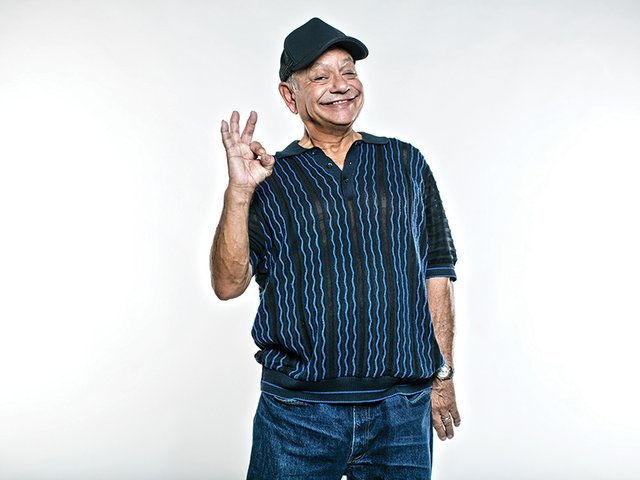
Cheech Marin may be famous for his love of marijuana, but his not-so-secret passion is Chicano art.
Four years ago, the comedian and perpetual stoner—who celebrates his 80th birthday on 13 July—began an unlikely late-career act as a museum founder, opening the Cheech Marin Center for Chicano Art & Culture at California’s Riverside Art Museum. The fledgling institution grew out of Marin’s personal art collection, which he had already spent years touring to more than 50 museums across the country.
“Chicano art is American art. It is not separate from American art. It's part of the mainstream of American art, and has been for a long, long time,” Marin says. “That’s my anthem.”
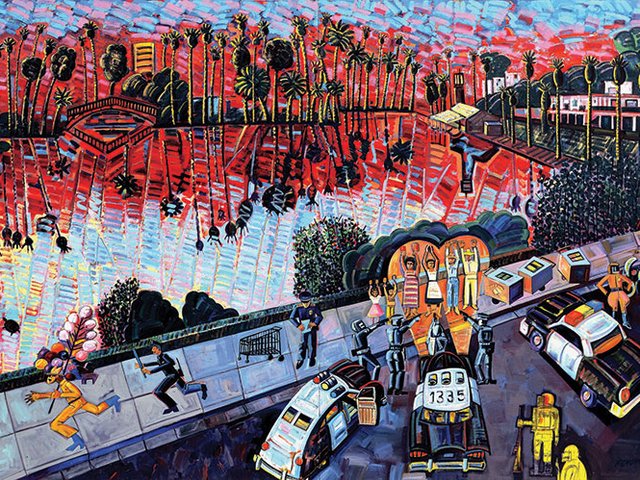
The museum recently tapped Benito Huerta, an artist represented in Marin’s collection, to curate the exhibition We the People: Chicano Art in the USA (until 23 May 2027). The works on view—such as Lalo Alcaraz’s poignant 2025 painting Summer of ICE, based on a real photo from a GoFundMe page for a Los Angeles man detained by Immigration and Customs Enforcement while selling paletas—confront the timely issues of immigration, documentation and borders. They also celebrate cultural pride in the Mexican American community.
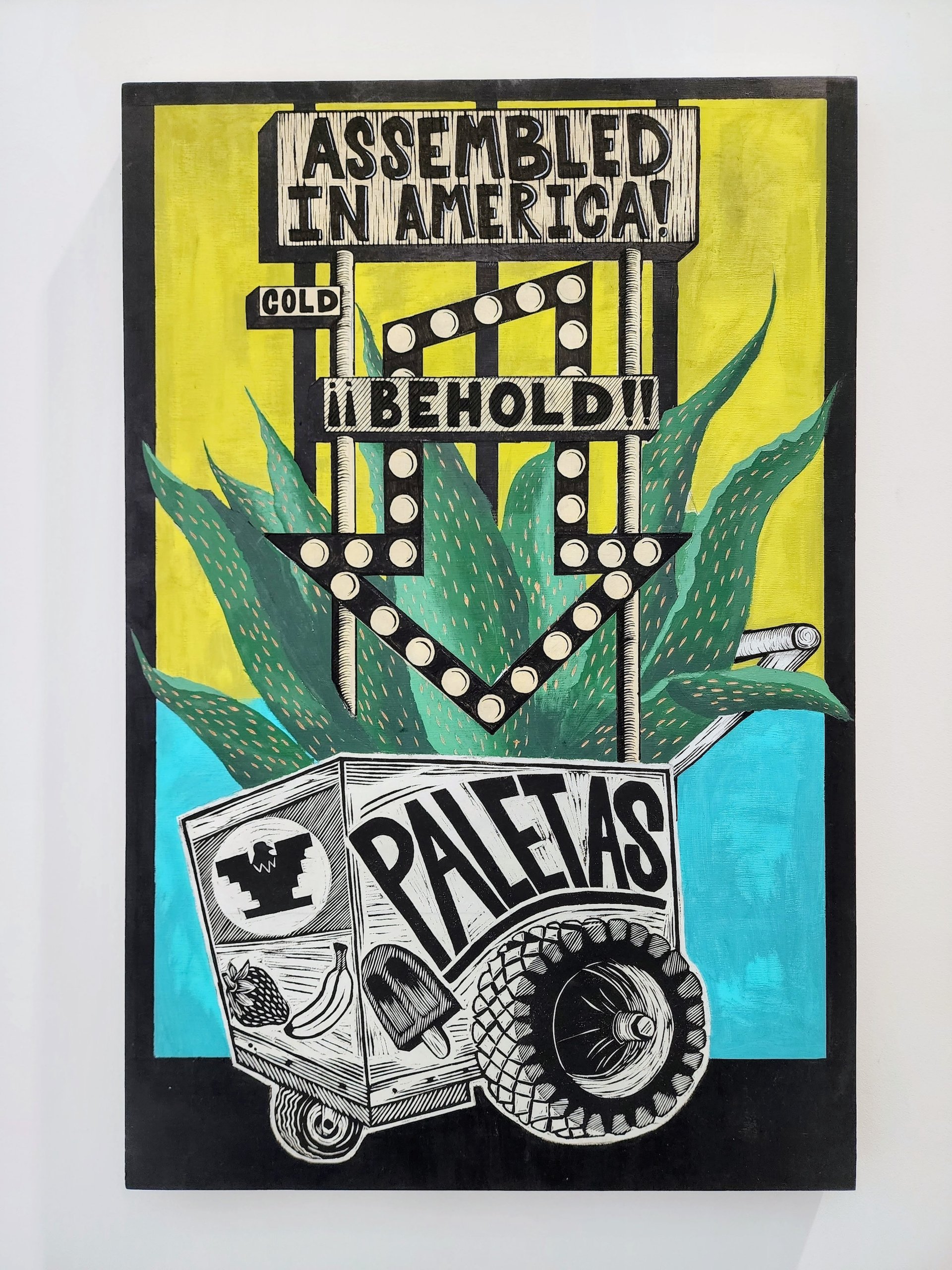
Benjamin Muñoz’s A Miracle of the Masses (2023) Courtesy the artist and the Cheech Marin Center for Chicano Art & Culture
These are powerful statements from an institution at a time when US president Donald Trump has fought to eradicate “divisive” narratives about discrimination against minority groups from museums. Republican members of congress even tried to defund the Smithsonian’s fledgling National Museum of the American Latino—which has organised an ongoing tour of the Cheech’s inaugural show Collidoscope: de la Torre Brothers Retro-Perspective—because of an exhibition representing Latinos as an oppressed group.
These are the kinds of topics that Marin has tackled head on in his comedy over the years. In his directorial debut, Born in East LA (1987), he starred as a US citizen mistakenly deported to Mexico. Both then and now, the plot hews disturbingly close to real-life events.
As the Cheech prepared for an influx of visitors during the Fifa World Cup, we spoke to Marin about the museum and its mission, and about his experience in the wake of last year’s Palisades Fire, which nearly destroyed his home.
The Art Newspaper: What does the exhibition title We the People mean to you at this fraught time?
Cheech Marin: That's where the Constitution starts: “We the people of the United States, in order to form a more perfect union...” We’re always striving for perfection—sometimes not-so-striving and sometimes anti-striving. But this is not unusual in America's progress. History is filled with these moments, you know. We just have to overcome them because we, the people, would like a democracy.
The museum’s mission has been consistent from the very beginning: here’s our people, here's where they live, these are their concerns, and these are their joys.
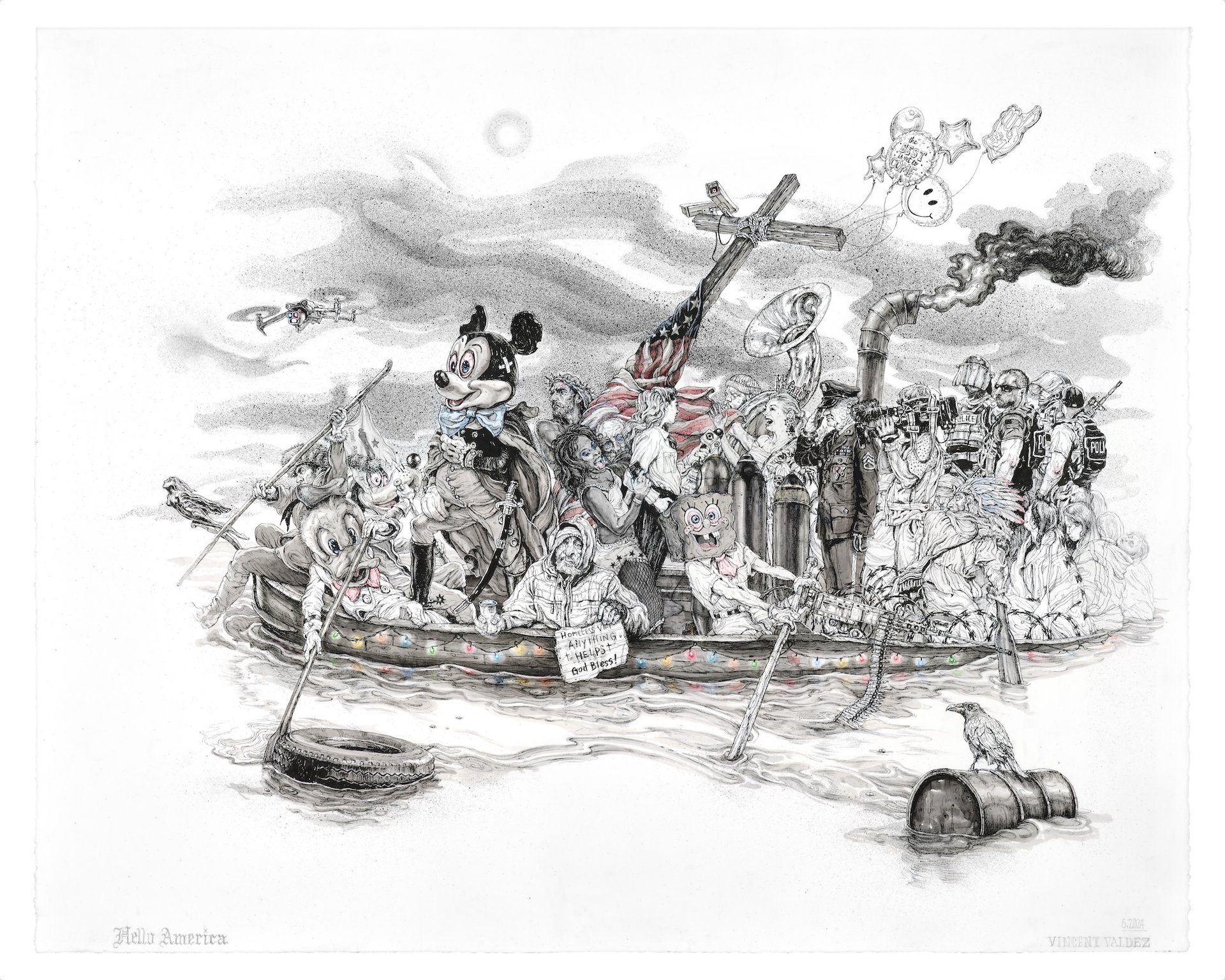
Vincent Valdez’s Hello America (2025) Courtesy the artist and Cheech Marin
What did you learn touring your collection before opening the Cheech?
It was the first time much of the Latino audience had ever been in a museum of any kind. And that happened in every single city, all over the country. And they had repeat admission. People would say things like: “I didn't think museums were for us, but now they are. And I'm going to bring my kids and my cousins and my Aunt Thalia from out of town.”
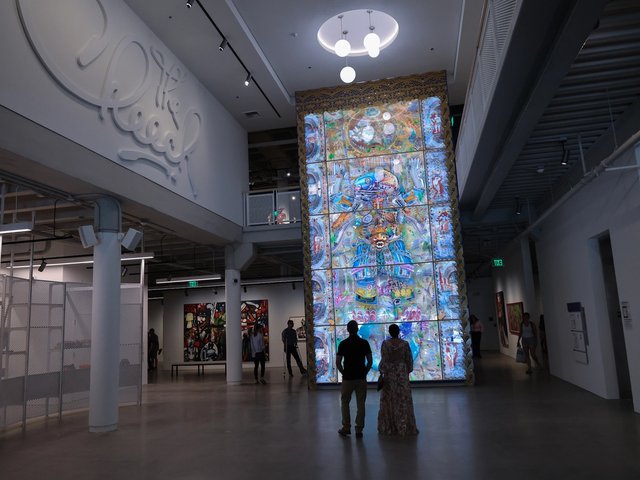
Sometimes, I sit at the entrance and watch families come in. They don't know I'm there. There’s this big piece by the De la Torre brothers that's two storeys high at the entrance. It's a lenticular piece, and the image changes depending on where you stand and how you move. A little girl in a folkloric dress, maybe five or six years old, was dancing in front of it. She was holding out her dress and interacting with the changing images. I thought she was going to disappear into the piece.
That's the purpose of art. I'm thrilled by those things, which happen every day.
What was your experience in the aftermath of the Palisades Fire?
We were getting ready to get in the car to go back. My friend, who is in the neighbourhood, called and said: “Don't come. Everything's on fire here. They won't let you in. Stay wherever you are.” The next week, we were watching TV. We saw a helicopter flying right over the house, and it was still there. And I go: “Whoa”.
We were right across the street from where the fire started. And it was devastating. It burned down my whole block, except for my house and the one next door. It looked like Dresden after the firebombing. But not one spark went into our house. A miracle.
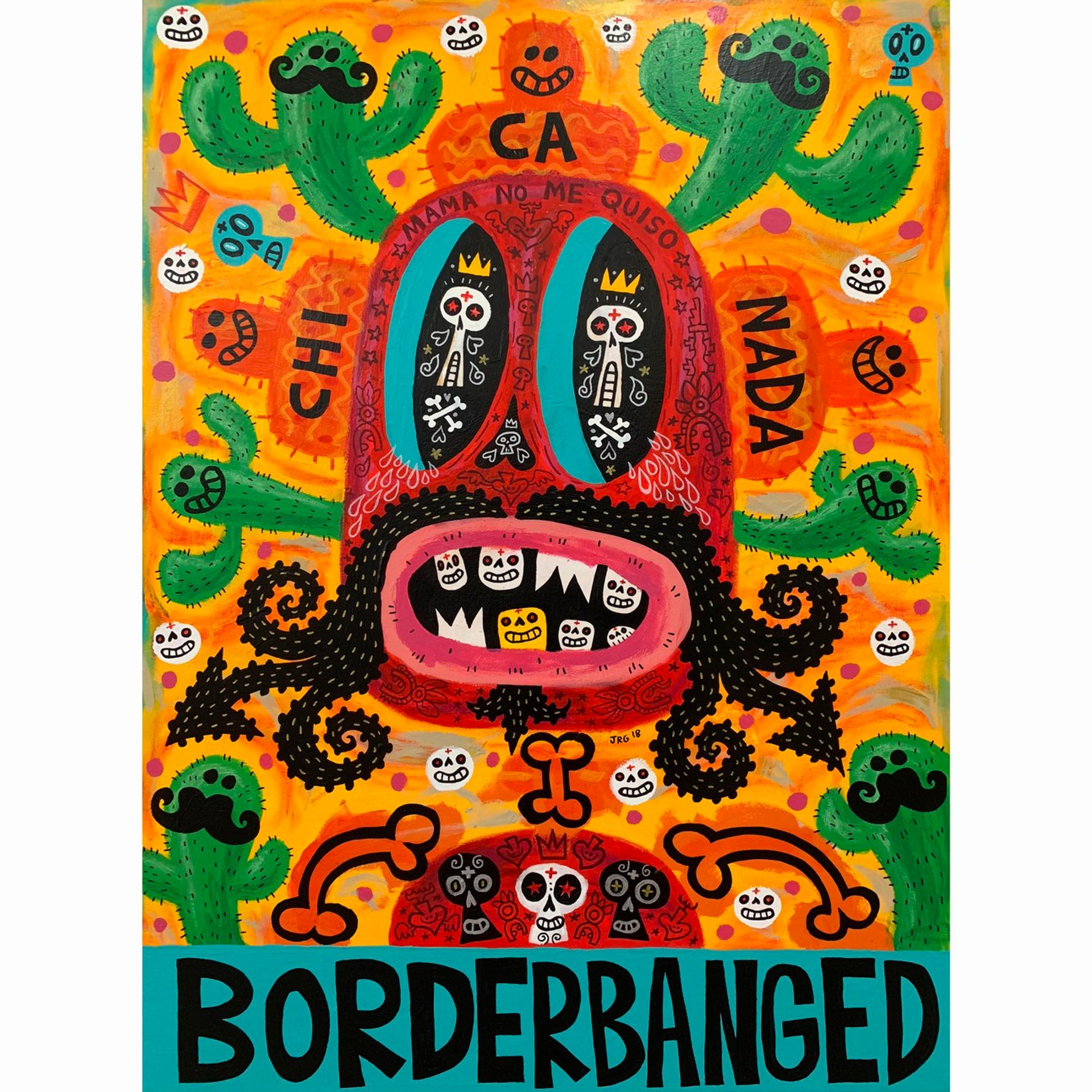
Jorge R. Gutierrez’s Border Banged (2018) Courtesy the artist and the Cheech Marin Center for Chicano Art & Culture
The art was fine. We wiped it all down and cleaned it for smoke damage and put it in storage. The little ones we took to the condo that we're living in now in Beverly Hills. We've been out of our house for almost a year and a half.
Our first place that we had to stay was the Century Plaza Hotel. There were all these homeless millionaires waiting in the lobby with no house. It was the exact spot where I participated in the great Vietnam Resistance Day movement in 1967, which started in Rancho Park across the street.
It was a big LA anti-war demonstration, which I was heavily involved in. Right in front of the hotel, which was still being built at the time, the police waded in and just started beating everybody. And it turned into this big police riot. After the fire, I was sitting on the balcony, smoking a joint and remembering that—right in front of the place that it happened. So life goes around.
Why do you think there is such a strong connection between art and activism?
Art is so primal. You look at Guernica, and even though it's abstract, you figure it out right away, the horrors of war. Art, if it's good art, you don't have to sit there and puzzle over it. You get it right away.
Visual art makes me happy. Few things are more thrilling than seeing a beautiful artwork for the first time. All your learning on the academic side of it is reduced to one word: wow. And that's what we want to create at the Cheech. We intend to make the Cheech an international destination.
- We the People: Chicano Art in the USA, Cheech Marin Center for Chicano Art & Culture, Riverside, California, until 23 May 2027