The 57th edition of Les Rencontres de la Photographie feels unusually open-ended. In past years, the festival has tended to anchor to loose yet clearly articulated curatorial propositions. This summer, director Christoph Wiesner instead offers what he describes as "a space for complexity and attentiveness". The programme resists "simplification, division and reduction", he writes in his introductory essay for the festival’s catalogue, embracing photography's capacity to reveal "what goes unnoticed, what endures, what circulates, what is passed on and what connects".
That thinking is reflected across more than 40 exhibitions that are organised into broad constellations—such as ‘Independence’, ‘Forms of Life’ and ‘The Uncertain Archive’—rather than a single overarching theme. At times the festival feels diffuse, with exhibitions ranging from posthumous retrospectives and historical surveys (William Klein: This Way to Heaven, Animal Model: 200 Years of Photography) to process-driven abstraction and contemporary installation (Meghann Riepenhoff’s cyanotypes created in nature, Lara Tabet’s microbiological altarpieces).
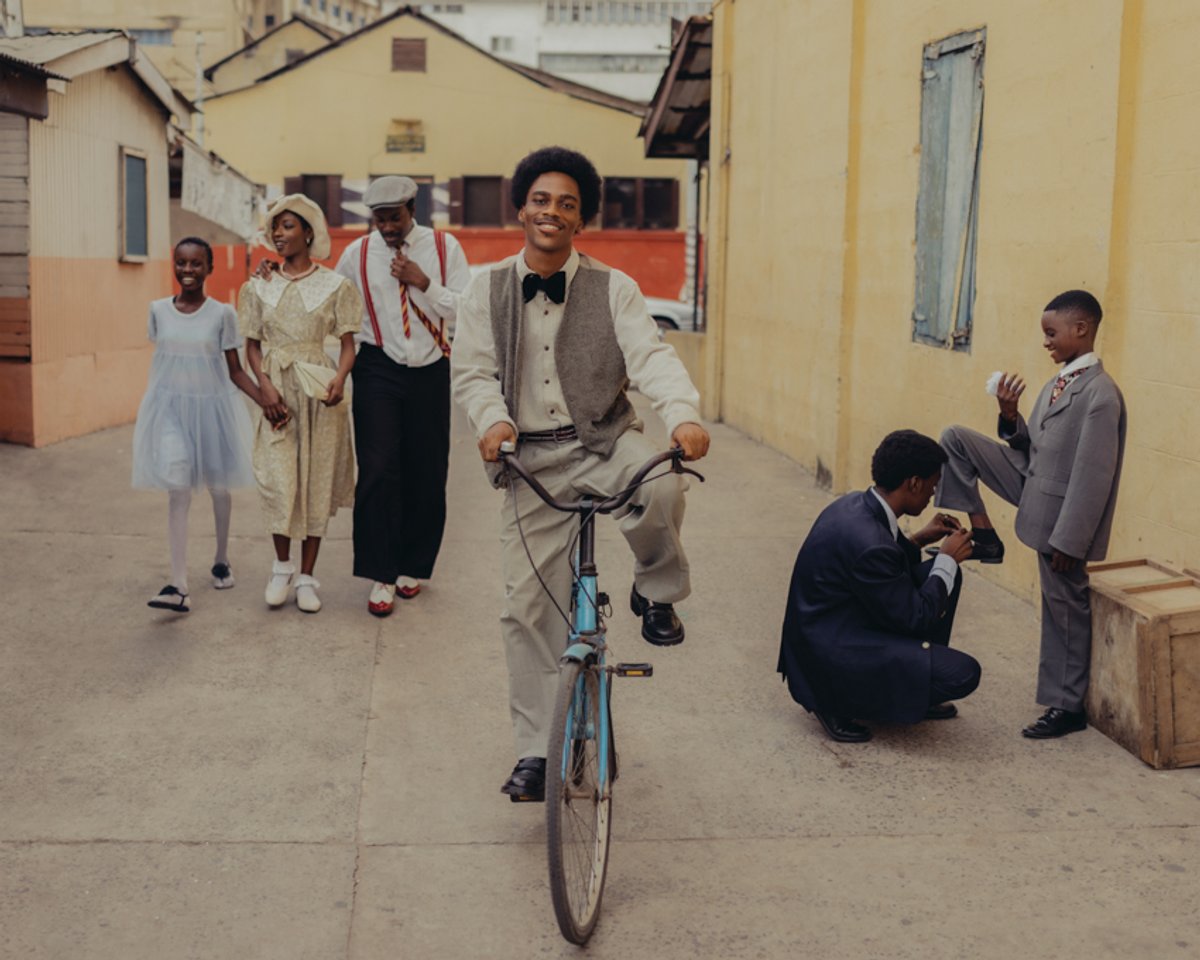
Yet the absence of a rigid framework challenges visitors to find their own connections in a welcome alternative to the sledgehammer approach. And running quietly through many of the strongest exhibitions is a concern not simply with photography as image-making, but with photography as a way of constructing history, memory and identity. Nowhere is that more evident than in Ghana! Dreaming Independence 1957-1976 (until 4 October). One of the intellectual anchors of this year's programme, it is installed on the first floor of the Palais de l'Archevêché on one side of the Place de la République, opposite a fourth-century Roman obelisk and the ornate 12th-century façade of the Église Saint-Trophime. Rather than retelling the familiar political history of the West African state's independence from Britain in 1957, curator Damarice Amao examines the visual culture through which the newly independent nation imagined itself and its future.
Photography appears not simply as documentation but as a building block towards statehood. Reproduced across books, magazines, stamps, textiles, postcards and official publications, images became central to the construction of a modern national identity. Photographers including James Barnor, Felicia Abban, Willis E. Bell and Paul Strand are brought into dialogue with contemporary Ghanaian artists such as Carlos Idun-Tawiah and Rita Mawuena Benissan, whose works question how that visual inheritance continues to shape ideas of nationhood today. It is an exhibition that demonstrates how decolonisation was as much an act of idealistic representation as one of politics, and how photographs remain active participants in that process rather than passive historical records.
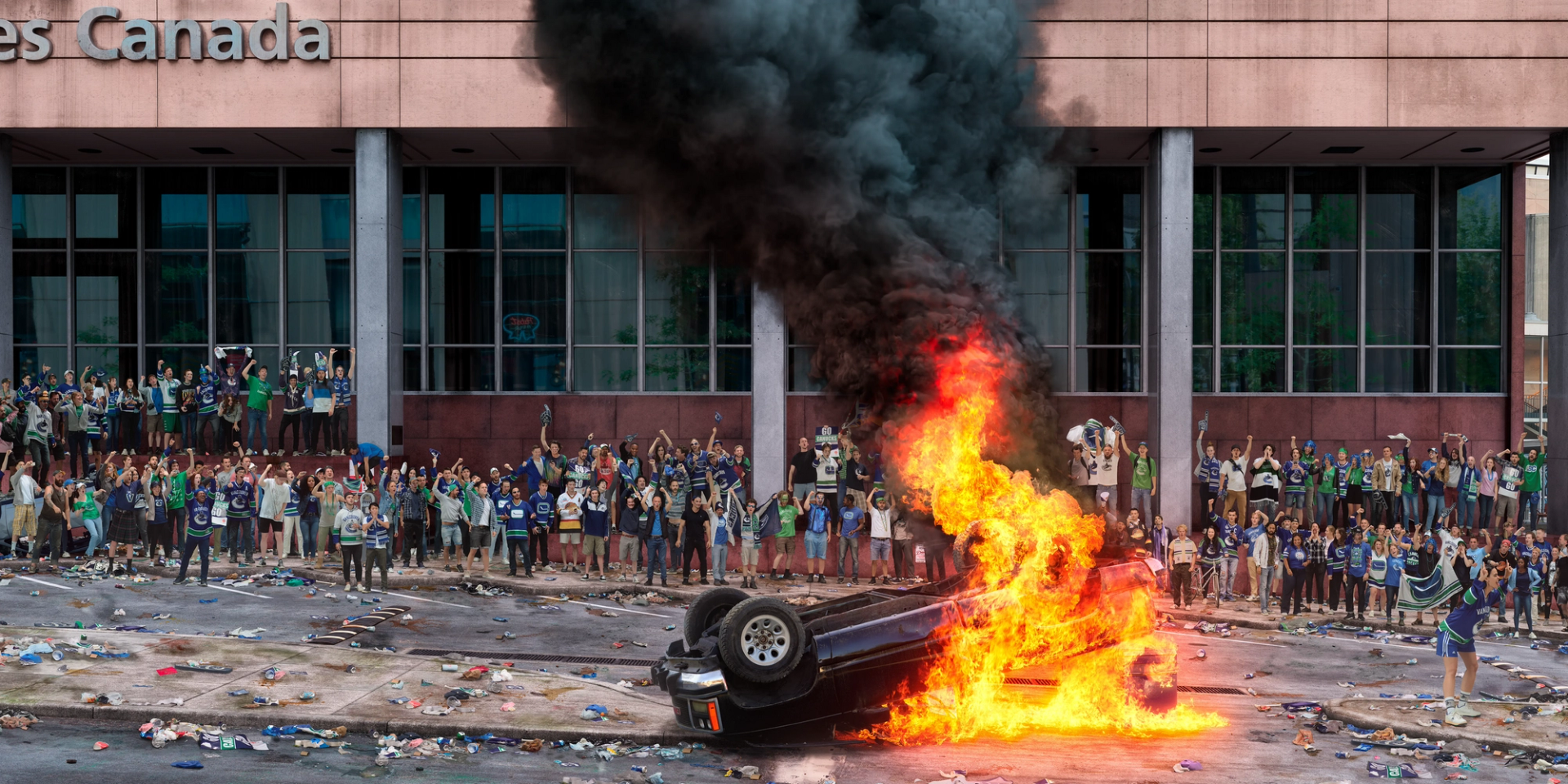
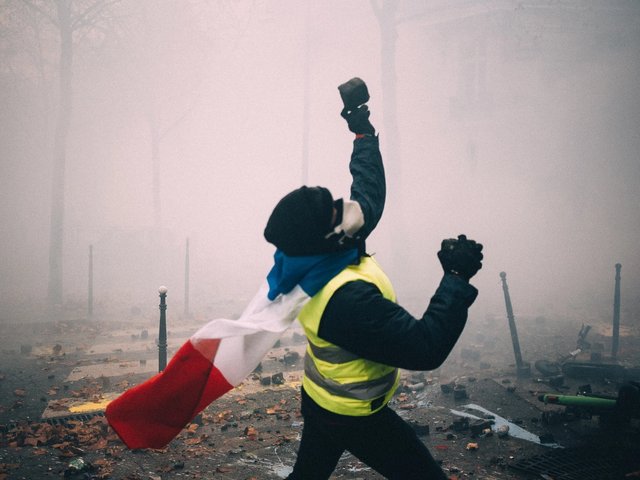
Stan Douglas's Vancouver, 15 June 2011, from the series 2011 ≠ 1848, 2021
© Stan Douglas. Courtesy the artist, Victoria Miro, and David Zwirner
If Ghana! looks at the making of national history, Stan Douglas's Bodies Never Lie, presented at Luma Arles (until 10 January 2027), examines how history itself is constructed. Douglas has long occupied a distinctive position between photography, cinema, theatre and installation, producing meticulously staged works that reconstruct overlooked or unresolved historical moments to examine ideas of power, resistance and the formation of collective memory. The exhibition includes both the video works for which he is best known and still images, including the mural-sized Vancouver, 15 June 2011, which re-enacts the Stanley Cup riot (also known as ‘the smartphone riot’, after a reported million images were sent to police investigators, captured on mobile phones) in his hometown. Music as a powerful social force remains an enduring subject, and the centrepiece of Bodies Never Lie is a new film commissioned by Luma. On one level, Exquisite Corpse (2026) is an absorbing homage to flamenco as an artform, well worth 25 minutes of your attention, its split-screen viewpoint emphasising the players’ intensity and gesture. On another, set in the 1950s during General Franco’s rule, it explores flamenco as a coded form of resilience and resistance.
Installed at monumental scale at La Mécanique Générale, one of the ginormous former railway workshops that make up the revitalised Parc des Ateliers, the exhibition demonstrates the precision with which Douglas choreographs movement, architecture and light, creating images that possess both a documentary impulse and cinematic spectacle. It is among the festival's most ambitious contemporary presentations, not simply because of its scale but because it exemplifies photography's expanding relationship with moving image and installation. In doing so, it also embodies Wiesner's belief that photography continues to generate new ways of seeing rather than merely recording the world.
The most unexpected exhibition comes at the Musée Réattu, where locally born fashion designer Christian Lacroix repeats his 2008 role as guest curator, albeit on a smaller scale. Photography Collector (until 4 October) is less an exhibition about fashion (though there are plenty of his magical drawings on the upper floors) than about the associative pleasures of looking. Lacroix's selections move freely between celebrated photographers, anonymous vernacular pictures and unexpected visual juxtapositions, following instinct rather than conventional art history.
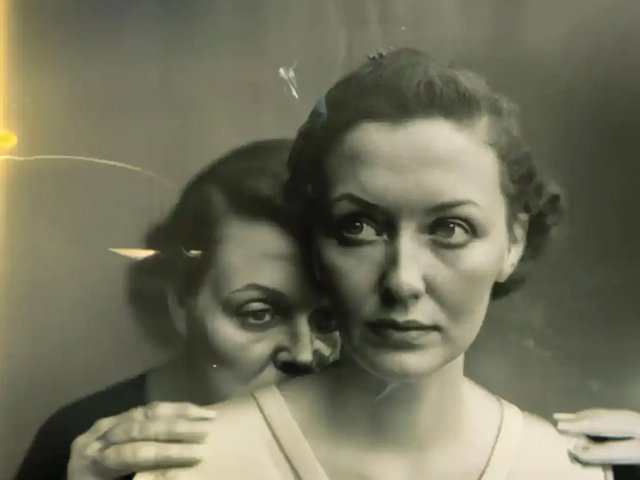
Depthless, life-size images by Katerina Jebb, made using a handheld scanner, stand out, appearing like ghostly apparitions of the museum’s archive, mingling with the works of Arles's most famous painter, Jacques Réattu, who bought the building in 1796. Old and new collide in wonderful, surprising constellations, among them a Sarah Moon photograph hanging alongside antique figurines and drawings representing L'Arlésienne (The woman from Arles). The result is an exhibition built on curiosity and visual memory, suggesting that collections are autobiographies assembled through images.
It is also fittingly housed in the museum that established France's first photography department in 1965 under the guidance of photographer Lucien Clergue and historian Jean-Maurice Rouquette—a move that helped lay the foundations for what would become the Rencontres five years later. That quiet historical echo gives the exhibition an added resonance. After a festival largely concerned with rewriting histories and recovering overlooked narratives, Lacroix reminds us that photography also survives through the private passions of those who preserve, collect and connect images across generations.