Los Angeles right now is a city of extremes, not far from what Octavia Butler once imagined in her dystopian novels. While the county boasts more than 55 billionaires, around 1.35 million people here live below the federal poverty line, and around 45,000 of them are unhoused.
You can feel the inequity in your bones. Or see it near the freeways, where Waymo’s self-driving Jaguars glide past homeless encampments. And the inequality is only getting worse, thanks in part to the billionaire—make that trillionaire—Elon Musk. By the end of the year, the initial public offering of his company Space X is expected to mint 400 new “centi-millionaires”, most of whom live in Los Angeles County.
So what in the world is Star Wars creator and billionaire art collector George Lucas doing with his much-anticipated Lucas Museum of Narrative Art, set to open here on 22 September? I am not only thinking about the important questions raised by Hyperallergic reporter Matt Stromberg last year, when Lucas let go of museum director Sandra Jackson-Dumont and education staff in a “shocking and chaotic” process so close to the grand opening. I also want to know why Lucas and his development team—which appears to be the one department left intact—is currently busy soliciting public donations to his self-named museum?
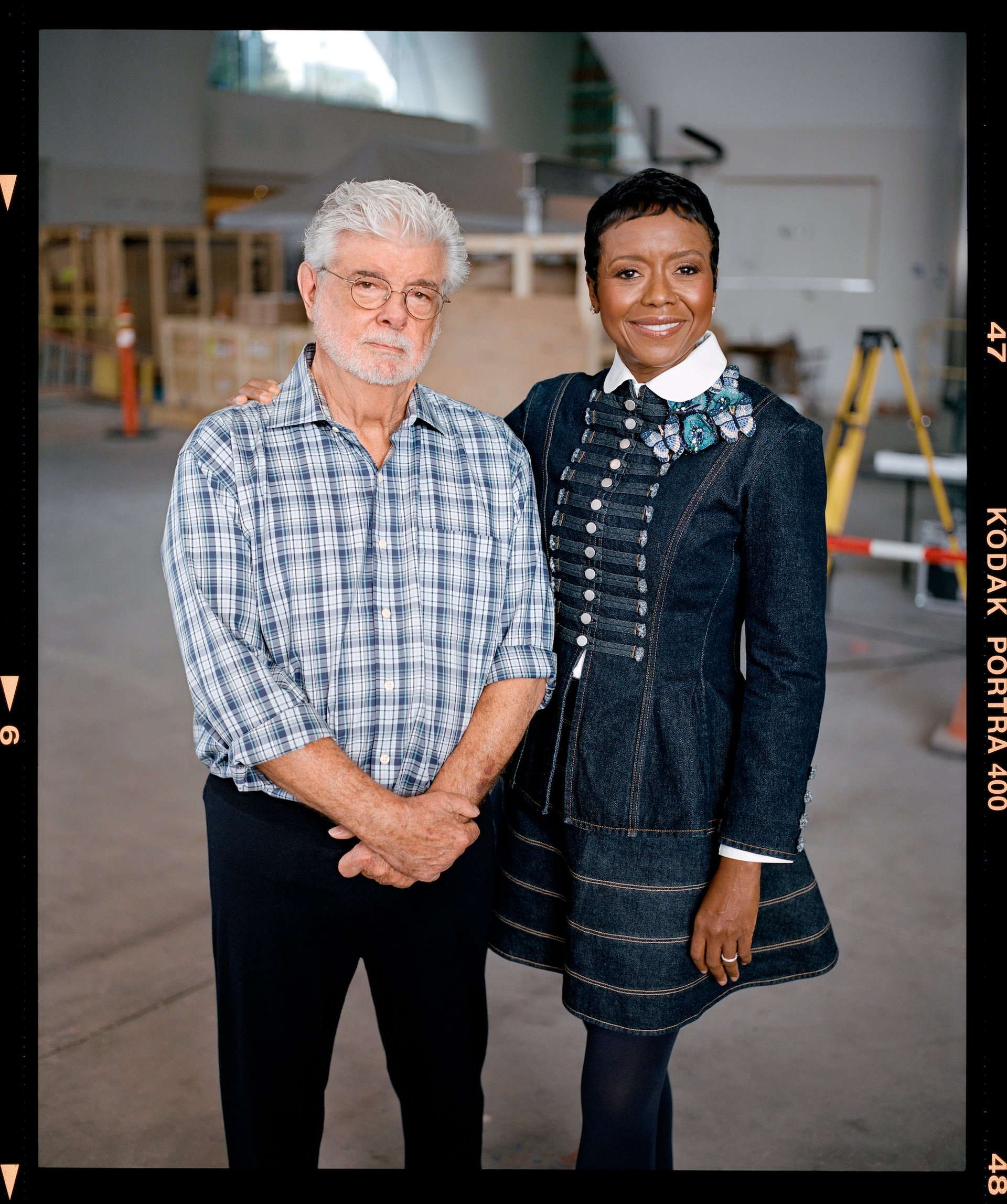
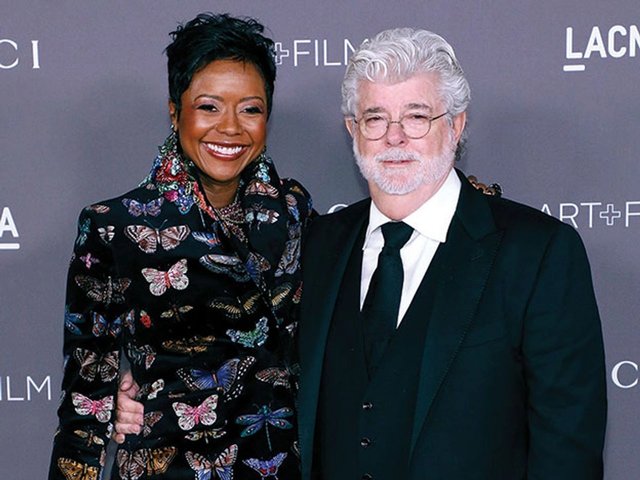
Lucas Museum of Narrative Art founders George Lucas and Mellody Hobson in the museum lobby last year Photograph by Deanna and Ed Templeton
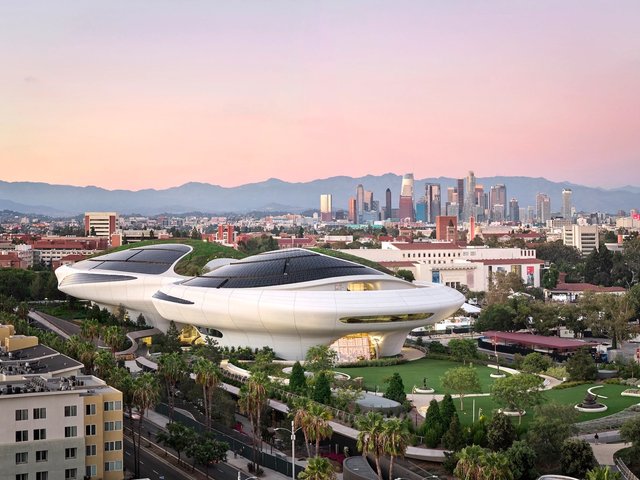
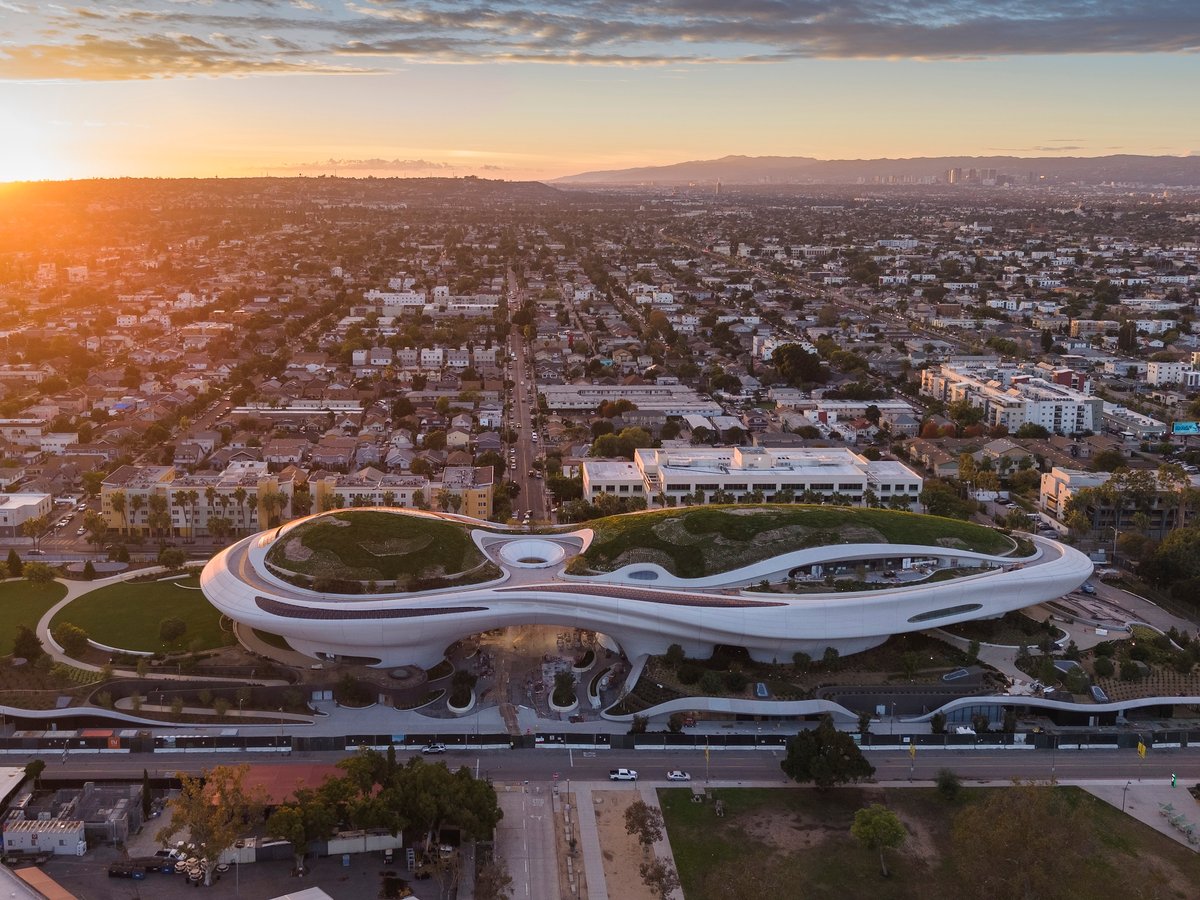
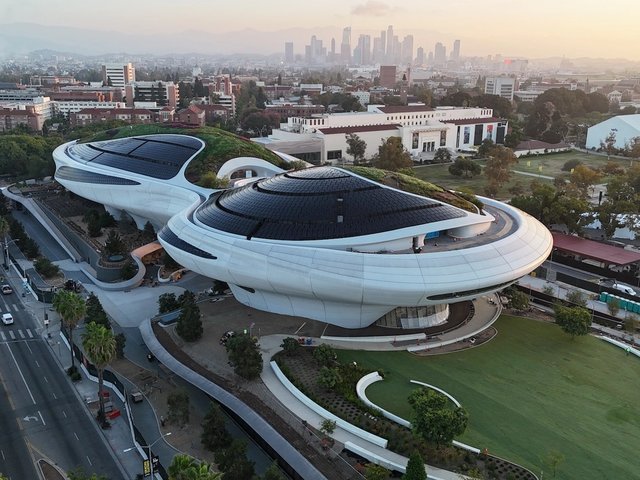
Not only is its $25 adult ticket price high for the area—a city where free admission has become the norm—but the Lucas Museum is now offering multi-tiered annual memberships using a model popularised by cash-strapped cultural institutions. Prices range from $140 annually for an “Access” membership that covers priority admission with a plus one, to $600 annually for an “Alliance” level that includes VIP events and early access to limited-edition merch. “Be Part of our Origin Story”, urges the website’s “support” section, alongside a large aerial photograph of the new museum—a sleek, figure-eight-shaped, billion-dollar building by Ma Yansong of Mad Architects that resembles a double-headed spaceship ready to launch.
It is not a good look to say the least, for a billionaire museum founder to be hustling for visitors’ money. Why would Lucas and his wife Mellody Hobson, a successful executive in her own right who runs a large investment company, ask for any support beyond admission? For that matter, why does the institution, which Lucas has called “a temple to the people’s art” even have admission fees when it could eliminate this barrier to entry entirely?
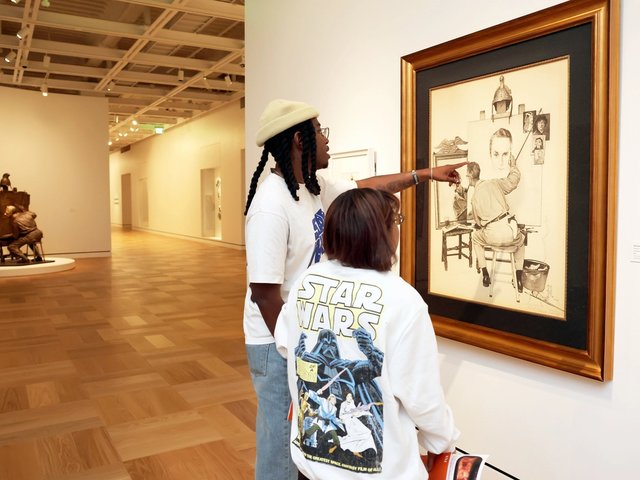
The art critic Christopher Knight blasted the museum early on as a treacly vanity project, arguing that it combines Lucas’s personal art collection—heavy on Norman Rockwell and N.C. Wyeth—with Star Wars materials under a flimsy, made-up rubric of “narrative art”. I personally think that a focus on the art of visual storytelling, bolstered by acquisitions of works by Judy Baca, Robert Colescott and Frida Kahlo, among others, is imaginative and not bogus. And I am eager to see the inaugural installation, even though curated by Lucas himself, featuring special sections across 100,000 sq. ft of gallery space on Rockwell, Wyeth, children’s book illustrations and more, plus enough Japanese manga and Star Wars vessels, props and costumes to satisfy Comic-Con fans.
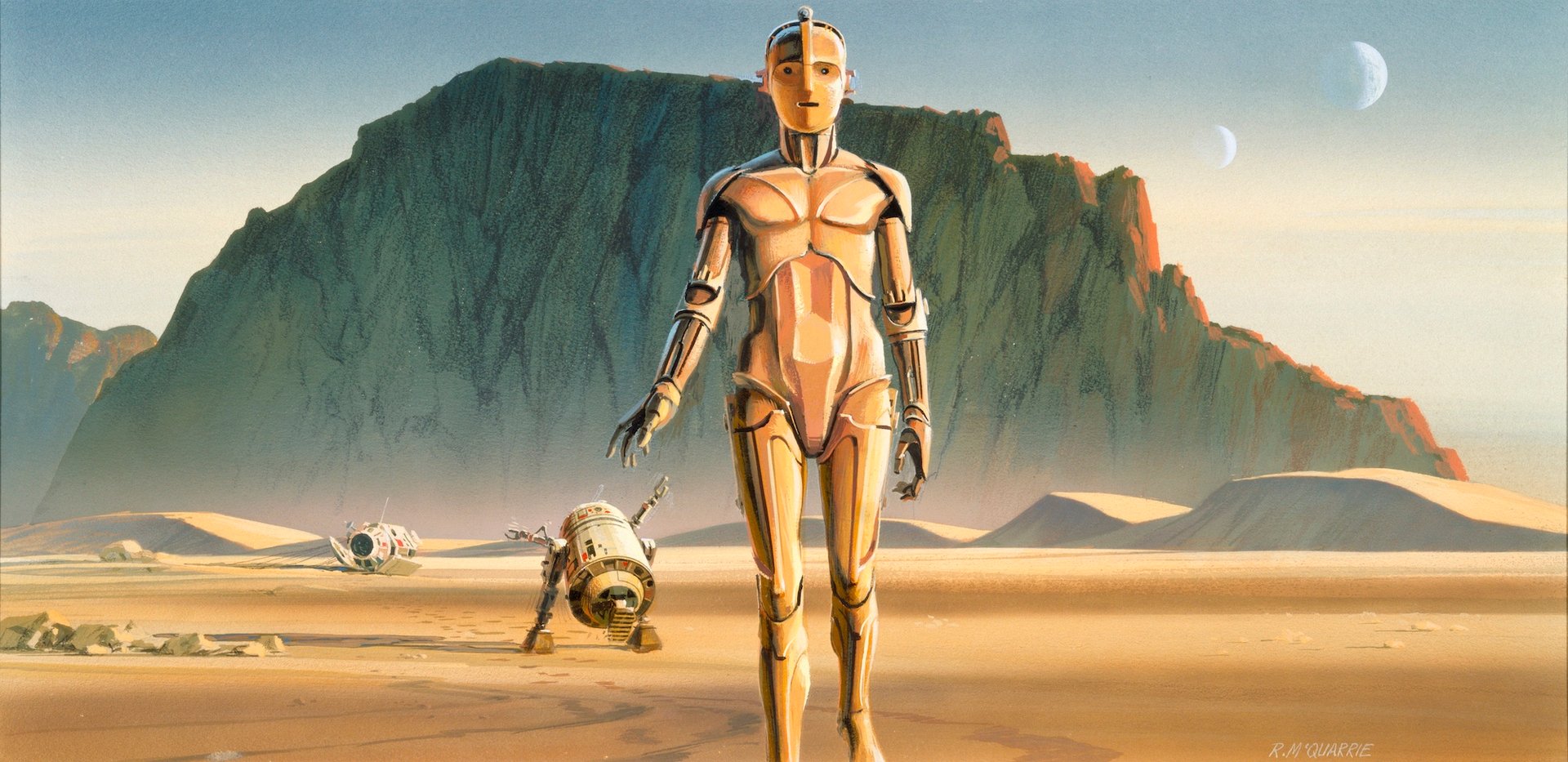
Ralph McQuarrie, Artoo and Threepio Leave the Pod in the Desert,
production art for Star Wars: Episode IV – A New Hope, 1975 Lucas Museum of Narrative Art, Los Angeles. © & ™ Lucasfilm Ltd. All rights reserved. Used under authorisation
But who wants to pay $25 per visit or $600 a year to support a billionaire’s project that has been widely praised as “a gift to the city”? Other unconscionably wealthy museum founders in the US in recent years have been much more generous and civic-minded. Walmart heir Alice Walton from the start ensured free admission to the Crystal Bridges Museum of American Art in Arkansas, billed as “America’s art museum”. The more bespoke Glenstone museum in Maryland, founded by the private collectors Mitch Rales and Emily Wei Rales, is also in their words “always free”.
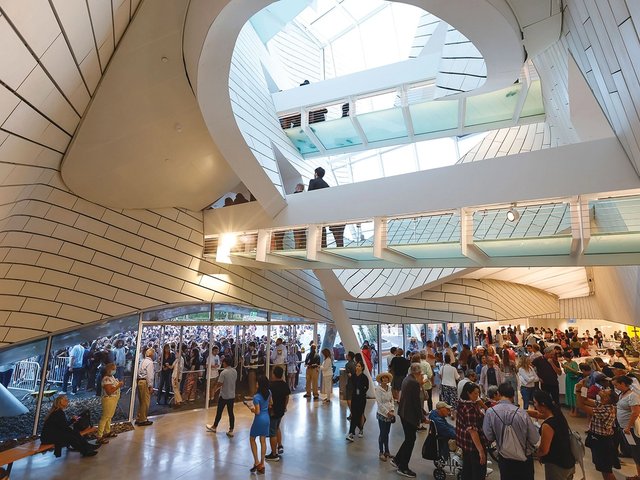
Closer to home, the Getty uses part of its massive endowment to provide free admission at the Getty Center and Villa. And when the Broad opened here a decade ago, self-funded by Eli and Edythe Broad, it likewise made a commitment to free access, though it charges for temporary and travelling exhibitions.
The hypocrisy of charging high admission fees to see “the people’s art” feels more acute considering the Lucas Museum’s near neighbours. Set on 11 acres in Exposition Park near the University of Southern California, the museum belongs to the region known during the 1992 Watts Rebellion as “South Central” and since rebranded by the city as “South Los Angeles”. The area is low-income and racially mixed, with 65% of residents identifying as Latino and around 24% as African American.
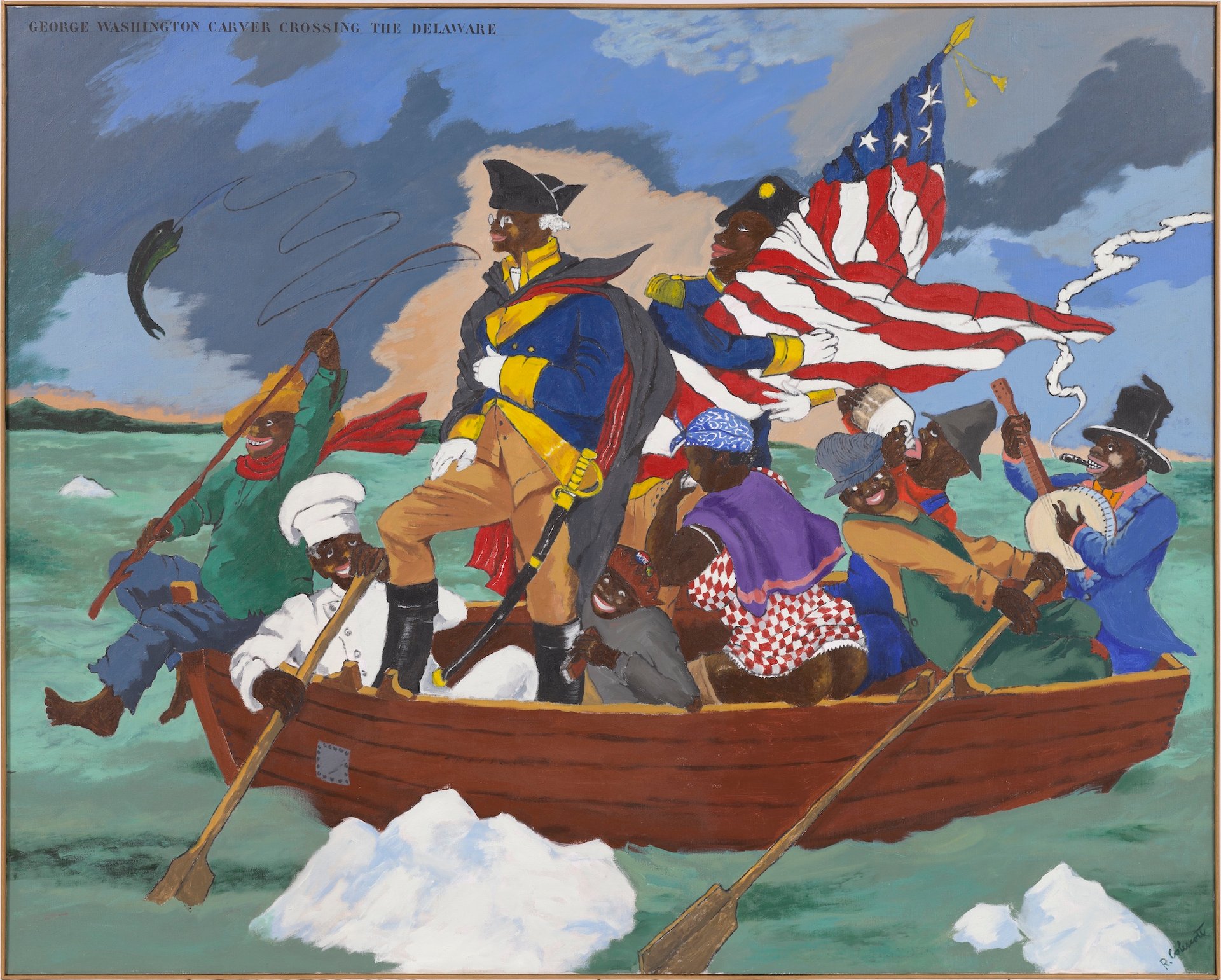
Robert Colescott, George Washington Carver Crossing the Delaware:
Page from an American History Textbook, 1975 Lucas Museum of Narrative Art, Los Angeles. © 2025 The Robert H. Colescott Separate Property Trust / Artists Rights Society (ARS), New York
Michael Govan at the Los Angeles County Museum of Art has long been looking to build a satellite space in South Los Angeles to better serve these potential museum-goers and diversify his museum’s majority-white audience. The Lucas Museum is already beautifully positioned to do this, both through its location and its emphasis on humanistic (also interspecies!) storytelling that cuts across class and racial boundaries. The museum is perfectly positioned to bring people together at a time of great social divisiveness.
But so far the Lucas Museum seems to be squandering that opportunity. It made one gesture in this direction by announcing the “LM37 Pass”, offering free admission with a plus one to people living in the museum’s zip code of 90037. Judging from the museum’s Instagram post on the topic, residents of the 30 other zip codes that make up South Los Angeles were peeved.
“What about including 90011 and 90007?’’ asked FeistyLatina2004. “We’re just a block over and part of South LA too! You’re within our 9th Council District @currendpricejr We have to deal with the noise, parking and traffic of Expo Park!” Or, from another Angeleno: “How is 90007 that borders the museum excluded?”
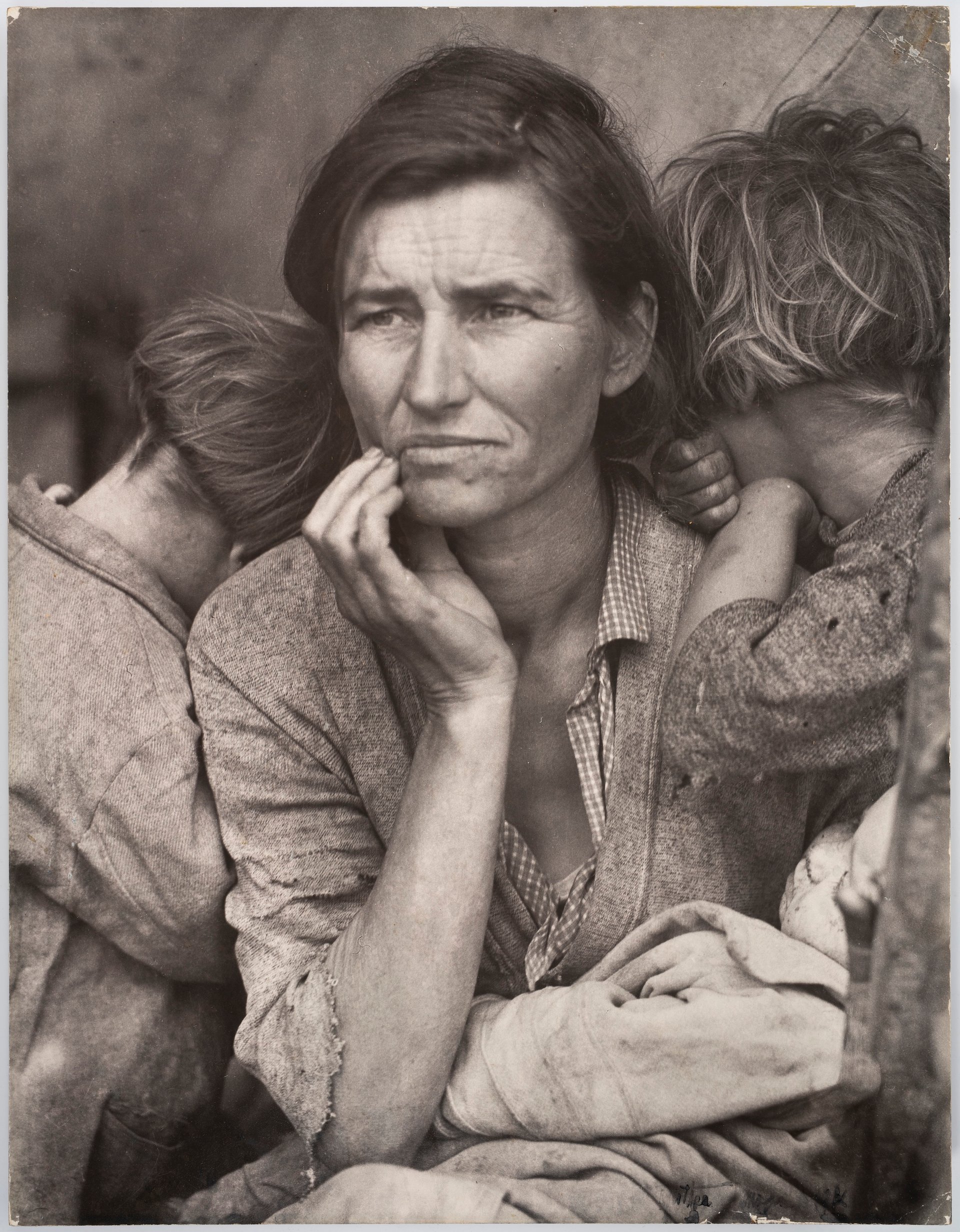
Dorothea Lange, Migrant Mother, Nipomo, California, 1936 Lucas Museum of
Narrative Art
Asked about the decision to charge admission, a spokesperson for the Lucas Museum said the institution “is committed to providing numerous access opportunities”. She noted that admission is free for “visitors age 17 and under, active-duty military personnel and California EBT [public assistance] cardholders” and that “the museum’s research library and park and gardens are free and open to the public daily during museum hours without a ticket”.
The gardens in particular are truly a gift: 11 acres of flowering, tree-lined terraces and pathways, designed by Mia Lehrer of Studio-MLA, have replaced ugly parking lots. The Lucas Museum’s art-plus-film collection, as weirdly or wonderfully diverse as it is, should be a gift to the city of Los Angeles as well. And it is not too late: George Lucas could step up and put his money where his slogan is, and make the “temple to the people’s art” mean something at a time when people are so divided.
- The Lucas Museum of Narrative Art opens on 22 September in Exposition Park, Los Angeles