A large, deep-blue marble plate with 5,000 inlaid stones sits in Irfan Ali’s workshop in Uttar Pradesh, India. Ali’s family has practiced marble-inlay work (pachchikari) for generations. His ancestors likely even worked on the nearby Taj Mahal. Ali is one of only a handful of masters of the technique in the city of Agra. The intricate floral inlay took more than three months to complete.
Although a gift shop near the Taj Mahal would sell Ali’s piece for around $3,000, it would keep most of the revenue. From his fee, Ali would have to deduct roughly $250 to pay his assistants, $30 for the stone, and $20 for polishing. “And the rest is ours, that’s all there is,” Ali says in Handmade Future, a new documentary about traditional craftspeople around the world. He estimates “the rest” at the equivalent of about $50.
Traditional craft has been threatened by the economics surrounding it, not just in Agra but worldwide. Handmade Future, directed by Kirsten Dickerson, explores the challenges facing craftspeople in six countries: marble-inlay craftsmen and block-printers in India, women-led cooperatives of rugmakers in Morocco, broom-makers in the US, a slow-fashion studio in the UK, and weavers in Kenya and Mexico. What connects them are the unique traditions of each of their communities and their shared position at the bottom of the supply chain.
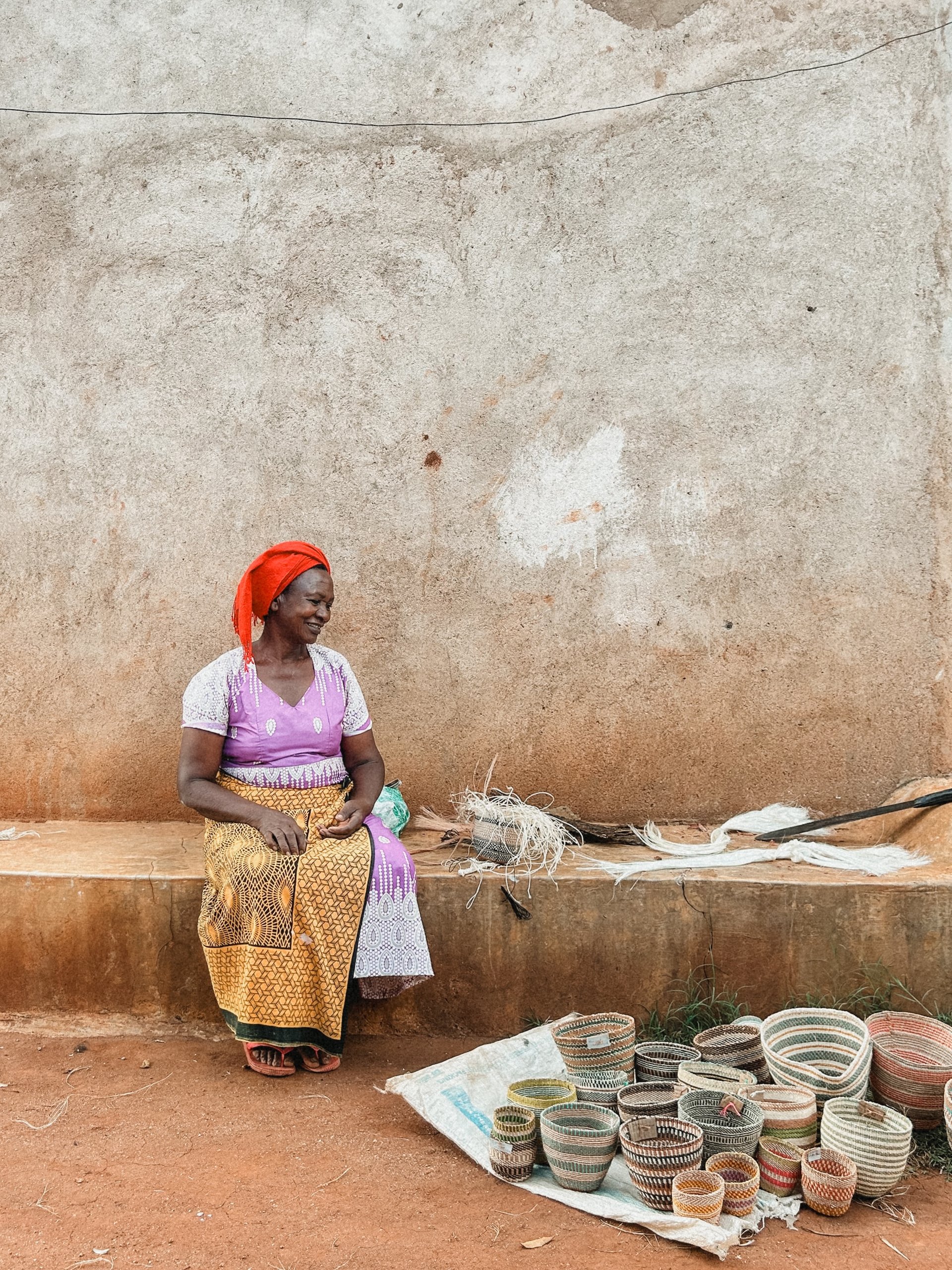
Ali’s story is far from unique. The documentary shows women basket weavers in Kenya’s Taita Hills, most of whom grew up seeing their older relatives practice the craft. But this was a tradition, not necessarily an economic activity. “They made baskets mostly for home use,” Judith Mwazighe, a weaver from the Neema Manganga Cooperative, says in the documentary. “There was no market.”
Agripin Marura, a mother of four who lives in Taita Hills, tells The Art Newspaper that she had seen her own mother weaving baskets and selling them to a single customer. When Marura was a teenager, she also began making baskets for sale.
“There were many challenges. We didn’t have money,” says Marura, whose husband works as an electrician. Like her mother, she only had one customer, in Denmark; market access for basket weavers like her was negligible. “It was very rare for a client to know that this one person has a basket,” Marura says. But her situation improved when she and about 20 other weavers in the area formed a group called Mrurunyika Basket Weavers in 2012 to sell their wares together.
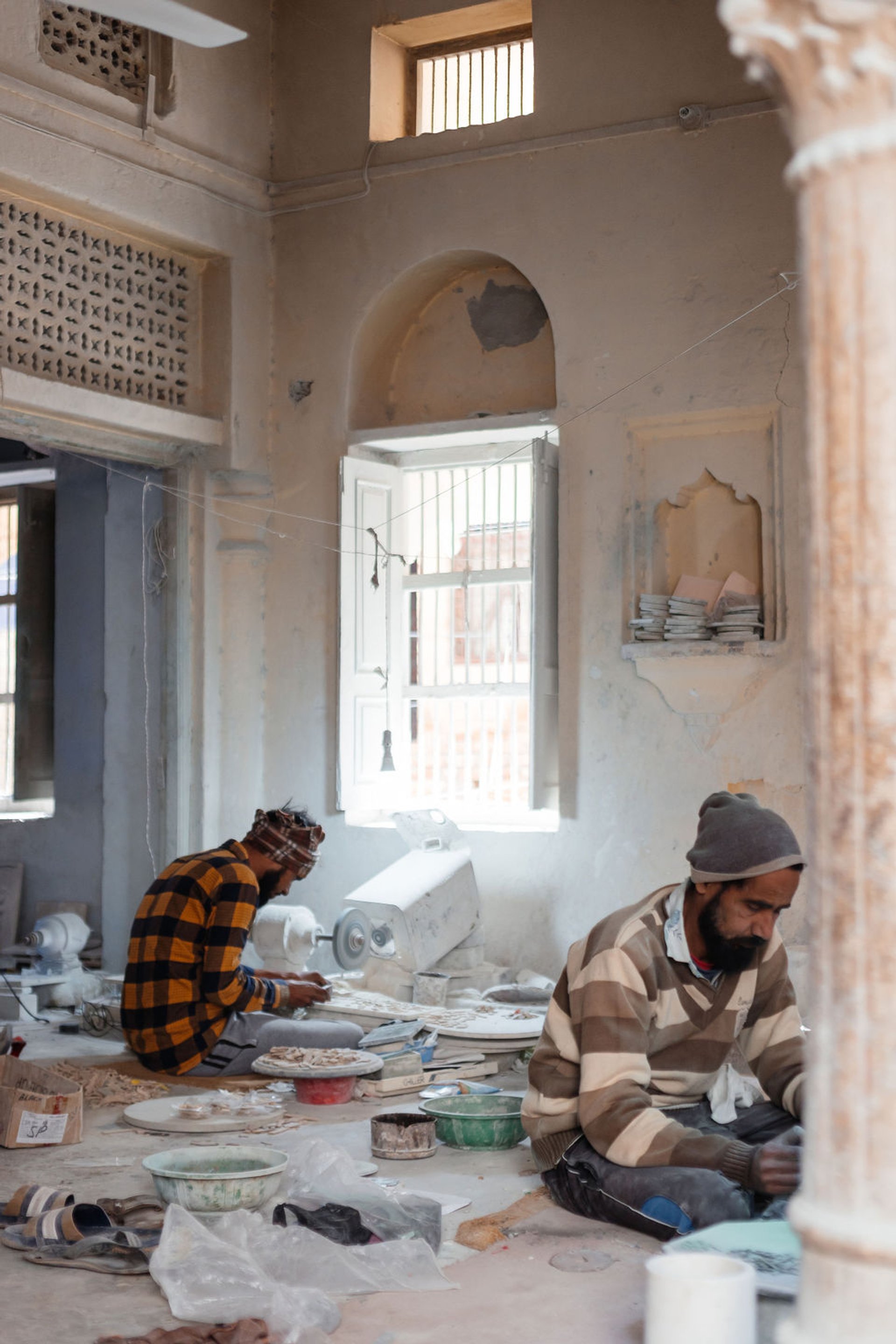
Irfan Ali’s marble-inlay workshop in Uttar Pradesh, India Photo: Stacia Hiramine
The marble-inlay artisans in Agra face a similar issue. “They are living right next to the Taj Mahal,” Tahir Ahmed, who leads Agra Heritage Walks, says in Handmade Future. “But they are not in areas which are tourist friendly.” The issues they face extend beyond money. “You do not get appreciated, the locals do not treat you well,” Ahmed tells The Art Newspaper. Ali has been doing this work for 40 years. But his son Shariq now works as a salesperson; his father has not taught him the family’s traditional craft.
With her documentary, Dickerson hopes to create more awareness of and empathy for artisans like these. “It’s not that you can’t be a designer or company sourcing from artisans and marking it up for profit," she says. “It’s the fairness of the model—making sure the artisans have a say and ownership in the entire process.” She adds that proceeds from her film will go to Artist & Nomad, her organisation that supports artisans worldwide.
Collectives over middlemen
In Morocco’s High Atlas Mountains, Handmade Future follows female rugmakers who are now part of artisan-led cooperatives. A main reason they formed these groups was a history of bad experiences with middlemen. “A middleman is someone who is against me, who lost my money,” Kenza Oulghada, from the Tithrite Cooperation, says in the film.
Back in Kenya, Hadithi Crafts serves a similar function to the Moroccan cooperatives. “Hadithi is the answer but, in a way, Hadithi is the middleman,” says Lore Defrancq, its founding member and chief executive. “But I would say we are a very positive middleman.”
Defrancq first came across artisan groups of basket weavers in Kenya in 2010. “It was almost a dying craft,” she says. “There were places where these baskets were on consignment, and I think it's almost cruel. I don’t like consignment, because you're only paying when the basket sells.”
She began contacting artisans to help create markets for them. In April 2014, she co-founded Hadithi Crafts, an umbrella organisation for several women artisans’ groups in Tsavo in southeastern Kenya. Hadithi (“story” in Swahili) buys the baskets in bulk from the groups for a negotiated price, sometimes storing them for months before they are sold but always paying for them up front. “We do hold a lot of stock,” Defrancq says, “and sometimes things get broken or mouldy or damaged.”
Hadithi also hosts skill-development workshops for the artisans. According to the organisation’s ten-year impact report: “We went from supporting 552 to 1,902 female artisans, and from 24 to 64 active women’s groups, reaching 10,000+ lives through household and community impact.”
Judith Mwazighe, a basket weaver in Kenya Photo: Kirsten Dickerson
In the documentary, Defrancq explains the challenges of people living in Tsavo. “There is a lot of wildlife here,” she says. “They come into your farm, these elephants at night. They eat your fresh maize, if you ever manage to grow some. It’s frustrating.” If, she argues, people wanted to prevent poaching in the area, there had to be an alternative industry. “There were already some amazing handicrafts being made, completely traditional skills, often passed from grandmother to granddaughter,” she says, “and it was a logical place to start.”
Hadithi has created a small-scale economy for working women in the area. But what has struck Defrancq most is that in the beginning only older women were a part of the groups, but now younger people are as well. “Because there's the market, they keep it up,” she tells The Art Newspaper. “Even if it's just as a hobby, it’s still worth it.”
Of course, this new market remains fragile. Hadithi’s sales have declined in recent years amid higher shipping costs, online competition and the decline of brick-and-mortar stores. The organisation has stopped taking on new groups, at least for now.
Meeting artisans where they are
In India, Ahmed takes visitors not to shops but directly to artisans’ homes and workshops as part of his Agra Heritage Walks. He often provides access to workshops where visitors can meet the artisans and try their hands at the work they do. “When your nails get worn out or cut, you realise that it’s super risky,” Ahmed says. “Of course, we do it in a safe environment.” And the artisans love it when visitors show appreciation for their craft.
Unesco is also working with inlay workers in Agra as a part of its World Heritage, Sustainable Development and Local Communities Programme. The project supports local jobs, fair growth and community well-being. Some of the labels and Unesco branding on items for sale may help bolster artisans’ credibility, but Ahmed says that only time will tell if the programme makes a lasting impact.
For Dickerson, questions of livelihood are inseparable from the preservation of art. “Master artisans are also fine artists,” she says. “All the architecture you look at around the world—the carvings, the paintings, the marble inlay—it's the work of artists. That’s why we still love it today. And you’re about to lose the last remaining artists who know how to do that.”
Watch the trailer for Handmade Future:
- Handmade Future has upcoming screenings in the UK, Ireland, Portugal, Australia and throughout the US