The exhibition, If Emmett Till Lived: Freedom on American Ground, at the Museum of Contemporary Photography (MoCP) in Chicago, is intended to be a photographic monument to an unmet life. It could also be viewed as a call to action. The richly layered exhibition draws from the museum’s extensive collection and features work by more than 110 artists, including Dawoud Bey, Christian Boltanski, Todd Hido, Sally Mann and Carrie Mae Weems.
There is no easy way to encapsulate what happened to the 14-year-old Emmett Till in Money, Mississippi in August of 1955. He was a jokester, a playful kid from Chicago who was accused of breaking a social code of the Jim Crow-era South when he stopped at a country store with his cousins to buy candy. Days later, Till was kidnapped and lynched.
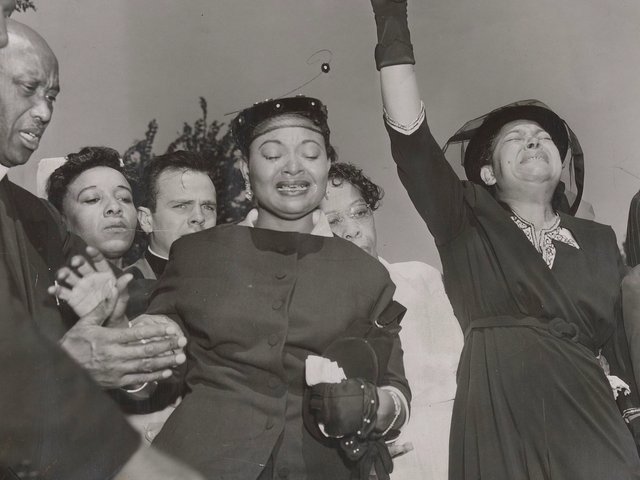
The brutality inflicted on this Black child is something that his mother, Mamie Till Mobley, wanted the whole world to see. At her son’s funeral in Chicago, she insisted that his casket remain open. Her son had been savagely beaten and a heavy cotton gin fan had been wrapped around his neck with barbed wire before being thrown in the Tallahatchie River. Photographs of his mutilated body in the casket appeared in the Black press across the US, exposing white supremacist violence, igniting moral outrage and galvanising the nascent Civil Rights movement. Many of the young Black leaders that emerged from this period, like the late congressman John Lewis from Alabama, would refer to themselves later as being part of the “Till Generation”.
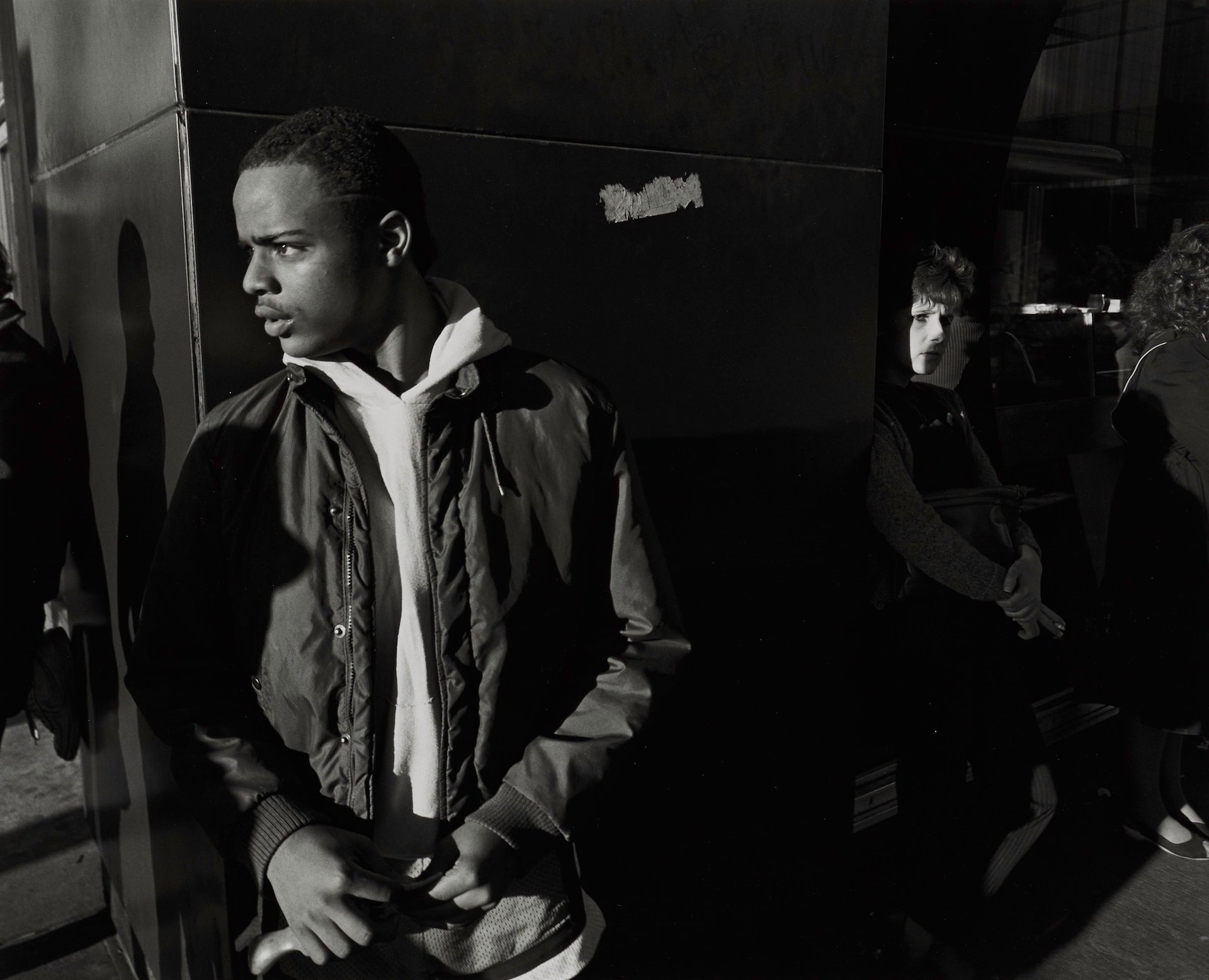
Dawoud Bey, A Man and a Woman Waiting for the Bus, Syracuse, NY, 1985 Museum of Contemporary Photography, Columbia College Chicago. Gift of Eric Ceputis and David W. Williams.
“Photography plays such an important role in the story of Emmett Till,” says Karen Irvine, the MoCP’s chief curator and deputy director. “The exhibition shifts away from the violence that ended his life to the possibilities that were taken from him.” She adds: “It is a moving testament to the power of photography to insist on remembrance as an active, collective responsibility.”
Irvine met Sarah Elizabeth Lewis, a cultural and art historian on the faculty of Harvard University, through the writer and photographer Teju Cole, who curated a show at MoCP in 2019. The museum’s leaders were aware of Lewis’s work and her long track record of addressing social and political issues, and knew she was the right person to take on this important project, which caps a year of programming marking the institution’s 50th anniversary.
To curate the exhibition, Lewis combed through 18,000 pieces in the museum’s collection with Till’s grieving mother’s courageous decision in mind. One goal of the exhibition would be to underscore the power of bearing witness. As she studied images, Lewis said she had one primary question in mind: what is required for truth and reconciliation today?
“Mamie Till Mobley’s prophetic understanding was that witnessing would be required for the CivilRights movement and its endurance,” Lewis says. “But today we’ve seen so many images of injustice that sometimes that alone is not enough. The collection offered a way to extend her understanding of the power of witnessing.”
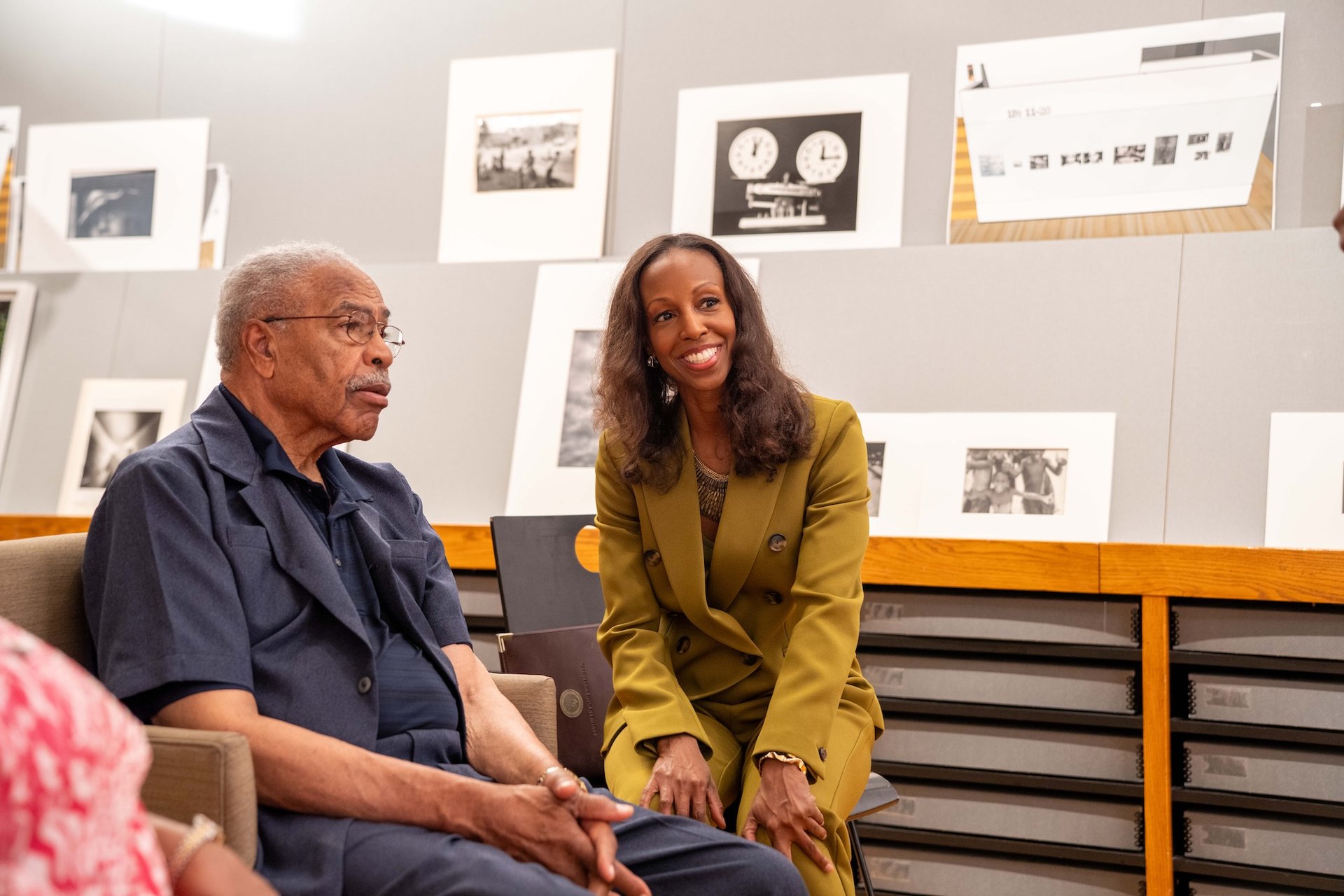
Sarah Elizabeth Lewis and Wheeler Parker Jr at the Museum of Contemporary Photography in Chicago Photo by Lance Omar Thurman
Early in the curatorial process Lewis invited the Reverend Wheeler Parker Jr, Till’s cousin and best friend, who was with him that fateful day in 1955, to select images with her. Through their conversations, and Parker’s recollections, the exhibition took shape. A narrative arc developed that imagines what Till’s life might have been like had he returned home to Chicago alive. The images chosen represent the hopes for Till's unlived life, from playing baseball to going to the prom.
Lewis says she did not consider the stature or name of each image’s the maker. “I just looked at the photograph itself,” she says. In the end more than 110 images were chosen for the accompanying catalogue, and are presented uncaptioned. The exhibition includes a few more, but follows the same narrative path, taking viewers on a visual journey from the north to the South and north again, from childhood to adulthood. The images are juxtaposed in ways that are at times poetic and even provocative. For instance, an image by Todd Hido of the back of a blonde woman’s head, her hair gleaming in the sun, appears next to an image by Paul D’Amato of a young Black boy sitting at the edge of a pool, gazing directly at the camera, the sun of the golden hour reflecting off his skin.

Todd Hido, #2653, from the Roaming portfolio, 2000 Museum of Contemporary Photography, Columbia College Chicago. Gift of Pilara Family Foundation
Lewis knew she was building the exhibition with works by many photographers who might not see themselves as connected to one another or to Till. “That is the point,” she says. “It is an American collective that has been transformed through the life and death of Emmett Till.” It was important, she adds, that the images not only symbolise racial justice, but also indicate the full range of possibility in his life.
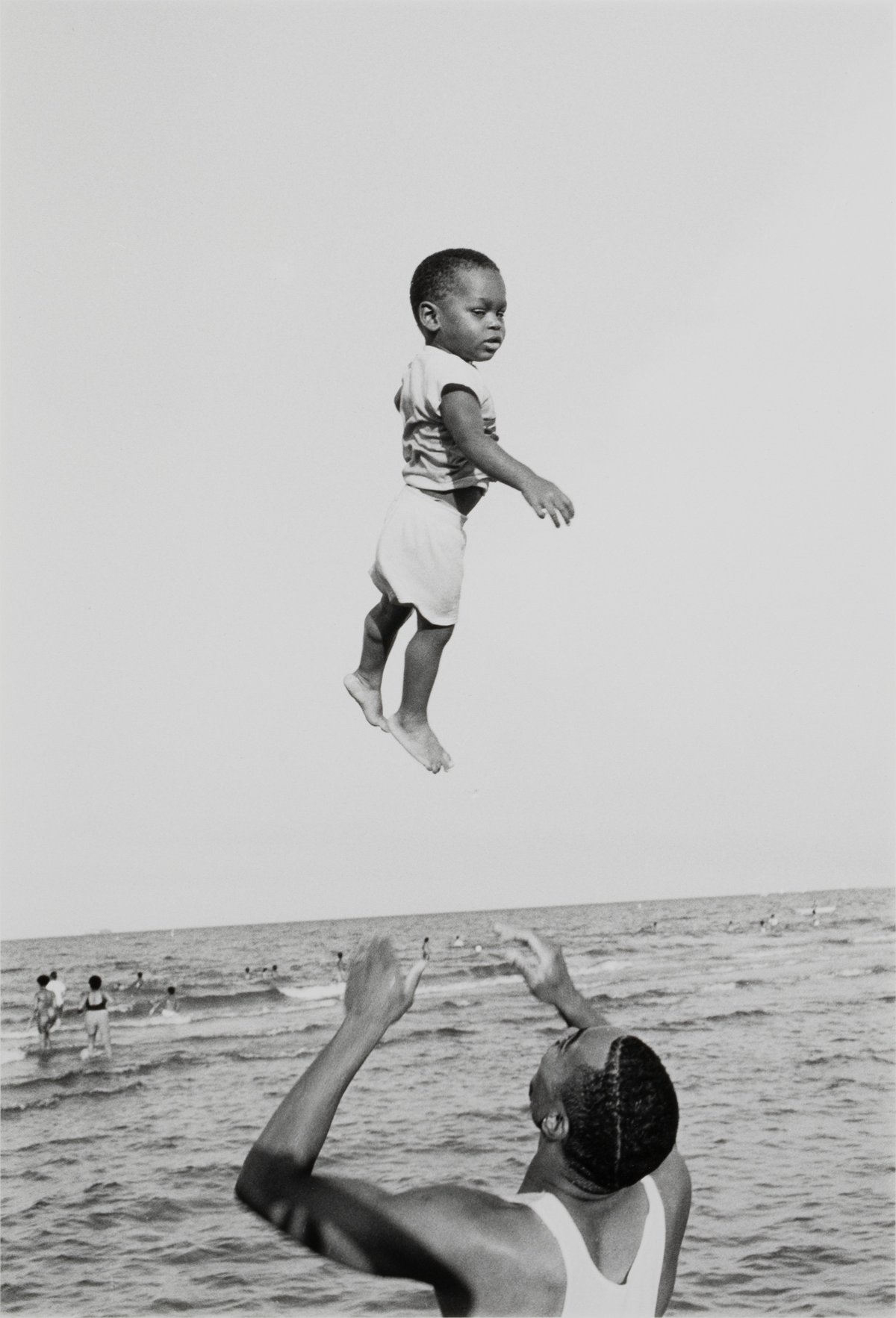
The catalogue’s cover image is by Stephen Marc, a Chicagoan documentary photographer, and captures a young boy suspended in midair, a freeze-frame from a moment of play between a father and son. The father’s arms are outstretched in a gesture of both release and embrace. The boy, suspended above a slightly askew shoreline, evokes the freedom of flight, even the biblical Ascension. At first, Lewis says, she was attracted to the image because she felt both the boy and the father could be Emmett Till. “I really had to catch myself as I looked at the photograph and realised, ‘Oh he couldn't be the father,’ and that is the point, that is the power, poignancy and pain of that photograph,” she says.
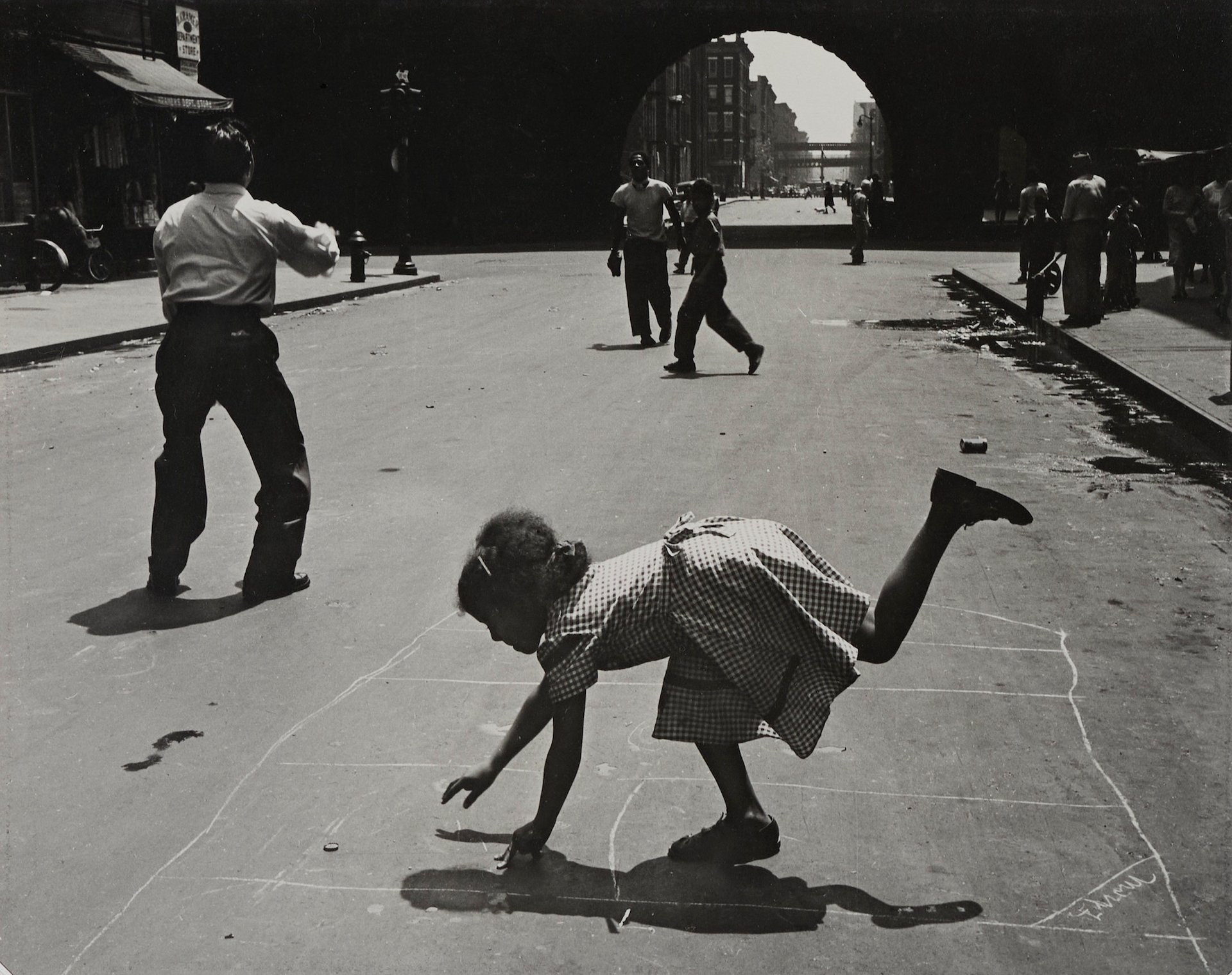
Walter Rosenblum, Hopscotch, 1952 Extended loan of the Baum Family Collection. © Nina and Lisa Rosenblum
The catalogue features essays by a range of contributors including Lonnie G. Bunch, the retiring secretary of the Smithsonian Institution, who recalls a visit with Mamie Till when he was leading the Chicago History Museum (she died in 2003). That meeting informed how he would, years later, as the founding director of the National Museum of African American History in Washington, DC, help create a permanent exhibit devoted to Till and his funeral.
In another act of collective remembrance, earlier this summer the governor of Illinois, J.B. Pritzker, visited the site of Till’s funeral, Roberts Temple Church of God in Christ in Chicago’s Bronzeville neighbourhood to sign new state legislation. It designated 25 July as Emmett Till Day, honouring his birthday with a day of reflection and remembrance.
- If Emmett Till Lived: Freedom on American Ground, 10 September-19 December, Museum of Contemporary Photography, Columbia College Chicago