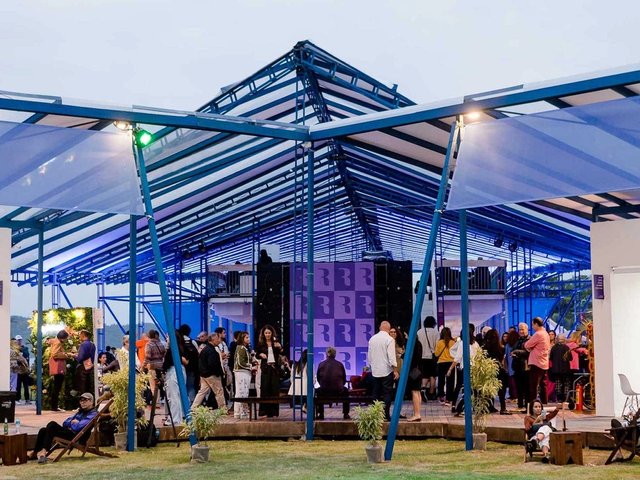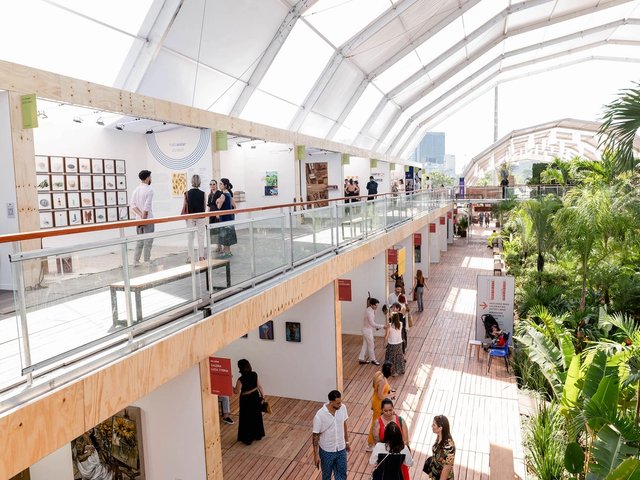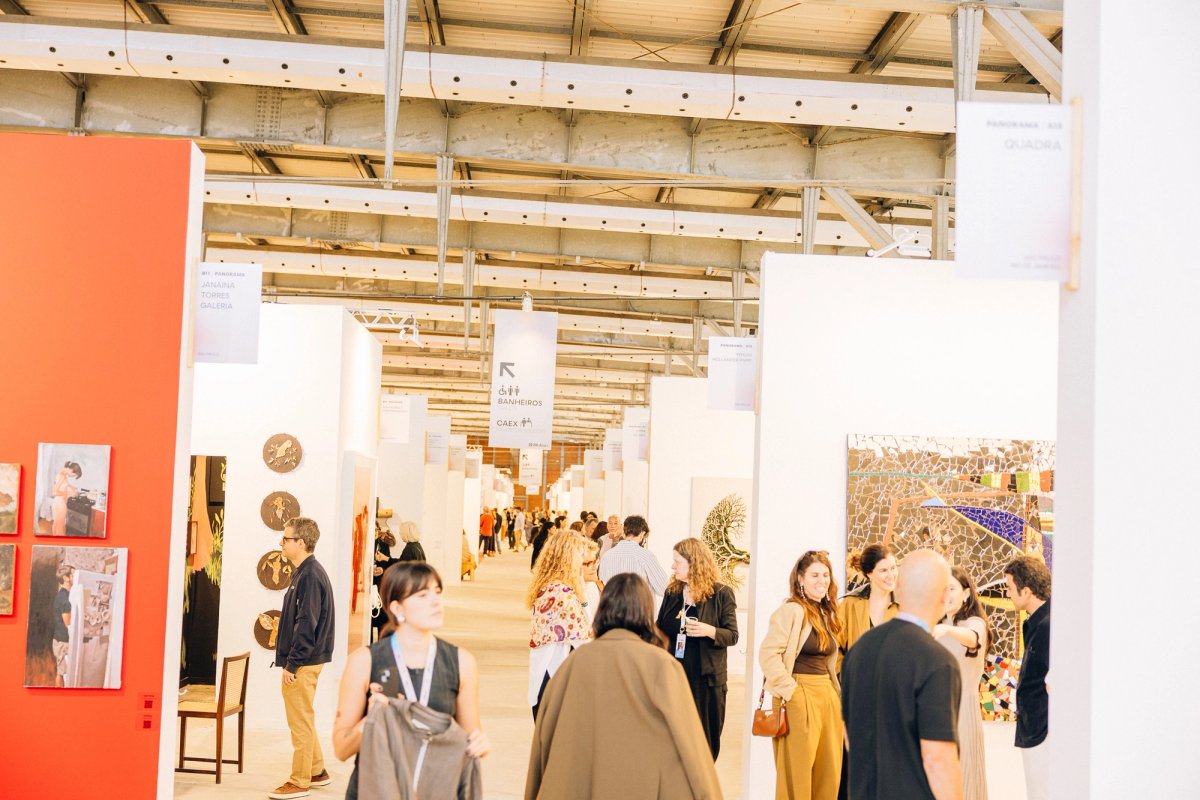
ArtRio has opened in Rio de Janeiro as the upcoming Brazilian elections create an atmosphere of tension for a market otherwise showing signs of growth. The 16th edition of the fair features 76 participating galleries, largely Brazilian.
This year’s fair is taking place against a backdrop of political uncertainty. Several attendees at the preview on Wednesday (16 September) wore stickers supporting Luiz Inácio Lula da Silva, Brazil’s left-wing president. Lula is up for re-election in early October against most notably Flávio Bolsonaro, the son of former president Jair Bolsonaro, who is serving a prison sentence for plotting a coup after losing the 2022 election. Just before the fair opened, Brazil’s Supreme Court was embroiled in a tumultuous, politicised battle over corruption probes that many interpreted as a proxy for the power struggle between Lula and Bolsonaro.
The tension over Brazil’s polarised politics has made some collectors more cautious about spending ahead of the elections, some at the fair said, echoing attitudes expressed by some collectors in the US before the 2024 elections. Maria Luz Bridger, ArtRio’s artistic director, tells The Art Newspaper galleries were already making sales at a pre-preview dinner on Tuesday night.
“I'm a little bit surprised, because there will be an election in two weeks, so normally it's very uncertain. But the market is doing really well,” Bridgers says. “This is what the dinner is for—to have a more cozy experience between our biggest collectors and the galleries.”
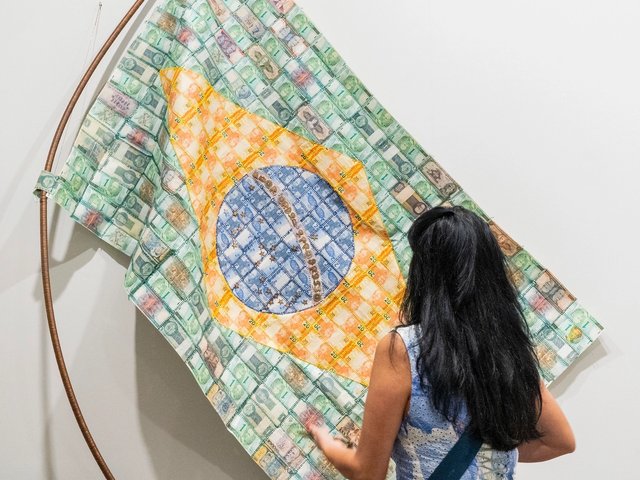
The fair’s main section, Panorama, features established galleries familiar to the international art-fair circuit, including Mendes Wood DM, Nara Roesler and Galleria Continua, as well as dealers active within Brazil. A smaller pavilion, devoted to solo and duo presentations and institutions, backs onto sea near Rio de Janeiro’s Marina da Glória and features smaller works, often at more affordable price points. Most exhibitors are from Rio de Janeiro and São Paulo. One section, dedicated to contemporary Brazilian practices, and galleries from cities such as Brasília, Vitória and Belo Horizonte that highlight the diversity of Brazilian artistic practices, includes textiles, woodwork, beadwork, ceramics and mixed media.
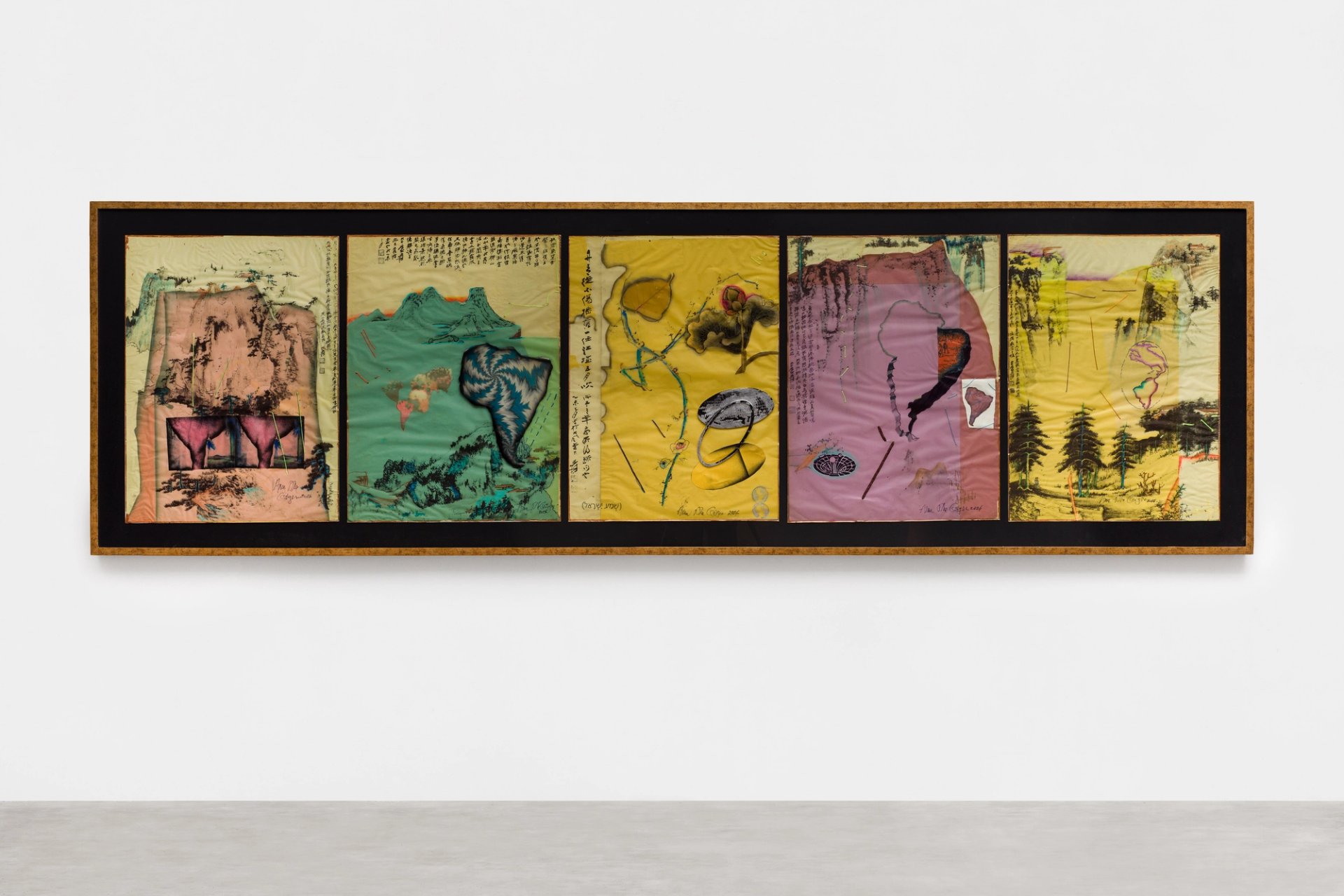
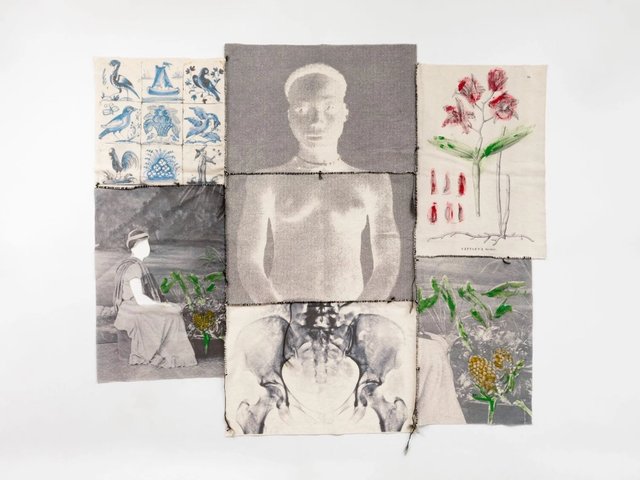
Anna Bella Geiger's A Rota do Bicho da Seda n. 5 (2026) Courtesy the artist and Mendes Wood DM
Brazilian art appears to have drawn the attention of Sheikha Al-Mayassa bint Hamad Al Thani, the chairperson of Qatar Museums, perhaps the most powerful collector in the world, with an acquisition budget that has been estimated to be around $1bn. Al Thani stopped by ahead of the exclusive pre-opening dinner, and her attendance marked the first time ArtRio had received what Bridger described as such an important collector from the Middle East.
Brazil, the largest country in South America, boasts Latin America’s second-largest art market, a history of producing some of the continent’s most well-known artists and enjoys a strong domestic base of collectors that continues to grow. According to the most recent Global Art Market Report published by UBS and Art Basel, Brazilian dealers reported a 21% increase in sales year-on-year in 2025. In a survey of collectors conducted by Art Basel and UBS in 2025, Brazilian collectors reported the highest share of being new to art collecting, with 23% having begun collecting within the previous five years. That figure aligns with ArtRio exhibitors’ experiences, Bridger says, adding that many of last year’s participants said they sold to new collectors.
One of the few galleries from outside Brazil at ArtRio is Tomás Redrado Art, a Miami-based gallery dedicated to Latin American art. It is participating in the fair for the first time, and its founder and director Tomás Redrado says the gallery already had a strong collector base in Rio de Janeiro, which has helped the gallery commercially at the fair.
“Those collectors have supported us a lot, and so we think we've been very lucky in that sense,” Redrado says. “Other people have asked for a lot of catalogues and haven't confirmed or are still thinking.”
Tomás Redrado Art’s stand features a selection of works by the artists the gallery represents, including three by the Argentine artist Guadalupe Reyna, who is based in Miami and works with encaustic painting using wax from bees. Her subject matter often deals with feminine figuration while also commenting on colonisation, like the introduction of European honeybees to the Americas in the early 17th century.
Brazilian collectors, Redrado says, are “very conscious of the artists they support and the reasons that connect them with those artists and their galleries”, adding that they are often politically aligned with the messages of the artists they collect.
Many Brazilian artists explore politics in their practices, and work shown at the fair is no exception. On display at Mendes Wood DM’s stand is A Rota do Bicho da Seda n. 5 (2026) by Anna Bella Geiger, a 93-year-old multidisciplinary artist who is considered a living legend in her hometown of Rio de Janeiro. The work addresses physical and ideological borders, imagining the Silk Road as a metaphor for a network that moves beyond such divisions.
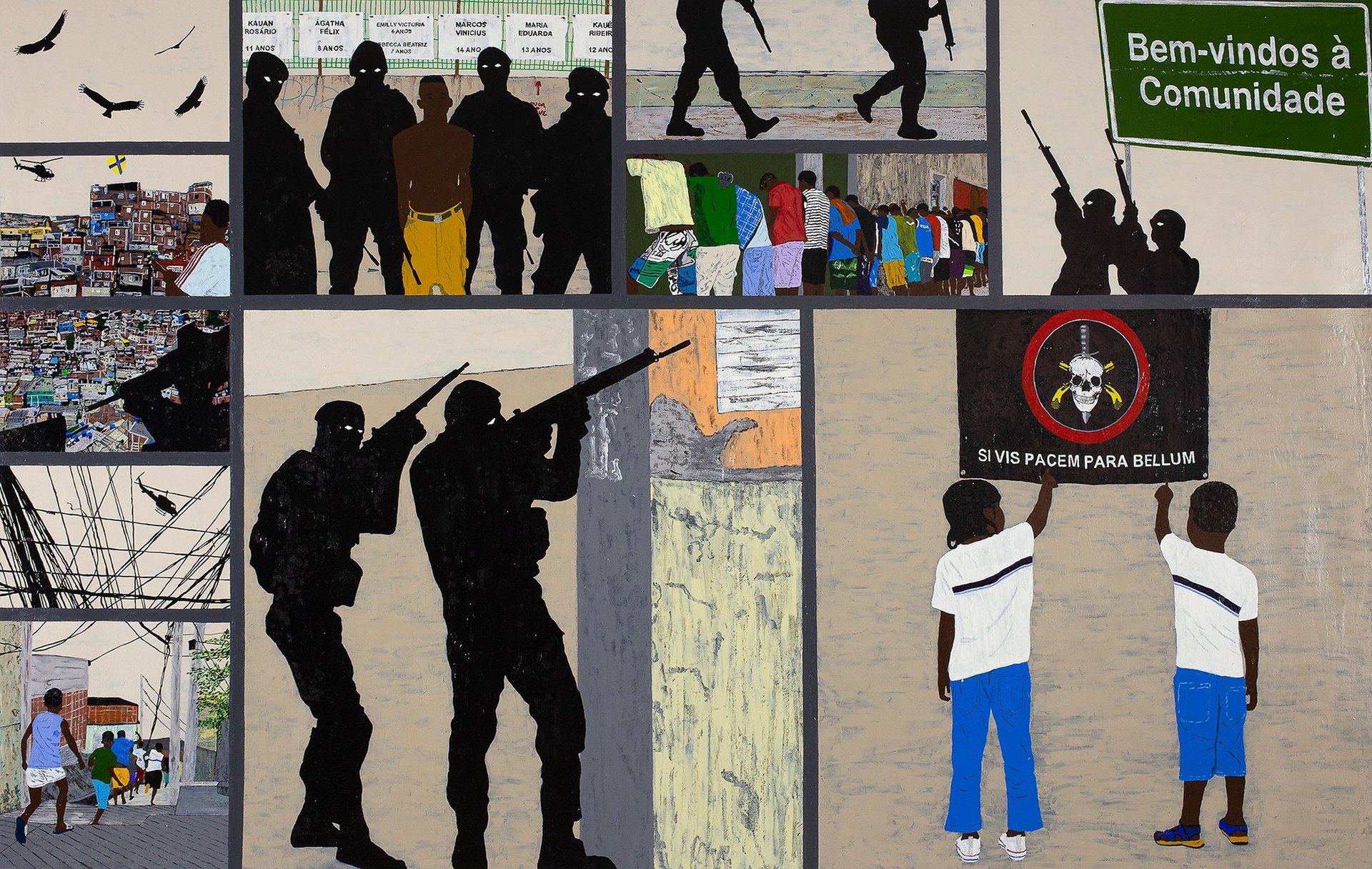
Osvaldo Carvalho’s Público Alvo (2020) Courtesy the artist and Janaína Torres Galleria
One of the more striking paintings at ArtRio is Osvaldo Carvalho’s Público Alvo (2020), displayed at Janaína Torres Galeria’s stand. Translated as Target Audience, it depicts the brutality of Brazil’s police force in some of Rio de Janeiro’s most neglected neighbourhoods.
“The targets are mainly young Black boys and Black men, they are seen as dangers,” says Luisa Moser, the sales and liaison lead at the gallery. “The only way that the arm of the state enters these communities is through violence, not to give help.”
Three works at the gallery’s stand come from Carvalho’s Balada series, developed after several locations near his studio were targeted by gun violence. He began painting the scenes and enclosing bullets found at the sites between the works and their frames. When the paintings are moved, the bullets are jostled and repositioned within the frame. Works in the series “question the banality of violence”, Moser says, and the way the public grows desensitised over time.
There are precedents for Brazilian artists addressing timely political issues. At its Rio de Janeiro gallery in Botafogo, Pinakotheke is recreating a 1954 exhibition in which Brazilian artists showed works only in black and white to protest a government import policy that made it difficult for artists to access foreign art supplies.
Rio de Janeiro occupies a distinct place in Brazil’s art scene. While São Paulo is home to the country’s largest concentration of commercial galleries, prominent collectors, the biggest fair and the most closely-watched biennial, many of the most well-known Brazilian artists are based in Rio.
“The most important artists are from Rio, but at the time there were no galleries, they went to São Paulo,” says the dealer Anita Schwartz, who founded her eponymous gallery in Rio nearly 30 years ago and was among the first to open a space in the Gávea neighbourhood, an increasingly prominent hot-spot for art. “More and more each year, it's becoming bigger, bigger. With the beginning of the (ArtRio) fair, it created an atmosphere and now we have a market that grows crazy year by year.”
The expanding local collector base is also bringing new audiences to the fair, says Márcio Botner, the co-founder and director of A Gentil Carioca, one of the galleries founded in Rio (it also operates a location in São Paulo).
“The local market is important, and it is growing,” he says. “You have a new market and new people coming in you have to educate.”
- ArtRio, until 20 September, Marina da Glória, Rio de Janeiro