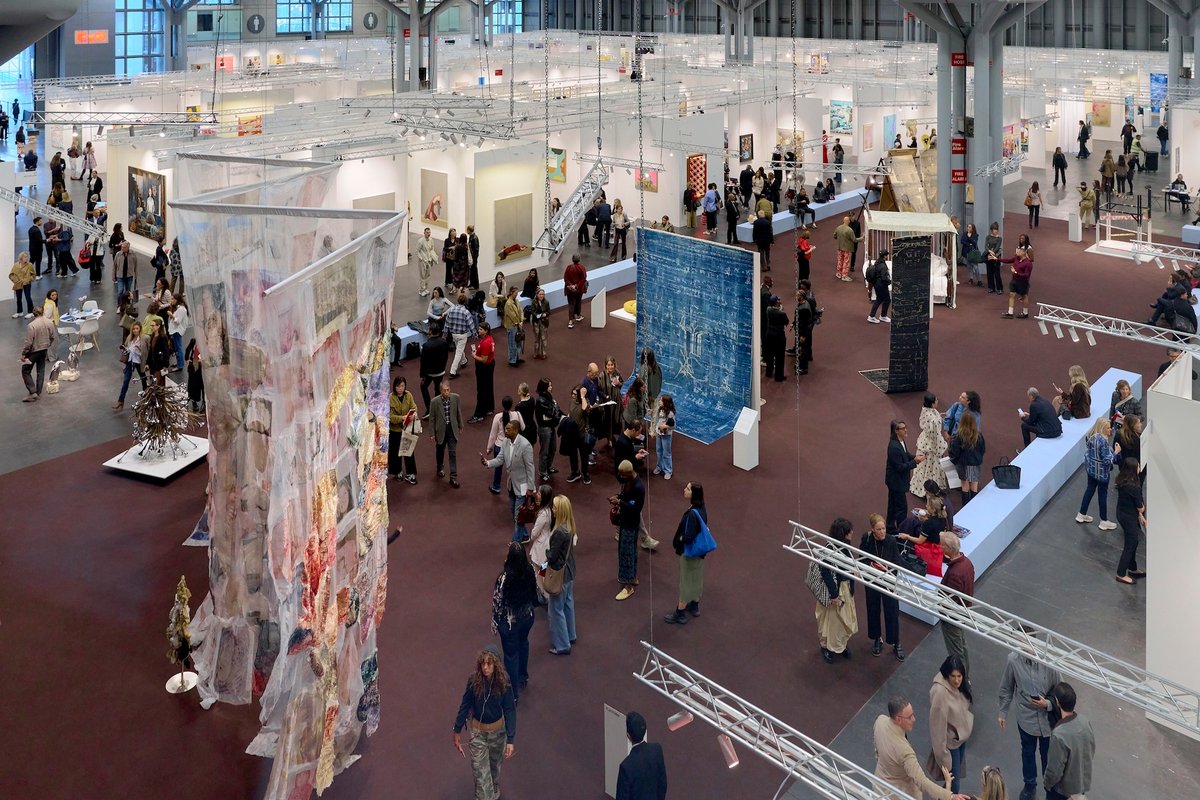
The Armory Show’s Presents section has grown as emerging galleries weigh the costs and potential upsides of art fair participation. The section is 20% larger this year compared to 2025, but dealers say participating remains a gamble—prompting some to share stands, negotiate fees and find other ways to limit costs.
The Presents section at The Armory Show is dedicated to galleries founded within the last 12 years, focuses on solo or dual artist presentations and is often home to some of the most interesting work at New York’s largest art fair. The section features 54 exhibitors this year, up from 45 last year, as younger galleries look to the fair as a way to reach new collectors and establish themselves on an international stage. But for many of those young dealers, participating remains a significant financial risk.
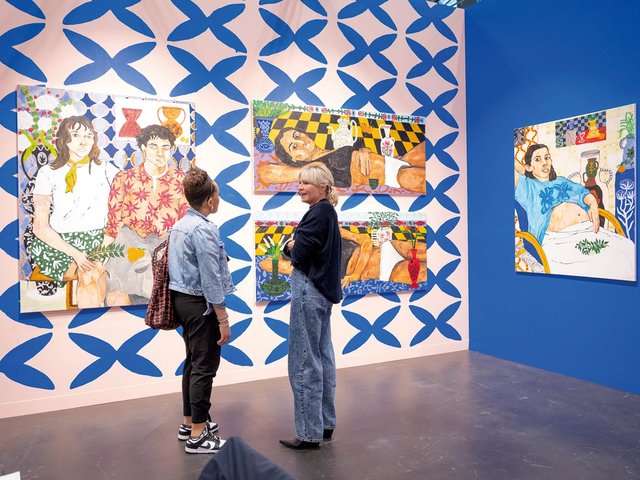
Of this year’s 54 Presents exhibitors, 18 are taking part in The Armory Show for the first time. The section, historically dominated by New York galleries, has also expanded its geographic reach, with participants including Martha’s from Austin, Wolfgang Gallery from Atlanta and Rajiv Menon, who founded his eponymous gallery in Los Angeles.
According to UBS and Art Basel’s most recent Art Market Report, dealers with annual gross revenue of less than $500,000 experienced the strongest growth in 2025, reporting double-digit increases in average sales values. Despite much art world grumbling about art fair fatigue and diminishing returns, that same report found that for dealers across the board, art fair sales increased by 4% year-on-year to comprise 35% of gross revenue, the highest level since 2022. Dealers also reported that increasing fair costs were among the biggest challenges in running a gallery.
Kyla McMillan, the director of The Armory Show, says stands in the Presents section are deliberately priced below those in the main Galleries section to allow for emerging gallery participation. For McMillan, the section’s expansion reflects the confidence of younger dealers.
“Seeing a growth amongst young galleries signals to me a health and an optimism for experimentation,” McMillan says. “We’re always so proud of that section and the ambitious presentations that come out of it. I think they’re a bit of an inspiration for the rest of the fair, in terms of taking a big swing in a fair context.”
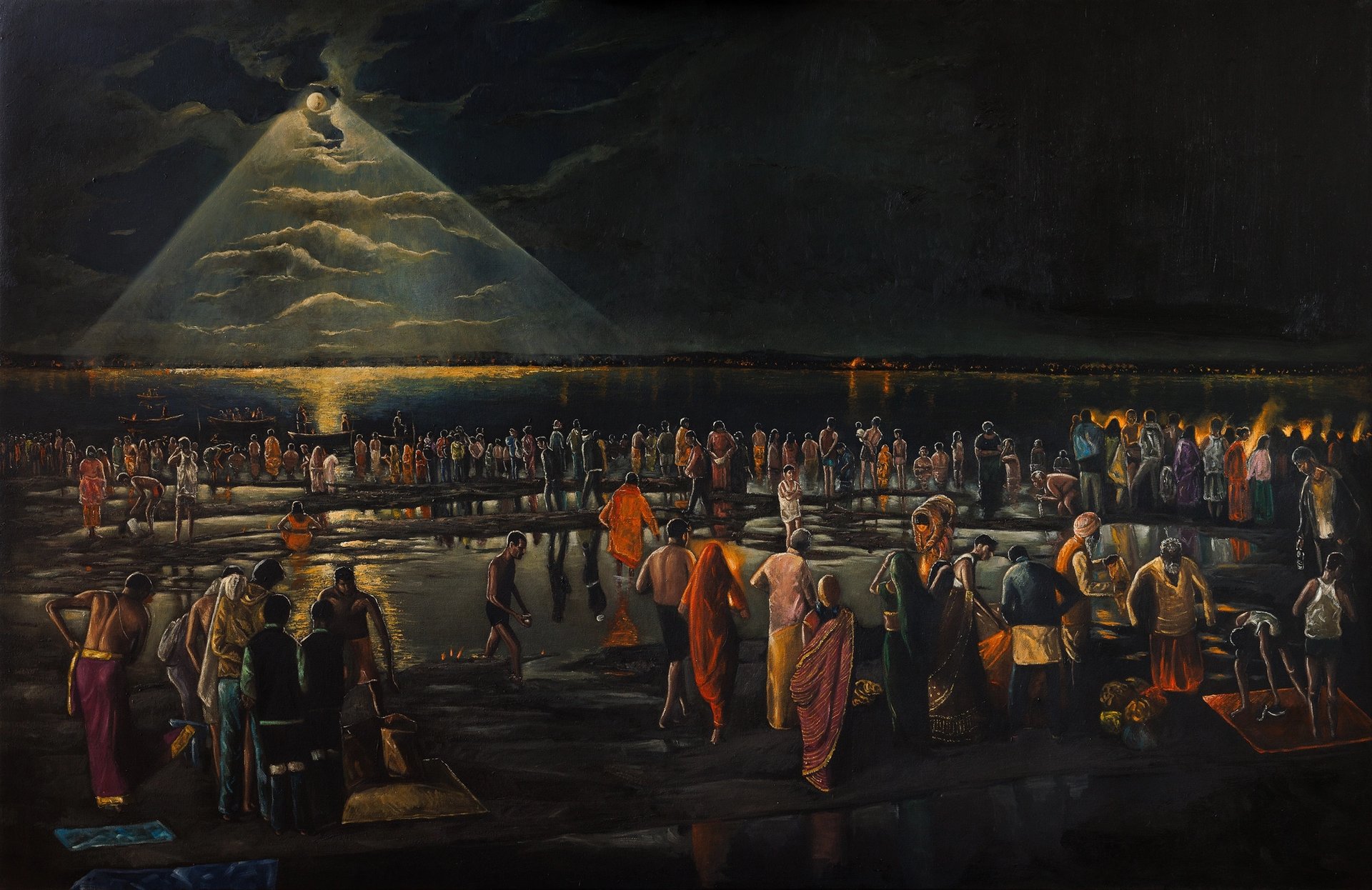
One of Raghav Babbar's paintings at Rajiv Menon Contemporary's stand Courtesy the artist and Rajiv Menon Contemporary
Some first-time participants at The Armory Show say they were able to negotiate their fees down, while others have shared booths or found other ways to spread the expense. Dealers have to balance benefits like potential fair sales, artist exposure and meeting collectors and curators against a more immediate bill.
Rajiv Menon is using the fair to introduce both his namesake gallery and an artist to New Yorkers. Menon is showing work by Raghav Babbar, a 28-year-old painter whose recent work draws on the artist’s experience on the Maha Kumbh, the Hindu pilgrimage in North India that in 2025 brought together more than 600 million people.
“I deeply believe Raghav is the most significant Gen Z painter coming out of India right now,” Menon says. “We wanted to be conscious that it wasn’t just our debut, but it's Raghav’s as well, and it felt like such an appropriate platform for the centre of the art world.”
Works on the stand range from $7,000 for works on paper to the mid-five figures for paintings. Within hours of the VIP preview’s opening on Thursday (24 September), all but the works on paper had sold. For Menon, bringing these lower-priced works was a way to make the artist accessible to younger collectors.
“Because I genuinely do believe his practice is significant and will have a very long impact, I want young collectors to find points of access,” Menon says. “The inclusion of works on paper was a very deliberate conversation I had with Raghav, knowing that there are young collectors who may not be able to afford his canvases, but still feel deeply invested in the practice, in the impact he's making on the culture and on the fact that he is a rising, significant voice of South Asian art on the global stage.”
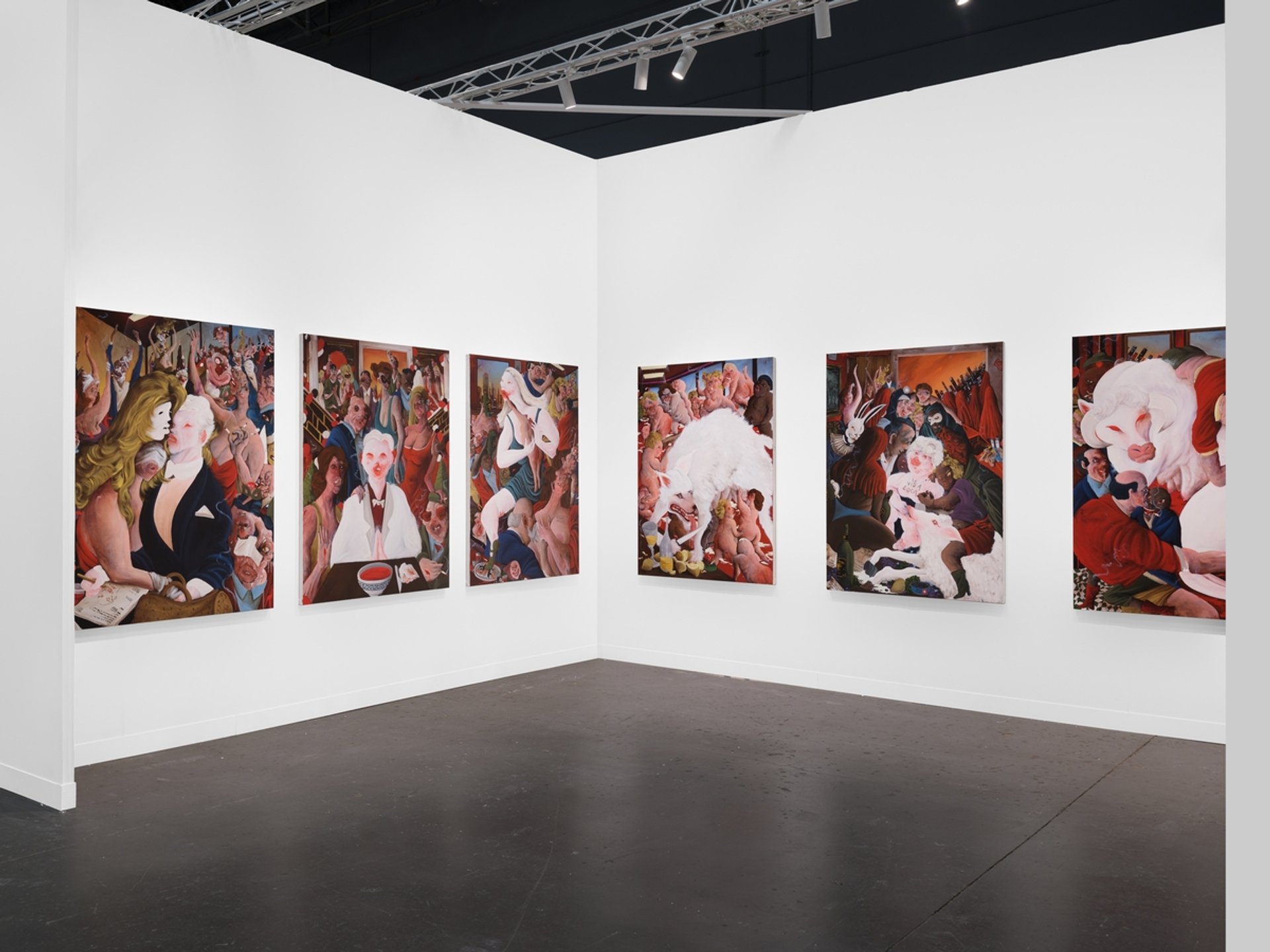
Management and Droste Galladé's shared stand with paintings by Willehad Eilers. Courtesy the artist Droste Galladé and Management
Other Presents exhibitors have found ways to make the economics of participating in a fair more manageable. The New York-based gallery Management is sharing a stand with French-German gallery Droste Galladé, splitting the costs between them with a portion also subsidised by the German government. It is the first at The Armory Show for both galleries, which together are presenting paintings by their shared artist Willehad Eilers, whose grotesque, bacchanalian scenes critique a culture of abundance and decadence.
Visitors to the stand are “disturbed by it. I think that is a condemnation in and of itself, that’s baked into the work,” Anton Svyatsky, the founder of Management, says. “If you are disturbed by this work and you don’t see yourself in it and you don’t see how it’s about you, that’s kind of the point.”
Going all in on grotesque social critique is an uncommon and risky choice for a major commercial fair, yet Droste Galladé and Management’s joint stand was one of the buzziest in the section during the VIP preview. That curiosity seems to have paid off—about half of the paintings, priced at $18,500 each, had sold during the preview, with the rest on hold. Svyatsky adds: “I think ambitious, interesting work inevitably becomes commercially viable if it is in fact ambitious and interesting."
Other participants in the fair’s Presents sector are rethinking the gallery concept. For Superposition, the cost-saving strategy is more fundamental: it has no permanent gallery space at all.
“For my gallery, we don’t pay rent because we’re a nomadic entity, and wherever we are, that’s where home is at that moment. So home right now is at The Armory Show,” Storm Ascher, Superposition’s founder, says. “We save all those resources that would be going into a Tribeca rent or Chelsea rent or Brooklyn, Newark, wherever it is—New York is just impossible to afford right now.”
Superposition is presenting work by Zoë Pulley, marking the artist’s first appearance at an art fair. Pulley’s maximalist multimedia works combine textiles, assemblage and typography, drawing on the legacy of her grandmother, a fashion designer who staged runway shows in 1980s Philadelphia outside the mainstream fashion industry. The presentation examines how Black creative expression is passed between generations. Pulley’s installation earned the inaugural Bronx Museum Acquisition Prize, with one of her works entering the museum’s permanent collection: the museum purchased Elegance No. 1 (2026) for $14,000.
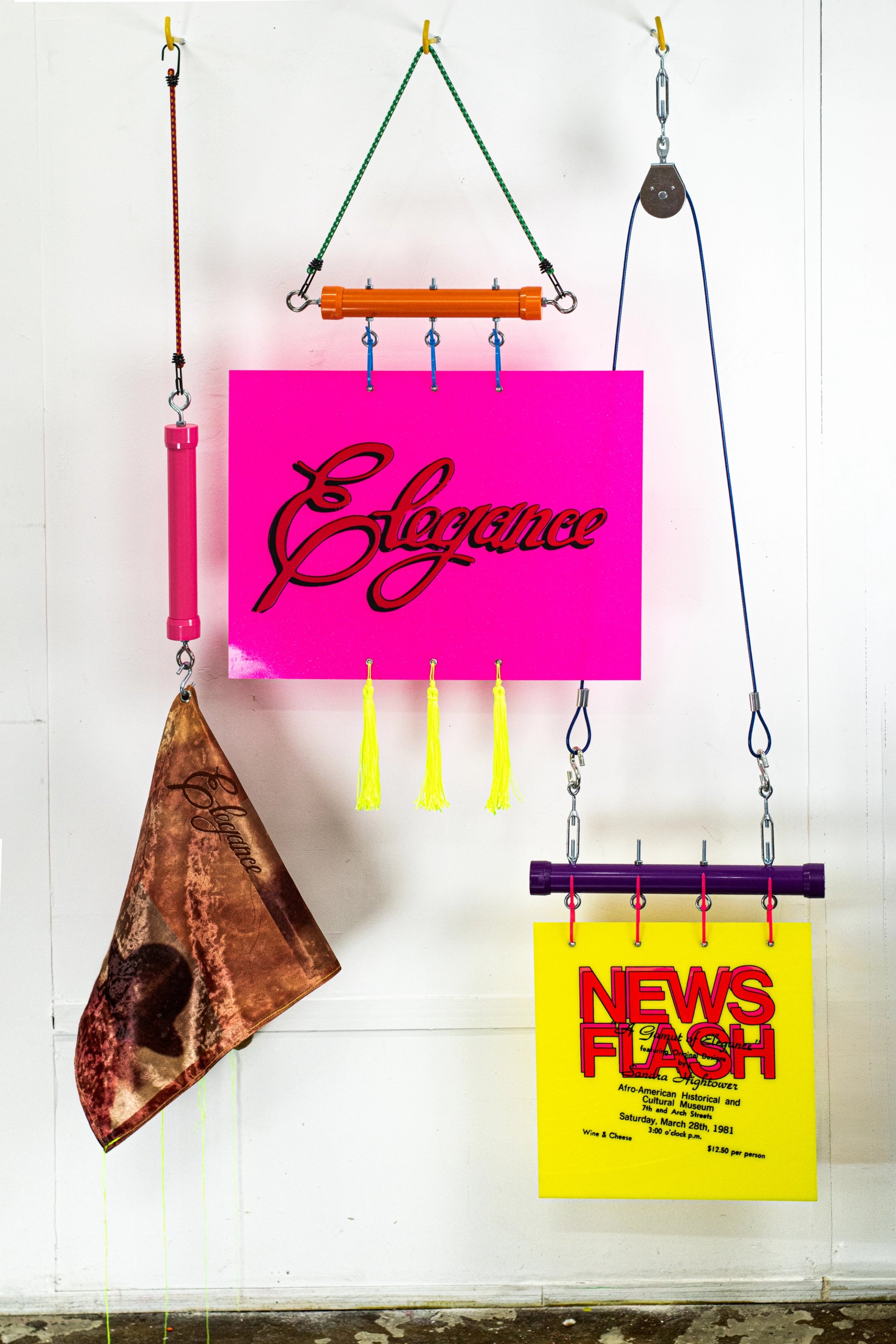
Zoë Pulle’s Elegance No. 1 (2026) at the Superposition stand. Photo by Jazz Wong, courtesy the artist
The fair’s organisers also offer one opportunity that can remove the cost of a stand altogether. Ahead of the VIP preview, the New York-based gallery Margot Samel was announced as the winner of the Gramercy International Prize, which gives a free stand to a hometown gallery that has not previously participated in The Armory Show. In its Presents section stand, the gallery is showing works by Leroy Johnson and Sasha Brodsky.
Another New York-based Presents exhibitor, Lobster Club, reported selling nine of Megan Koons’s paintings made with acrylic and woven cotton on canvas, in the range of $3,600 to $8,500 each. Hannah Traore Gallery sold out its stand of works by Kesewa Aboah, priced between $2,500 and $27,000 each. In the fair’s general Galleries sector, Chelsea-based Michael Rosenfeld Gallery reported selling a painting by Joan Mitchell for over $2m to a private collection, the most valuable sale reported during the VIP preview.
Pietro Alexander, who founded his eponymous gallery in New York this year after operating Spy Projects in Los Angeles, is taking part in Presents. His stand features paintings by Christian Vincent, whose exhibition was the final show at Spy Projects. Alexander chose Vincent’s work for The Armory Show partly because he believed it could connect with collectors even in the busy context of a sprawling art fair.
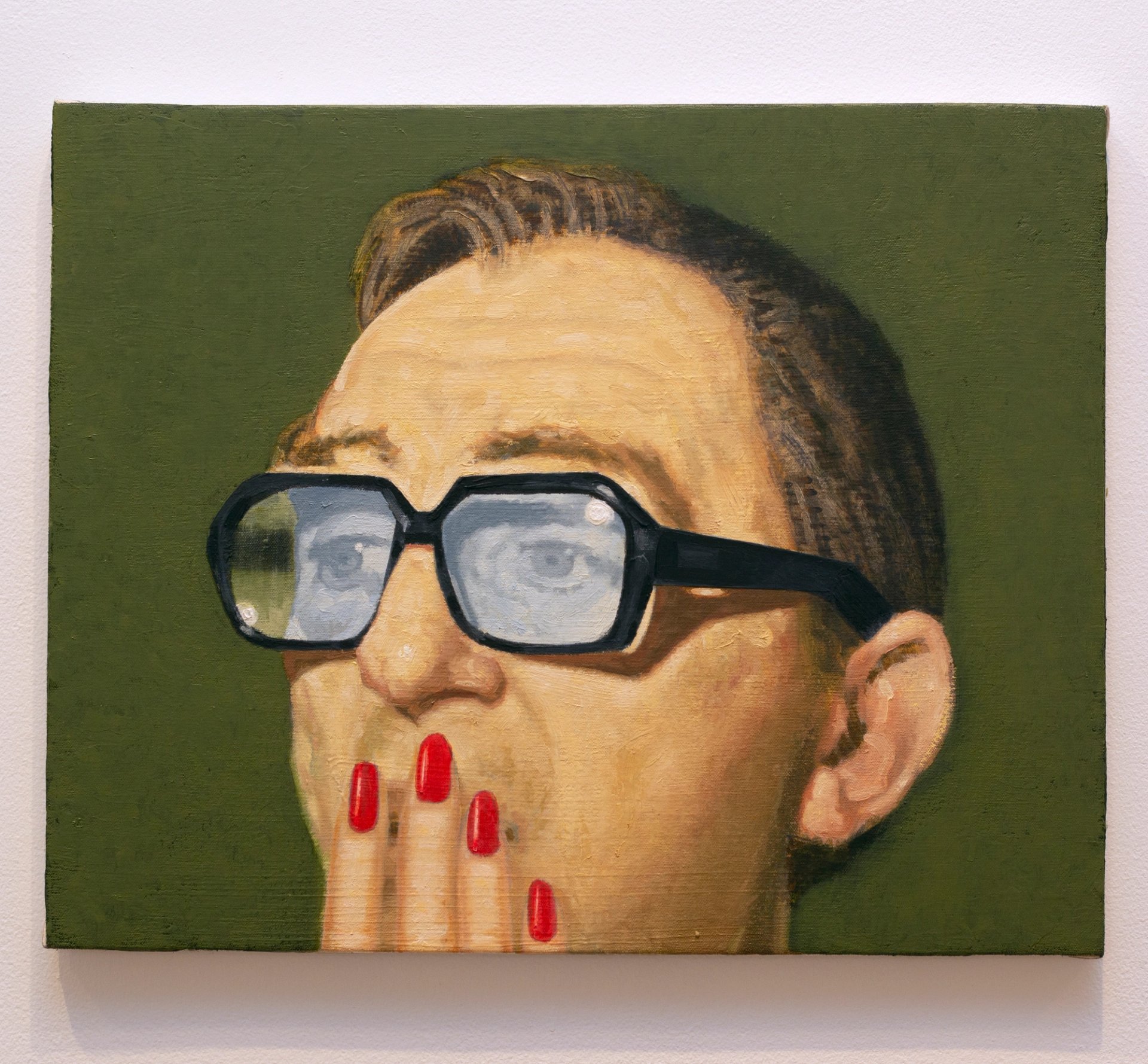
Christian Vincent's Speakeasy (2026) Courtesy Pietro Alexander Gallery
“What I love about the work is this focus on narrative over figure in figurative painting. There’s a sense of humor, capturing a moment in time rather than the body,” Alexander says. “There are some artists whose work is very hard to present in a fair context. His work is these colourful moments of weirdness that I thought could work if I had a 10ft by 10ft booth, or a 50ft by 50ft booth,” Alexander says. The gallery has sold six of the eight paintings, but Alexander was frank about the financial realities facing emerging galleries.
“For younger galleries, art fairs are really difficult. I have had a lot of colleagues and peers who basically lost their shirts at art fairs,” Alexander says. “After I did my first fair, I completely face-planted.”
The calculation can be particularly difficult for galleries without established collector bases or pre-sold works under their belt.
“It’s a hard pitch to make to younger galleries, but they kind of have to do it,” Alexander says. “You’re supposed to be John the Evangelist for your people, and part of that is being the one to encumber those risks. That’s your job for your artists.”
- The Armory Show, until 27 September, Javits Center, New York