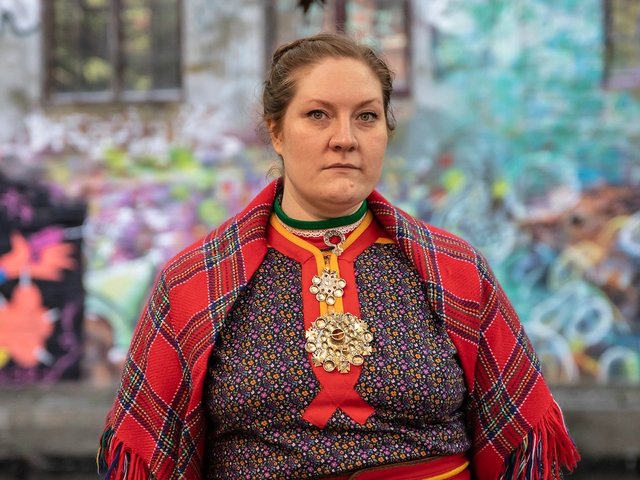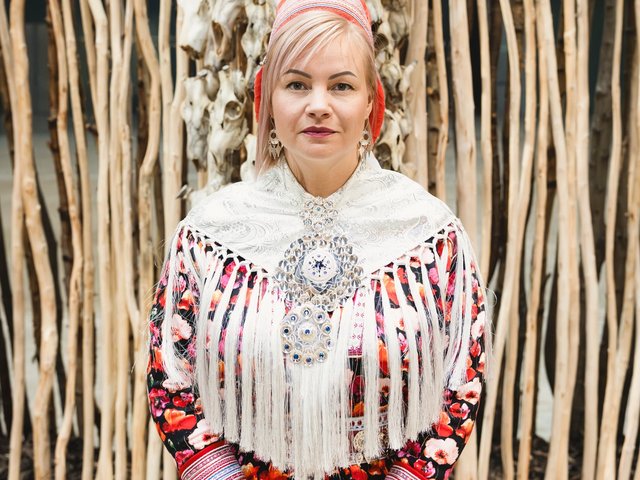
The Sámi artist network Dáiddadállu, whose co-founder’s work recently filled the Tate Modern’s cavernous Turbine Hall, has won this year’s Munch Award dedicated to artistic freedom of expression. The group will receive NOK 300,000 (around £24,000).
Dáiddadállu comprises an administration and 22 artist partners, whose multimedia work spans theatre, music, visual art and joik, a traditional form of Sámi singing. The Sámi are an Indigenous people whose traditional homeland, Sápmi, spans northern Norway, Sweden, Finland and the Kola Peninsula in Russia.
The network was founded in 2014 by the filmmaker and choreographer Elle Sofe Sara and the artist and author Máret Ánne Sara (no relation). Last autumn, the latter presented her Hyundai Commission in Tate Modern’s Turbine Hall, for which she created a 26m-high column of reindeer hides, bound by electrical cables, and a wooden maze-like structure based on the anatomy of a reindeer’s nose. Sara, who comes from a Sámi reindeer herding family, told The Art Newspaper’s Louisa Buck that the works responded to, among other things, the impact of “increasingly unstable environmental conditions in the Sápmi Arctic region” and her search “for alternative strategies for a more sustainable global future”.
“By bringing hides here, I’m bringing the energy and the life from these animals and from the region where I come from. It’s a very powerful energy,” she added. “Then combining them with these power cables, where they are trapped and entangled with each other, opens up a possibility to reflect on the greenwashing or green colonisation that we are in the midst of, especially in Sápmi, and to consider what is important in this need for energy and light”.
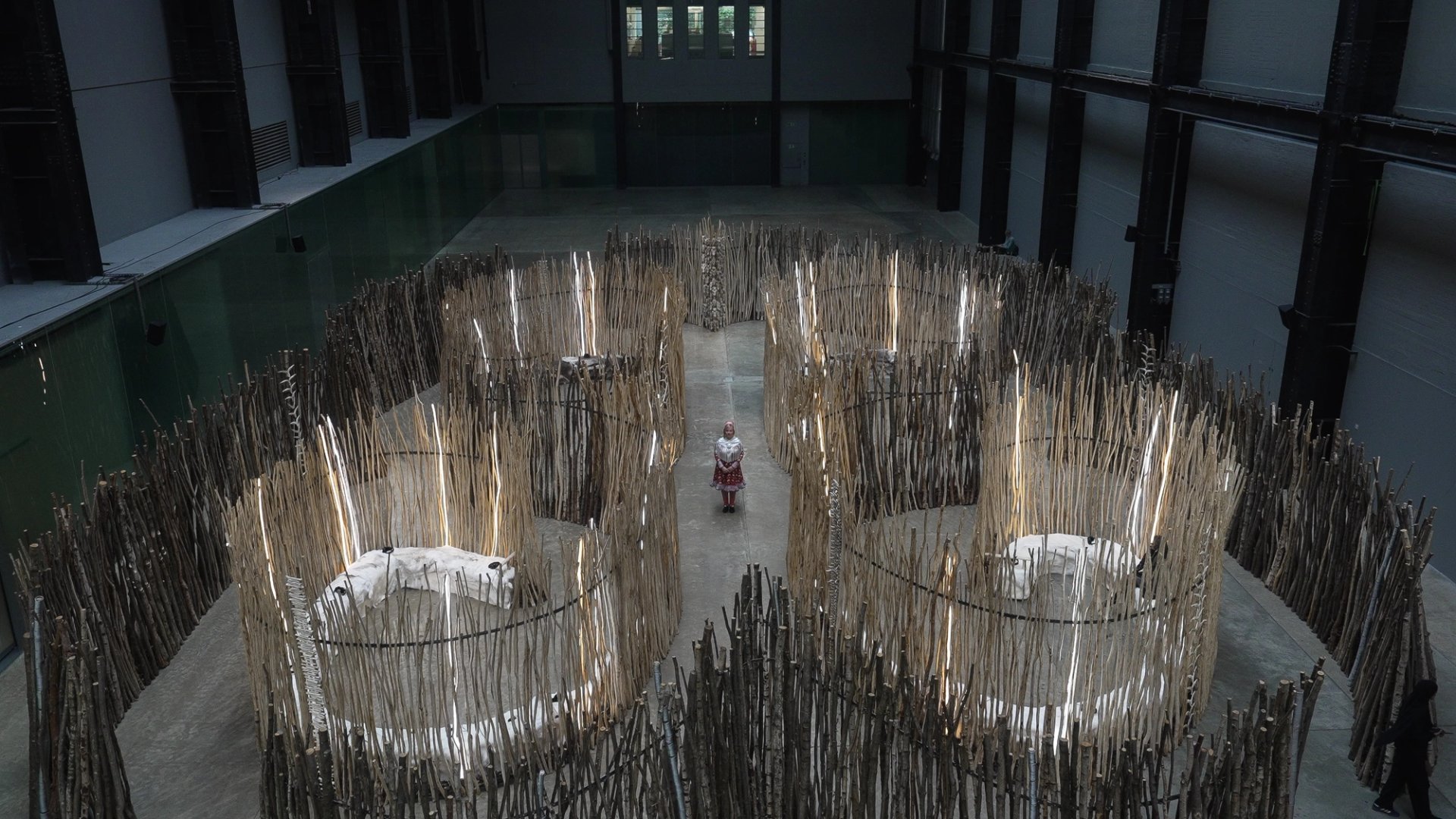
Máret Ánne Sara’s work Goavve-Geabbil (2025) in Tate Modern’s Turbine Hall
Courtesy of Dáiddadállu
Dáiddadállu’s work similarly draws on Sámi knowledge and philosophies, with a focus on themes such as openness, sustainability and holistic thinking. The network, says a release, “is committed to the development and preservation of a healthy and vibrant Sápmi, striving to foster fair, lasting, and sustainable development through all of its activities” there and in other parts of the world. Further projects members of the group have been involved in include Birgejupmi Through Art & Duodji, an EU-funded research initiative that explored how art and traditional Sámi handicrafts—known as duodji—could be used as tools of resilience, reconciliation and the sharing of knowledge.

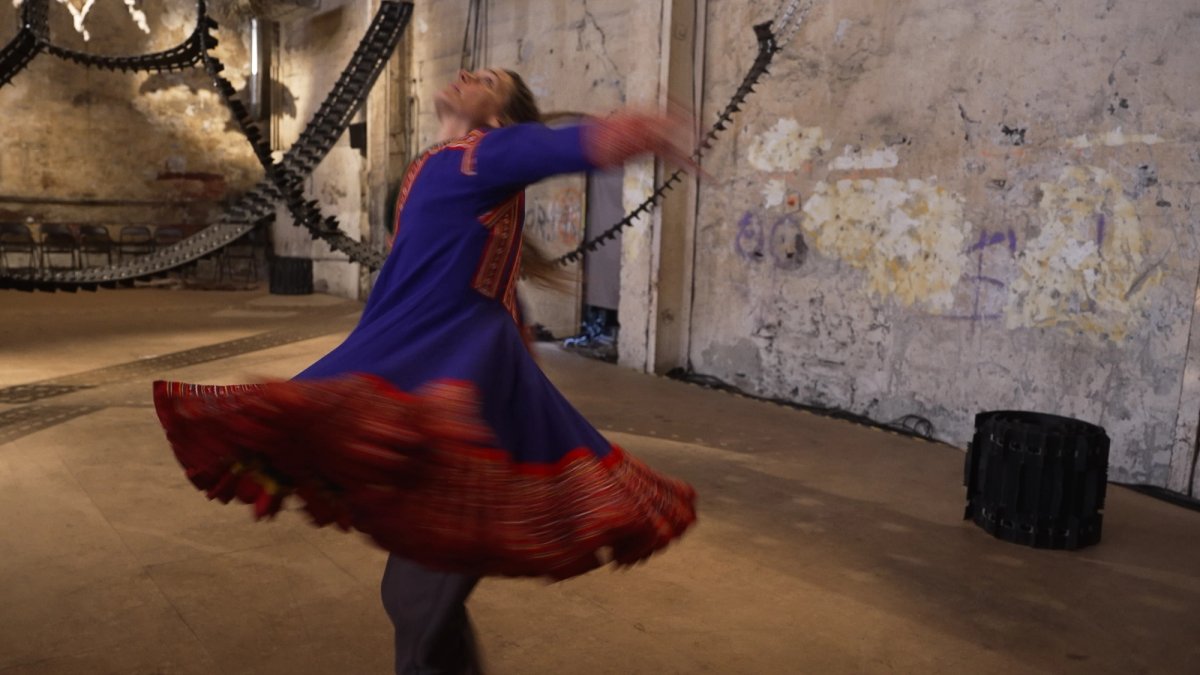
Another is Elle Sofe Sara’s ballet Láhppon/Lost (2025), choreographed together with Icelandic choreographer Hlín Diego Hjálmarsdóttir. It explores the Kautokeino Rebellion of 1852, a violent Sami uprising against oppression by the Norwegian authorities. A 2024 “rapid review” by the Norwegian Institute of Public Health stated that “the Sami people were subjected to a persistent assimilation policy from the mid-1800s until the late 1960s… and while the policy has been abandoned, the Sami people still experience harassment and discrimination based on their ethnicity.”
Championing freedom of expression
The Munch Awards, launched in 2024, are given annually in honour of the Norwegian modernist Edvard Munch, whose experimental paintings embody a drive for individualism and unbound freedom of expression.
Dáiddadállu’s managing director Dine Arnannguaq Fenger Lynge said in a statement: “We have worked hard for many years to build Dáiddadállu into what it is today. It has been about creating a platform and an infrastructure where Sámi artists can develop, work, collaborate and engage with the world on their own terms. That is why this award means so much to us. It is a recognition of the work put in over many years, of the people who have built Dáiddadállu, and of the importance of having strong Sámi art institutions. At the same time, the award gives us the inspiration and energy to continue developing Dáiddadállu further.”
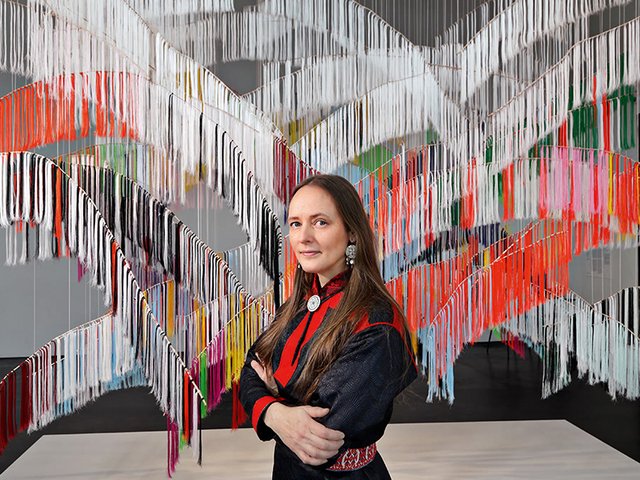
The award was judged by a jury including the artist and curator Wanda Nanibrush, the curator and acadmic Yvette Mutumba and the Munch museum director Tone Hansen, among others.
The group said in a statement: “The Munch Award Jury would like to honour Dáiddadállu for their significant work in supporting Indigenous artists, and for actively inserting Indigenous knowledge and perspectives into established art worlds. Dáiddadállu operates as a network focused on creating and building infrastructures, which have been lacking for their practices. With an emphasis on solidarity and sustainability, they nurture the next generation at the same time as they honour their elders. Whilst fundamentally committed to their communities, they also challenge Sámi culture from within, always aiming to highlight and confront the status quo.”
The previous winners of the award are the Brazilian artist Rosana Paulino and the Palestinian artist and educator Samia Halaby.