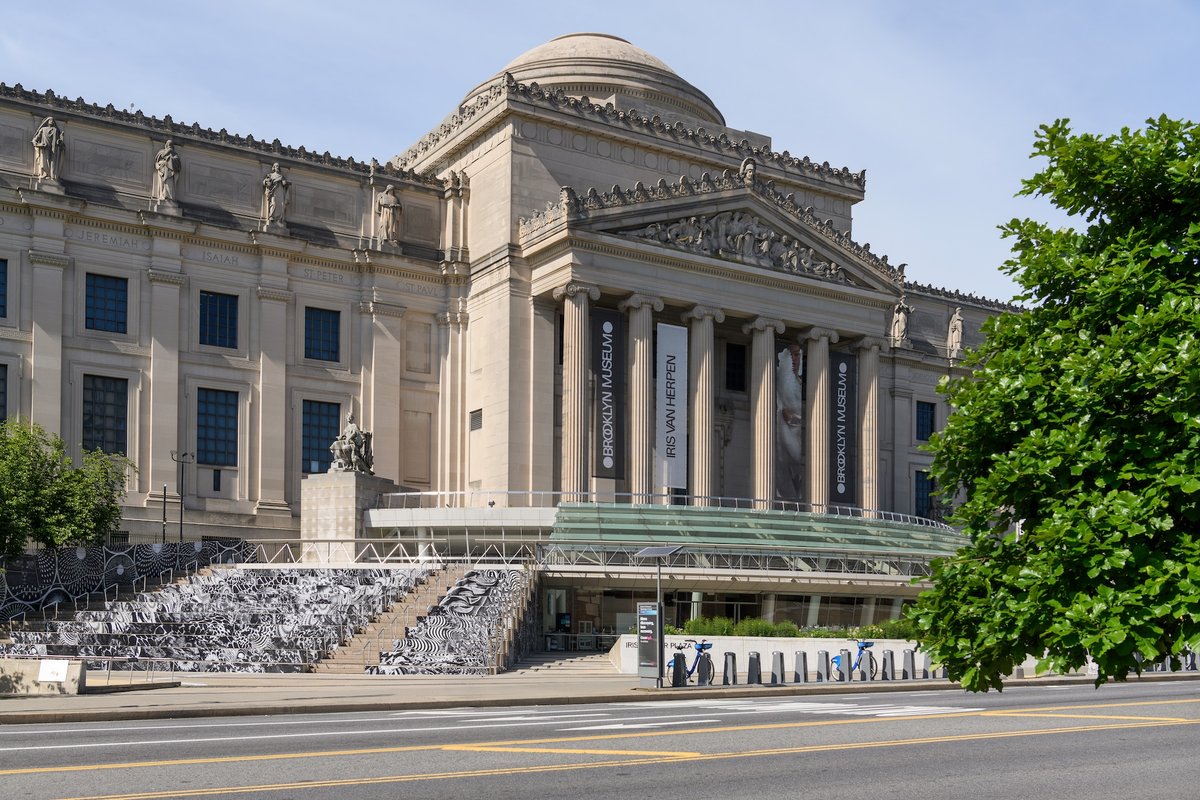
The Brooklyn Museum is undertaking a $48m overhaul of its century-old infrastructure, as New York City steps up efforts to make its cultural institutions—and the city more broadly—energy efficient and less dependent on fossil fuels. The endeavour is the most comprehensive energy initiative that the Brooklyn Museum has undertaken.
The project, announced in June by the Department of Citywide Administrative Services (DCAS), together with the Brooklyn Museum and the New York Power Authority, will combine renewable-energy generation with modernisation of the museum’s systems. Work is expected to be completed in mid-2027 and will contribute to DCAS's ongoing efforts to reduce carbon emissions.
The investment, called the Deep Energy Retrofit programme, includes solar carport panels, a new building-management system and heating, ventilation and air-conditioning upgrades. The museum’s ageing steam-generation plant will be replaced with a high-efficiency hot-water system, while electric humidification control will regulate gallery conditions.
“This is something that we are very excited about, and we welcome a project of this scale,” says Hardat Raywat, the museum’s deputy director for operations, engineering and facilities. “Through this project, we’re expecting a roughly 57% reduction of our carbon, which is over 3,300 metric tons per year. That is the equivalent of taking 725 cars off the road.”
For DCAS—the agency responsible for much of New York’s municipal infrastructure and procurement—the Brooklyn Museum project is part of a broader strategy to comply with Local Law 97, the city’s Climate Mobilisation Act of 2019. With an overall goal of achieving net-zero emissions by 2050, the law requires a 50% reduction of greenhouse gases for city-government operations by 2030 when compared to a 2006 baseline. DCAS’s Energy Management division provides technical guidance and funding to city agencies while overseeing programmes designed to reduce energy use and greenhouse-gas emissions.
“Building operations generate more than two-thirds of city government-operations emissions,” says Brian Chang, the deputy commissioner for energy management at DCAS. “Our charge is to bring down emissions to net-zero by 2050 by working with city agencies to decarbonise our portfolio. We're talking about libraries and schools, as well as waste-water treatment plants and cultural institutions. There's no one-size-fits-all strategy, but the work we’re doing at the Brooklyn Museum might offer lessons to other cultural spaces.”
When deciding which buildings to work on, DCAS looks within its portfolio for spaces that offer “the greatest amount of energy-efficiency work or upgrades at one location at the same time”, Chang says. “We found early on that when you do one upgrade at a time, you're often pulling apart a wall and uncovering something that hasn't been looked at for quite some time. This can present new challenges that need to be addressed.”
“Internally, our energy-efficiency projects were related to basic maintenance,” Raywat says. “When you’re dealing with a building with century-old parts, a major overhaul is needed to support contemporary energy needs and museum standards.”
Ensuring long-term viability
The Brooklyn Museum is one of 39 organisations in the city’s Cultural Institutions Group (CIG), non-profits that range from zoos and botanical gardens to museums and concert halls—all on city-owned property. The city gives CIG members capital and operating support. According to the most recent DCAS emissions report, CIGs make up 4% of the agency’s total emissions.
In addition to the Brooklyn Museum, DCAS worked with the Fashion Institute of Technology on a $7m project to replace a steam turbine-driven system with an electric chiller. The new equipment is expected to save more than $1m in energy costs annually and reduce greenhouse-gas emissions by about 1,000 tonnes. DCAS has also undertaken 30 projects at the Metropolitan Museum of Art, including a recent $25m energy-efficient lighting project.
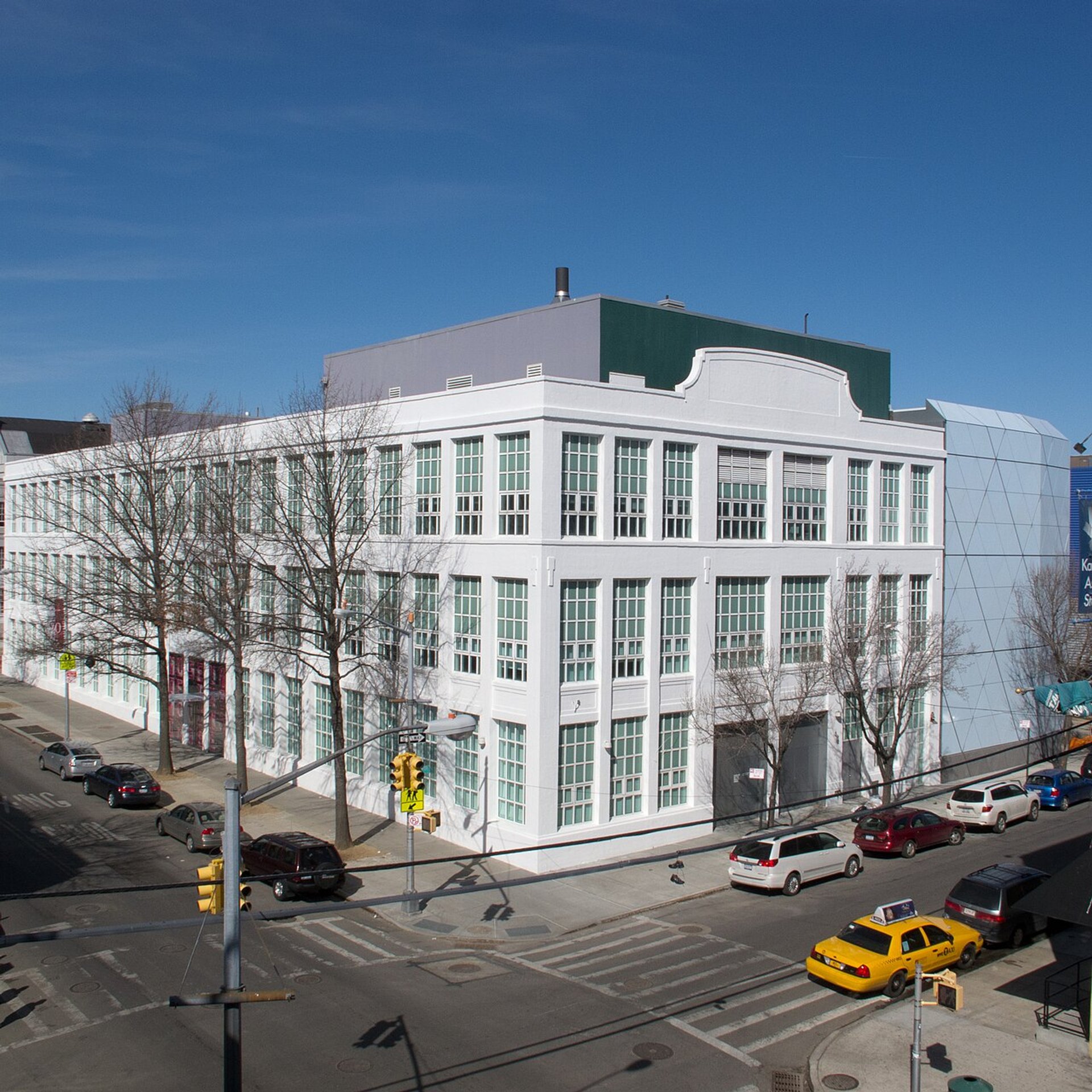
Museum of the Moving Image, Queens Photo: Nick C. Prior, via Wikimedia Commons
At the Museum of the Moving Image (Momi) in Queens, DCAS has invested more than $7.5m over five years in infrastructure improvements. “With the steady increase in visitation to the museum—including seeing attendance double in the past year—it has become increasingly important to ensure the long-term viability of our infrastructure,” says Aziz Isham, Momi’s executive director.
Its latest project replaced Momi’s chiller with a more efficient system incorporating an air-source heat pump, “a meaningful step towards building electrification; the museum has about 15% of the work left before it is completely off fossil fuels”, Isham adds. The upgrades are expected to save around $235,900 per year and have become particularly crucial as heatwaves continue to impact New York's cultural institutions.
“The high temperatures we’ve experienced in recent years placed additional burdens on our infrastructure,” Isham says. “Now, during the recent heatwave, we only used 15% of the load to cool the building and are on our way to becoming a city-designated cooling centre.”
While these case studies are useful for other cultural institutions, the price tags are often prohibitive for organisations already operating on slim budgets. “The $48m cost of the Brooklyn Museum project includes 17 energy upgrades,” Chang says, “so while it might seem high, in terms of our work, it’s actually a small investment for long positive results.”
For the cultural sector, resources to aid energy-efficiency projects do exist. Bloomberg Philanthropies provides research, technical expertise and hands-on support, while the Frankenthaler Climate Initiative awards grants of up to $100,000.
“Costs vary widely,” says James Merle Thomas, the deputy director at the Helen Frankenthaler Foundation, which administers the climate grants. “A targeted retrofit at a small organisation is a different order of magnitude from a comprehensive overhaul at a large institution with historic buildings and collection-conditioning requirements. Building age, condition of existing systems and scope are all factors.” Institutions often undertake larger projects with a combination of funds—like federal incentives, private fundraising and capital budgets.
Still, “funding is often a significant barrier”, says Tracey Knuckles of Bloomberg Philanthropies. “While support is frequently available for programmes and exhibitions, securing funding for back-of-house infrastructure, deferred maintenance and major capital improvements is more difficult.”
Increasingly, Knuckles explains, there is an understanding that “climate adaptation is most effective when it's built into the everyday decisions institutions are already making about their buildings, capital investments and long-term planning, rather than seen as a stand-alone initiative”.
Several organisations, like the Brooklyn Museum, have made changes such as shifting to less energy-intensive climate-control standards and seeking sustainable products. The need for such behavioural change is as crucial as major infrastructure overhauls. For institutions whose collections are expected to survive for centuries, modernising the building housing the art may prove just as important as caring for the objects on the walls.