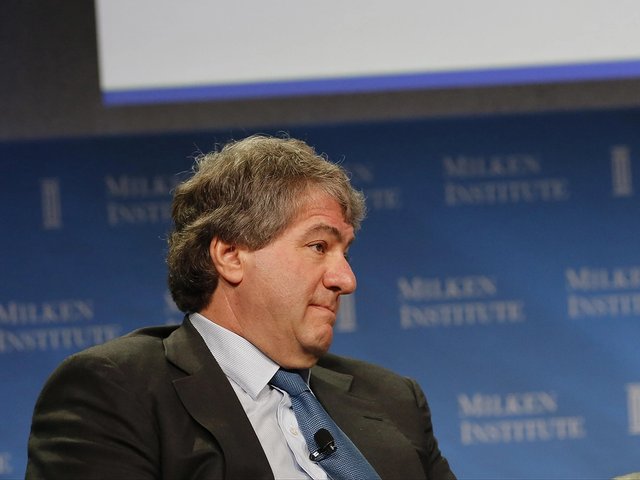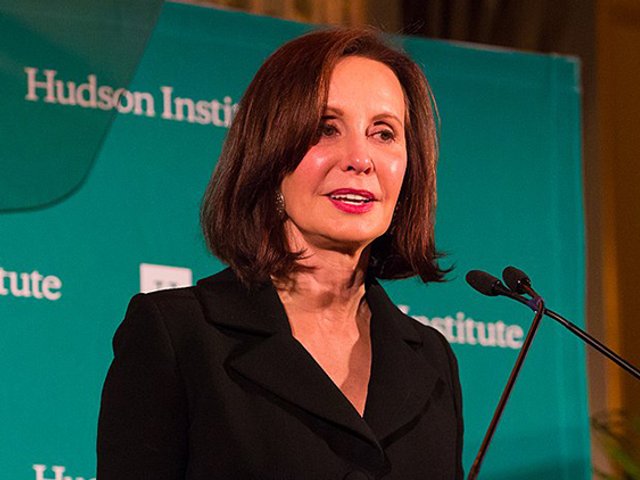
On Tuesday (6 October) the Institute for Primary Facts’ “Bookmobile”, a truck filled with copies of the so-called Epstein files, parked near the Museum of Modern Art (MoMA) in New York in an effort to pressure the institution to drop the billionaire Leon Black, a longtime trustee and former chairman, from its board. Black’s name returns 8,512 results in the Justice Department’s library of documents released by the Trump administration related to investigations of the late sex offender Jeffrey Epstein, including references to graphic sexual abuse allegations Black vehemently denies and has never been convicted of.
Alongside a handful of Epstein survivors, a small group of organisers for the Institute for Primary Facts and the feminist non-profit UltraViolet urged passersby to explore the documents in the truck. The project is a mobile iteration of the 3.5-million-document Trump-Epstein reading room, which opened in Tribeca in May to raise awareness of Epstein’s network of alleged co-conspirators. The truck houses 440 books of the files, including volumes dedicated to references to US President Donald Trump. It also features community comments and a selection of paintings by Maria Farmer, one of the first women to accuse Epstein.
“I’m very disappointed to see people visiting the MoMA today, and I think it’s important that those folks become educated as to who Leon Black is,” Elisa Batista, a campaign director with UltraViolet, told the Art Newspaper. “We’re OK with not seeing the art in the MoMA as long as they keep enabling this abuser.”
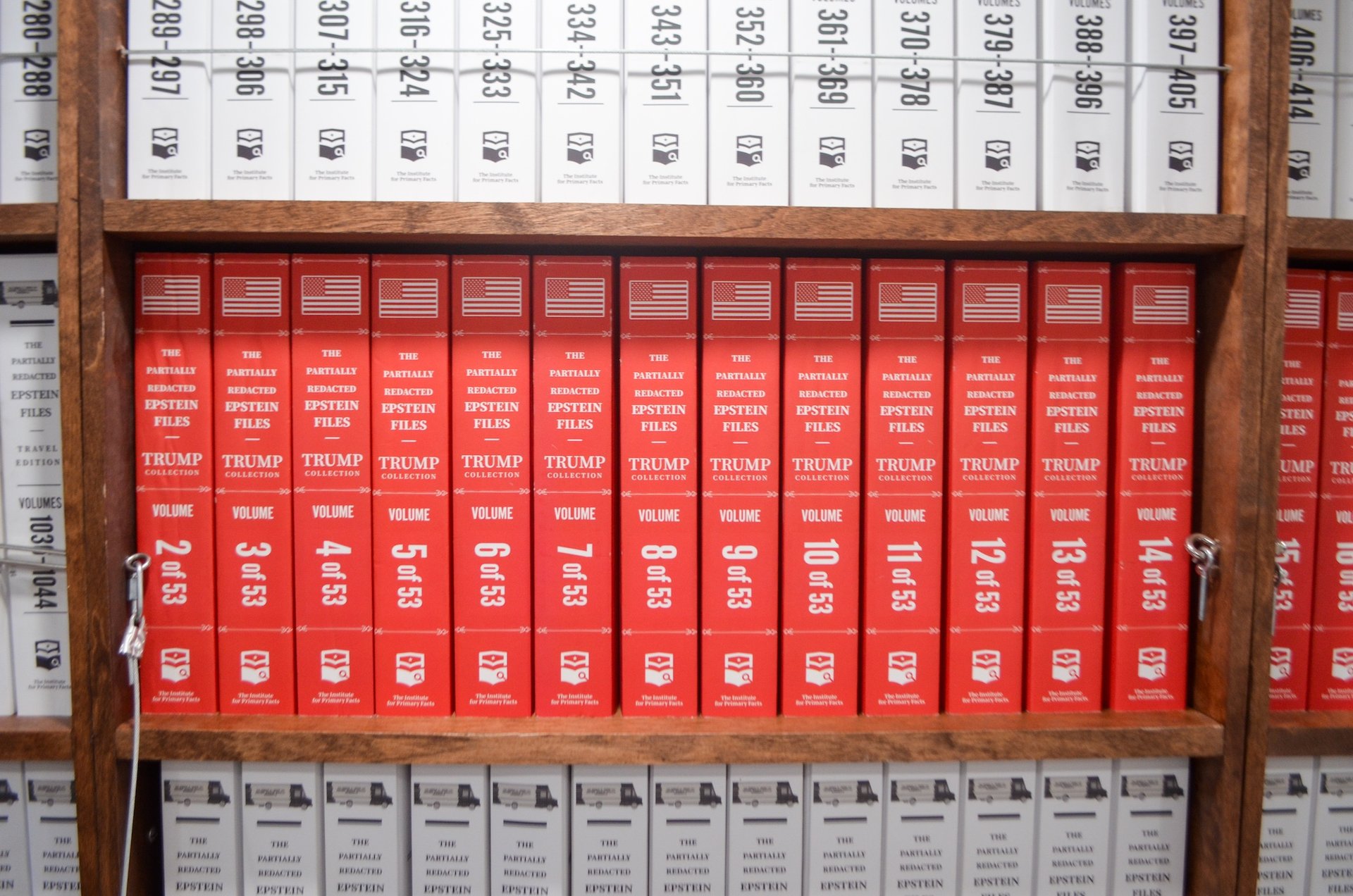
Bound volumes of documents from the Epstein files that mentioned US President Donald Trump Photo © Isa Farfan
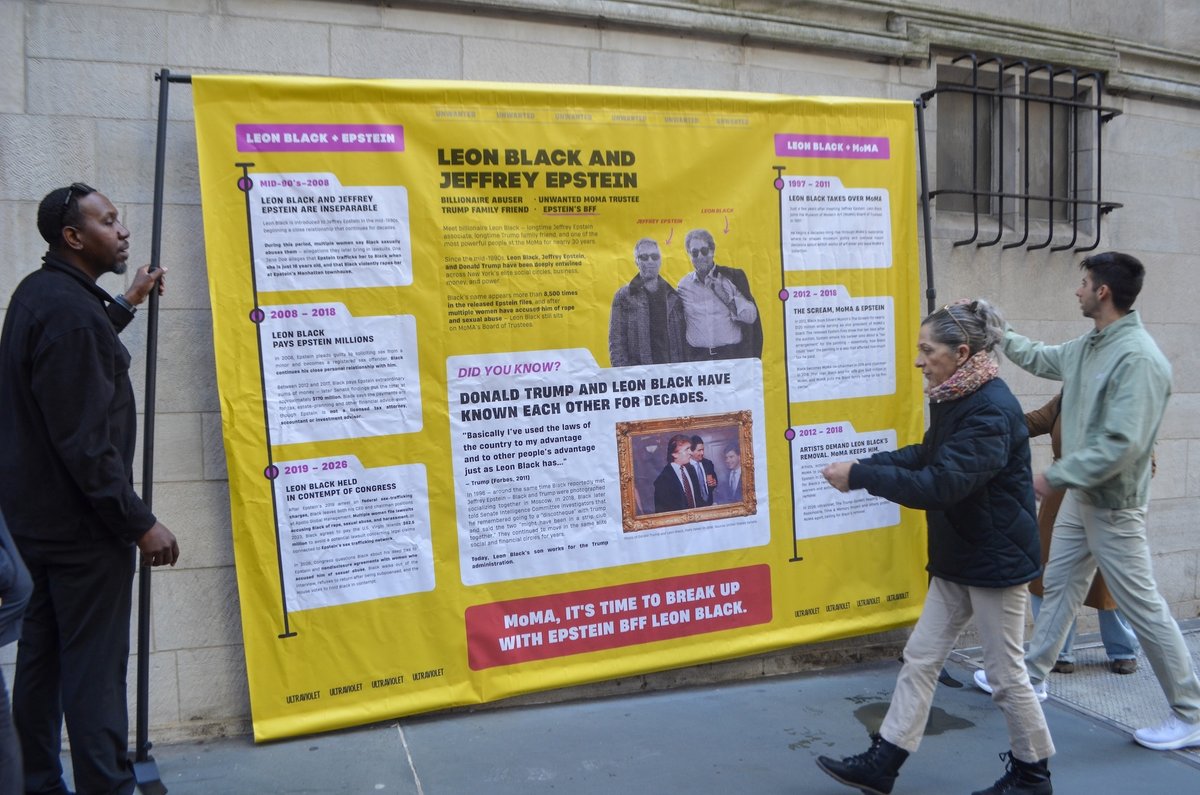
In addition to drawing attention to Black’s appearance in the Epstein documents, the pop-up’s organisers hung a banner detailing the relationship between Black and Epstein, including Black’s payment of $158m to the late sex offender for tax work. They also pointed to the fact that last month, the House of Representatives found Black in contempt of Congress for failing to participate in a probe into his and Epstein’s relationship.
According to Black’s spokesperson Whit Clay, two of the sexual abuse allegations that appear in the Epstein files refer to two cases against Black that were dismissed in court with prejudice. (One of those cases, filed by Guzel Ganieva in 2021, was dismissed when a judge found that a previous non-disclosure agreement precluded her from the suit; the plaintiff in the other, Cheri Pierson, dropped her case against Black in 2024.) In another pending case referenced in the files, Black’s alleged rape of a disabled teenage girl, the plaintiff and her attorney were sanctioned by a judge for fabricating evidence.
In a statement regarding Tuesday’s event, Black’s spokesperson wrote: “To call for Mr Black’s resignation from a board based on outright lies is the height of hypocrisy and those responsible for this campaign should be ashamed of themselves. There is no truth to any of the allegations against Mr Black.”
Spokespersons for MoMA did not respond to The Art Newspaper’s request for comment.
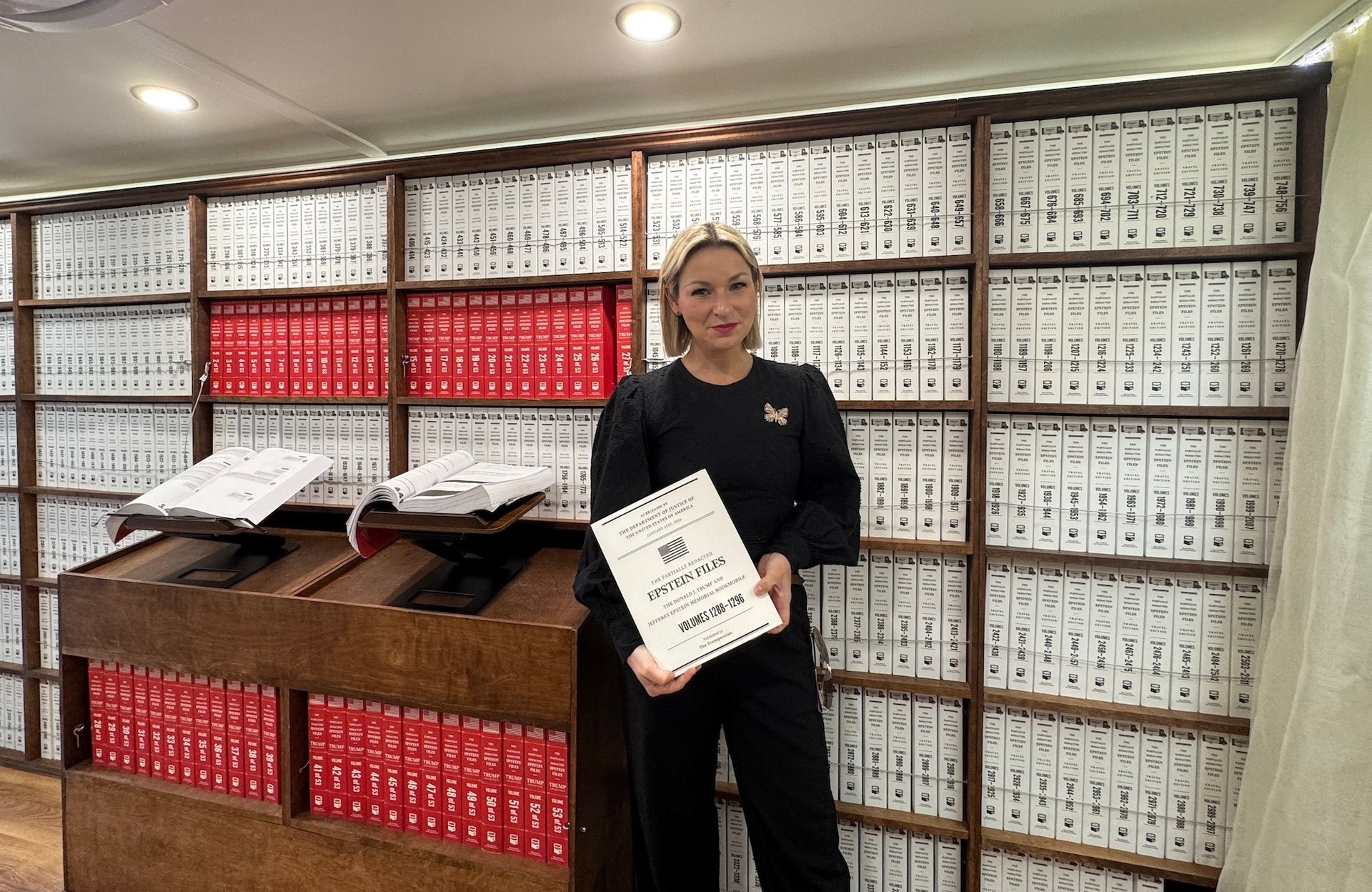
Dani Bensky holding a bound edition of Epstein files inside the Donald J. Trump and Jeffrey Epstein Memorial Bookmobile on 6 October Photo © Isa Farfan
Among the survivors present at Tuesday’s event was Dani Bensky, who said she was abused by Epstein in 2004 and 2005 when she was a 17-year-old training to become a ballet dancer in New York City.
Standing in front of stacks of bound documents, Bensky recalled the moment the files were first released earlier this year. She was among dozens of survivors whose sensitive information was published in the government’s release, despite requesting redactions.
On Tuesday, Bensky called Black’s presence on the MoMA board “frustrating”. “The art world is something that I feel requires protection, and there’s a sanctity to it,” Bensky told The Art Newspaper. “Jeffrey really did use the ballet world… I stopped dancing after that for years, and I just need to make sure that people with the right intentions are in positions of power.”
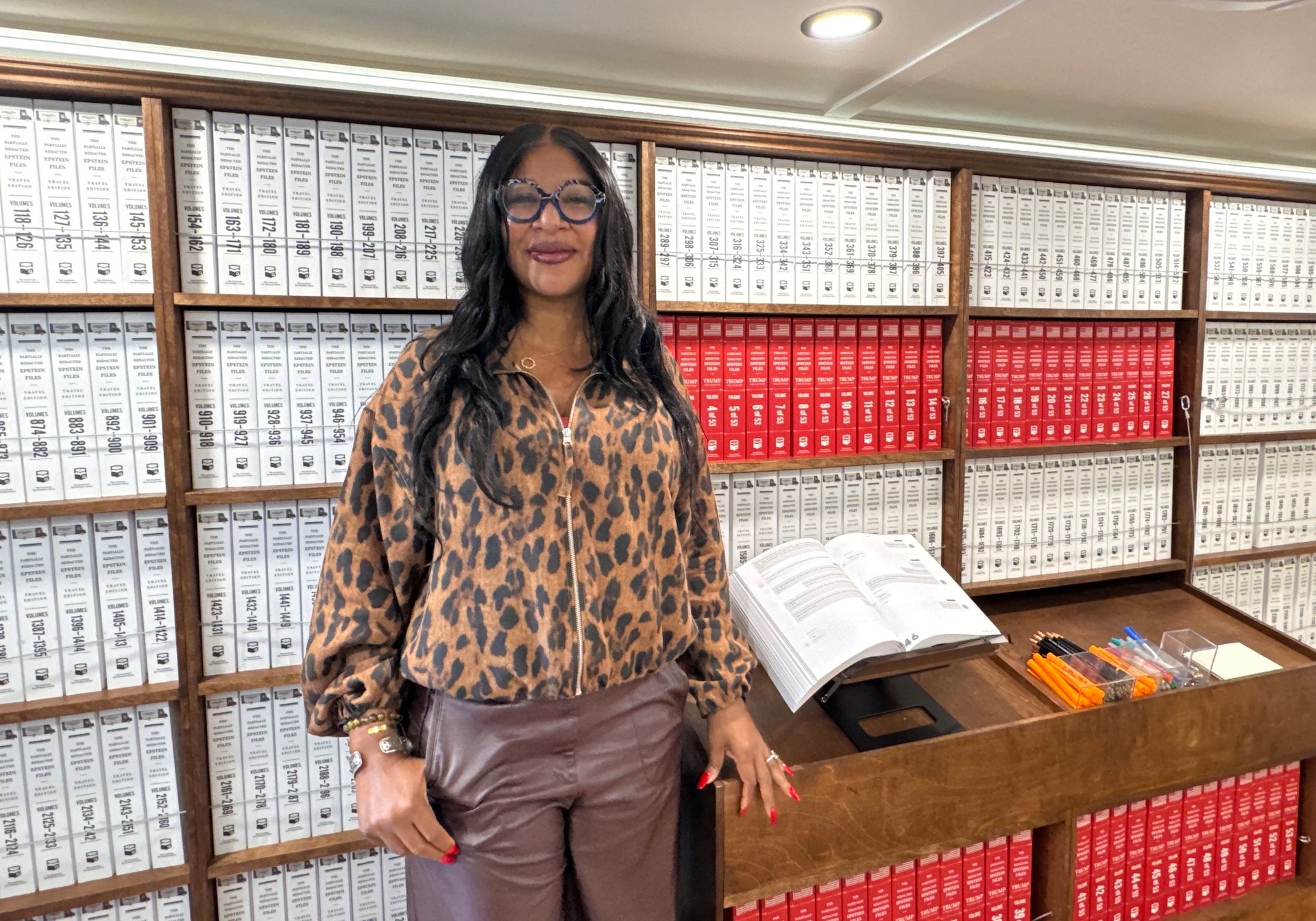
Alva Johnson in the Donald J. Trump and Jeffrey Epstein Memorial Bookmobile on 6 October Photo © Isa Farfan
Alva Johnson, who accused Trump of sexual misconduct in 2016 when she was a staffer on his campaign, also attended Tuesday’s event. Inside the truck, Johnson pointed to a collection of red volumes—standing out amid a wall of white books—which are dedicated to references to Trump in the Epstein files.
The mobile exhibition helps people understand the magnitude of Epstein’s web of alleged victims and accomplices, according to Johnson. “It’s overwhelming to see [the files], but it's so necessary for people to understand that this isn’t a Democratic hoax, and that these women actually exist, and that these perpetrators and these co-conspirators are actually still running free in this world,” Johnson said. “I wouldn’t be surprised if it’s still happening, because there have been no repercussions to most of it.”
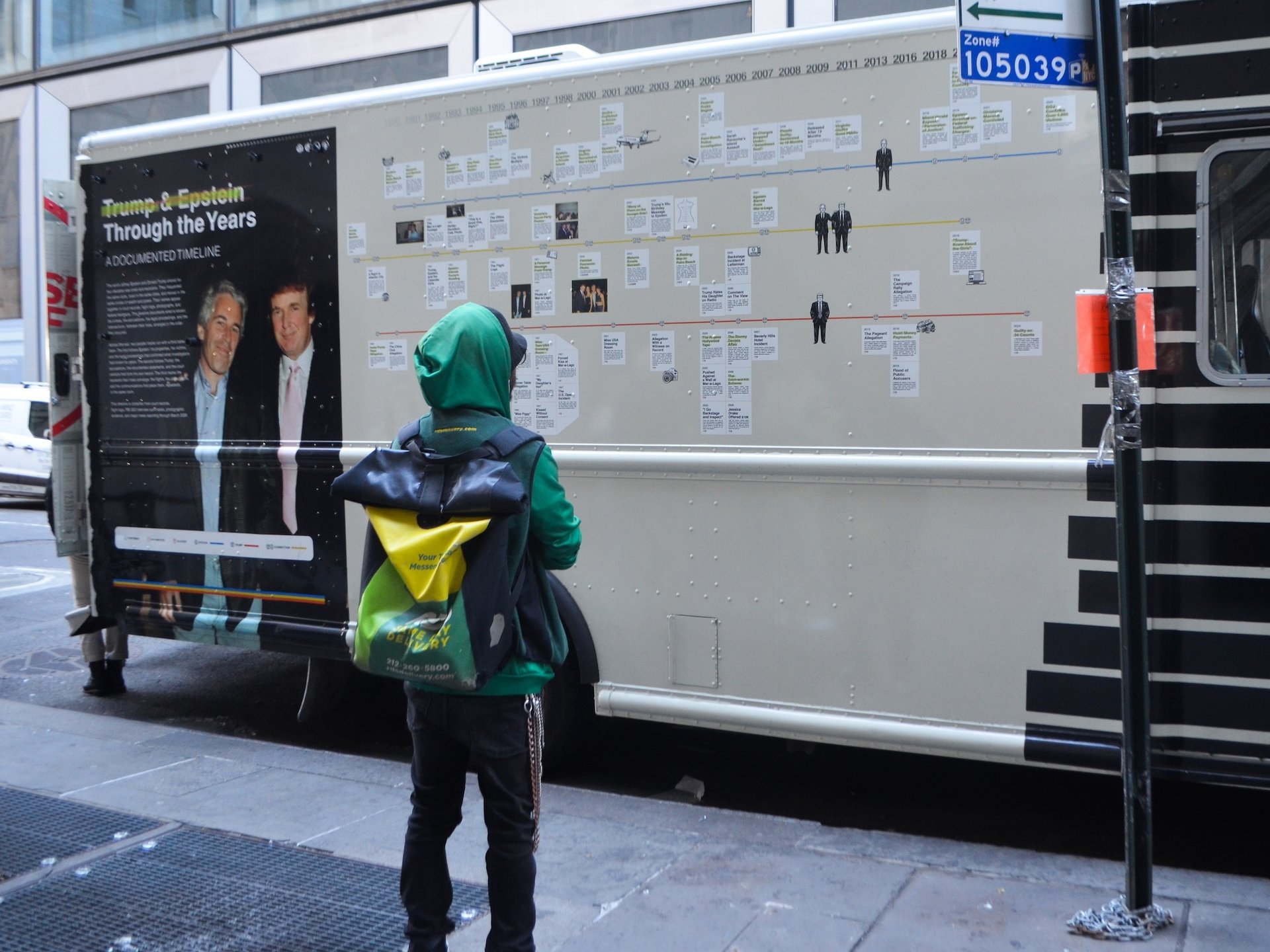
A passerby reads an infographic on the exterior of the Donald J. Trump and Jeffrey Epstein Memorial Bookmobile Photo © Isa Farfan

Ashley Dearborn, a tourist from Chicago who was on her way to visit MoMA when she stopped at the bookmobile, said she struggled to understand why MoMA would want to associate with someone such as Black.
“I'm happy I saw it,” Dearborn told the Art Newspaper. “Happy and sad at the same time that this has not been resolved, that we still have a president in office that has been involved in this situation.”
Johnson said the traveling exhibition, which has made previous stops in cities including Chicago and Dallas, helps sustain attention on the Epstein case. “Sometimes people hear ‘Epstein files’ and it’s like a blip on the radar in the media,” Johnson said. “But it’s really hard to ignore it when you are overwhelmed by the weight of the books and knowing that each page is a co-conspirator or an allegation or a lead to a crime.”