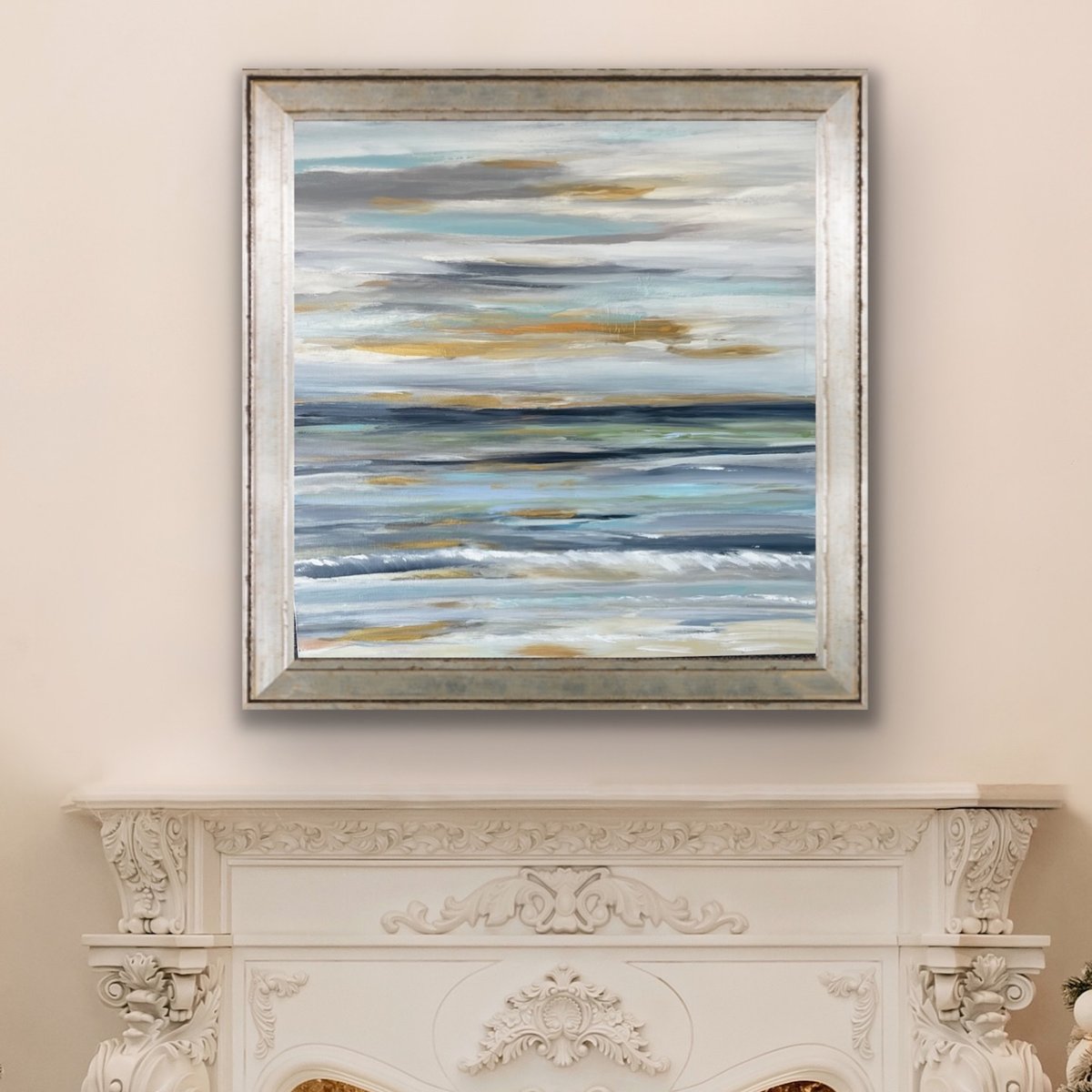
When Sheila Olsen, an artist based in St Petersburg, Florida, painted Storm, an abstract seascape reflecting the destruction of Hurricane Ian, she never imagined that it would one day be swept up in a hurricane itself.
Storm was hanging in a local gallery when the floodwaters of Hurricane Helene rushed in and carried it away. Sheila initially feared the painting had become another casualty of Florida’s intensifying hurricane season. But it survived. She found the damaged canvas and chose to restore it, deliberately preserving some of the damage as part of its new story.
I recently found myself bidding on that painting at auction, drawn to it for reasons that went far beyond the work itself. Having spent more than 30 years in disaster recovery and humanitarian aid, I saw in it something familiar: hope and resilience amid loss and destruction.
When hurricanes strike, we tally what can be counted: homes damaged, businesses closed, meals served, dollars raised. Those measures help direct resources and track progress. But they cannot capture everything a community loses or needs to recover.
Hurricanes do more than destroy buildings and roads. They disrupt livelihoods, memory, identity and the ties that make a place feel like home. Arts and culture are where many of those ties live: in the artists, traditions and gathering spaces that make a community unique. Yet we often treat them as extras, something to support only after the “real” work is finished.
As we endure another hurricane season, we must stop treating arts and culture as afterthoughts in an equitable recovery process. Philanthropic, business and government leaders must include artists and cultural organisations in recovery planning from the outset.
Recognising arts and culture in recovery does not mean choosing them over basic needs like housing, food, healthcare or jobs. In fact, physical and cultural recovery are often inseparable. A recreation centre may distribute supplies after a hurricane and host dance classes on Saturdays. A school auditorium may serve as a shelter before students return to take the stage. A musician, poet or muralist may help people express what they are feeling long before formal mental health services reach them.
Arts and culture also play a critical role beyond addressing acute physical needs after a disaster strikes. They serve as part of the essential social infrastructure communities rely on after a crisis. Recovery is not simply rebuilding what stood before the storm. It is restoring the people, places and traditions that help a community grieve the loss, reconnect and heal.
Artists and cultural organisations quietly do this recovery work while navigating the same losses as the communities they serve, often without financial support. They help neighbours process grief and regain a sense of belonging even as they have lost studios, collections, equipment, performance spaces and income. These contributions are difficult to quantify and easy to overlook, but they help sustain the relationships, rituals and shared meaning that hold communities together before, during and long after a disaster. When we recognise culture as a central part of disaster recovery, we can protect these essential contributions and a community’s unique identity.
Rebuilding a destroyed arts district
Asheville, North Carolina, offers a powerful example. The same storm that damaged Olsen’s painting also devastated that city’s River Arts District, home to more than 700 artists. Floodwater damaged an estimated 80% of buildings in the district and swept away years of artists’ work and supplies, threatening both individual livelihoods and a creative community central to Asheville’s identity and economy.

Philanthropists, business leaders and the local government immediately sprang into action to protect the River Arts District. They offered grants and temporary studio space to help Asheville artists rebuild and developed a long-term Arts Recovery Framework to incorporate art and cultural organisations into redevelopment plans. Two years later, the River Arts District is once again filled with artists, students and visitors. It remains the creative heart of Asheville and a vital economic engine, showing that investing in culture helps communities recover more fully.
I ultimately won Olsen’s painting at auction, and it now hangs in my home. More than just a seascape, it’s a record of survival and resilience. Every time I see the painting on my wall, it reminds me that some things survive because someone decides they are worth saving.
Every community decides what is worth saving after a disaster. As we weather another hurricane season, I urge leaders across the business, philanthropic and government sectors to recognise that arts and culture are worth saving. Recovery plans must invest in the artists, cultural organisations and gathering places that imagine a future beyond the storm and make a place feel like home.
- Patricia McIlreavy is the president and chief executive of the Center for Disaster Philanthropy