
The backs of Van Gogh paintings can reveal hidden stories. Daubigny’s Garden, at Amsterdam’s Van Gogh Museum, is a picture with a tale to tell. Painted in Auvers-sur-Oise, a village just northwest of Paris, it depicts the garden of the artist Charles-François Daubigny, whom Van Gogh greatly admired.
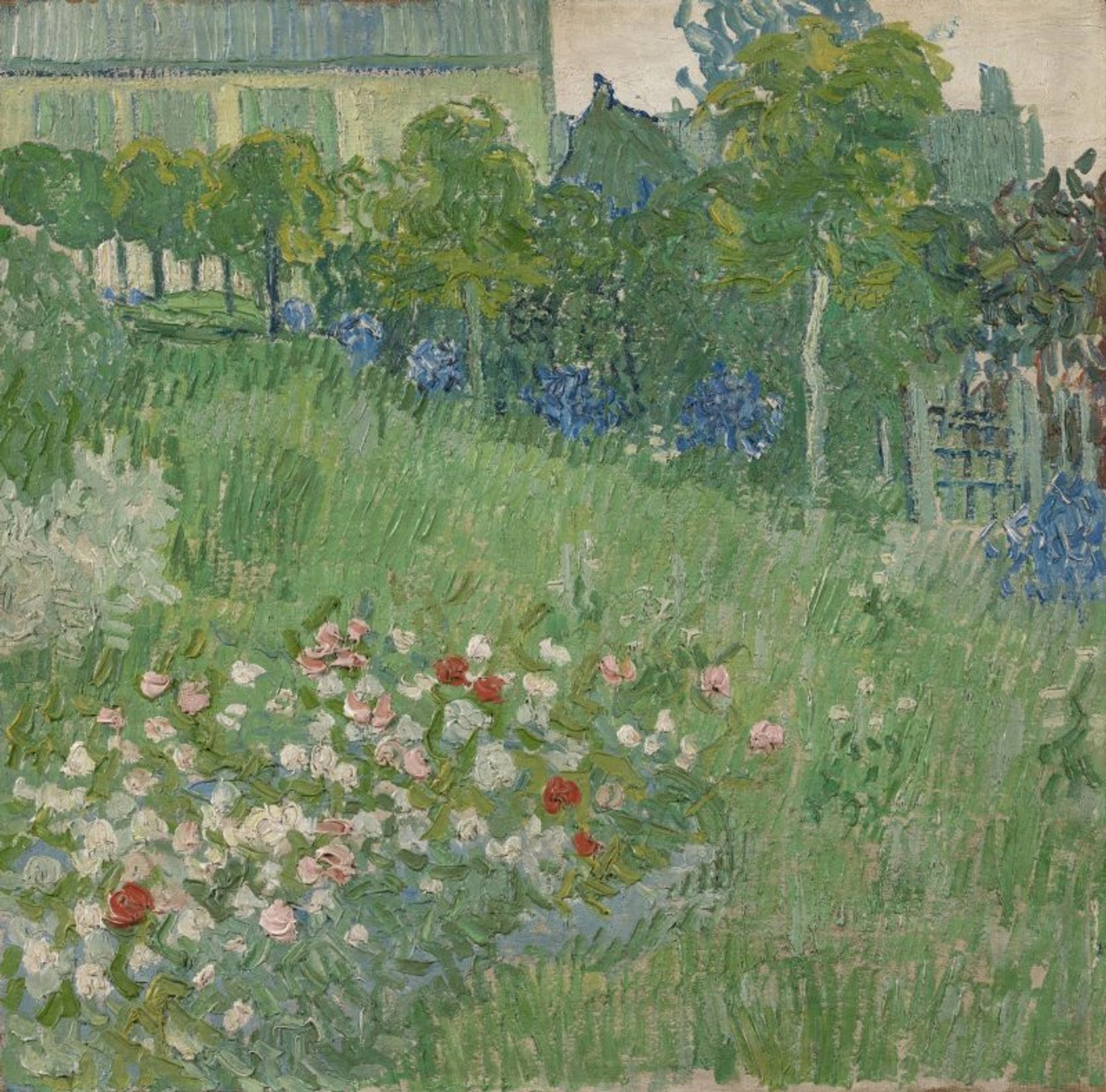
Van Gogh’s Daubigny’s Garden (June 1890)
Van Gogh Museum, Amsterdam (Vincent van Gogh Foundation)
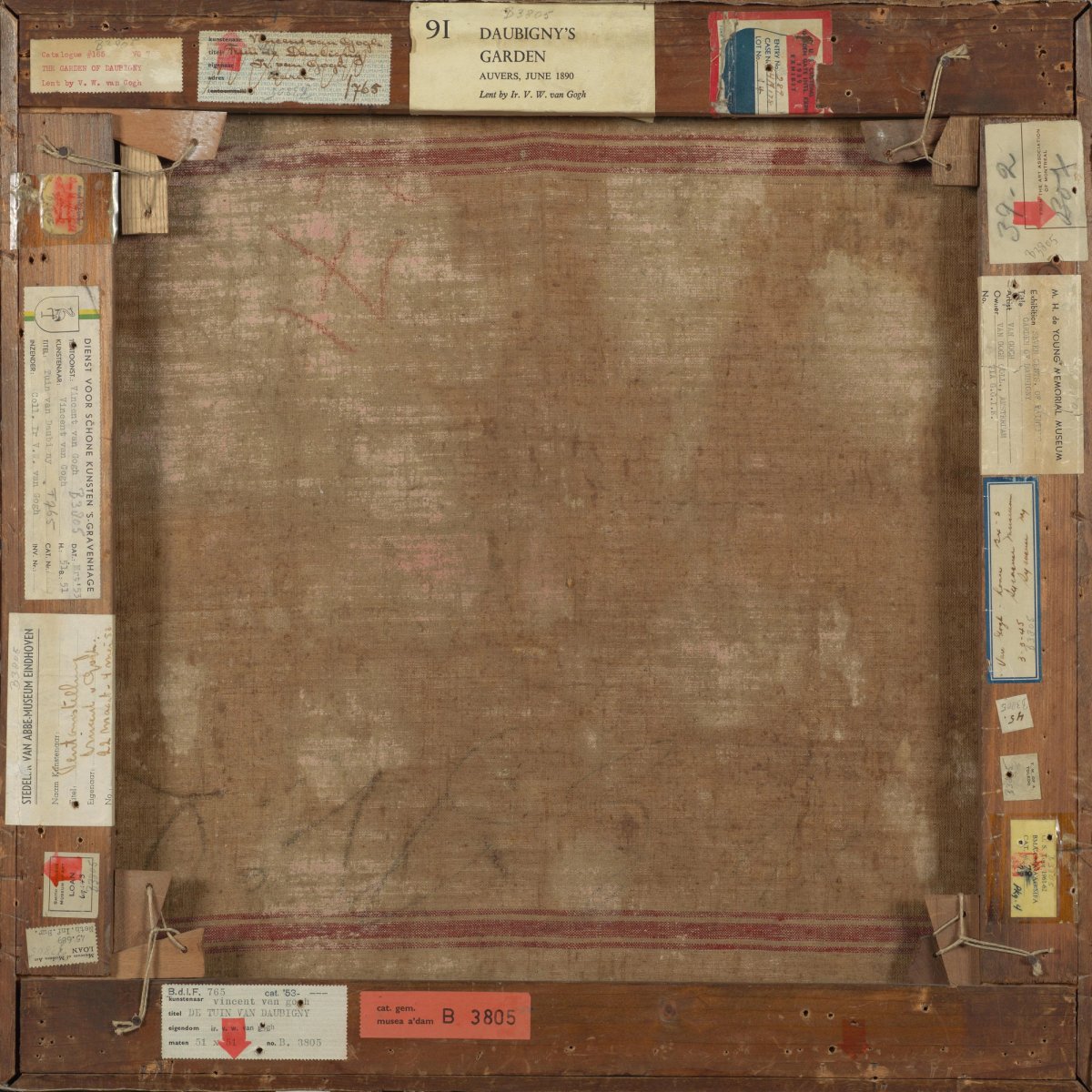
A photograph of the reverse reveals two horizontal red stripes woven into the material of Daubigny’s Garden (June 1890), running close to the top and bottom of the picture. For this work, Van Gogh did not paint on conventional canvas, but on a striped kitchen towel (this household linen is known in French as torchon).
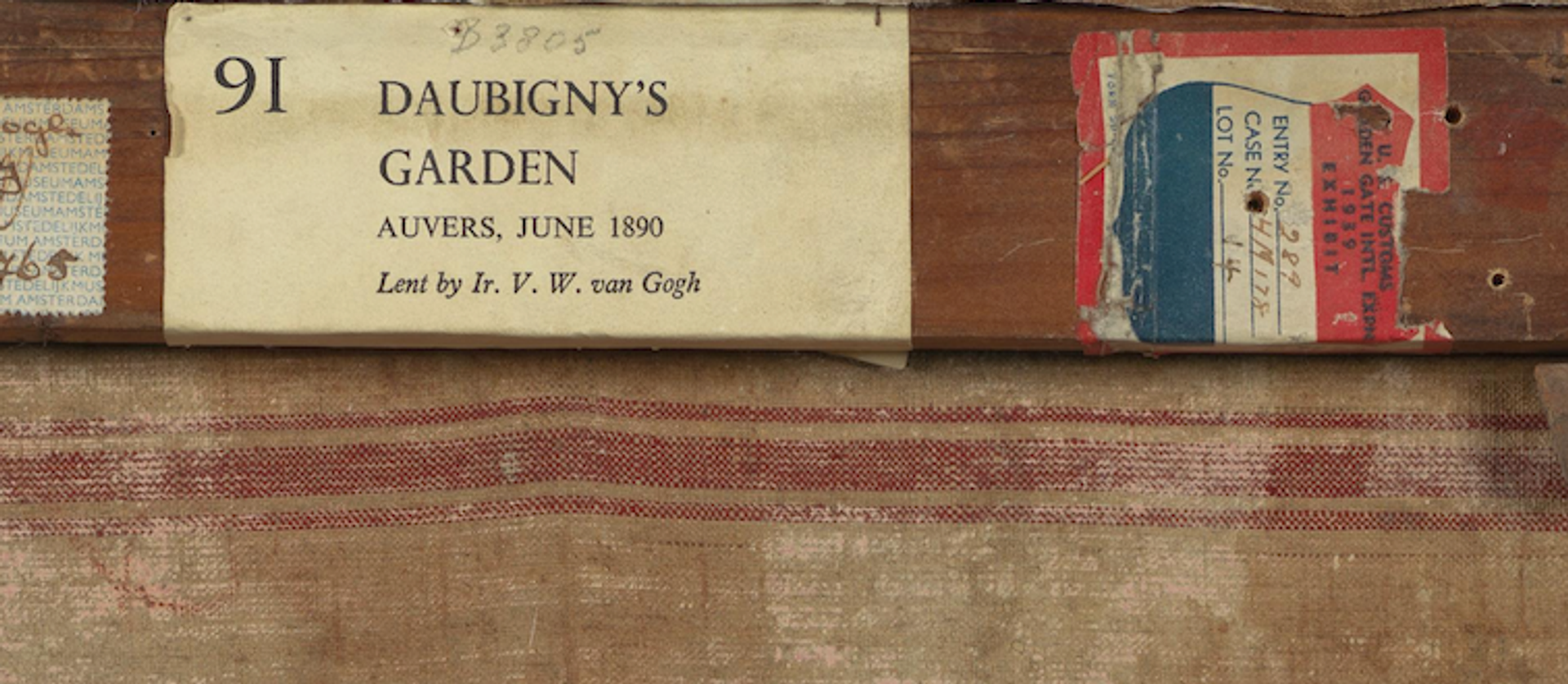
A detail of the reverse of Van Gogh’s Daubigny’s Garden, with the red stripe of a kitchen towel
Van Gogh Museum, Amsterdam (Vincent van Gogh Foundation)
As the Van Gogh Museum’s web entry on the picture explains, the artist "had probably run out of canvas temporarily and reached for whatever was available”. Most likely he simply obtained the square of towelling from the kitchen of the inn where he was staying, the Auberge Ravoux.
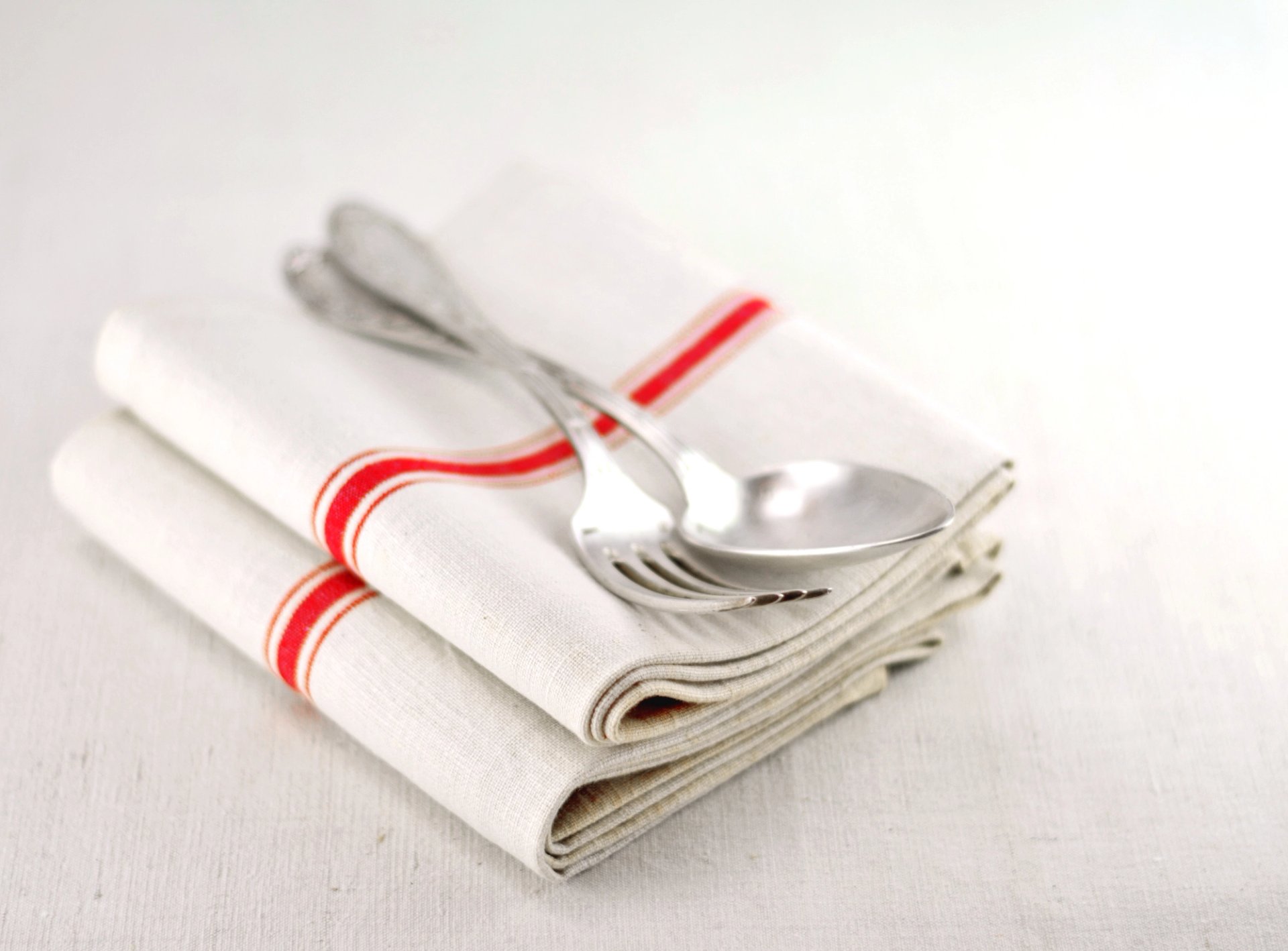
A sample of traditional French striped kitchen towel (torchon)
Photo: lynea; Courtesy Adobe Stock
Daubigny’s Garden was to prove the start of a more ambitious project. On 17 June 1890, Vincent wrote to his brother Theo to say that he had just completed “a small study” of Daubigny’s house and garden—the work on a kitchen towel. This inspired him with the “idea of doing a more important canvas”.
The following month, after receiving canvas supplies from Theo, he made two ambitious “double square” landscapes with a wider view of Daubigny’s garden. One is at the Hiroshima Museum of Art and the other is in the Rudolf Staechelin foundation collection in Switzerland.
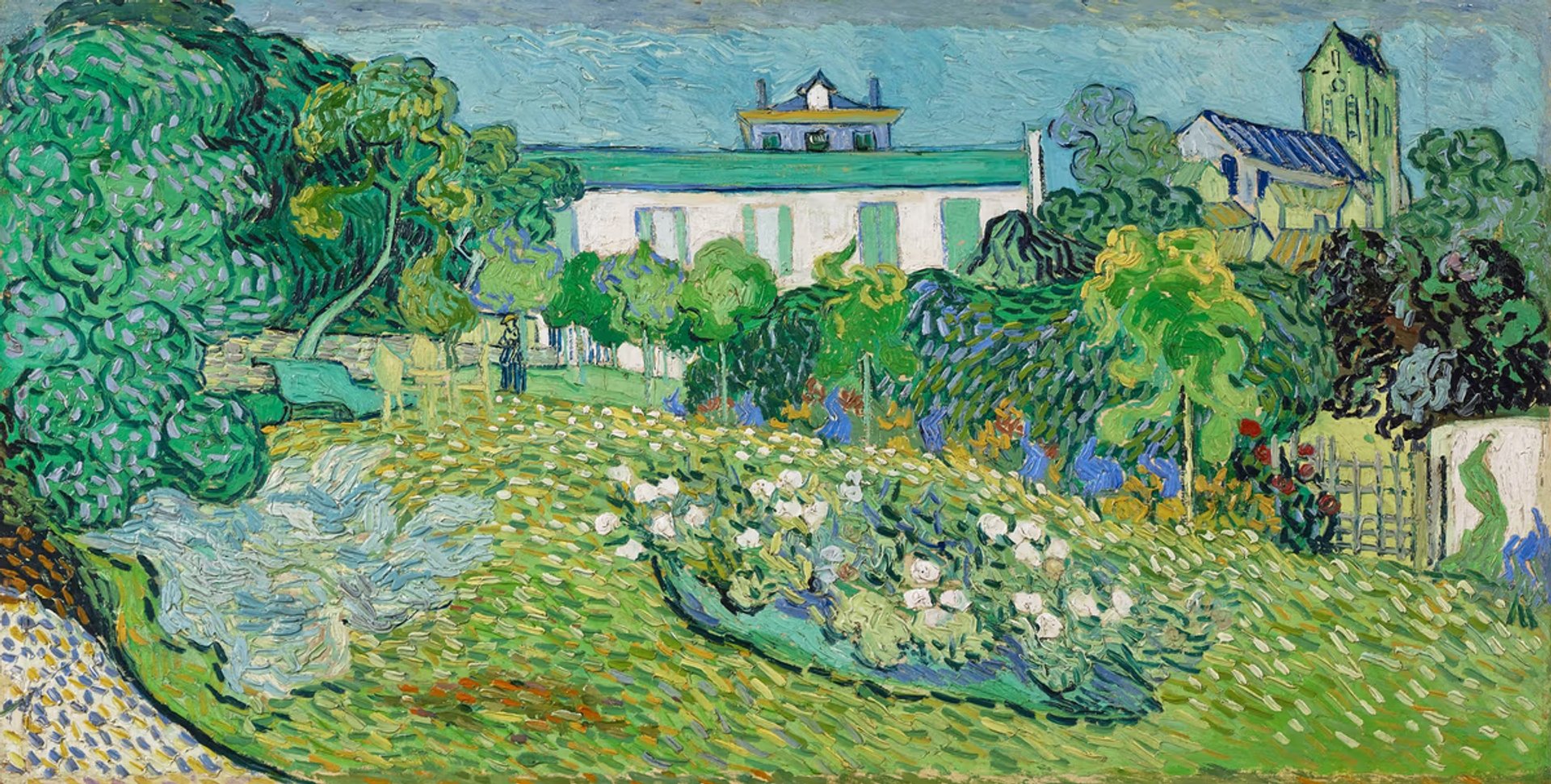
Van Gogh’s Daubigny’s Garden (July 1890)
Hiroshima Museum of Art
Labelling the back
The stretcher of the reverse of Daubigny’s Garden is plastered with small labels recording the exhibitions where the painting was once displayed. Such labels were frequently used in the mid-20th century, although they are much less common nowadays.
Altogether Daubigny’s Garden has been lent to a total of 105 exhibitions since 1896. The labels record 17 of these venues.
Among the exhibitions which do not have labels were three in what may seem a surprising location: Indonesia. It was then very unusual for works by Van Gogh to be lent for shows outside Europe and North America. Indonesia was a Dutch colony at the time, which helps to explain the loans.
In 1938-39, Daubigny’s Garden, along with 13 other Van Goghs, was sent by the artist’s nephew (V.W. van Gogh) to shows in the capital Batavia (now Jakarta), Surabaya and Bandung.
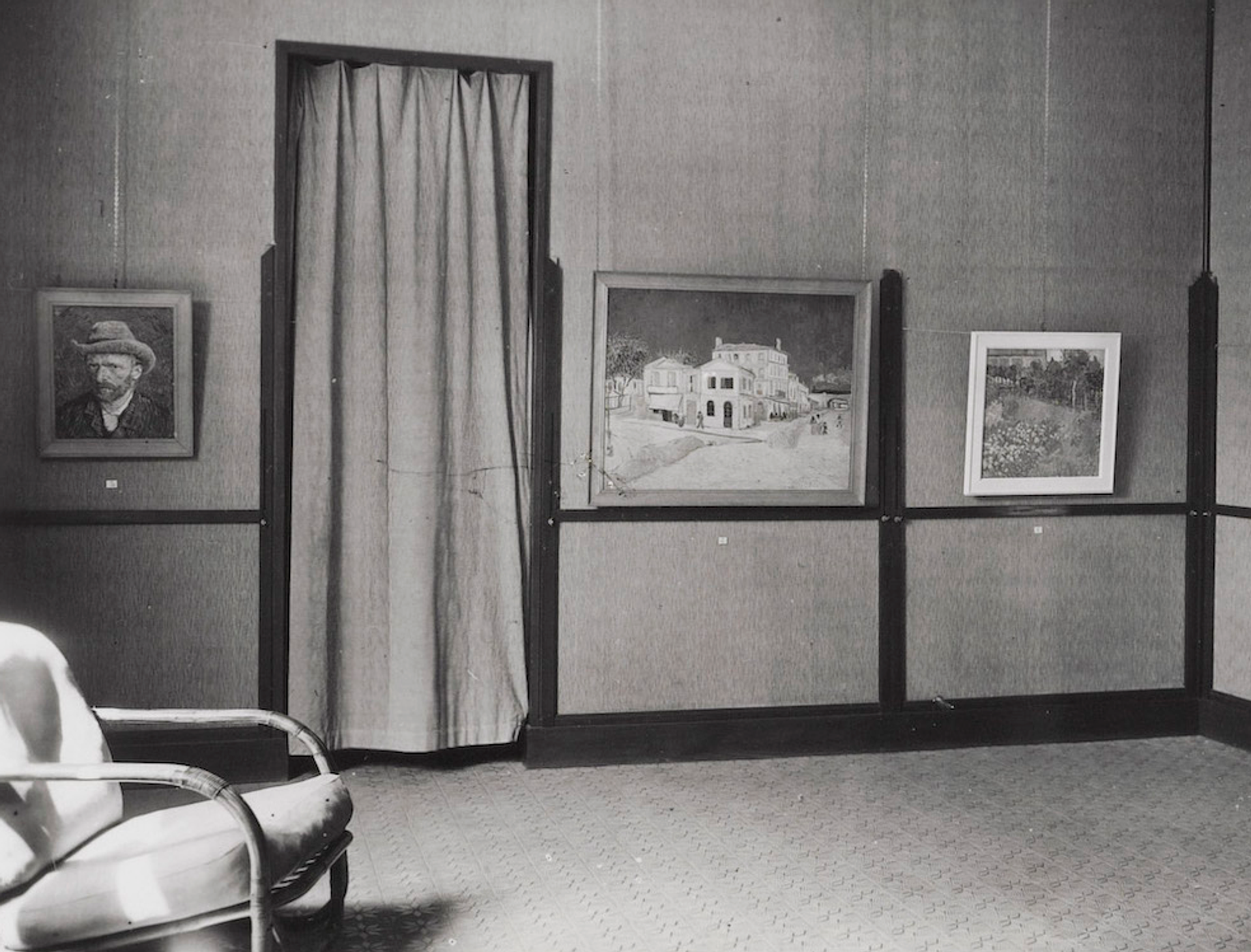
The Van Gogh exhibition in Batavia (1938), with Daubigny’s Garden on the right
Vincent van Gogh: letters, art, and context via Het Geheugen
The final Indonesian exhibition closed in January 1939, just a few months before the outbreak of the Second World War in September (which later led to the Japanese invasion of Indonesia in early 1942).
A label on the reverse of Daubigny’s Garden records its next journey. The painting, with the other Van Goghs, was sent directly from Indonesia to San Francisco, where it was included in a display of Masterworks of Five Centuries as part of the Golden Gate International Exposition world’s fair. The Indonesian exhibition had closed on 31 January, and the show in San Francisco opened on 18 February.
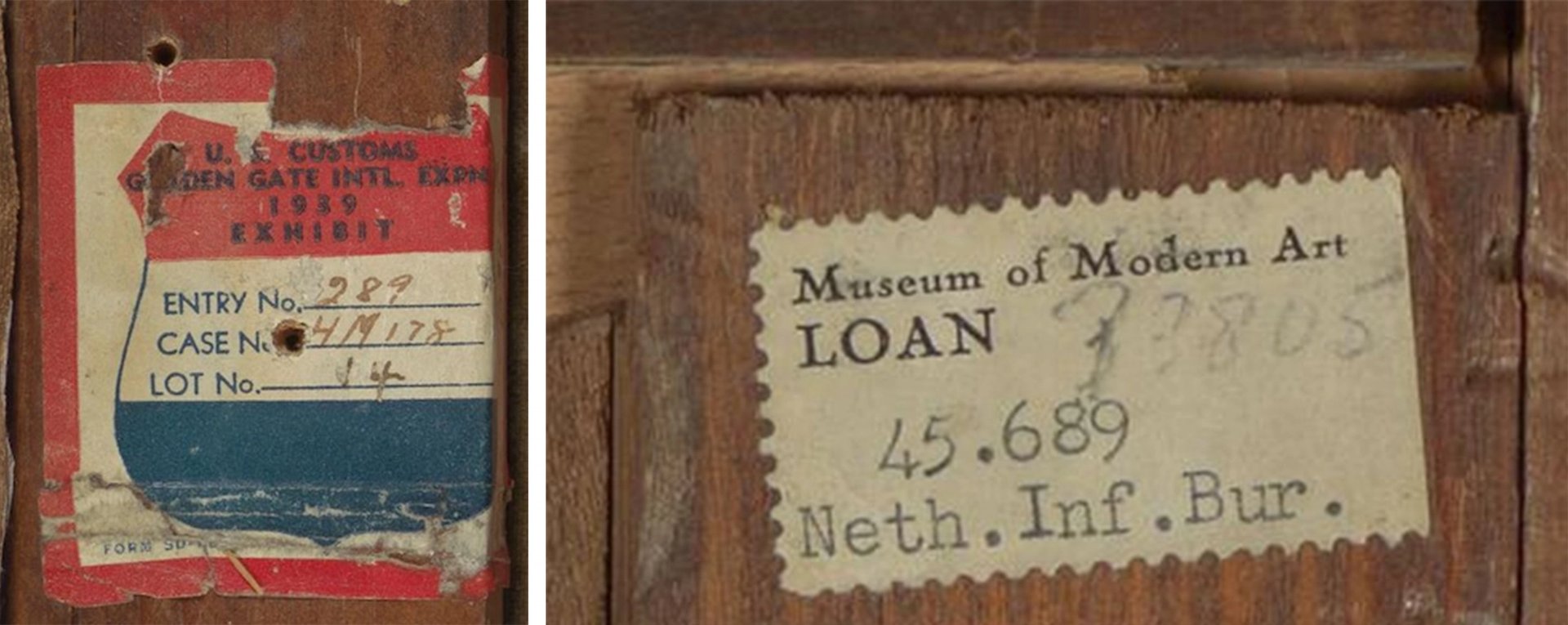
Labels on the reverse of Daubigny’s Garden recording its loan to exhibitions in San Francisco (1939) and New York (1945)
Van Gogh Museum, Amsterdam (Vincent van Gogh Foundation)
The San Francisco show eventually closed on 29 October 1939, a month after the outbreak of the war. It was then too risky to return the Van Gogh paintings to the Netherlands. The 14 pictures, including Daubigny’s Garden, were hastily formed into a North American travelling exhibition.
Labels on the back of Daubigny’s Garden record its subsequent stops at the Toledo Museum of Art, the Art Association of Montreal (now the Montreal Museum of Fine Arts), the Syracuse Museum of Fine Arts (now the Everson Museum of Art) and New York’s Museum of Modern Art.
The wartime show would end up touring in no fewer than 39 cities across North America in 1939-45, bringing Van Gogh to a huge number of people during these difficult years.
Other Van Gogh news
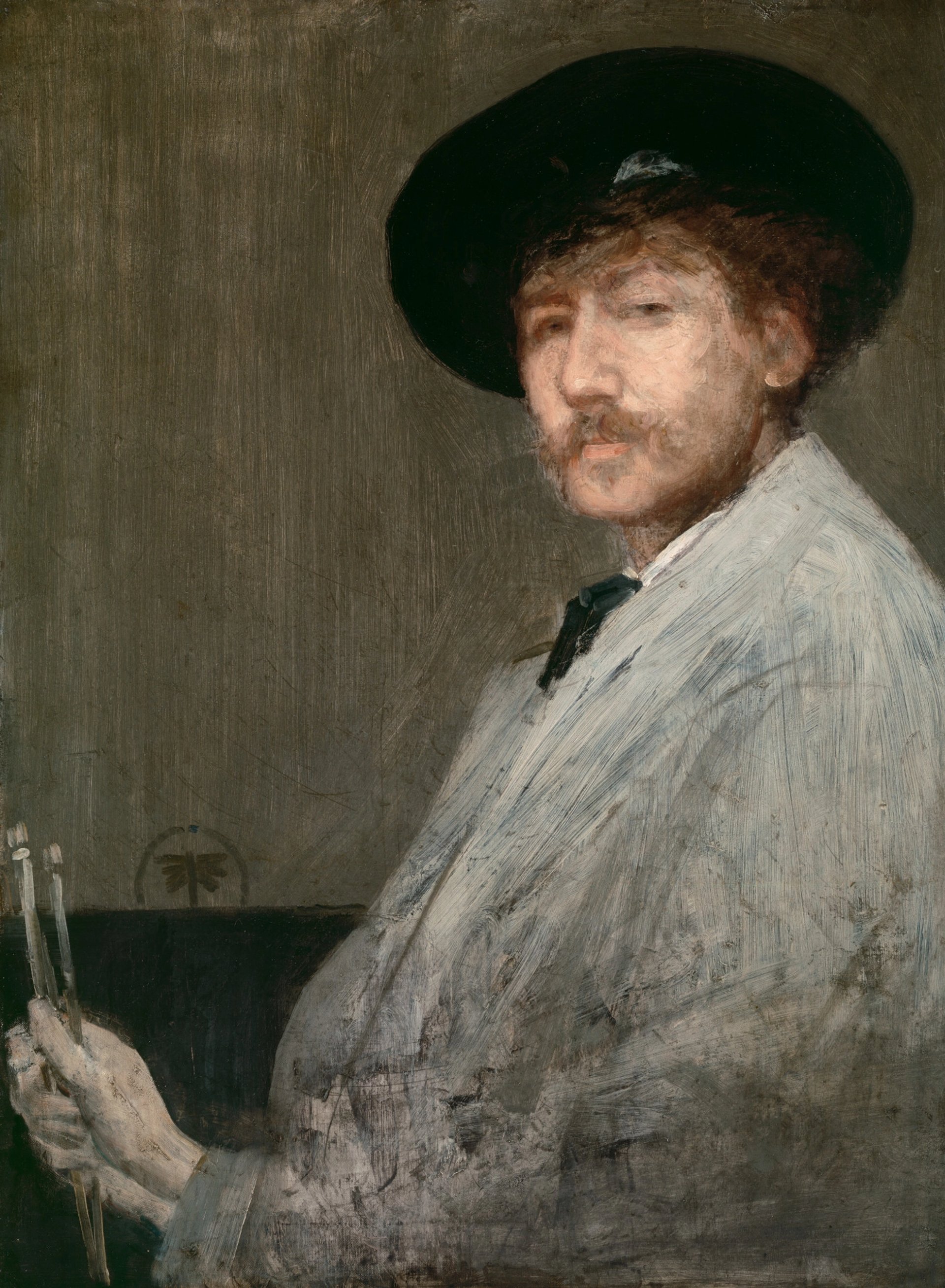
James McNeill Whistler’s Arrangement in Grey: Portrait of the Painter (1872)
Detroit Institute of Art (Bequest of Henry Glover Stevens; photograph © Detroit Institute of Arts/Bridgeman Images)
Amsterdam’s Van Gogh Museum last week opened Whistler: Dandy and Disruptor (until 10 January 2027), a version of which was shown earlier at Tate Britain, where it closed on 27 September. Van Gogh was a great admirer of James McNeill Whistler. In addition to the Amsterdam presentation, the Mesdag Collection in The Hague has a smaller show, Whistler: Loving the Netherlands, revealing the American artist’s links to the Dutch art scene.
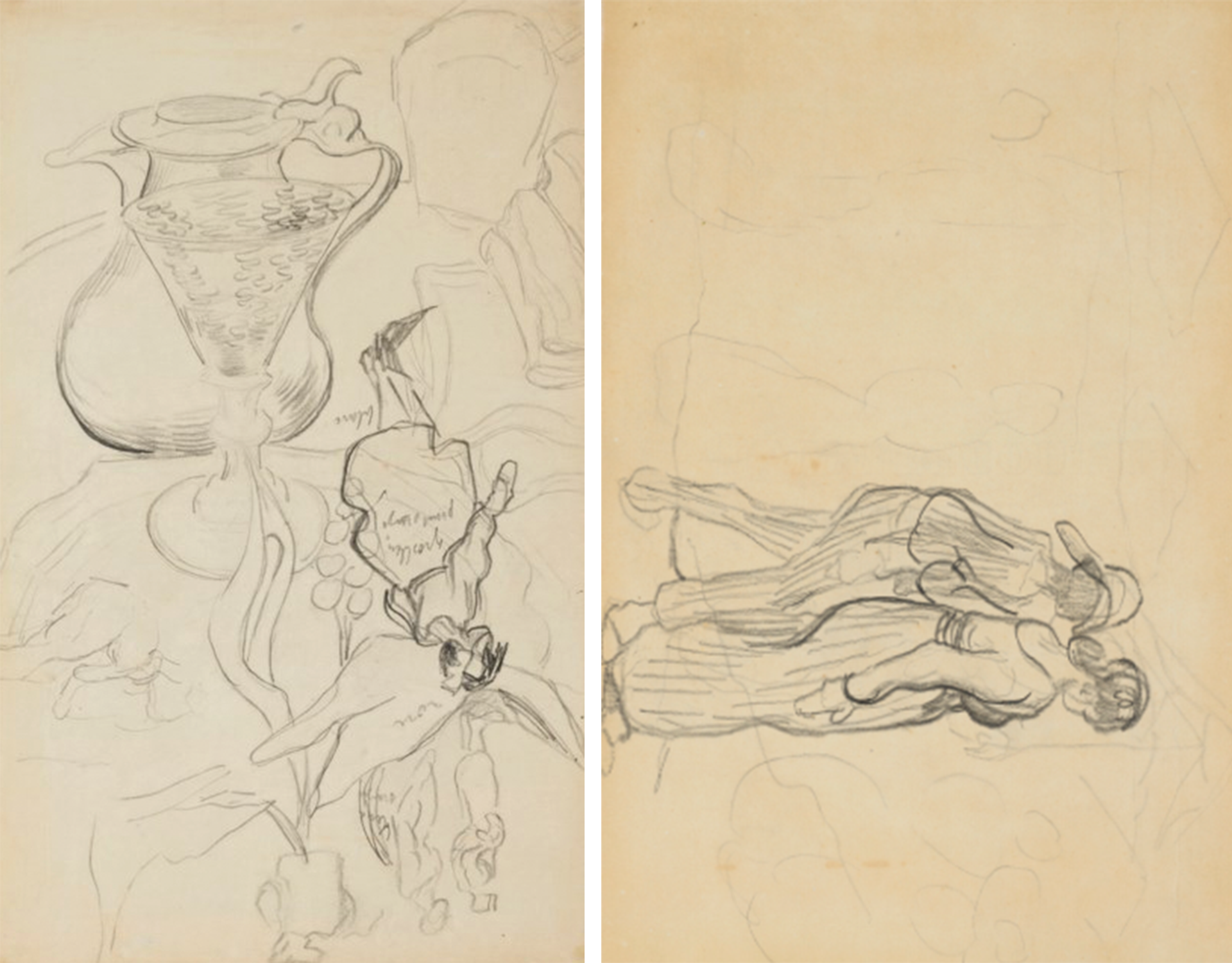
Van Gogh’s Still Life: Can, Books, Wineglass, Bread and Arum, Sketch of Two Women and a Girl (front); Couple Walking (reverse) (June-July 1890)
Christie’s
A Van Gogh sketch done at Auvers-sur-Oise sold at Christie’s Paris for €230,400 (including fees) on 23 October. The first side is a complicated series of partly overlapping images (some at different angles), entitled Still Life: Can, Books, Wineglass, Bread and Arum, Sketch of Two Women and a Girl. On the reverse is a smaller drawing, Couple Walking (June-July 1890).