Sydney’s Powerhouse, a new arts, design, science and technology museum that the New South Wales government describes as its biggest cultural investment since the city’s Opera House, is due to open on 7 November amid controversy and uncertainty.
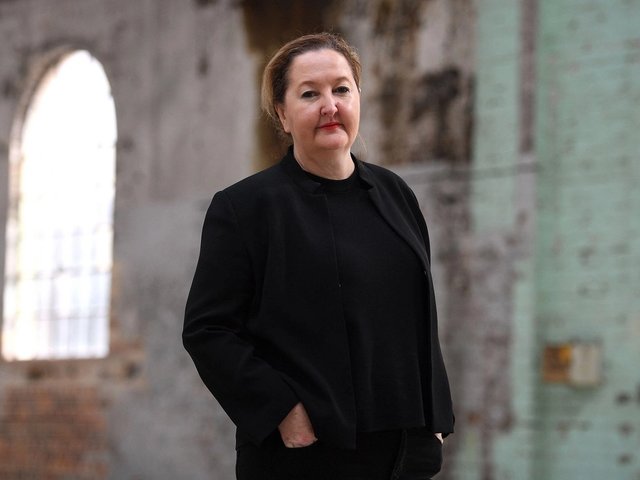
The most recent crisis is the departure of Lisa Havilah, the museum’s chief executive, who stepped down in August over allegations of misconduct. Havilah had been the figurehead of the Powerhouse development at Parramatta, located in Sydney’s multicultural western suburbs, since 2019.
Some of Australia’s most powerful and influential arts identities have since signed a petition calling for Havilah to be reinstated immediately. The petition was launched on 27 October by Kon Gouriotis, the editor of Artist Profile magazine.
Among the more than 750 signatories so far are the prominent artist Ben Quilty, the architect and arts patron Penelope Seidler, the commercial gallery owner Anna Schwartz, and Lucy Turnbull, the former lord mayor of Sydney (2003-04) whose husband Malcolm Turnbull was Australia's prime minister (2015-18).
John Graham, the state’s arts minister, also announced that Powerhouse’s chief operating officer, Mark Wilsdon, is on leave while a Sydney law firm, Lander & Rogers, investigates the allegations. Those allegations have not been publicly detailed, but Graham has said they were brought forward by a whistleblower and touch on “governance and procurement”. Graham’s office did not respond before we went to press to a question about whether the inquiry’s findings will be made public.
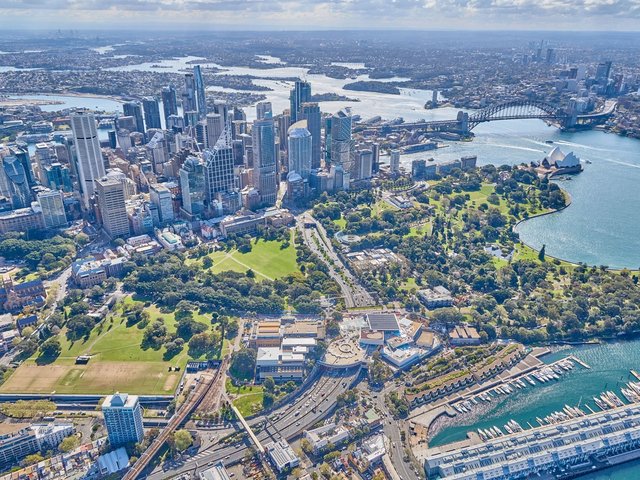
Powerhouse is part of the broader Museum of Applied Arts and Sciences, which also encompasses a large site in Ultimo, a storage area and discovery centre in Castle Hill, and the Sydney Observatory.
The Ultimo site was the location of the Powerhouse Museum and its half a million objects from 1893 until the state government decided to distribute the city’s cultural assets more equitably across the population base. In 2015, Parramatta, about 20km west of central Sydney, was selected as the new site.
The Ultimo building was closed in 2024 and is now undergoing a A$300m ($210m) heritage revitalisation by the state government.
But a public petition has been launched to save the site following a newspaper report that the government is secretly considering selling part of the Ultimo site to cover the cost of the new Powerhouse.
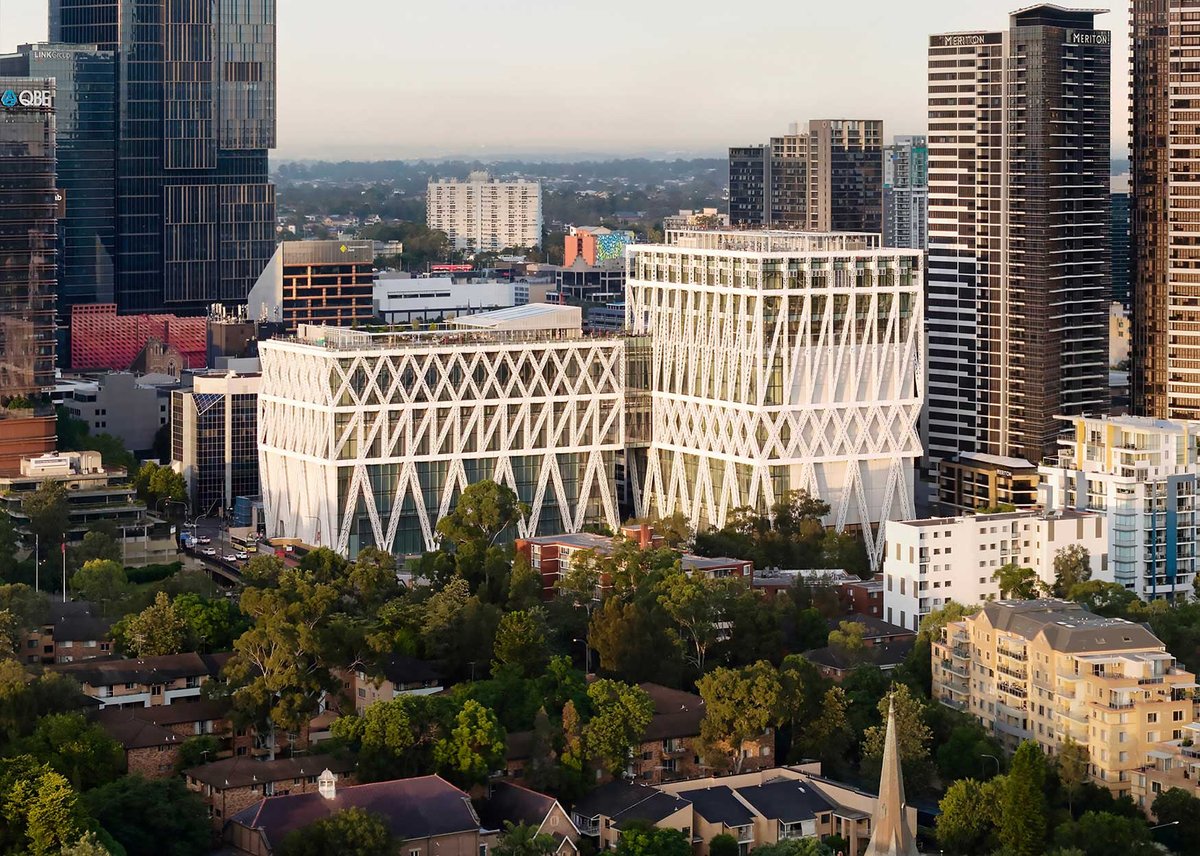
The closure of the Ultimo site is a cultural “tragedy”, heritage expert and former Powerhouse trustee Kylie Winkworth tells The Art Newspaper. “It’s a globally unprecedented museum demolition,” explains the vocal member of the Powerhouse Museum Alliance pressure group. Located on the banks of the Parramatta River, the new Powerhouse was designed by the Franco-
Japanese architectural practice Moreau Kusunoki in collaboration with the Australian firm Genton. Its exhibition spaces cover more than 18,000 sq. m across seven vast, column-free galleries. It also has a rooftop terrace and garden, and temporary accommodation for students, artists and scientists.
Meccano monolith
Dubbed by some “the milk crate” because of its steel criss-cross design, the Powerhouse is in good company in earning an irreverent nickname: the Sydney Opera House was called a “scrum of nuns” in the 1970s because its sails resembled wimples. While the Opera House was made a Unesco World Heritage Site in 2007, a similarly illustrious future for the Powerhouse, which cost A$915m ($641m) to build, is far from assured.
Even before construction began, experts told a parliamentary inquiry that the museum’s riverfront undercroft would flood in heavy rain. This led to changes in the building’s design.
During a tour around the site in June, before her departure, Havilah told The Art Newspaper that “the whole of Parramatta would be under water” before the Powerhouse flooded. However, Winkworth says she fears people within the building would still be at risk in the event of overland flooding.
Already widely viewed as having consumed a disproportionate share of the state’s arts budget, the Powerhouse has in recent months been the focus of a new funding scandal—the backdrop to Havilah’s departure. The Sydney Morning Herald reported in August that more than A$70m ($46.2m) had been spent in the run-up to the museum’s grand opening, including A$10m ($7m) for LED screens, staging and backdrop for an immersive experience created by the British artist Es Devlin.
Another point of contention was Havilah’s introduction of a five-year “artistic associates” programme, costing A$2.6m ($1.8m), in which external experts were employed to help bring the Powerhouse to fruition. The Public Service Association, a trade union, claimed this sidelined long-serving and knowledgeable Powerhouse curators in favour of outsider non-specialists. The programme was scrapped in May following a review by the state treasury.
After Havilah’s dismissal, Abbie Galvin, the New South Wales government’s architect, took over as interim chief executive. At the same time, the state appointed former Sydney Opera House CEO Louise Herron as a “strategic adviser”. Cassandra Wilkinson, a New South Wales treasury executive, took over Wilsdon’s role in July, in an environment of constant media reports about apparent cost blowouts in the lead-up to the launch.
Minus its famed machines
Campaigners are unhappy that key treasures of the Powerhouse collection will not be on display in the new building. The 1785 Boulton & Watt steam engine, the 1855 Locomotive No.1 and the Strasburg Clock model—along with most of the rest of the collection—are stored off-site in a discovery centre that is open to the public only on weekends.
Winkworth says the Ultimo site was “uniquely resonant and appropriate for the display of the Powerhouse Museum’s internationally significant power and transport collections. Now the collections are dismembered at Castle Hill and never to be seen together again.”
She argues that the new Powerhouse was “never intended to be a museum” at all but rather a function and performance centre, helping boost the local nighttime economy.
Five inaugural shows are all scheduled to open on 7 November. Task Eternal, the main draw, traces the history of aviation and space exploration in partnership with the Smithsonian and the British Museum. Es Devlin: The Turning features five major works by the artist and stage designer. The Dark, for children, turns darkness into a “playground of curiosity” through interactive storytelling, a crystal tunnel and 100 borrowed childhood toys.
The fourth show, Overflow, explores the care of salt and freshwater ecosystems around Australia. Finally, The Mall centres on western Sydney’s pioneering role in the global development of shopping malls as part of modern culture and lifestyle.
General admission to the Powerhouse will be free. Over-16s will pay A$30 ($21) for a ticket to Task Eternal. All visitors will pay from A$10 ($7) for James Turrell’s light-based installation, Shangri La (Over the Hump). A 23-day opening festival will feature 179 events including Space Shuttle astronaut Charles Bolden reflecting on leadership in space exploration. Most of the opening events are free.
- Powerhouse, Sydney, opens on 7 November