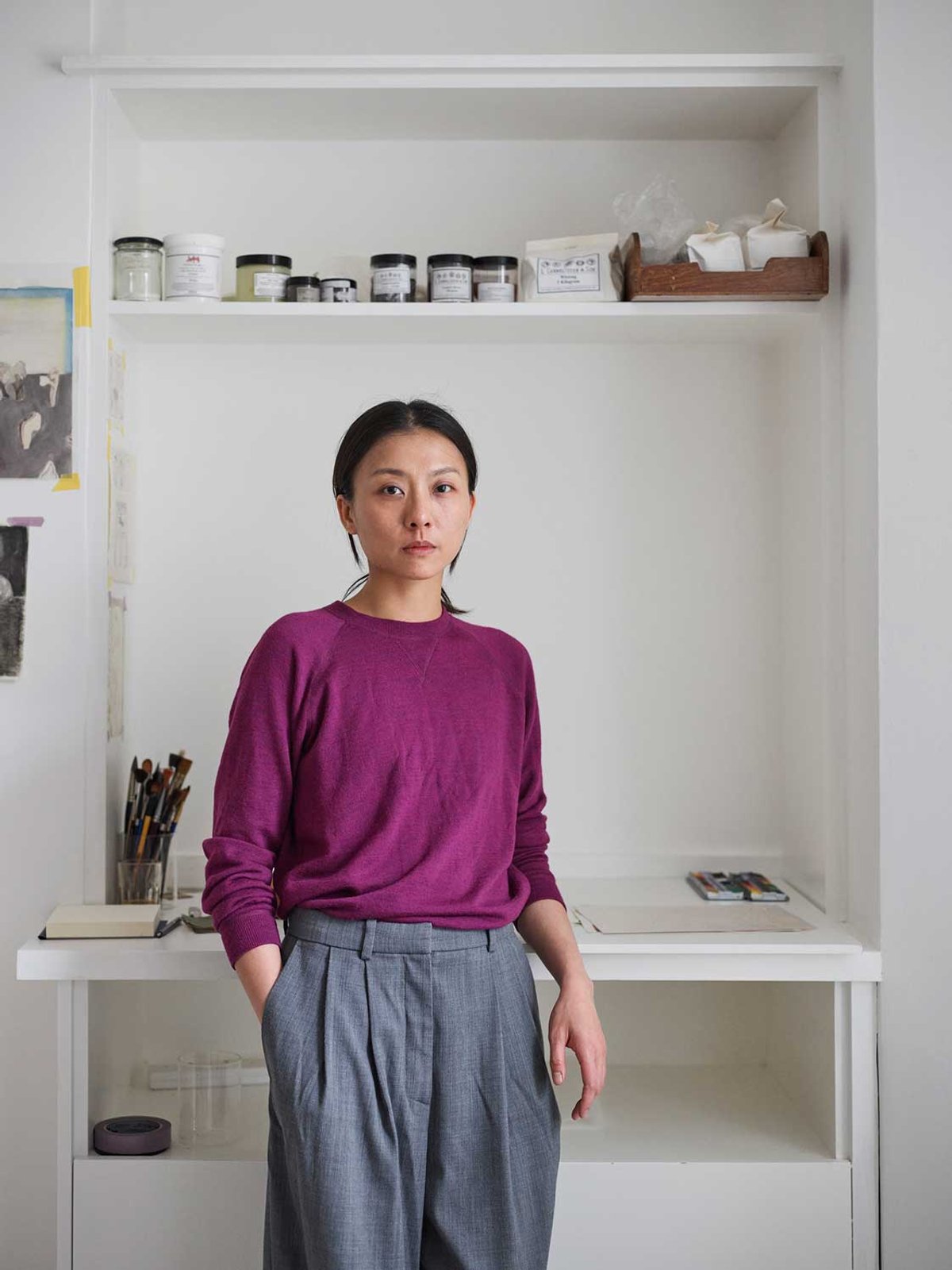
In mid-October, coinciding with Frieze London and nearly four years after she relocated from her native Hong Kong to London, the artist Firenze Lai opened her first UK solo exhibition at White Cube Mason’s Yard. Featuring new works created in her adopted home, North and True North (until 14 November) is not just a milestone for her career, it also signals a potential shift in major galleries’ approach to Asia.
Lai is among a handful of Hong Kong artists represented by major Western blue-chip galleries today. Born in 1984 and educated in Hong Kong, the artist has exhibited internationally, including in the main exhibition of the 57th Venice Biennale in 2017. Her current show marks the first solo exhibition White Cube has staged by an artist originating from Hong Kong since it opened its outpost in the city in 2012.
The shift suggests the maturity of this generation of mid-career artists from Hong Kong, several of whom have relocated abroad fairly recently. It also raises hopes that Western blue-chip galleries are finally adopting a less siloed approach to Asia, in which global art markets were approached from a simplistic geographical perspective. This mindset of “keeping Asians in Asia” kept transnational relationships rare, the cultural strategist Adeline Ooi notes, but this is starting to change.
“People are much more cosmopolitan and international today. They are not just rooted within their region and bounded by their geographies,” says Ooi, the former director for Asia at Art Basel.
Taking a wider view
Major international galleries are taking a more sophisticated approach, rather than simply placing Asian artists in front of Asian collectors, says the Taipei- and New York-based art adviser Gladys Lin. “It’s about integrating that artist into the wider language of the gallery programme, so that collectors from different backgrounds can understand the work in relation to other artists, histories and conversations.”
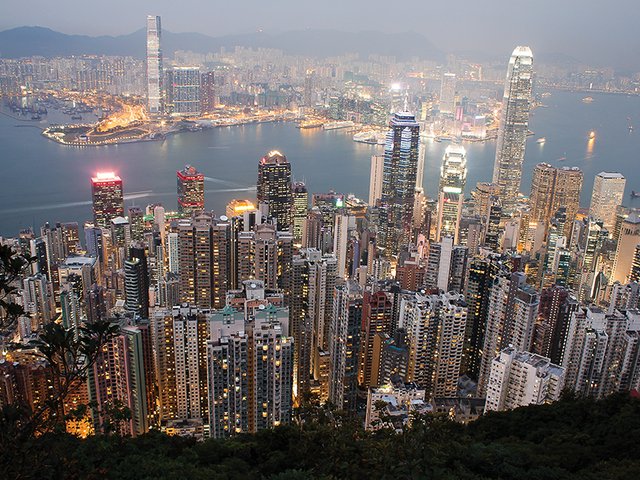
Hong Kong has long been Asia’s biggest art market hub, with headline-grabbing auction sales for over half a century joined, since the 2000s, by a lively landscape of galleries and fairs catering to local collectors, and those from mainland China and the wider region. The city has hosted Art Basel Hong Kong since 2013, and Asian outposts of blue-chip galleries proliferated after the launch of the ArtHK fair in 2008. Artists from the city, however, have struggled to receive much attention in the global market, or even at home.
Leading multinational Western blue-chip galleries such as White Cube, Hauser & Wirth, David Zwirner, Gagosian and Pace have shown Asian artists internationally, but they tend to concentrate on bolstering their rosters with established names from Asian cultural powerhouses like mainland China, South Korea and Japan.
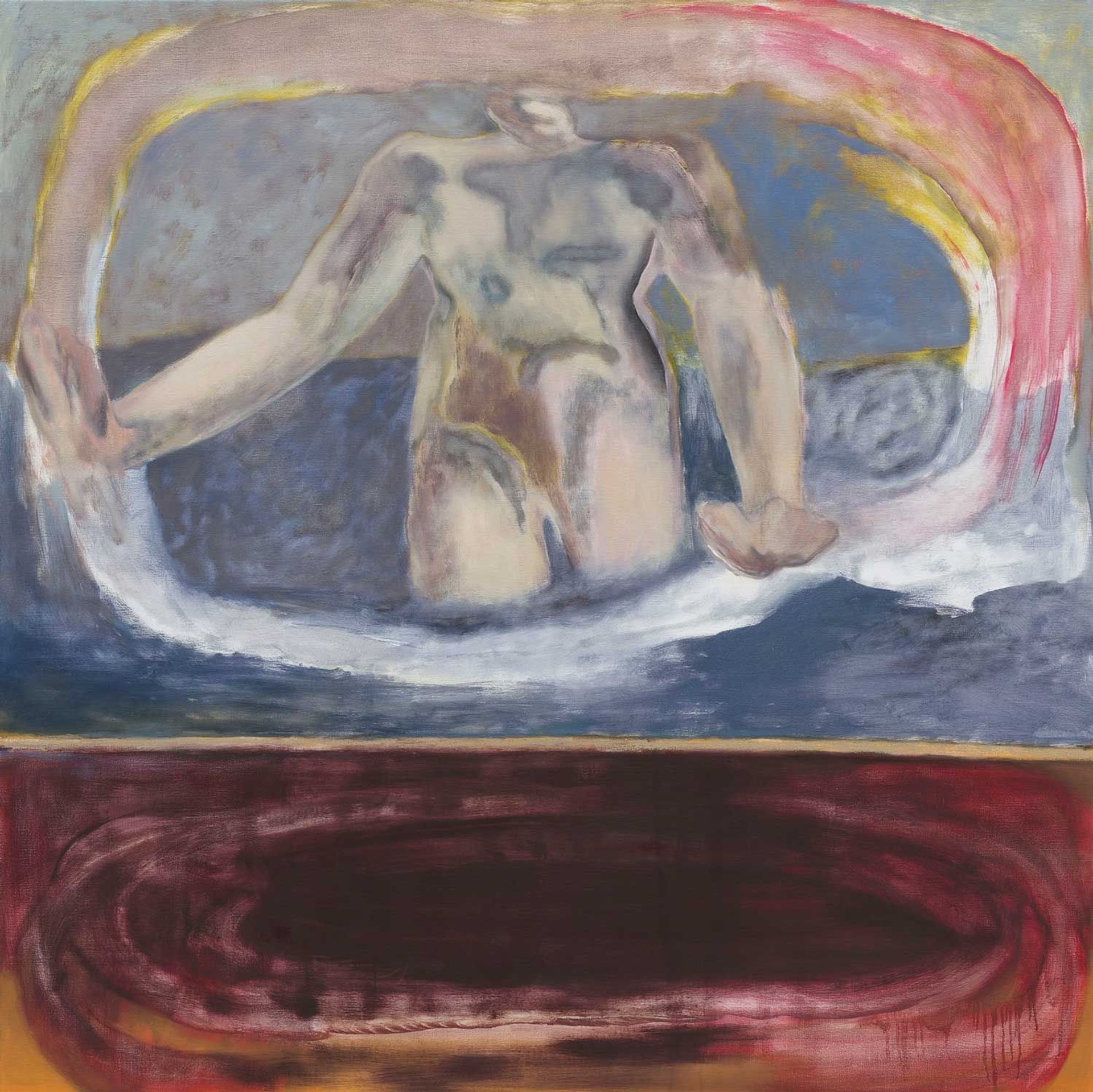
Firenze Lai’s A Second Storm (2025) from her White Cube show Photo: © White Cube/Theo Christelis; © the artist
Hongkonger artists are increasingly exhibiting abroad, but primarily with smaller galleries. The Taipei-based artist Lee Kit works with galleries including Massimo de Carlo in London and ShugoArts in Tokyo. The UK-based Chris Huen Sin-kan showed with the now-defunct Simon Lee in New York and London, and more recently with Matt Carey-Williams.
While diaspora and émigré Hongkongers have more opportunities to cultivate overseas networks, artists based in the city are also widening their reach. Chang Ya Chin held her first solo show with Perrotin in New York in 2025, while Stephen Wong Chun-hei exhibited with Unit London in 2022 and Mother’s Tankstation in 2025, which also represents Lee Kit. The sound artist Samson Young performed his work Canon at Art Basel Unlimited in 2016, presented by Cologne’s Galerie Gisela Capitain and the now-closed Team Gallery. Wong Ping held a solo show at Tanya Bonakdar Gallery in New York in 2021, while Mak2 had her European gallery solo debut in 2023 with the now-defunct Peres Projects in Berlin.
However, representation by one of the global “big five” galleries remains rare for Hong Kong artists. White Cube began working with Lai in July 2025. “Her paintings have a singularity that speaks to the human condition, a universal theme that audiences everywhere can appreciate,” a spokesperson for the gallery says.
Lai was born and raised in Hong Kong, and has lived in London since 2022. Her visual language nonetheless remains rooted in her lived experience of her densely populated hometown. “We are not 100% Chinese, nor are we 100% British,” Lai says.
Moving to London changed how she approaches the canvas. The painter recalls that during her time in Hong Kong—where she built a solid career and a following for her dreamlike figurative paintings through a long-term and continuing collaboration with Guangzhou gallery Vitamin Creative Space—she tended to work on smaller canvases.
‘I needed a bigger canvas’
“After moving to London, I felt that I needed a bigger canvas. I have a lot more to say,” Lai says. Much of her poignant new work draws from deep emotional responses to her changing environment before and after relocating.
Lai says the current timing for global market recognition for Hong Kong artists makes sense. Those of her generation, born between the late 1970s and 90s, needed time to establish themselves and explore which galleries would be a good fit for their career. “I am proud of the fact that Hong Kong has produced a generation of artists who can have solo shows in London,” she says. “I’ve been told to give up many times. But I can now tell a 15-year-old [aspiring artist] that this is possible.”
It remains unclear how much long-term benefit a solo exhibition at a global gallery can bring to an artist’s career. “Who are the people paying attention to Firenze right now? If they are private collectors, who are they and what are their demographics? If it’s an institution, who are they?” Ooi asks. Expanding the following for her work will take time as much as exposure.
Lin says Lai’s move to London put her into a different art world, where she offers galleries a “compelling combination”. “She already comes with a collector base in Asia, an institutional history and more than a decade of critical exposure,” Lin says. “It’s not simply about bringing in Asian collectors, but about adding an artist who connects different collectors, institutional and geographical systems. For a global gallery today, geography can still be a useful entry point, but it cannot be the final framework.”