After picking up the 2025 Calder Prize, the multidisciplinary Tokyo-based Yuko Mohri artist has been on a recent roll, opening institutional shows from Santander in Spain and her first US solo show in Miami Beach to bringing her 2024 Venice Biennale presentation home to her native Japan.
What you see is not stable: water leaks, gravity and the audience’s presence will change elements
Among the highlights is In Concert (until 24 January 2027), her solo exhibition at the Barbican Centre’s The Curve gallery in London. At the show’s core is a series of site-responsive kinetic and sound installations made with objects she found at the Barbican. These objects, either stored away or nearly tossed out, embed the history and memories of this famed cultural centre, which will be closed for a year from June 2028 for a £191m revamp ahead of its 50th anniversary in 2032. According to Mohri, the pieces represent an ongoing process that may lead to imperfection, which she finds more profound than a picture-perfect scenario.
The Art Newspaper: How did your Barbican residency come about?
Yuko Mohri: When I was approached for a project at The Curve, I discussed with Inês Geraldes Cardoso, the curator of this exhibition, the possibility of researching the Barbican Centre.
The Curve is a unique and challenging space, and they accept experimental projects with artists. I am not the kind of artist who needs to work within a white cube. I understand why they chose me to create something unique. I am, however, the kind of artist who needs time to understand the environment and identify interesting elements that already exist in that context. A research residency is necessary.
But rather than focusing on just this curved gallery space, I wanted to see what the Barbican really is. It is a huge centre involving many different departments and activities. Thousands of people are also living here in the attached residential complex.
After rounds of negotiations, I was offered a two-week residency to look for objects and meet the people living and working here. I got a temporary studio at The Pit, a small theatre space located in the basement.
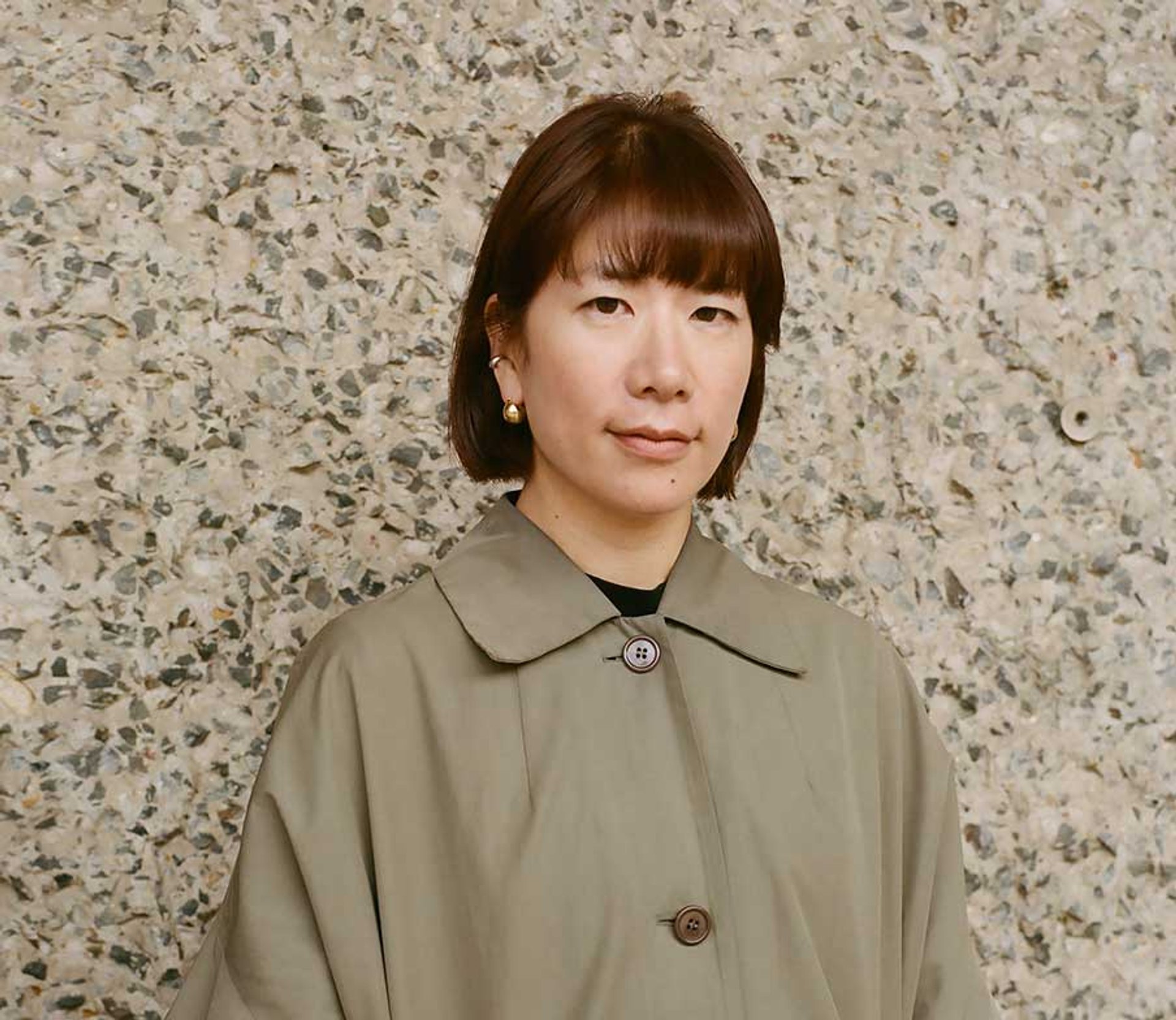
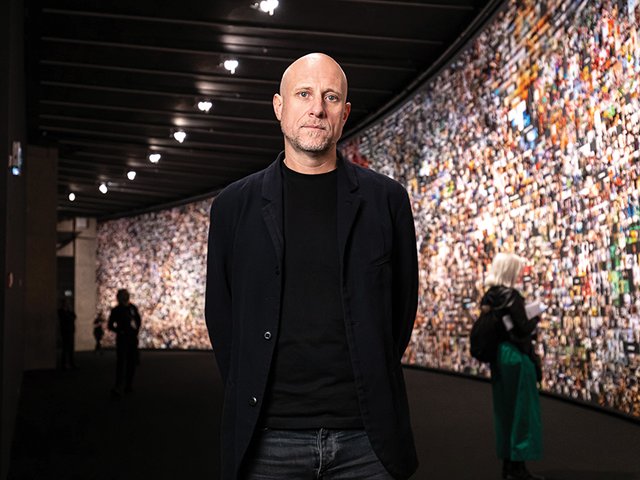
“Imperfection is everywhere,” Yuko Mohri says. “It’s a great element.” Photo: © Toby Coulson/Barbican Centre
What were your biggest discoveries?
The centre has many departments, but they seem very separate from each other and don’t have a lot of communication between them. But since they are going to have a major renovation, they want to revamp the centre’s system, too, and strengthen communication.
We started researching different departments and looked for objects across all the spaces. I wanted to collect objects from here that resonate with the space.
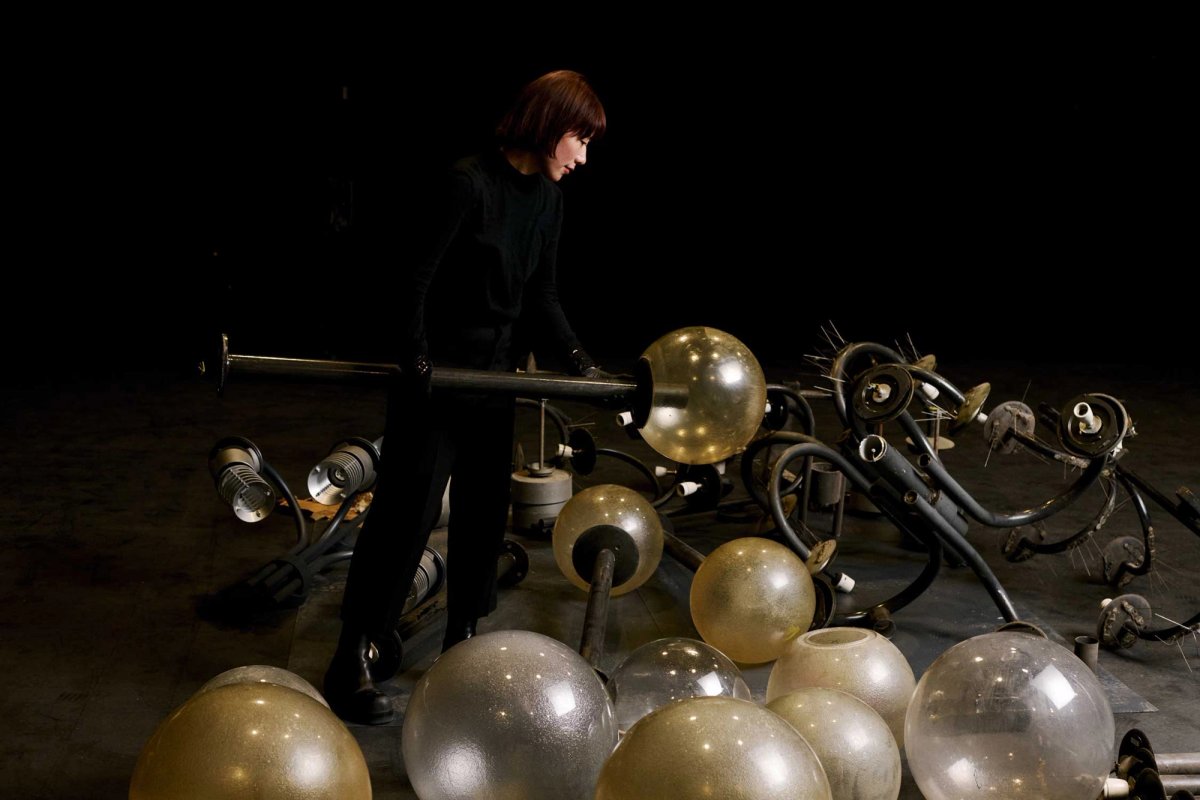
Among the most iconic ones are the original Barbican lamps featured throughout this exhibition. These were once used as street lamps surrounding the centre and also in the building. But as time went on, they were replaced with those of a new design. They were dusty and strange, but I immediately knew that I wanted to use them for my installation. So I spent a lot of time washing these lamps in my temporary studio.
The speakers that I use for the new iteration of the ongoing Decomposition series (begun 2021) located near the entrance to The Curve are old speakers from the Barbican. The found cables that I use to connect the fruit with the lamps and the sound are also very important to me. I also found these metal junk pieces that were discarded in a workshop, and I reappropriated them as triggers for the lamps in the installations in the middle part of the exhibition.
Throughout this project I met many people outside the gallery space, from engineers to the caretakers of the parking space. The extensive communication helped me connect with a lot of open-minded people who accept me and my work.
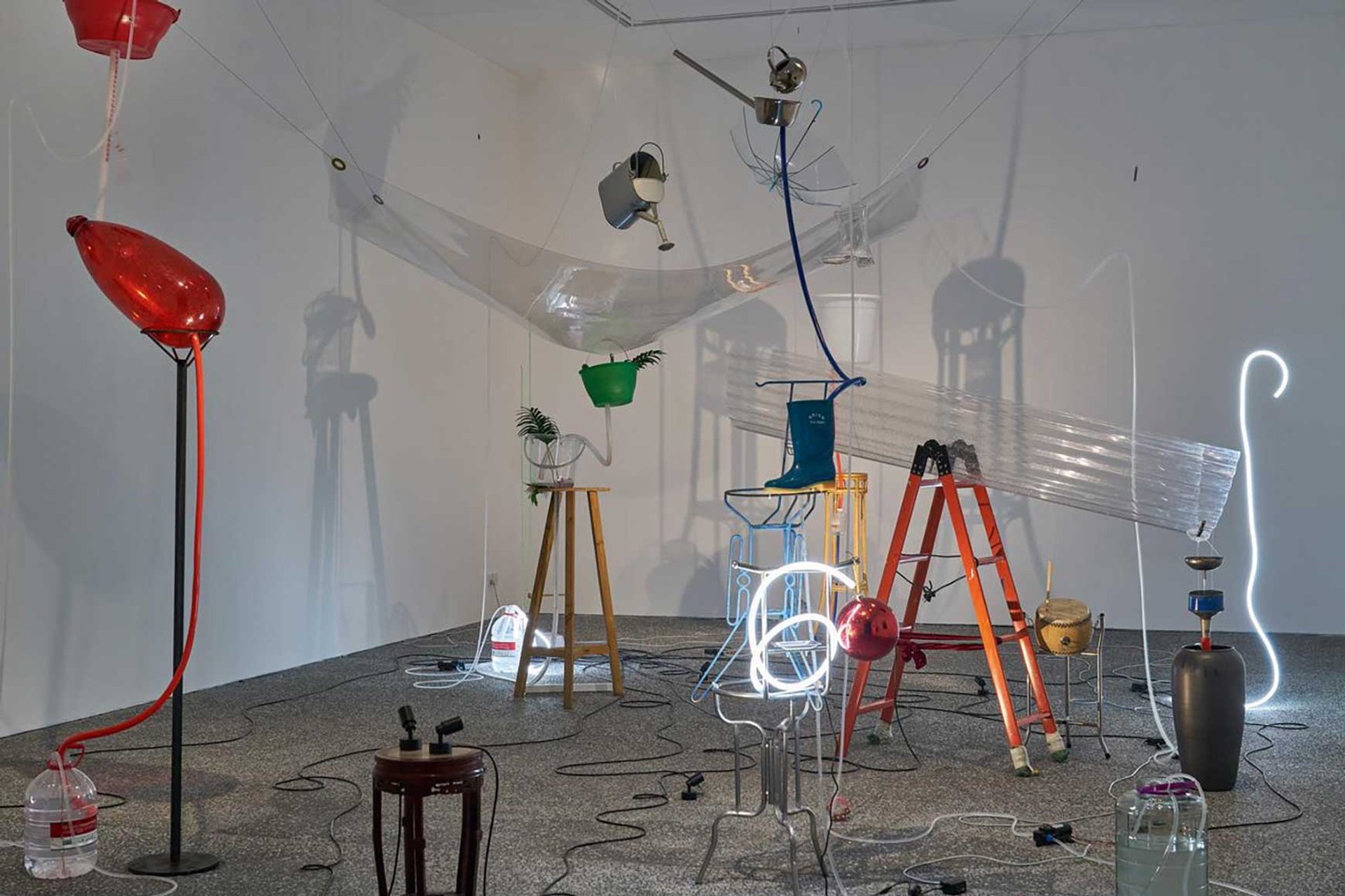
Yuko Mohri’s Moré Moré (Leaky) is an ongoing installation inspired by the water leaks at Tokyo metro stations Photo: Sun Shi; courtesy the artist, Project Fulfill Art Space, mother’s tankstation, Yutaka Kikutake Gallery, Tanya Bonakdar Gallery and WHITE SPACE
How do you relate the centre’s characteristics with your practice?
The Barbican has many water leaks. There’s also a leak of sound because The Curve wraps around the concert hall. So these leaky elements resonate with my practice, especially my ongoing Moré Moré (Leaky) series (begun 2017), which was inspired by the water leaks at Tokyo metro stations and how the staff contain these water leaks with temporary fixes using everyday items. I presented a version of this in Venice.
This time at the Barbican, I created a large-scale installation located towards the exit of The Curve, using found objects such as a pot, an umbrella, plastic bottles, Wellington boots, traffic cones and old water sinks designed for the Barbican apartments.
I also keep the space open and transparent by removing the covers on the entrances and the back so that people can see what’s going on there from the outside. I also exposed the inner layers of the walls to give people a peek into what is behind them.
Are you building an ecosystem within the Barbican that makes the inaudible heard and the invisible seen?
Instead of building, I see it as repairing. Inspired by attending concert rehearsals at the Barbican, I chose the title In Concert, which mirrors the Latin root consertare. It carries the meaning of repair and adjustment, resembling the process of making an organisation.
The process is also similar to making an installation. When I started, I had no idea how it would turn out eventually. I constantly make adjustments to the elements of my installations, like a conductor making adjustments to the tempo or the volume of the musical instruments. The title also reflects that what you see is not stable. Water leaks, gravity and the audience’s presence will change even some very tiny elements. It is not a finalised show. It’s an ongoing process.
Would you say that you are in control and at the same time you also let go?
I am a human being and I have a desire for a certain outcome. But somehow, it doesn’t always work. This trial and error process is a very learnable process for me.
We all have our expectations, but our society and environment have become increasingly unstable. For example, this summer Tokyo rained non-stop for a record 36 consecutive days. We need to adjust our lives. It’s also a necessity when we are based in Tokyo, constantly facing natural disasters like earthquakes. Japan has long been isolated, but now we have many immigrants. Our society is changing. I see this as a kind of training and accept these changing forces. It’s not necessarily about making things perfect. Imperfection is everywhere. It is a great element.
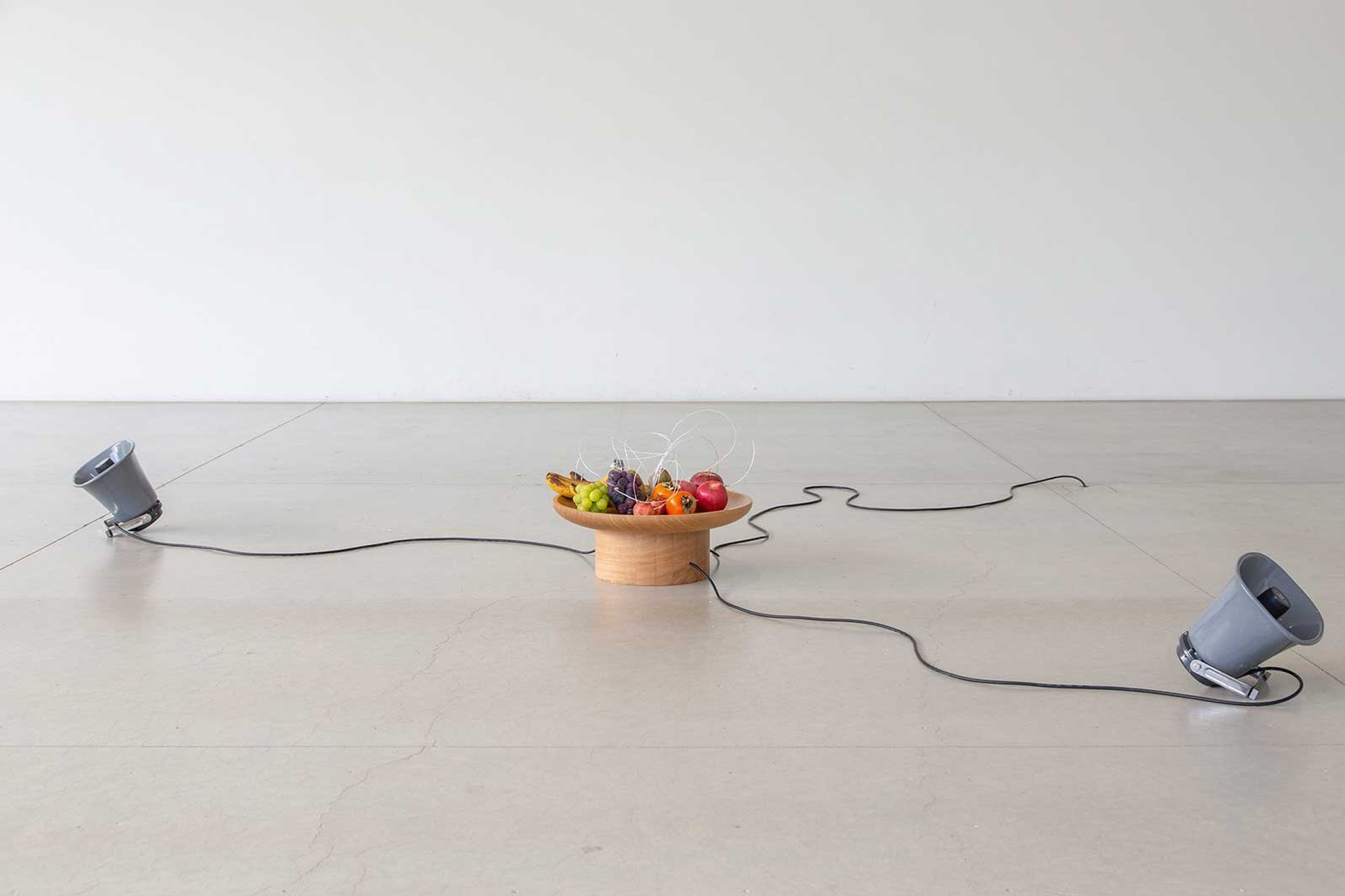
An edition of Mohri’s ongoing installation Decomposition from 2022 in Kanazawa, Japan Photo: Yuu Takagi; courtesy the artist, Project Fulfill Art Space, mother’s tankstation, Yutaka Kikutake Gallery, Tanya Bonakdar Gallery and WHITE SPACE
Biography
Born: 1980
Lives and works: Tokyo
Education: 2004 BFA, Tama Art University; 2006 MFA, Tokyo University of the Arts.
Key shows: 2026 The Bass, Miami Beach; 2026 Yokohama Museum of Art; 2026 Centro Botín, Santander; 2025 Pirelli HangarBicocca, Milan; 2024 Japan Pavilion, Venice Biennale; 2023 14th Gwangju Biennale
Represented by: Tanya Bonakdar Gallery, New York; Yutaka Kikutake Gallery, Tokyo; Mother’s Tankstation, London; White Space, Beijing; Project Fulfill Art Space, Taipei
• Yuko Mohri: In Concert, Barbican Centre, London, until 24 January 2027