

Digital Editions
Newsletters
Subscribe
Digital Editions
Newsletters
Art market
Museums & heritage
Exhibitions
Books
Podcasts
Columns
Art of Luxury
Adventures with Van Gogh
Venice Biennale
Art market
Museums & heritage
Exhibitions
Books
Podcasts
Columns
Art of Luxury
Adventures with Van Gogh
Venice Biennale
Exhibitions
news

Royal Academy of Arts tried to borrow $450m Salvator Mundi for its Charles I exhibition

New London show has received glowing reviews but there is one conspicuous absentee

Anna Somers Cocks
27 January 2018
Share
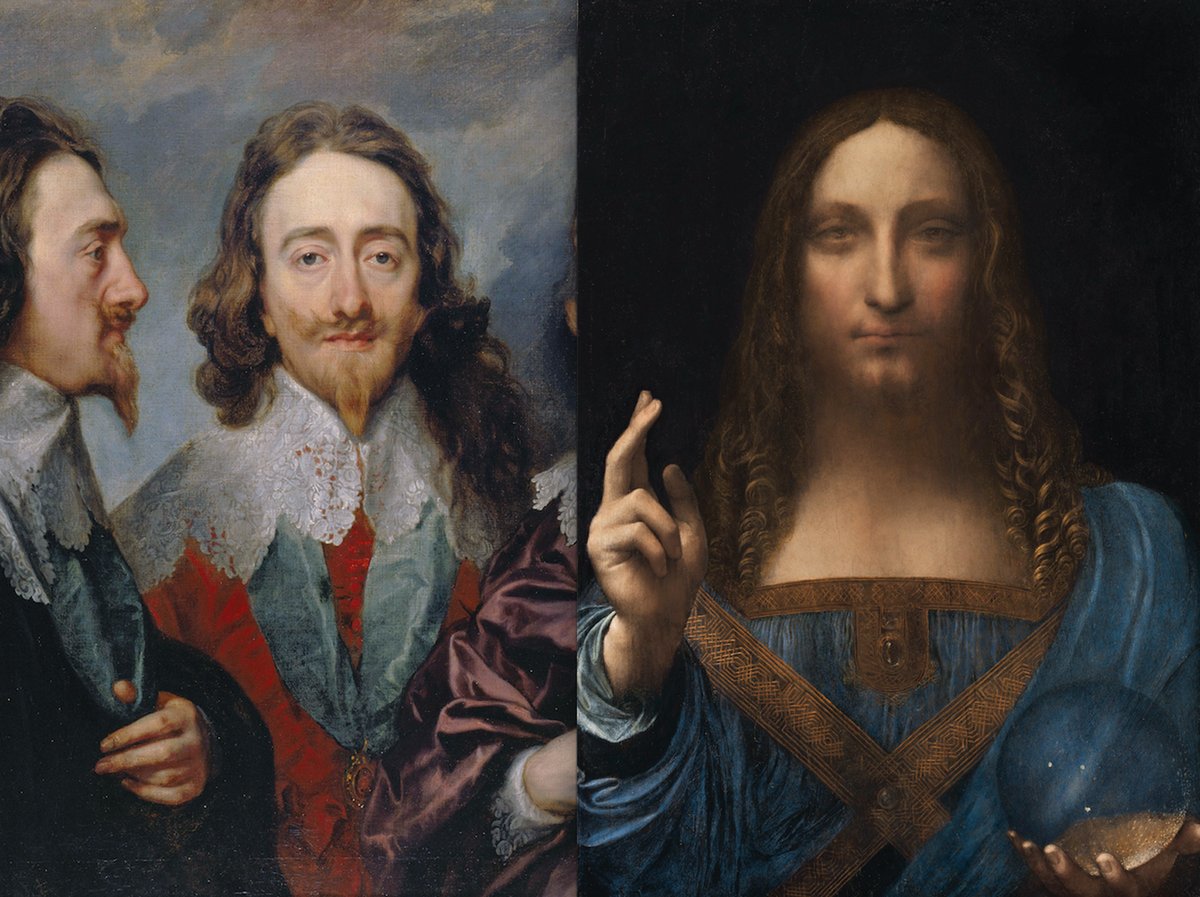
Detail of Anthony van Dyck's Charles I (1635-36) and Leonardo's Salvator Mundi (around 1500) was sold for £45 at Sotheby's London in 1958. Photo: © Christie's Images, 2017 Charles: Royal Collection Trust / © Her Majesty Queen Elizabeth II 2017. Salvator Mundi: Christie's Images, 2017

Detail of Anthony van Dyck's Charles I (1635-36) and Leonardo's Salvator Mundi (around 1500) was sold for £45 at Sotheby's London in 1958. Photo: © Christie's Images, 2017 Charles: Royal Collection Trust / © Her Majesty Queen Elizabeth II 2017. Salvator Mundi: Christie's Images, 2017

The once-in-many-lifetimes show at the Royal Academy of Arts in London of the art collected by King Charles I has reunited, for the first time in over three and a half centuries, 140 works of the greatest fame and beauty, dispersed after his decapitation in 1649. Among the paintings in Charles I: King and Collector (until 15 April) by Titian, Van Dyck, Rembrandt, Holbein and Dürer, one great name is missing, however: Leonardo da Vinci. 

This is not for want of trying. Leonardo’s Salvator Mundi was part of Charles I’s collection, valued after his death at £30, sold to John Stone, a mason, and returned to Charles II after the restoration of the monarchy in 1660 and was then dispersed again. As soon as the Louvre Abu Dhabi was revealed to be the new owner of the Salvator Mundi after the auction of the painting at Christie's on 15 November 2017, the Royal Academy requested the auction house to ask the authorities in Abu Dhabi whether they would lend the painting. The Louvre Abu Dhabi decided, however, that they wanted the painting’s first showing to be in the emirate, as confirmed to The Art Newspaper by the museum’s director Manuel Rabaté.

• For more on the Charles I exhibition, see Royal Academy of Arts reunites masterpieces from Charles I's collection—many for first time since his execution or listen to our podcast, Charles I at the Royal Academy—an exhibition fit for a king
Subscribe to our daily newsletter

ExhibitionsLeonardo da VinciSalvator MundiRoyal Academy of ArtsCharles I
Share
Subscribe to The Art Newspaper’s digital newsletter for your daily digest of essential news, views and analysis from the international art world delivered directly to your inbox.
Newsletter subscribe
Information
About
Contact
Cookie policy
Data protection
Privacy policy
Frequently Asked Questions
Subscription T&Cs
Terms and conditions
Advertise
Sister Papers
Sponsorship policy
Follow us
Instagram
Bluesky
LinkedIn
Facebook
TikTok
YouTube
© The Art Newspaper

Related content

Diary of an art historianblog
17 January 2018

Stop reading, start looking: today’s art history students are not getting a grounding in connoisseurship skills

When I put an image of a well-known Titian on the screen, only one of 40 could identify the artist

Bendor Grosvenor
Leonardo da Vincinews
7 December 2017

Saudi Arabia's Crown Prince revealed as buyer of $450m Leonardo and loan confirmed to Louvre Abu Dhabi

Gesture consolidates close political alliance between Saudi Arabia and the UAE

Julia Michalska and Anna Somers Cocks