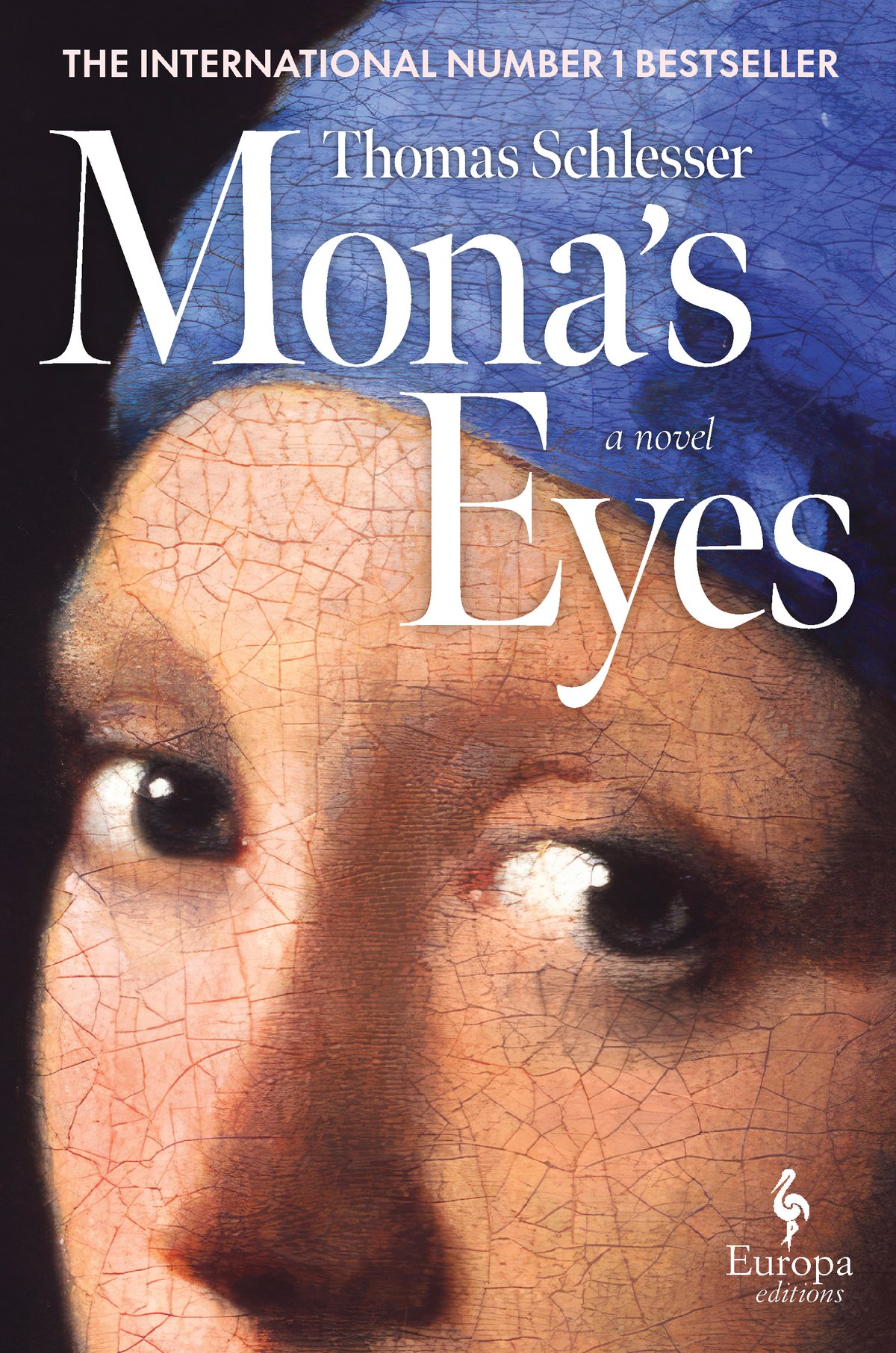
There is something quite addictive about Thomas Schlesser’s Mona’s Eyes (Les yeux de Mona in French). Once you start reading it, you cannot stop, even though nothing much happens over the course of its 300 pages, and the 52 chapters all follow the same pattern. Written in the vein of Jostein Gaarder’s Sophie’s World (1991), a fictional survey of Western philosophy as seen through the eyes of a 14-year-old girl, Schlesser’s novel, a bestseller in Europe, offers a similarly compact, often exhilarating cruise through the last few centuries of Western art.
Schlesser’s novel offers an often exhilarating cruise through the last few centuries of Western art
There is only the barest of plots. After the ten-year-old Mona suffers a temporary bout of blindness, her octogenarian grandfather, or “Dadé”, a former photojournalist called Henry Vuillemin, springs into action. Blind in one eye himself, due to an injury suffered in Lebanon, Henry is also an art historian manqué. Concerned that Mona might lose her sight permanently, he plans to “lodge in her memory all that art offered in terms of beauty and significance”. And so, every Wednesday afternoon, for a year, he takes Mona to view a carefully selected work of art in the Musée du Louvre, the Musée d’Orsay and the Centre Pompidou. (There is always only one work, a rule against which Mona, more compliant than the ten-year-olds I have known, never rebels).
Art historian in the making
While Mona’s parents believe that Henry is accompanying Mona to a child psychiatrist (did they never ask why there were no bills?), he is turning her, one carefully prepared mini lecture at a time, into a formidable art historian in her own right. Henry’s tour begins with Sandro Botticelli’s Venus and the Three Graces (around 1475-1500, Louvre), which he says shows the beauty of receiving gifts. His lessons—in a sense, Henry’s gift to Mona—end with Pierre Soulages’s Painting 200 x 200 (2002, Pompidou), five solid bands of black painted on a fibreboard panel: a reminder to Mona that black is more than the absence of light.
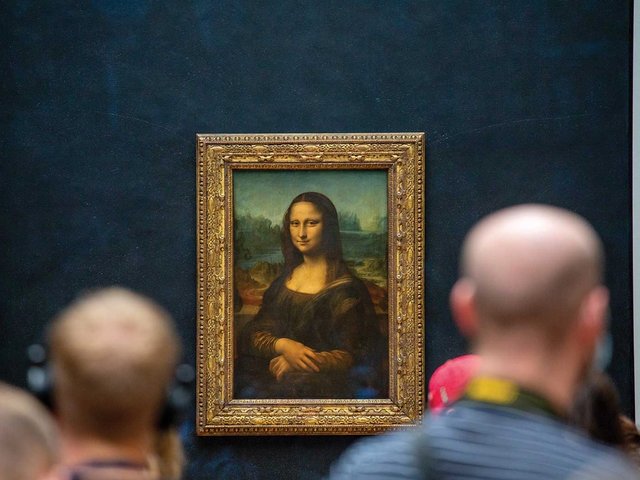
Unlike Henry, his alter ego, Schlesser is a scholar, the director of the Hartung-Bergman Foundation, a small museum in Antibes, France, and a professor of art history at the Ecole Polytéchnique in Paris. And so Henry’s lectures are awash in technical terms, from “three-quarter view” to “barycenter” to “golden ratio”. Surely a challenge for most children, though not for the precocious and super-smart Mona, who is every bit as inscrutable as her adult namesake in Leonardo da Vinci’s painting (around 1503-19, Louvre). The reader breathes a sigh of relief when, like other girls her age, she asks for chocolate and vanilla ice-cream.
Who would blame Henry, then, when he forgets how young his interlocutor is? He stops himself just in time before identifying what female body part he believes Georgia O’Keeffe is alluding to (despite the artist’s denials) in Red, Yellow and Black Streak (1924, Pompidou). That said, in any case, he is never too worried about Mona’s sensibilities. The topic of violated or endangered sight dominates several of his choices, from the partly open dead eye of the slaughtered animal in Francisco de Goya’s Still Life of a Lamb’s Head and Flanks (around 1808-12, Louvre) to the empty eye socket of the mask in Hannah Höch’s Mother (1930, Pompidou). Looking at Claude Monet’s hazy Saint-Lazare Station (1877, Orsay), painted with the lightest of brushstrokes, Mona thinks she can feel “the threat of blindness” that darkened this artist’s last years.
The most delightful moments in the book happen when Mona points out things Henry has missed: she provides the exact number of crows in Caspar David Friedrich’s The Tree of Crows (around 1822, Louvre) and finds the face of a gnome hidden in the sleeve of the woman portrayed in Vilhelm Hammershøi’s Rest (1905, Orsay). Perhaps my favourite Mona comment is about Vincent van Gogh’s The Church at Auvers (1890, Orsay), which shows, she jokes, the building’s butt (les fesses in the French original).
The decision by Europa Editions to cram the illustrations, barely bigger than postage stamps, for the English-language book onto the fold-out dust jacket is a major distraction. But one should be grateful for small mercies: the French edition had no visuals at all. For me, reading Mona’s Eyes over the course of a week became a pleasantly reassuring ritual—the comforting confirmation that, no matter how confusing the world, how scary the future, artists have always found, and will always find, ways to pour their fears and hopes onto a few square feet of canvas, a block of marble or a piece of wood.
- Thomas Schlesser, translated from the French by Hildegard Serle, Mona’s Eyes: A Novel, Europa Editions, 300pp, 52 colour illustrations (on fold-out jacket), £18.99 (hb), published 25 September
- Christoph Irmscher is a critic and biographer