“I never expected to become a photographer when a friend put a Rolleiflex camera in my hands,” writes Susan Ressler (born 1949 in Philadelphia) of her introduction to photography in 1968. Coming of age during an era of “tumultuous” political and social change, from the “pervasive unrest and idealism” of 1960s counterculture to the mounting violence of the Vietnam War, Ressler has spent the past five decades documenting stark disparities of power, depicting “the haves to the have-nots”, as she puts it, “and how in America, they coexist with dis-ease”.
Fifty Years, No End in Sight offers a comprehensive overview of Ressler’s contribution to American photography, accompanied by her own reflections. From her famous series of corporate boardrooms in 1970s Los Angeles and intimate portraits of First Nations families in Canada to her ongoing engagement with the sprawling, hyper-real environments of Southern California, No End in Sight presents an artist who routinely challenges, in the words of Los Angeles County Museum of Art associate curator Eve Schillo, “the myths and realities of our everyday… to see through our fictions that often pose as facts”.
Photos hidden for 35 years
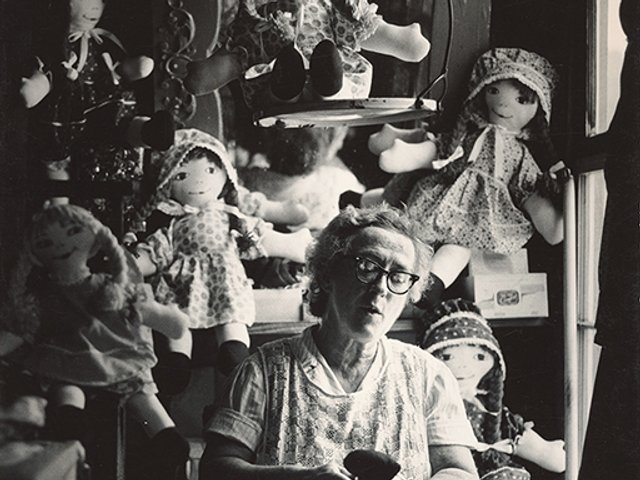
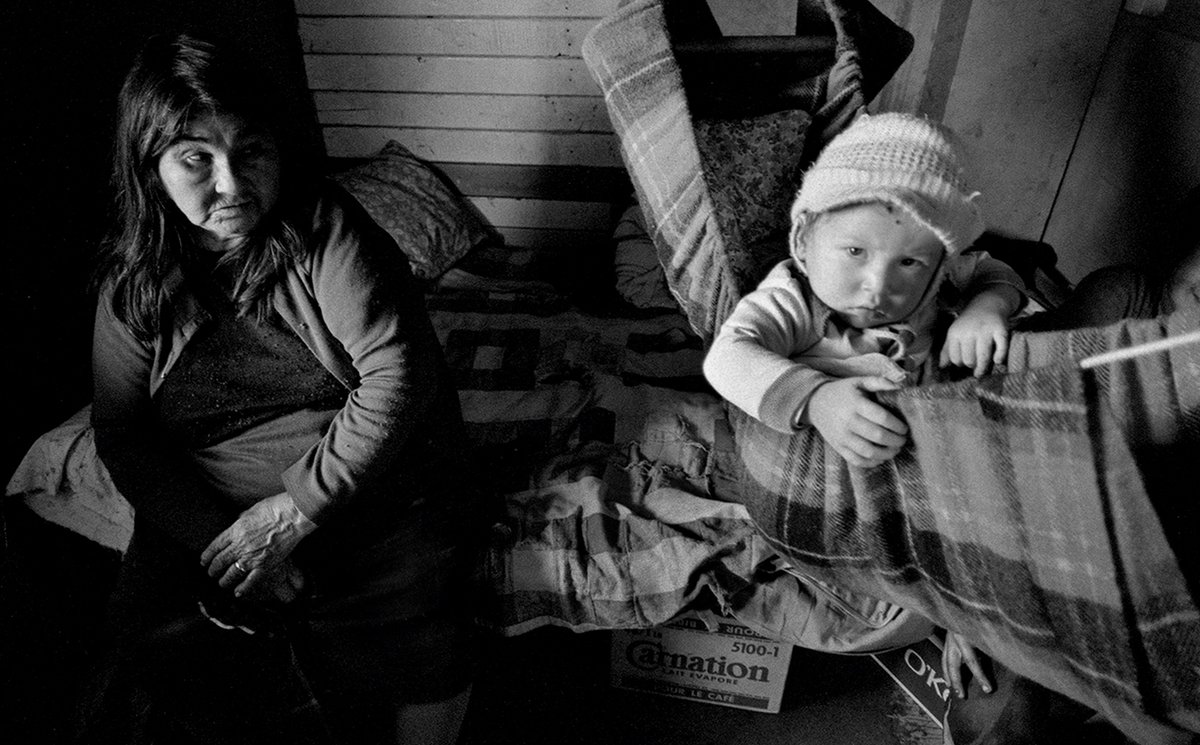
Graduating from the University of New Mexico in the early 1970s, Ressler accepted an invitation from the anthropologist Asen Balikci to document Algonquian communities in rural Quebec. “The experience was so profound that not only did it convince me to pursue photography to this day,” she writes, “but the pictures I made then remained hidden for 35 years.” Ressler expresses regret at her youthful naivety, unaware of “the complexities of documentary photography”, a medium that risks exploiting subjects for the sake of one-sided or biased stories. Taken in 1972, Ressler’s photographs of the Algonquian were first published in 2007 as a limited boxed set. A selection from the series is reproduced in this book, exposing “abject poverty and raw conditions on the reserve”, she says, the surrounding landscape decimated by the logging industry.
Taken in stately black-and-white, Ressler’s photographs reveal clear signs of hardship; a sense of objects, clothes and buildings fraying at the edges, disintegrating mattresses, unfinished and damaged walls. At the same time, they document the inevitable infiltration of post-war consumerism: alongside sneakers, cassette tapes and bottles of beer, the pictures capture the consistent presence of branded crates and tins and cardboard boxes, at odds with the apparent absence of essentials or any meaningful government or state support. Ressler relates the story of her time with the Algonquian and acceptance into the community. One picture shows her kneeling in the middle of a sparsely furnished room, surrounded by women and children; her posture is stiff, her expression seeming to betray an underlying uncertainty about what exactly she is doing there. As she writes beside one picture: “It was never clear which side of the table I was sitting on.”
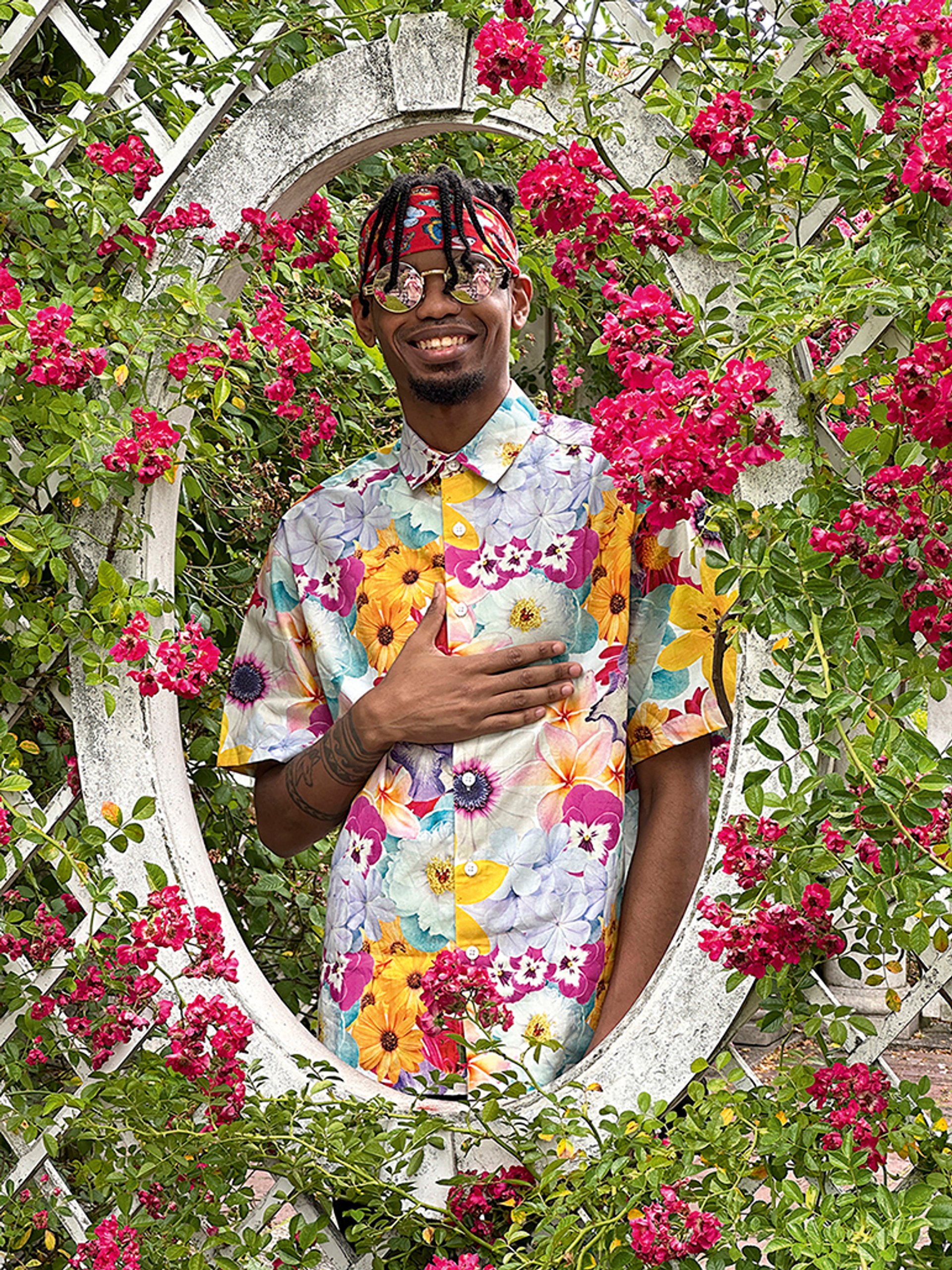
Ressler’s Antonio in the Rose Garden, Brooklyn Botanical Garden, Brooklyn, NY, US (2023)
© the artist
Returning to the US, in 1979 Ressler joined a cohort of photographers to form the Los Angeles Documentary Project, funded by the National Endowment for the Arts to mark the city’s bicentennial. This resulted in her striking series documenting Los Angeles’s wealthy corporate environments, published by Daylight Books in 2018. Ressler’s photographs appear to celebrate these sleek, polished interiors, picking out their shining chrome, expensive furniture and abstract, geometric forms. On closer inspection, the pictures reveal an eerie, oddly sterile environment, the few inhabitants we do meet strained, uncomfortable or slightly bored. Almost 40 years later, the interiors seem comically dated, like the sets of a generic sci-fi movie. After all, writes Ben Lerner in his novel 10:04, “Nothing in the world… is as old as what was futuristic in the past”.
A return to California
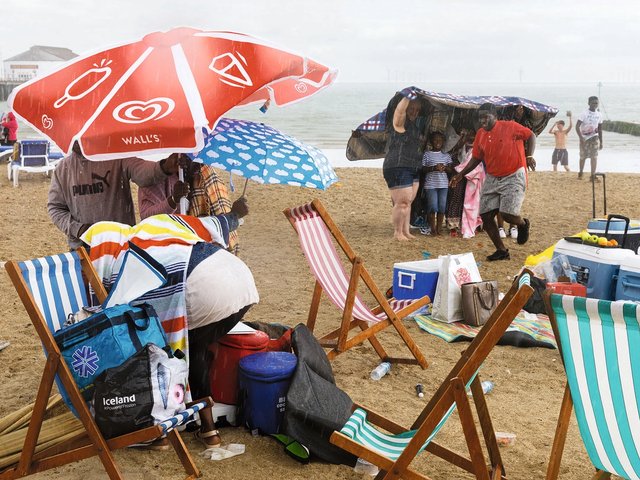
Following a 30-year hiatus, Ressler returned to photograph Los Angeles, drawn to its vibrant, often garish colours and an endless presentation of consumer excess. Ressler’s photographs of California are charged with contradiction, the lurid patterns, colours and textures of the built environment contrasting sharply with its deep, angular shadows, the luxury and its impressive ugliness at once. The pictures project a sense of unreality, a quality of being staged, as though alluding to the fakery of Los Angeles’s airbrushed billboard advertisements or the cartoonishness and bright surrealism of nearby Disneyland. One photograph depicts the entrance to a shopping mall emblazoned with the phrase “Experience the Incredible”, the word “incredible” conveying both amazingness and something lacking credibility.
It is a shame to find that Ressler's more recent photographs from Europe, South America and Asia lack the interest of her early work, occasionally seeming more like holiday or tourist snaps. Nevertheless, this publication succeeds in summarising Ressler’s vision, calling attention “to the unreality, the surreality, of what is actually there”. Can images make a difference? Ressler wonders in her introduction: “I still don’t know, but that doesn’t stop me from trying.”
• Photographs: 50 Years, No End in Sight, by Susan Ressler, with essays by Susan Ressler and Eve Schillo, afterword by Mark Rice. Published 31 July by Daylight Books, 284pp, 238 photographs, £46/$60 (hb)