The contraction of the global art market stretched well into 2025, with the challenging macro environment cited as a key reason behind the closures of several prominent businesses. Middle market powerhouses Blum (with locations in Los Angeles, New York, Tokyo) and Clearing (New York, Los Angeles) both shut shop, while stalwart New York dealerships Sperone Westwater, Tilton and Kasmin also announced their closures. In London, galleries like TJ Boulting and Project Native Informant ceased trading, while gallery closures further afield included Nir Altman in Munich and Altman Siegel in San Francisco. In Hong Kong, where auctions remain a fraction of their 2021 peak, Pace also shut its space.
By autumn, signs began to emerge of a rebound at the top end, following Sotheby's white-glove sale of the Pauline Karpidas collection in London and big-ticket VVIP-day sales at Art Basel Paris. New York's November auctions heralded a return to form, seeing competitive bidding for trophy lots and valuable single-owner collections. That week, Sotheby's sold Klimt's Portrait of Elisabeth Lederer (1914-16) for $236.3m, now the highest price paid for a work of Modern art, as well as Frida Kahlo's El Sueño (la cama) (1940) for $54.7m, making the top price for a female artist at auction.
Christie's and Sotheby's closed the year reporting that sales had increased from 2024, with auctions in the second half of 2025 up 26% on those held during the same period last year. Whether this recovery will endure, and be felt across the sector, is less clear.
The demand for many contemporary artists whose markets boomed over the past decade seems unlikely to return. Rather, it is classic tastes served mostly by the secondary market that are buoying up the trade. Well placed to serve this demand are two conglomerates that launched this year: New Perspectives, a five-strong advisor super group focused on the highest value transactions, and Pace Di Donna Shrader, a collaborative gallery for secondary sales.
Tariffs and trafficking laws
The first full year of Donald Trump’s second presidential term made the US an increasingly unstable place to trade art. The president’s tariffs have wreaked havoc on the trade of certain art forms such as decorative arts and furniture, though they have largely excluded most works of art. Nonetheless, the panic that ensued from the hasty trade announcements impaired shipping and logistics services, and has unsettled the US's leading reputation for ease of doing business.
Across the European Union, dealers of antiques and ancient artefacts rang alarm bells over the implementation of new legislation that came into effect in June, intended to prevent the trade of looted art. The law demands dealers to provide proof of origin for many cultural artefacts older than 200 years—an unreasonable demand, say key trade figures.
Some positive news came by way of tax deductions on art in Italy, which followed both Germany and France’s decision to lower VAT on art. Italy’s once stubbornly high rates are now the EU’s lowest, at 5%, and it has subsequently welcomed branches of two of the world's biggest art dealerships: this year Thaddaeus Ropac opened a space in Milan while Hauser & Wirth announced a Sicily location.
Meanwhile Paris’s art market enjoyed a boost, with October’s auctions in the French capital up 30% from last year. Still, much of Paris’s growth is attributed to London’s losses post-Brexit, and Europe’s overall market remains stagnant.
One clear area of growth has been in South Asia, where record auction prices were achieved via landmark sales. M.F. Husain’s Untitled (Gram Yatra), which made $13.7m at Christie’s in New York, by far the highest price paid for a painting by an Indian artist.
Art Basel and Frieze look east
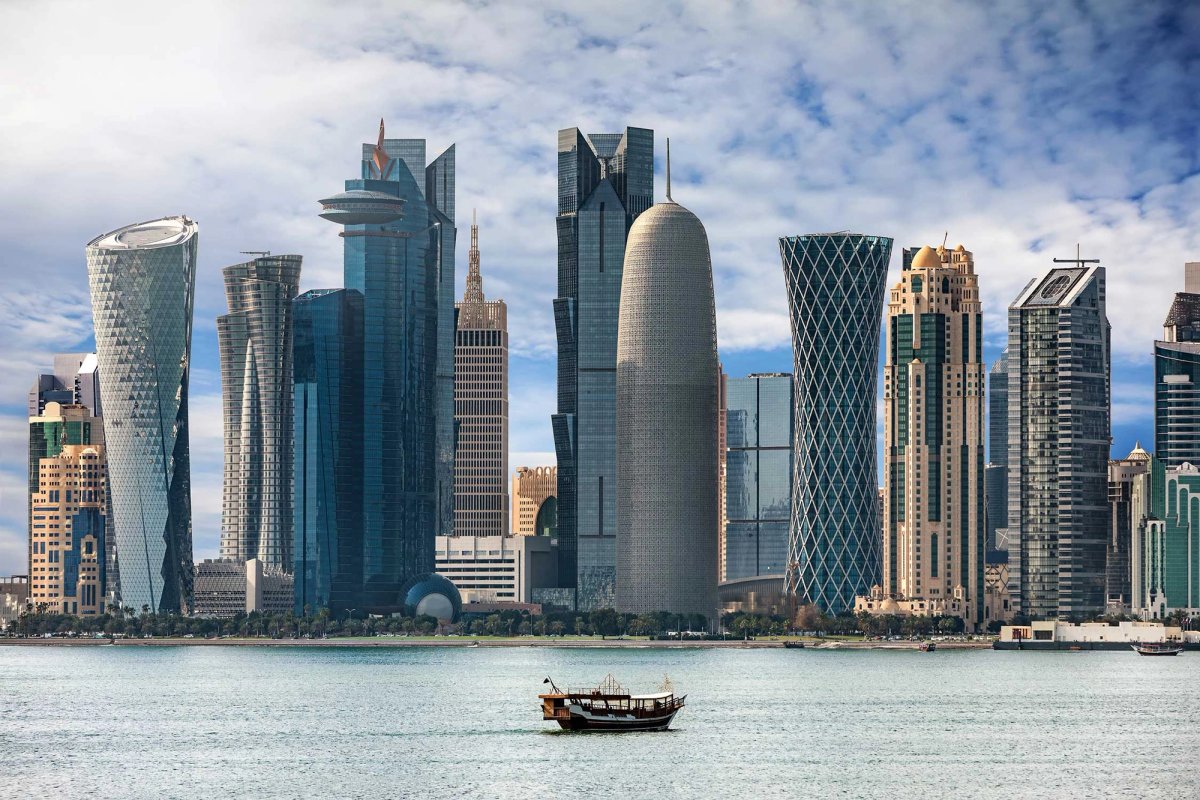
But it is the Arabian Gulf that received the keenest focus from major industry players. Chiefly, both Art Basel and Frieze announced new fairs in the region, in Doha and Abu Dhabi respectively. Art Basel Qatar will be relatively boutique in size, with 87 galleries showing solo presentations in a show led by the artist Wael Shawky. Meanwhile, Frieze, rather than creating a brand new fair, has opted to take over an existing one, replacing the longstanding Abu Dhabi Art. Auction houses continue to double down on the region too, with Sotheby’s having launched its first luxury focused Collectors' Week in Abu Dhabi, following a $1bn investment in 2024 from the emirate’s sovereign wealth fund. Meanwhile, Art Dubai has expanded, having added two new director roles this year.
Saudi Arabia is also being eyed by Western firms. Chief executives of Art Basel and Sotheby’s were present at an October conference in Jeddah where major investment deals were announced. Colnaghi, the world’s oldest gallery, will open a Riyadh space next year, following an investment from a Saudi firm. In a year where the stability and viability of the West has been called into question, the Gulf has emerged as the key driver of new business. Now to see if that market can be developed quickly enough to justify these expansions.