On 6 February, the University of Maryland’s David C. Driskell Center for the Visual Arts and Culture of African Americans and the African Diaspora opened America Will Be!(until 8 May), an exhibition showcasing how Black artists have “harness[ed] the power of the US flag”. According to the artist Dread Scott, however, there is a significant omission.
Last February, Scott says he was “thrilled” to receive a loan request from the Driskell Center’s director, Jordana Moore Saggesse, for his work What is the Proper Way to Display a US Flag? (1988). In her letter, Saggesse noted that the work was “central to the history of how Black artists have contested the power of this object”.
But after later rescinding the loan request and proposing an alternative work or an archival display about What is the Proper Way to Display a US Flag?, Saggesse and her co-curator on America Will Be!, Nicole Archer, ultimately informed Scott in January that his work could not be included in the exhibition at all “due to logistical constraints”, suggesting a future book project instead.
For Scott, whose interdisciplinary practice challenges assumptions about the United States and its history, the exclusion of his work from the Driskell Center exhibition is down to “anticipatory censorship”, as opposed to the issues outlined in his correspondence with the curators. He tells The Art Newspaper: “It’s the first time I’ve been censored in a show three times.”
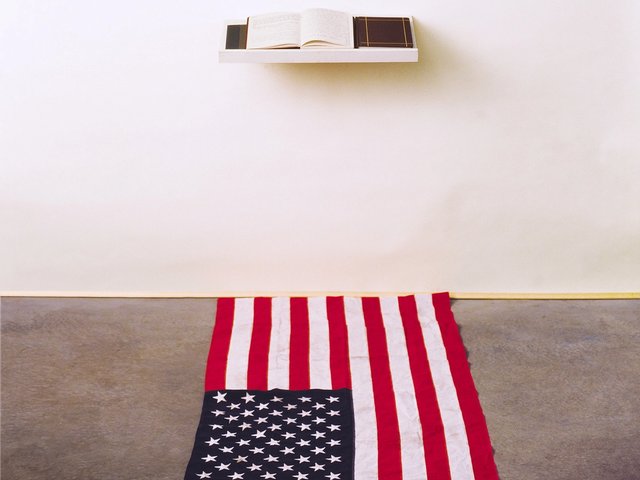
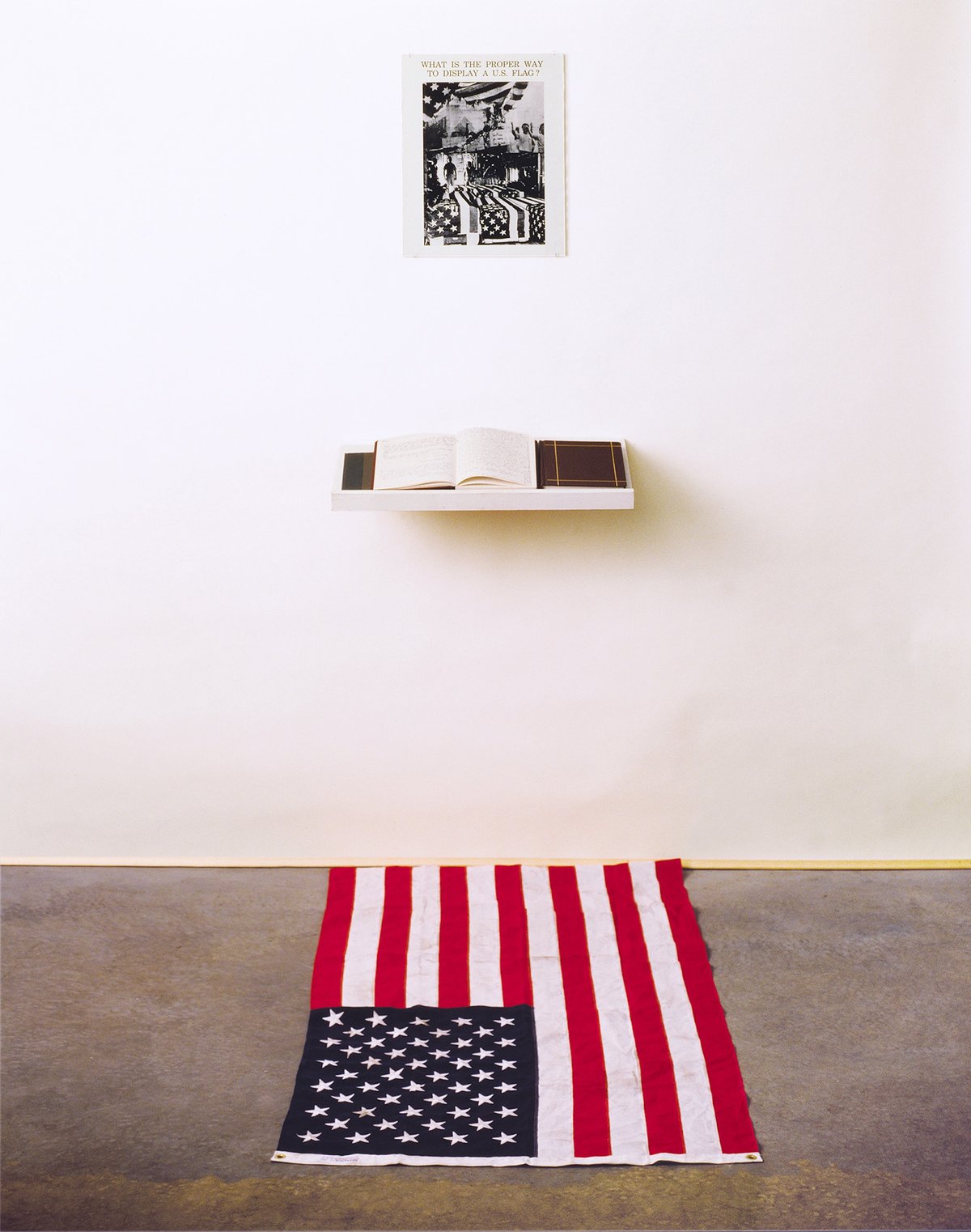
What is the Proper Way to Display a US Flag? caused a national outcry when it was first exhibited at the School of the Art Institute of Chicago in 1989. The participatory installation features an American flag laid out on the floor, along with a photomontage on the wall of images of the flag on military coffins and of South Korean protestors burning the flag. Between these two objects is a shelf with a ledger, inviting visitors to answer the titular question, though to do so participants must step on the flag.
The SAIC exhibition sparked daily protests by veterans and its temporary closure among bomb and death threats. Although the legality of flag desecration was upheld by the Supreme Court in the 1990 case United States v. Eichman, in which Scott was one of several defendants, he now believes that What is the Proper Way to Display a US Flag? is “effectively banned” in the US.Scott enumerated the potential risks of showing his piece in his response to the original loan request (at the time, the exhibition was to be titled Black Flags and Other Allegiances).
“With the current US administration and its focus on culture, I’d like to make sure you have the capacity and commitment to properly show the work,” he wrote. “If you, the [Driskell] Center and University of Maryland are willing to stand by the project and defend the work, I’m open to discussing loaning the art.”
In email correspondence reviewed by The Art Newspaper, Saggesse reasserted the centre’s commitment to showing the “critical” work and assured Scott that the organisers had been contemplating similar concerns.
Scott says he spoke with the curators on a video call last March and had a “very productive, serious conversation”. However, he was “surprised” by another call around a month later in which he was informed that the university’s dean would not permit What is the Proper Way to Display a US Flag? to be shown on campus due to concerns about students’ safety. Saggesse confirmed to The Art Newspaper that the March call prompted further enquiry into “extensive security measures”, but that all further communication occurred via email.In email correspondence with Scott last November, the co-curatorsconfirmed that it would not be possible to stage What is the Proper Way to Display a US Flag? due to a lack of funding for additional security.
“This decision not to display the work is rooted in safety concerns, not a judgment of the work itself, or its place in the exhibition,” Saggesse and Archer wrote to Scott. They went on to suggest including a different work of his, an image of What is the Proper Way to Display a US Flag? along with text explaining its omission, or a photograph of Emancipation Proclamation (2020), in which the artist burned the US flag.
“It went from them wanting to show the work to trying to find a rationalisation to not do it,” Scott says. He adds that he first understood he may not be featured in the exhibition when, in December, a press release about the show—now titled America Will Be!—was circulated that did not include his name among the list of participating artists. The curators informed Scott on 13 January that, following consultations with the centre’s registrar and installation team, they had concluded it was too late to include him in the exhibition.
According to Saggesse, there was no formal loan agreement and her original letter to Scott in February 2025 was an “initial inquiry”. She emphasises that What is the Proper Way to Display a US Flag? was one of several works considered for but not ultimately included in the exhibition. “We remain deeply committed to presenting an exhibition that engages meaningfully with the complex histories of citizenship and democracy,” she adds, “and we are proud of the 24 artists whose work is represented in America Will Be!.”
“The Driskell Center is a really important centre of Black art, and the curators are good people,” Scott says. “The real danger here is that very good people are being compelled to censor themselves, and doing it in a way that almost pretends that that’s not happening.”
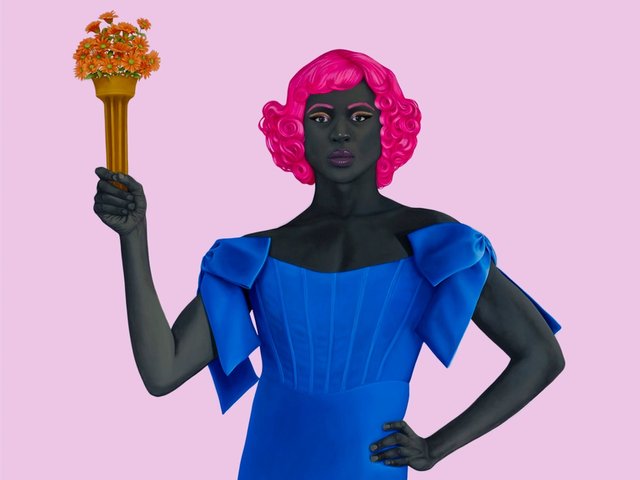
He cites last year’s decision by Amy Sherald to cancel her travelling exhibition American Sublime’s run at the National Portrait Gallery—allegedly because staff there wanted to remove her work Trans Forming Liberty (2024)—and the Trump administration’s review of activities at eight Smithsonian Institution museums as examples of the pressure facing institutions and curators. (The University of Maryland’s College Park campus, where the Driskell Center is located, sits in the suburbs of Washington, DC, just ten miles from the Smithsonian Castle.)
June Clark, whose work From Harlem (1997) is featured in America Will Be!, says she was “baffled” by Scott’s experience. The artist Sonya Clark (unrelated), whose work is also included in the exhibition, hopes institutions can be as “bold” as the artists whose work they show. She adds: “Shouldn't protecting the ideas that fuel the work be as important as protecting the work itself?”