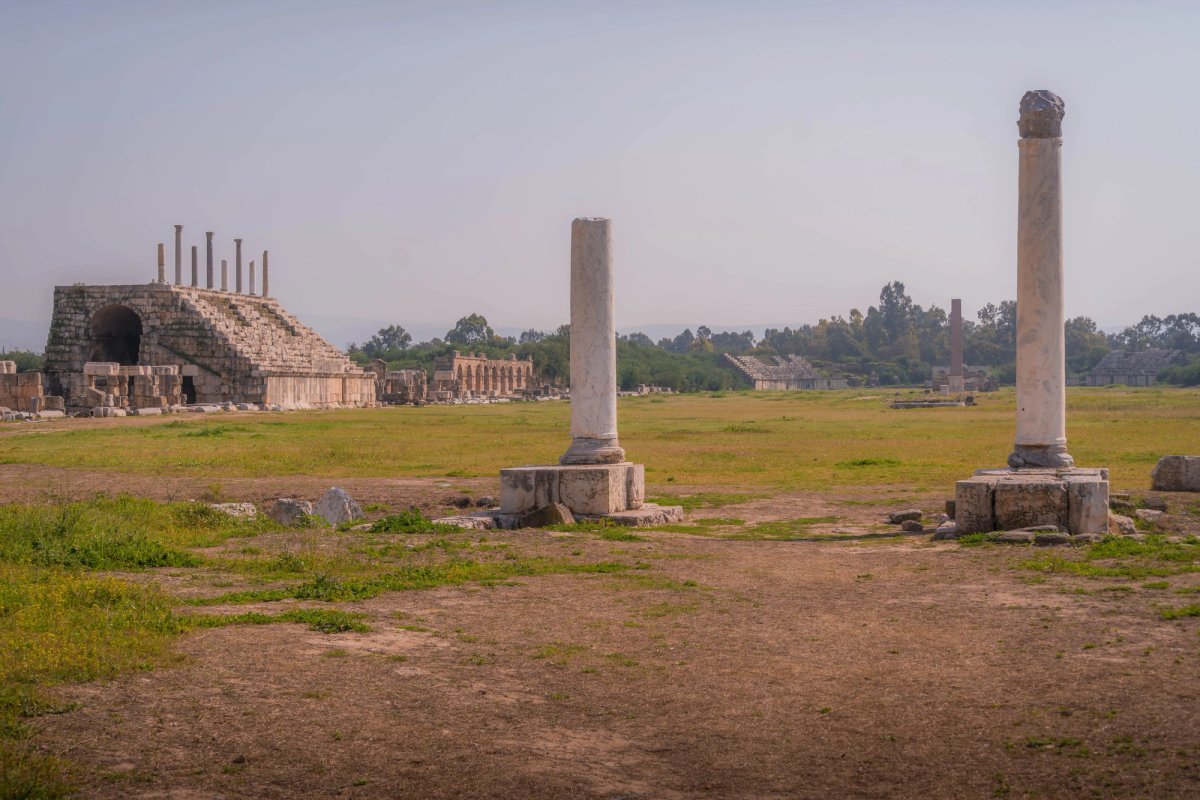
A missile strike that hit the ancient city of Tyre, in southwest Lebanon, on Friday (6 March) damaged the perimeter of one of its Unesco-listed archaeological sites, according to the country’s culture ministry. At least one person was killed in the attack, according to state media and AFP.
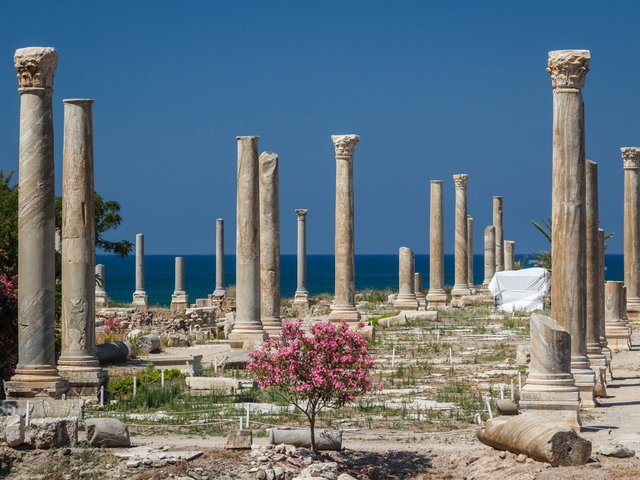
The strike hit the ancient ruins district of Tyre, one of the world’s oldest continuously inhabited cities with significant, predominantly Roman, archaeological sites.
According to the Lebanese ministry of culture’s Facebook page, the entrance of the Al-Bass archaeological site in Tyre suffered “material damage” because of the strike. Lebanon’s culture minister Ghassan Salamé said in the statement that “there is no military or security presence in the sites and such an argument cannot be used to bomb or harm them”.
The Al-Bass archaeological site in the city of Tyre is located next to the Al-Bass camp—one of 12 Palestinian refugee camps in Lebanon. The archaeological site includes a necropolis that served as the main entrance to the town in ancient times, and which straddles a wide Roman and Byzantine avenue dominated by a second-century triumphal arch. The site also features an aqueduct and a second-century hippodrome.
According to an expert from the International Council on Monuments and Sites (ICOMOS) Lebanon, the airstrike landed within the buffer zone of the Unesco World Heritage site. They tell The Art Newspaper that while the security situation precludes a full assessment at the moment, it is very likely that the area near the hippodrome has sustained damage, potentially from reverberations from the strike.
The 6 March strike came on the fifth day of fighting between Israel and Hezbollah. It also occurred two days after Salamé called Unesco’s director general, Khaled El-Enany, demanding intervention to protect Lebanese cultural heritage during the ongoing bombing of his country.
According to culture ministry’s Facebook page, Salamé asked El-Enany “to intervene with neighboring states or belligerent parties to remind them of the need to take all preventive measures, during this armed conflict with Lebanon, to protect and preserve Lebanese cultural heritage and refrain from targeting it, including the National Museum of Beirut as well as the Lebanese archaeological and historical sites, especially those listed on the Unesco World Heritage List”.
According to the post, El-Anany assured him that he was “following this emergency situation with the greatest vigilance” and that Unesco was “fully mobilised in order to provide Lebanon with the required support in the areas within the mandate of the organisation”.
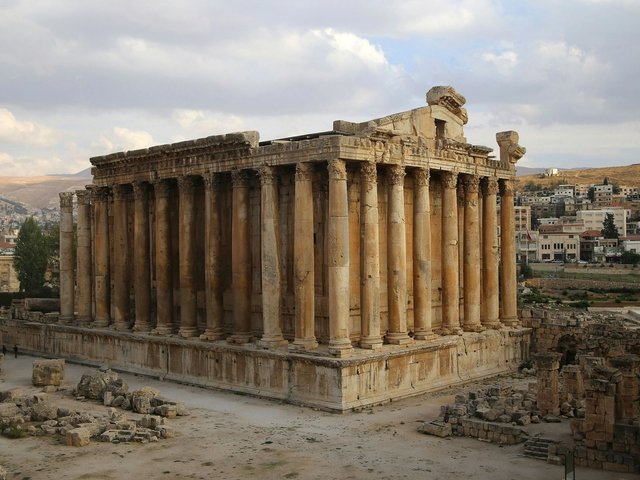
Lebanese heritage sites have been regarded as being at heightened risk since Israel’s intense bombing campaign in late 2024. In November that year, Unesco placed 34 cultural sites under enhanced protection. As the current bombing campaign continues in Lebanon, the ancient Roman sites of Baalbek in the Bekaa Valley and Tyre in the south are under particular threat.
On 23 October 2024 Israeli airstrikes destroyed large swathes of Tyre and one strike landed 50 metres from the ancient ruins. The airstrikes killed at least two people, caused mass evacuations, and damaged 400 apartments. They also came close to a coastal group of ancient Phoenician and Crusader ruins.
In November of the same year, Israeli strikes destroyed a centuries-old Ottoman building just metres from Baalbek.
In a statement on Monday, Unesco referenced the strike on Tyre in the context of other World Heritage Sites recently damaged during the ongoing conflict, including the Golestan Palace in Tehran and two buildings in Tel Aviv’s White City.
“Unesco recalls all parties of their obligations to respect international law,” the statement said. “Notably the 1954 Hague Convention for the Protection of Cultural Property in the Event of Armed Conflict, as well as the 1972 Convention concerning the Protection of the World Cultural and Natural Heritage.”
Meanwhile, Russia’s embassy in Lebanon has claimed that an Israeli missile strike hit the Russian House culture centre in the Lebanese city of Nabatieh on Monday (9 March).
The embassy said in a statement published by the Russian state-owned Tass news agency: "We strongly condemn this attack. This act of military aggression against an institution operating solely in the cultural and humanitarian sphere cannot be justified.” The embassy said that there were no human casualties.